Connection level
9 direct connectionsAncient Civilizations are the societies that turned villages, rivers, agriculture, trade, writing, religion and political power into organized worlds. The theme grips people because it is not only about old stones: it is about the moment humanity began to record accounts, raise cities, draw gods, measure the sky and leave material memory for those who came later.
What makes a civilization “ancient”
An ancient civilization is not just an old people. It usually involves urbanization, division of labor, government, organized religion, trade, intensive agriculture, monuments, calendars, specialized craft and some form of record keeping. Not all had writing in the same way, but all created systems to preserve memory and coordinate collective life.
On AwakenMap, this theme connects to ancient ruins, ancient Egypt, Atlantis, ancient aliens, Sacred Geometry, Akasha and Alchemy. It is one of the main gateways of the site because many mysteries begin here: at the meeting point of archaeology, myth, symbol and imagination.
Rivers as engines of history
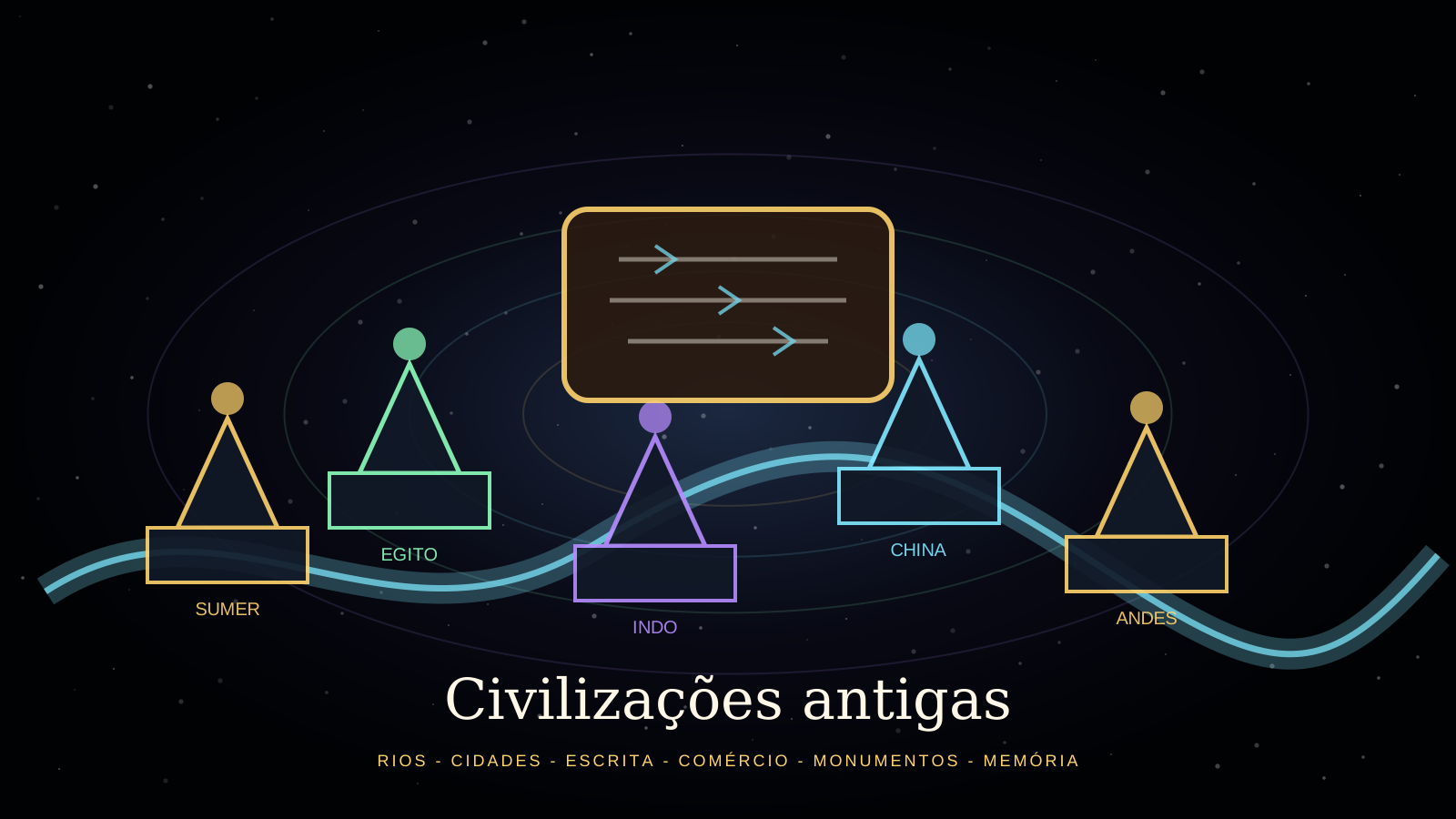
Many of the first civilizations grew around rivers. Mesopotamia between the Tigris and Euphrates, Egypt on the Nile, the Indus in South Asia, China in systems such as the Huang He and Yangtze. A river was not only water: it was farming, fertile mud, road, border, calendar and flood risk.
When a community must predict floods, divide harvests, store grain and organize canals, social life becomes more complex. The ancient city does not appear from nowhere; it grows where environment, need and organization meet.
The real image of ancient administration
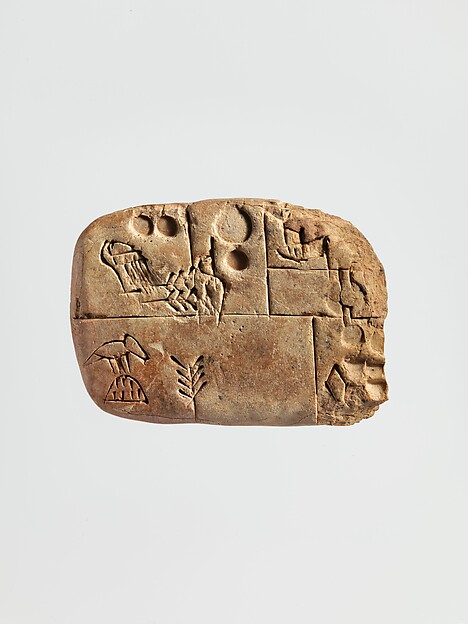
This Sumerian tablet, dated to about 3100–2900 BCE, records the distribution of barley and emmer wheat. It may not look “magical” at first glance, but it is one of the most important images for understanding civilization: someone had to count, record and administer.
Before kings became legend and temples became ruins, there was grain, labor, storage, delivery and written memory. Civilization also begins in this very concrete part of life.
Writing: when memory left the mouth
Writing was closely tied to administration. Before becoming poetry, myth or literature, it was used to count goods, record deliveries, mark debts and organize temples and palaces. That changes everything: memory no longer depends only on whoever remembers; it begins to live in clay, stone, papyrus and metal.
That is why a small tablet can be as powerful as a pyramid. The pyramid shows monumental power. The tablet shows administrative power. A civilization needs both: collective imagination and practical control.
Mesopotamia, Egypt, Indus, China and other centers
Mesopotamia is often presented as one of the earliest urban literate regions, with cities, temples, cuneiform writing, astronomy, law and trade. Egypt created a long-lasting state around the Nile, with monumentality, hieroglyphic writing, funerary religion and centralized administration.
The Indus civilization is striking for urban planning, standardized bricks, drainage and cities such as Mohenjo-daro. In ancient China, the development of states, writing, bronze, ancestral rituals and astronomy opened another civilizational axis. In the Americas, the Andes and Mesoamerica show that complexity also flourished outside the “Old World”.
What changed with cities
The city concentrates people, crafts and problems. It allows temples, markets, walls, scribal schools, workshops, archives and palaces. But it also creates inequality, taxes, wars, urban hunger and struggles for power.
That is why civilization should not be read as “pure progress”. It is power and cost at the same time. It produces art, science, laws and architecture; it also produces hierarchy, bureaucracy, exploitation and conflict.
Monuments: engineering, faith and power
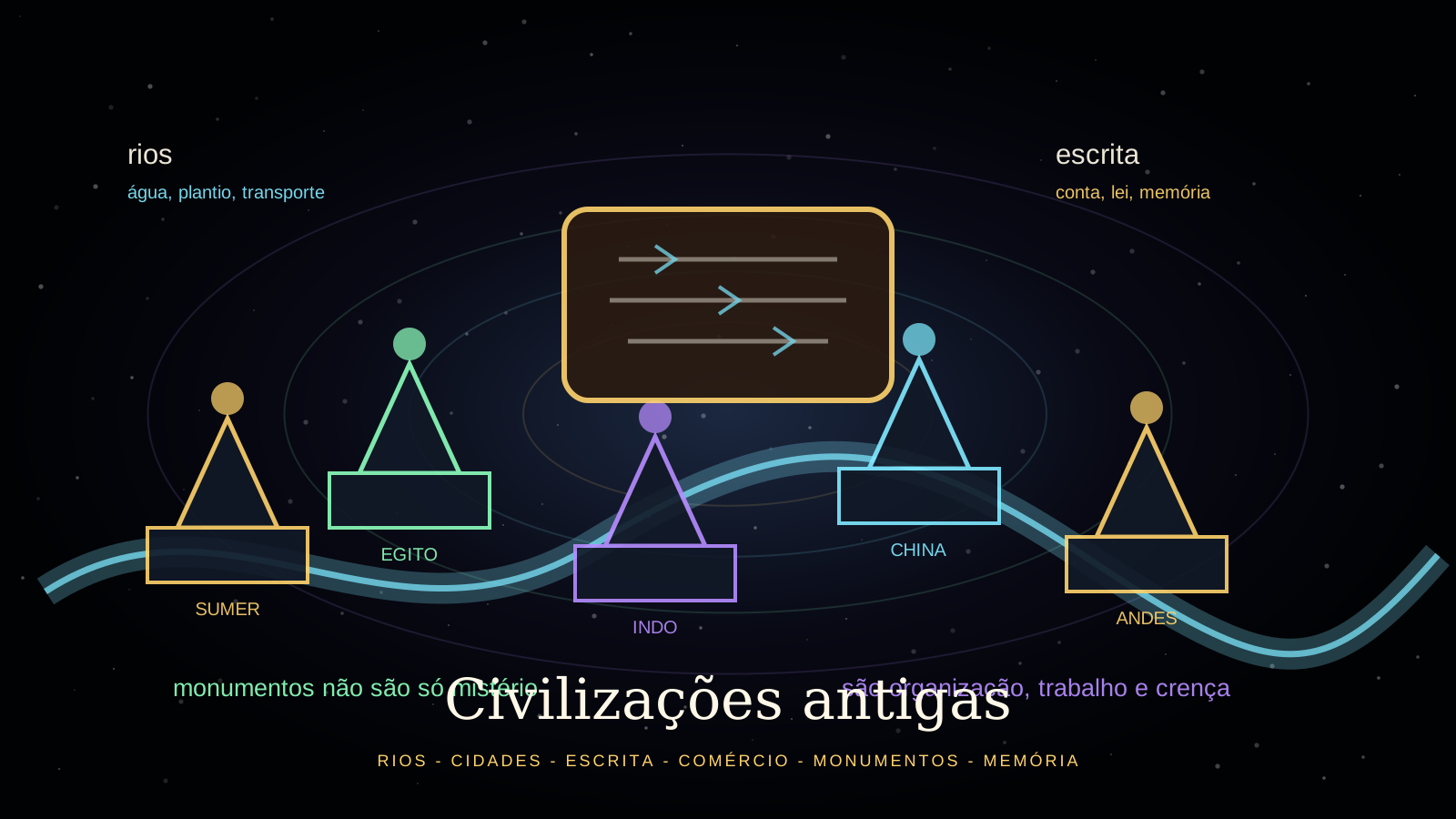
Ancient monuments are not only puzzles to solve. They are documents in stone. Pyramids, ziggurats, temples, walls, roads, observatories and tombs show engineering, collective labor, authority, religion and worldview.
The common mistake is to look at an ancient work and conclude too quickly: “they could not have done it”. Often, they could — with time, organization, accumulated knowledge and enormous human mobilization. The mystery remains interesting, but it becomes better when it does not erase ancient capability.
The invisible part: trade and exchange
Ancient civilizations were not sealed islands. Objects, metals, stones, wood, textiles, ideas and people moved along long routes. Archaeology finds materials outside their places of origin, showing contact between distant regions.
Recent ancient DNA studies also reinforce that connection was not only the trade of objects. In 2025, a study published in Nature sequenced the genome of an ancient Egyptian man dated to around 2855–2570 BCE and found ancestry linked to the Fertile Crescent. This matters because it speaks to what archaeology had already suggested: Egypt and Mesopotamia were not completely isolated.
Why the theme becomes mystery
Ancient civilizations become mysterious because they left ruins larger than our quick explanations. The reader sees aligned stone, abandoned city, dead writing, broken statue and sky map — and feels that something is hidden there.
That feeling is good. It opens curiosity. The care is not to replace investigation with a ready-made answer. Not everything is aliens, Atlantis or lost technology. Sometimes the most impressive thing is precisely the human: thousands of people coordinating labor, faith, power, sky and survival.
The link with spirituality and symbol
Ancient civilizations also matter because their symbols remain alive. Geometry, temple, world axis, sacred mountain, flood, sky gods, death and rebirth, alchemy, cosmic memory — many modern images come from ancient layers.
This is where the theme speaks to Akasha, Sacred Geometry, Alchemy and 5D / 7D. The past is not only historical; it becomes a symbolic repertoire for thinking about consciousness, transformation and meaning.
Connections to continue
After this theme, open ancient ruins, ancient Egypt, Atlantis, ancient aliens, Sacred Geometry, Akasha and Alchemy. This path leads from archaeological ground to AwakenMap’s symbolic and speculative readings.
Simple summary
Ancient civilizations are complex societies that created cities, writing, monuments, trade, government and collective memory. They were born from concrete needs such as water, food and administration, but also produced myths, symbols and works that still feed spiritual and historical imagination.
References and starting points
- The Met - Cuneiform tablet: administrative account concerning barley and emmer
- UNESCO - Archaeological Ruins at Moenjodaro
- Khan Academy - The cradle of civilization
- World History Encyclopedia - Civilization
- World History Encyclopedia - Mesopotamia
- Nature - Whole-genome ancestry of an Old Kingdom Egyptian
- Francis Crick Institute - Researchers sequence first genome from Ancient Egypt
- PBS NewsHour/AP - Ancient DNA shows genetic link between Mesopotamia and Egypt
- The British Museum - Ancient Egypt
FAQ
What were the first ancient civilizations?
Among the most cited are Mesopotamia, ancient Egypt, the Indus civilization and ancient China. It is also important to remember centers in the Americas, such as the Andes and Mesoamerica.
Were ancient civilizations isolated?
Not completely. Trade, materials, ideas and people circulated. Archaeological and genetic studies show broader connections than the image of totally separate peoples.
Do ancient monuments prove lost technology?
They prove engineering, social organization, belief and collective labor. Some questions remain open, but we do not need to erase human capability in order to admire these works.
Keep exploring
You can open another path
 Ancient civilizations H Blocks 5/5 intensity Explore →
  Esoteric practices Hidden History 4/5 intensity Explore →
  Earth and Antarctica Earth 4/5 intensity Explore →
  Esoteric practices Sumerian Creation Story 4/5 intensity Explore →
  Esoteric practices Sumerian Tablets 4/5 intensity Explore →
  Ancient civilizations Ancient Builder Race 4/5 intensity Explore →
Join the conversation
Comments are moderated. Keep the discussion respectful and distinguish evidence, interpretation and personal experience.