Connection level
14 direct connectionsAerospace Corporations are one of the most important pieces for understanding the modern imagination about space. They build rockets, aircraft, satellites, capsules, sensors, engines, software and military systems. They also appear at the center of narratives about hidden technology, secret contracts and space programs outside public view.
What aerospace corporations are
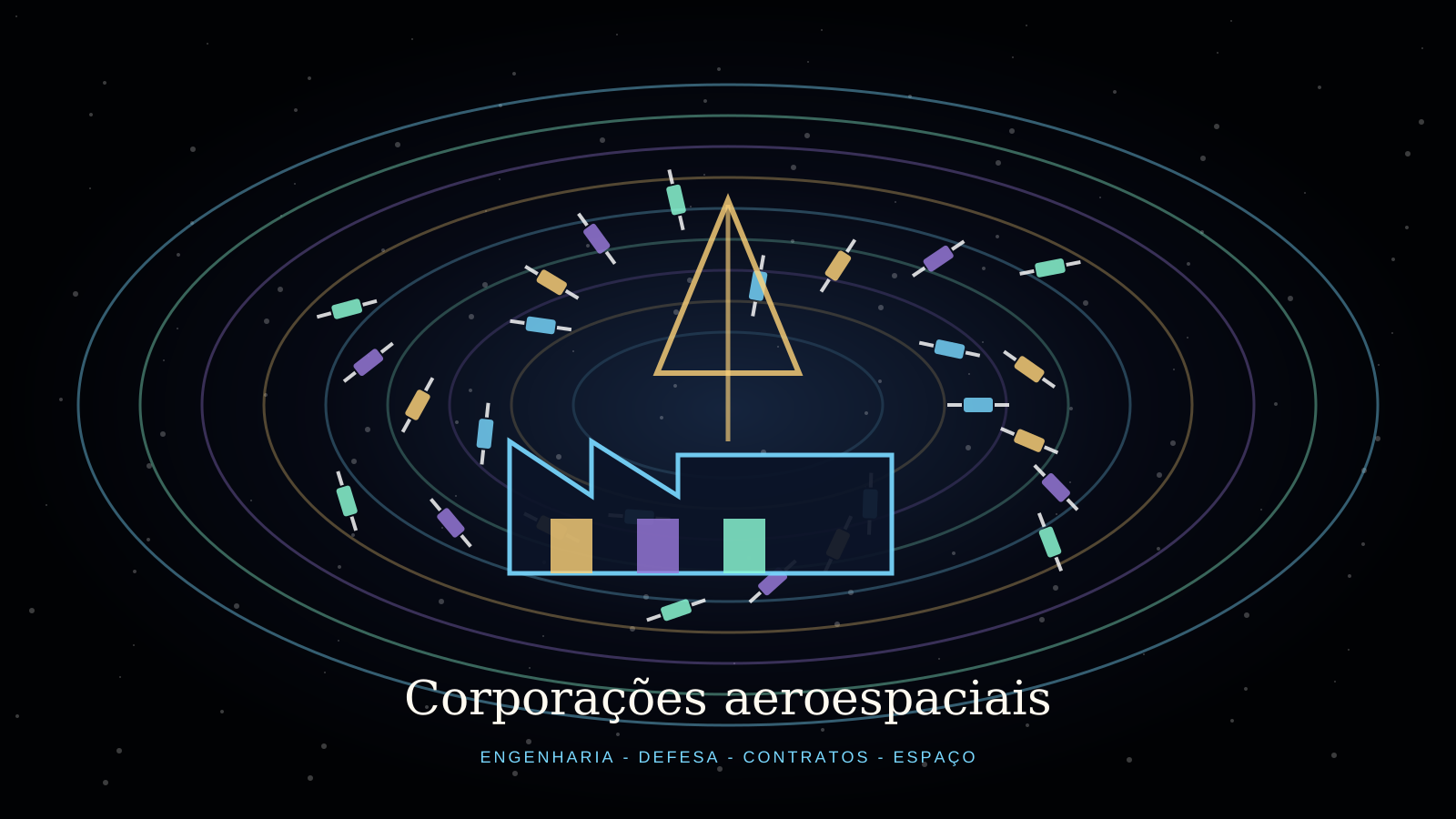
They are companies that design, manufacture and operate technologies connected to air and space. Some work in civil aviation. Others work with defense, satellites, rockets, lunar exploration, intelligence, sensors and communication systems.
In AwakenMap, the theme connects to NASA, the Secret Space Program, TR-3B, the Dark Fleet and advanced technology and high frequency. The reason is simple: if advanced space technology exists, there is usually a network of companies, contracts and laboratories behind it.
The real layer: NASA and private industry
Modern space exploration is not done only by public agencies. NASA works with private companies in programs such as Commercial Crew and Artemis. Boeing, SpaceX, Lockheed Martin, Northrop Grumman and other companies appear in real systems: capsules, rockets, engines, modules, propulsion, software and technical support.
This model is not secret. It is a normal part of contemporary space engineering. The government defines missions, funds parts of development and contracts companies capable of building what the agency does not manufacture alone.
Why they feel mysterious
The mystery begins because aerospace mixes three worlds: public science, military defense and classified contracts. One mission may have an official page, press conference and live broadcast. Another may involve classified technology, radars, sensors, experimental aircraft or intelligence satellites.
This mixture creates a natural public question: if there is so much in the open, what exists in the reserved part?
Skunk Works and the power of classified projects
The case of Lockheed Martin’s Skunk Works shows why this subject grips people. Projects such as the U-2, SR-71 and F-117 proved that highly advanced aircraft could be developed in secrecy for years and later revealed to the public.
This creates a lasting effect: when the public discovers that something real was hidden for a long time, it begins to imagine that even more advanced technologies may still be hidden. Real secret development programs feed the myth of nearly impossible technologies.
The bridge to the Secret Space Program
In Secret Space Program narratives, aerospace corporations appear as builders, suppliers or administrators of space technology far beyond what is officially announced. Some stories speak of fleets, off-world bases, antigravity craft and agreements between governments, companies and military groups.
The theme gains strength because it begins with something true: private companies really do build much of the space and military infrastructure. The speculative layer begins when that infrastructure is said to include secret interplanetary fleets.
TR-3B, Dark Fleet and hidden technology
TR-3B represents the popular image of a secret triangular aircraft with advanced propulsion. The Dark Fleet takes that imagination into deep space, with narratives of hidden military fleets. In both cases, aerospace corporations enter as possible manufacturers or operators.
These connections do not depend on one specific company. They depend on the larger idea: frontier technologies rarely emerge alone. They require supply chains, materials, engineering, testing, simulation, secrecy and money.
Antarctica, poles and extreme logistics
There is also a bridge to Admiral Byrd. Polar exploration, remote bases, extreme aviation and military logistics show that the boundary between science, defense and strategic territory has always been complex. The same applies to space.
When an operation involves hostile environments, advanced technology and state interest, specialized corporations are usually nearby. This is one reason the imagination of secrecy grows so strongly around them.
Why this theme grips people
It grips people because aerospace companies seem to operate near the future. They build things most people will never touch: satellites, rocket engines, stealth aircraft, space capsules and defense systems.
That distance creates fascination. The public sees only launches, statements and official videos. The rest becomes shadow — and shadow is where myth likes to live.
How to read without confusion
A clear reading separates three layers. The first is public: contracts, NASA missions, defense systems and the space industry. The second is classified: military projects that exist but are not detailed. The third is speculative: secret fleets, operational antigravity and parallel space programs.
When these layers remain separate, the theme becomes stronger and more honest. You do not need to deny real secrecy in order to avoid accepting every unsupported narrative.
Simple summary
Aerospace corporations are real companies that build essential parts of modern space and military technology. They appear in secret narratives because they work near governments, defense, satellites and classified projects. The theme connects public engineering, military secrecy and the imagination of hidden space programs.
References and starting points
- NASA - Commercial Crew Program
- NASA - Artemis Partners
- Lockheed Martin - Skunk Works history
- Lockheed Martin - Skunk Works origin story
- Northrop Grumman - Artemis Program
- Britannica - Aerospace industry
FAQ
Do aerospace corporations work with NASA?
Yes. NASA works with private companies in programs such as Commercial Crew and Artemis.
Do secret aerospace projects exist?
Yes, classified military projects exist. This does not automatically prove every narrative about secret space fleets.
Why do these companies appear in theories about space?
Because they have technology, contracts, laboratories and government relationships. That real base feeds larger speculation.
Keep exploring
You can open another path
 Secret Space Program Interplanetary Corporate Conglomerate 5/5 intensity Explore →
  Secret Space Program William Tompkins 5/5 intensity Explore →
  Secret Space Program Air Force Special Operations Command (AFSOC) 4/5 intensity Explore →
  Secret Space Program Black Project 4/5 intensity Explore →
  Secret Space Program Secret Space Program 4/5 intensity Explore → Secret Space Program Interplanetary Corporate Conglomerate 4/5 intensity Explore →
Join the conversation
Comments are moderated. Keep the discussion respectful and distinguish evidence, interpretation and personal experience.