Connection level
47 direct connectionsHidden History is the idea that important parts of the past were erased, hidden, manipulated or forgotten. The theme belongs to the fracture between science and meaning that runs through the Great Awakening.
What the term means
Hidden history can mean two very different things. In a legitimate sense, it points to marginalized histories, unexamined documents, archives opened late, memories of erased groups and revisions made when new sources appear. In this sense, history really changes.
In another sense, it becomes a total narrative: everything that contradicts the desired version must have been hidden by an elite, institution, religion, museum or media system. Then the gap stops being a research problem and becomes ready-made proof of cover-up.
Archives change the known past
When documents are declassified, digitized or found, historical interpretations can change. National archives, libraries, newspapers, letters, photographs, diaries, court cases and military records often reveal details public memory did not know.
This is not conspiracy by itself. It is normal historical research: new sources can correct old versions. The mature point is asking what the document actually says, who produced it, why it was preserved and which other sources confirm or complicate its reading.

Revision and discovery
Revising history is not necessarily denying history. Serious historiography revises hypotheses when new sources, better methods or previously ignored social questions appear. The problem begins when revision becomes immunity against evidence: if it confirms the thesis, it counts; if it contradicts it, it is part of the cover-up.
Good hidden history works with primary source, context, comparison and limits. Bad hidden history begins with the conclusion and uses any fragment as a sign of a universal plot.
Smithsonian, giants and the classic example
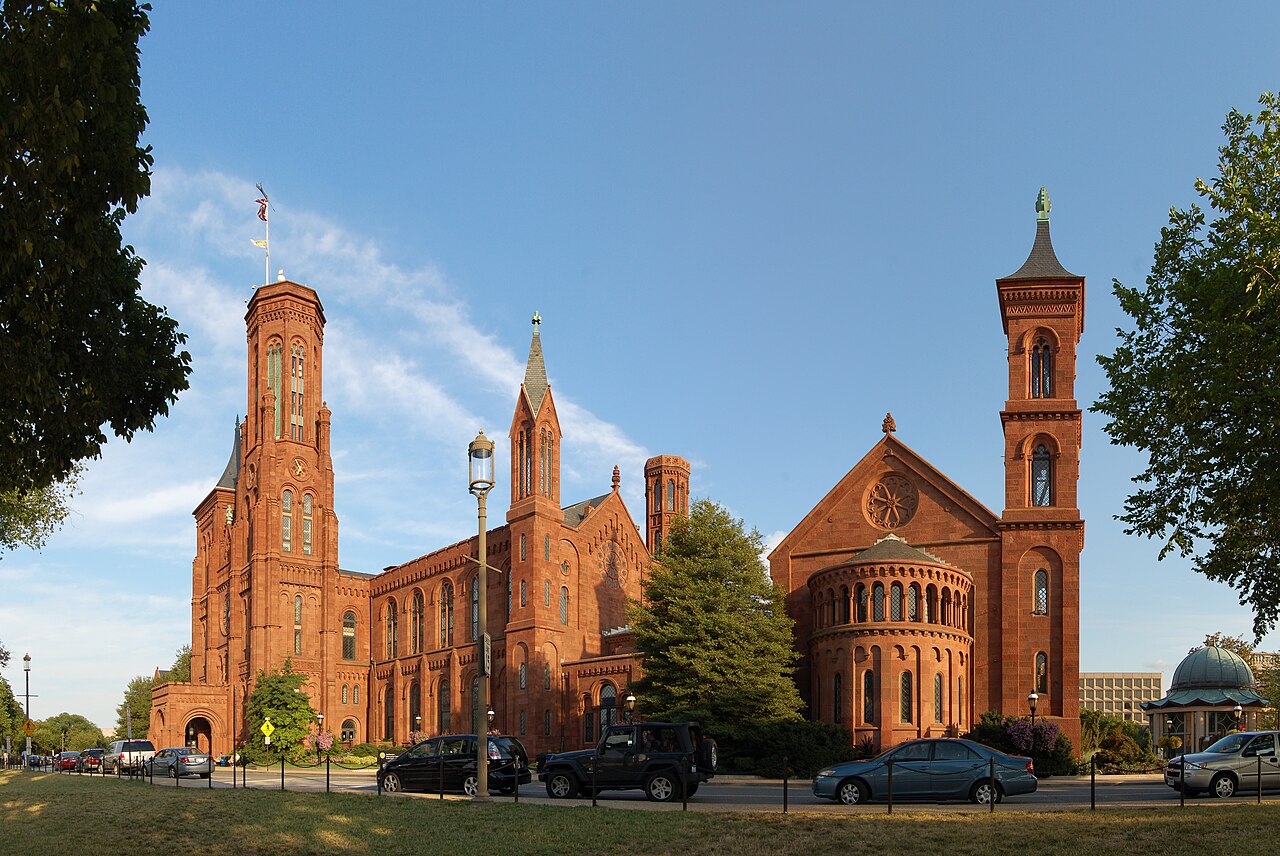
One of the most repeated stories says the Smithsonian destroyed giant skeletons to hide a truth about ancient humanity. Fact checks by AP and others indicate the viral version comes from satirical material and lacks proportional documentation.
This case is useful because it shows the mechanism: a fascinating theme, a powerful institution, a trust gap and an emotionally strong image. The result feels intuitive before it is proven. That is why the theme speaks with Giants, Ancient Civilizations, Ancient Aliens and the Ancient Builder Race.
Real hidden histories exist
Governments classify documents. Companies hide responsibility. States erase violence. Museums and universities have operated with real colonialism, racism and exclusions. Programs such as Project Paperclip show that morally difficult episodes can remain poorly explained for decades.
That is why simple skepticism is not enough. Saying “all hidden history is false” would be naive. The correct question is harder: which history, which document, which chain of custody, which institution, which incentive and which independent evidence?
Out-of-place objects and the temptation of the great reset
One of the strongest gateways into hidden history is the category of out-of-place artifacts: objects that seem too advanced, too modern or too displaced for the period in which they are said to have been found. They feed narratives of great resets, erased civilizations, lost technology and incomplete official chronologies. The fascination is legitimate: when an object seems as if it “should not exist”, it forces the question of what we really know about the past.
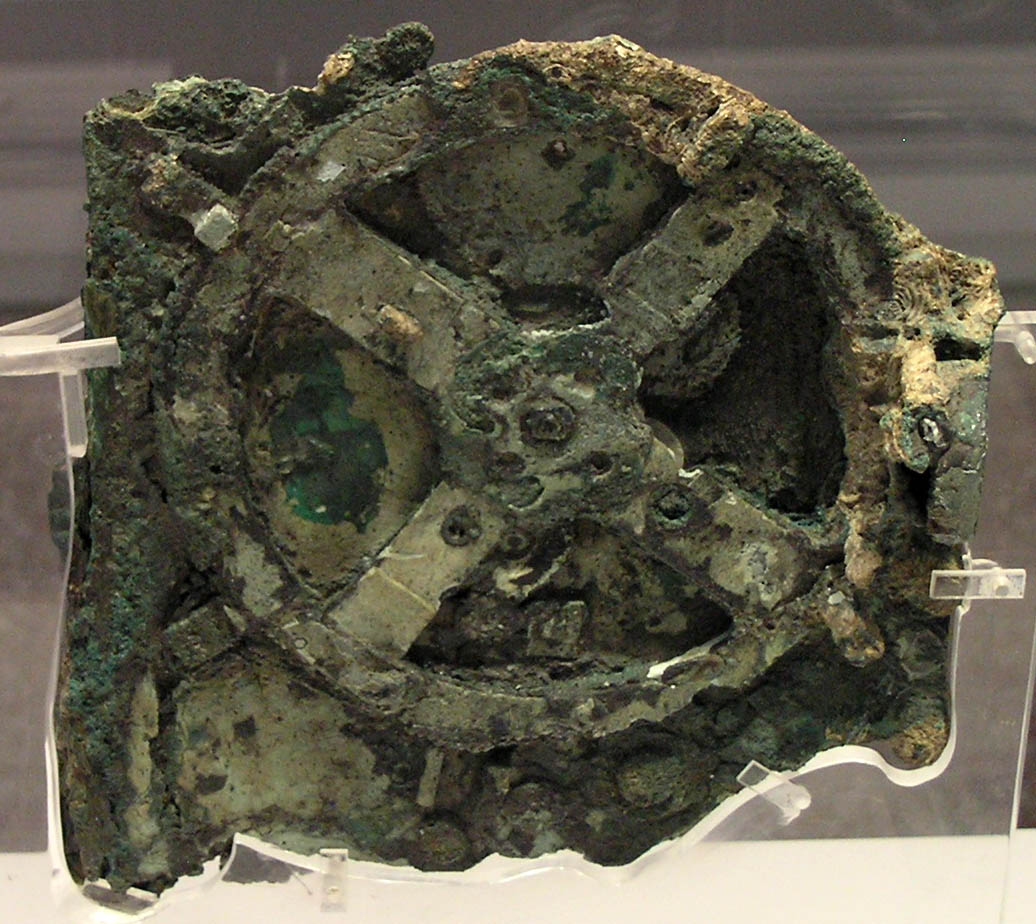
But these cases need to be separated into layers. The Antikythera Mechanism is the strongest example of a real anomaly: an ancient Greek instrument recovered from a shipwreck and studied by museums and researchers, capable of representing astronomical and calendrical cycles through complex gears. It does not prove time travel or a lost global civilization; it proves something perhaps more interesting: ancient technology could be much more sophisticated than the popular image of a “primitive past” allows.
Other examples are much weaker. The “Swiss watch” supposedly found in a Ming tomb circulates mainly through journalistic and internet reports, without a clear archaeological publication, verifiable inventory or robust chain of custody; it should therefore be treated as unproven. The London Hammer in Texas is compatible with a modern tool and was probably trapped in a recent mineral concretion, not found in ancient rock in its original context. The Coso Artifact has been identified by specialists as a twentieth-century Champion spark plug, not a 500,000-year-old technology. The Baghdad Battery is a real object, but its interpretation as an ancient battery is rejected or treated with strong caution by archaeologists because the electrical connections, use context and corresponding electroplating evidence are missing.
These objects matter for AwakenMap precisely because they show the difference between three things: real anomaly, exaggerated interpretation and fraud or context error. Serious hidden history does not need to dismiss every intriguing case; it needs to ask which ones survive the weight of method.
What is source and what is evidence
As source, there are archives, declassified documents, digital collections, academic research, investigative journalism, oral memories, reports of anomalous finds and studies on historical misinformation. This documents both real concealments and conspiratorial inventions.
As evidence for a total narrative, the situation is limited. There is no proportional public proof that the entire human chronology has been artificially fabricated by one single elite, nor that isolated objects prove a great civilizational reset by themselves. Responsible reading separates forgetting, censorship, error, incomplete archive, academic revision, propaganda, fraud, site contamination, natural concretion and conspiratorial myth.
The decisive question is always: was the object found in controlled excavation? Is the context recorded? Is the artifact available for independent analysis? Does the date apply to the object, the layer, the material around it or only to a later interpretation? Without those questions, every anomaly becomes only a mirror of the desire for history to be larger than it appears.
Relation to other nodes
On the map, Hidden History connects to the Vatican Library, Deep State, Mainstream Media, Atlantis / Lemuria / Mu, Ancient Ruins, H Blocks, Project Paperclip and Institutional Coverups. It is a passage node because almost every broad theory needs to retell the past to support its vision of the present.
This power requires care. A new historical reading can liberate erased memories; it can also fabricate imaginary enemies and turn legitimate distrust into a closed system.
Why it belongs on AwakenMap
The main fracture is between science and meaning, crossed by a second tension: gap and total narrative. A gap asks for investigation; a total narrative pretends the gap has already proven everything.
The philosophical connection on AwakenMap is this: awakening is not believing every official version is false. It is learning to live with uncertainty without handing imagination to any grand explanation. Objects like Antikythera show that the past can surprise us; cases like Coso and the London Hammer show that the desire for surprise can also outrun method. The past deserves openness, but it also deserves criteria.
How to continue on the map
After this theme, explore Ancient Civilizations, Ancient Ruins, Giants, Vatican Library, Project Paperclip, Deep State, Mainstream Media, Atlantis / Lemuria / Mu and the Ancient Builder Race.
Simple summary
Hidden History is the search for forgotten, erased or manipulated parts of the past. Sometimes it reveals real documents and marginalized memories. Other times it becomes a total theory in which any absence of proof is treated as proof of concealment. The theme matters because it teaches how to separate archive, gap, historical revision, misinformation and conspiratorial myth.
References and starting points
- NYU ISAW - The Antikythera Mechanism
- National Archaeological Museum, Athens - Antikythera Mechanism
- Smithsonian Magazine - Decoding the Antikythera Mechanism
- Smithsonian Magazine - Coso Artifact as 1920s spark plug
- National Center for Science Education - The Coso Artifact
- National Center for Science Education - London Hammer
- Discover Magazine - London Hammer and context
- History.com - Baghdad Battery
- Europa Star - Swiss ring watch report
- Wikimedia Commons - Antikythera Mechanism image
- U.S. National Archives - research historical records
- UK National Archives - working with primary sources
- Academic digital library - journals, books and primary sources
- CIA - declassified historical collections
- AP - fact check on the Smithsonian giant skeletons claim
- University of California Press - study on giant videos and historical conspiracy
- Wikimedia Commons - historical archive building
- Wikimedia Commons - Smithsonian building in Washington
Keep exploring
You can open another path
 Esoteric practices Runs of the Ancient Builder Race Civilization Lay Scattered Across the Solar System 5/5 intensity Explore →
  Esoteric practices The Hero's Journey 5/5 intensity Explore →
  Ancient civilizations Giants 5/5 intensity Explore →
  Map center Great Awakening 5/5 intensity Explore →
  Esoteric practices Jordan Maxwell 5/5 intensity Explore →
  Control systems Khazars 5/5 intensity Explore →
Join the conversation
Comments are moderated. Keep the discussion respectful and distinguish evidence, interpretation and personal experience.