AwakenMap
View this theme on the interactive map

Esoteric practices

Jordan Maxwell: pattern and proof

Jordan Maxwell connects occult symbolism, astrotheology, secret societies, law, comparative religion and the boundary between perceived pattern and proof.

Connections: 19 Categories: 6 Depth: Basic concepts Related nodes: 17 Updated in: julho 2026

Local network

This theme belongs to a larger network

Connection level

19 direct connections
45% relative density in the AwakenMap network

Jordan Maxwell, the pseudonym of Russell Joseph Pine, was an American researcher and lecturer associated with occult symbolism, astrotheology, comparative religion, secret societies and theories about world control. The theme belongs to the fracture between meaning and method that runs through the Great Awakening: the search for hidden signs can expand perception, but it can also turn coincidence into verdict.

Portrait of Jordan Maxwell
Archive photo: Jordan Maxwell in a portrait published on his biographical page. The image keeps the node from becoming abstract and reminds the reader that his influence came through decades of lectures, interviews and alternative-media circulation. Source: JordanMaxwell.com.

Who he was and why he mattered

Jordan Maxwell became known in alternative-media circuits through decades of lectures, interviews and videos about religion, symbols, law, language, cinema, money and power. His work was not organized as traditional academic research. It was a mixture of symbolic collecting, comparative reading, esoteric intuition, historical association, institutional critique and political suspicion.

His impact came less from one single discovery and more from a gesture: teaching an entire audience to look at logos, words, architecture, rituals, films, coats of arms, coins and documents as if everything might carry a second layer. For many people, Maxwell opened the door to Sacred Geometry, Mystery Schools, Hermeticism, Gnosticism and Kabbalah. For critics, he also helped popularize a risky method: connecting scattered signs before demonstrating that they belong to the same system.

His influence on internet conspiracy culture

Maxwell belonged to a pre-YouTube generation, but his influence expanded precisely when long lectures, radio interviews and documentary clips began circulating outside traditional filters. He became a bridge between esoteric bookstores, alternative radio, UFO conferences, New Age culture, anti-corporate critique and the conspiracy internet of the 2000s.

This is why his name appears beside themes that seem different: comparative religion, ufology, secret societies, Hollywood, Freemasonry, Saturn, the Vatican, money, law and global control. He offered a common grammar for all of it: public symbols would be residues of ancient systems of power. Even when the conclusions were weak, the feeling produced was strong. The reader stopped seeing isolated events and began seeing a fabric of signs.

That is where Maxwell becomes important for AwakenMap. He is not merely a person with controversial claims. He is an example of how digital culture turned alternative research into an experience of revelation: someone watches a lecture, recognizes a handful of symbols, connects them with a film, a logo, a coin, a court, and feels that the surface of the world has cracked.

The central gesture: the world as language

Maxwell's force lies in the idea that modern institutions are not only bureaucratic machines; they also operate through language, symbols, ceremonies, names, seals, clothing, architecture and narratives of authority. At this point there is an important intuition: societies really do organize power through signs. Flags, courts, uniforms, brands, anthems, currencies and monuments are not neutral. They teach obedience, belonging, fear, prestige and continuity.

The problematic leap happens when every resemblance becomes coordinated intention. An ancient symbol appearing in a bank, a public building or a film may mean cultural influence, inherited aesthetics, classical repertoire, marketing, coincidence or conscious appropriation. To become proof of hidden control, it needs more than resemblance: it needs context, document, authorship, historical chain and a hypothesis willing to be corrected.

The conspiratorial layer appears when symbolic reading becomes a map of domination. Maxwell spoke of religions as systems coded by solar and astrological worship, governments as structures tied to legal language, and elites as groups that communicate power through emblems, numbers, names and rituals. This view influenced readings about Illuminati, Free Masons, the Vatican, Global Control and Hidden History.

The fascination lies in making the world readable. A statue, a Latin word, a banking symbol or a legal phrase stops being detail and becomes clue. Reality begins to look like a hidden text. The risk is that, when everything is a clue, almost nothing can be refuted: every similarity confirms, every absence becomes concealment and every critique looks like defense of the system.

Connected geometric symbols
Editorial/contextual image: circle, triangle and square as connected symbols. Symbolic reading can open inquiry, but it can also force connections.

The Maxwell method in five moves

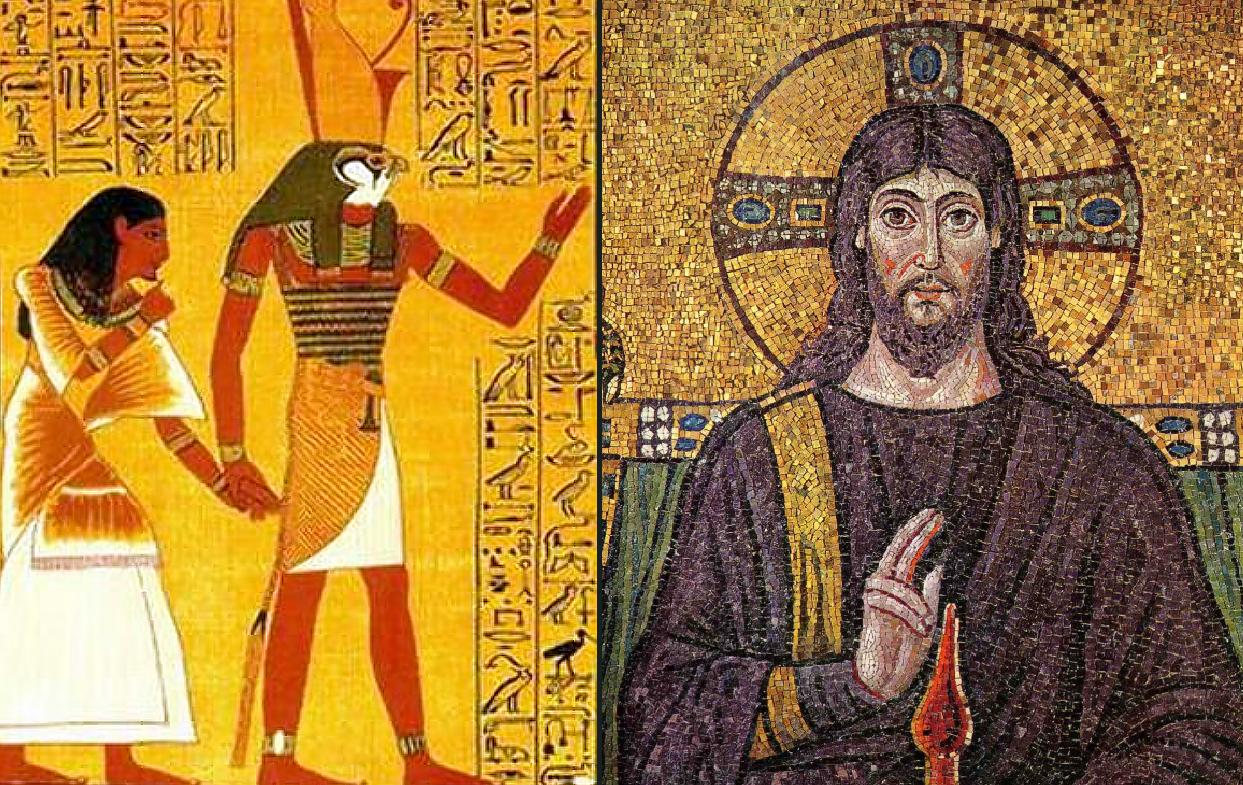
His method often follows five moves. First, choose a visible symbol: sun, cross, eye, cube, crown, ship, seal, star, serpent. Second, look for parallels in ancient religions, mythology, astrology, temples or initiatory societies. Third, bring that symbol close to modern institutions: banks, governments, churches, cinema, courts, corporations. Fourth, interpret the repetition as continuity of a hidden tradition. Fifth, present that continuity as a clue of control.

This method is powerful because it trains symbolic perception. It forces the reader to notice that public images have history, that symbols carry memory and that institutions speak not only through laws but also through staging. At the same time, it is dangerous when it skips steps. Without documentation, it turns analogy into genealogy; without context, it turns resemblance into intention; without the possibility of error, it turns reading into dogma.

Astrotheology and comparative religion

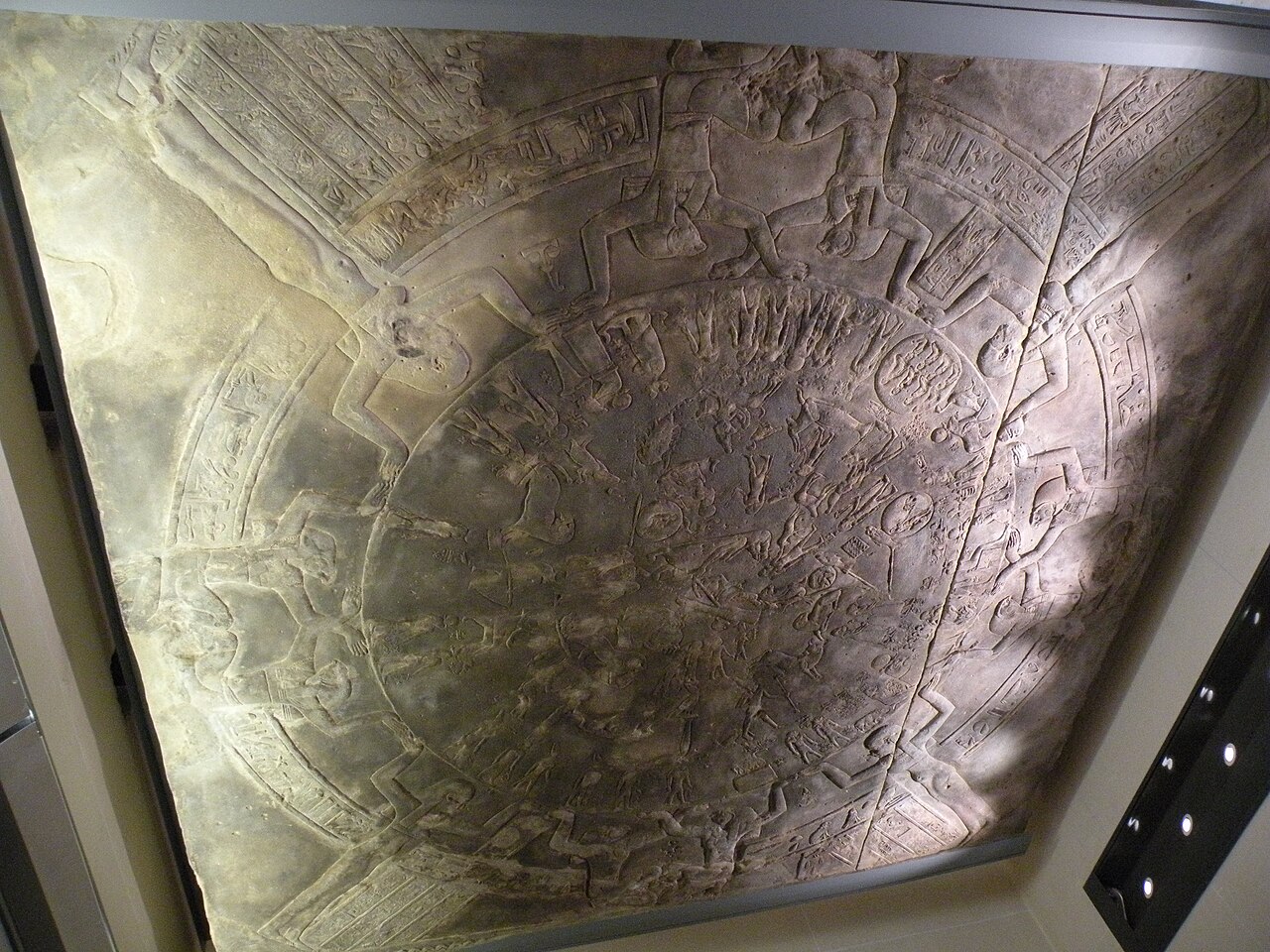
One of the fields most associated with Maxwell is astrotheology: the reading of religious narratives as codifications of solar, lunar, zodiacal and seasonal cycles. This lens did not begin with him. The study of religious symbols, celestial myths and parallels between traditions is legitimate within fields such as history of religions, anthropology, comparative mythology and symbolism studies. Maxwell's strongest contribution was popularizing the question for an audience outside academia: how many religious images carry memories of sky, agriculture, season, death and rebirth?

The critical boundary is not reducing every religion to one formula. Religious traditions are layered: ritual, politics, poetry, mystical experience, community, trauma, calendar, institutional power and symbolic language. Saying that a solar motif appears in many cultures can be interesting; saying that this alone explains the origin of all religions is a simplification. Maxwell works best when he provokes questions, not when he closes the investigation.

Maritime law, legal personhood and the language of power

Another famous axis in Maxwell is the reading of legal terms as if they hid a ritual structure of control: maritime law, birth certificate, legal personhood, commerce, debt, contract and names in capital letters. Here there is a partly useful intuition and a frequently exaggerated conclusion. It is true that law creates operational fictions: legal personhood, property, citizenship, contract, jurisdiction and liability are linguistic constructions with real effects. Modern life depends on these categories.

But recognizing that law uses technical fictions does not by itself prove that human beings are literally treated as maritime cargo or secret property of a state corporation. That is the difference between institutional critique and legal myth. The first asks how the state produces obedience through documents and language. The second turns wordplay into proof of hidden enslavement. AwakenMap should preserve the strong question without automatically accepting the weak conclusion.

Symbolic document being examined
Editorial image: document and magnifying glass. The challenge is moving from symbolic association to verifiable evidence.

Where he is useful and where he overreaches

Maxwell is useful when he reminds us that modernity is not as secular as it imagines. States, brands and institutions still use almost religious forms of authority: ceremonies, oaths, monumental architecture, dates, emblems, ritual language, titles and origin stories. He is also useful when he challenges the idea that symbols are mere decoration. Symbols organize attention, belonging and obedience.

He overreaches when he treats shared symbolic repertoire as if it were always centralized command. A triangle can be geometry, Christianity, Freemasonry, design, pyramid, hierarchy, illumination, the eye of God or simply visual composition. Meaning depends on use, period, author, audience and context. Without that layer, symbolic reading becomes a confirmation machine.

The best use of Maxwell, therefore, is not accepting him as final authority. It is using him as initial training in suspicion and then applying a harder rule: who produced this symbol? When? With what documentation? Who interpreted it this way first? Is there a simpler ordinary explanation? What would be needed to show that the hypothesis is wrong?

What is source and what is evidence

As source, there are lectures, interviews, books, videos, fan archives, catalogs, streaming pages, archival materials and cultural records that show Maxwell's influence in esoteric and conspiratorial scenes. His own public biography claims a trajectory beginning in 1959, a period with Truth Seeker Magazine, hundreds of radio interviews and appearances in programs and documentaries. This documents an important figure in alternative culture, especially at the crossing point between popular occultism, religious critique, anti-institutionalism, ufology and symbolic reading.

As evidence for the strongest claims, the situation is different. Saying that symbols matter is a plausible cultural observation. Saying that elites use language and ceremony to produce authority is also plausible. Saying that all religions are only solar worship, that every modern legal system is a secret maritime trap, or that all public symbols confess a coordinated hidden order requires much stronger evidence than visual resemblance, popular etymology or mythological association.

The editorial rule is simple: a repeated symbol opens a question; it does not close a verdict. An etymology suggests a clue; it does not replace linguistic history. An aesthetic coincidence asks for comparison; it does not prove conspiracy. And a narrative that refuses to be falsified stops being investigation and becomes a closed system.

Pattern and proof

The main fracture is between pattern and proof. Pattern is what catches attention: repeated symbols, similar words, solar narratives, recurring rituals, images that seem to speak to one another. Proof is something else: context, primary source, historical chain, demonstrated intention, responsible comparison and a hypothesis willing to be corrected.

Without this difference, the mind becomes bright and vulnerable at the same time. Bright because it notices layers literal reading misses. Vulnerable because it can turn any coincidence into secret architecture. With this difference, Maxwell becomes more interesting: he does not need to be treated as an oracle or dismissed as a fraud. He can be read as a key figure in an alternative pedagogy of suspicion.

AwakenMap reads Jordan Maxwell as a transition node between popular occultism, modern conspiracy and symbolic literacy. His importance is showing how many seekers arrived at the theme of global control: not through government documents, but through the feeling that public symbols were confessing a hidden order.

Relations on the map

On the map, Jordan Maxwell connects to Secret Program Researchers, Sacred Geometry, Mystery Schools, Hermeticism, Gnosticism, Kabbalah, Saturn, the Black Cube, Illuminati, Free Masons, the Vatican, Global Control, Hidden History, Propaganda, Mainstream Media and Natural Law.

These connections form a corridor between symbolic reading, comparative religion, legal language, cultural criticism and hidden-elite theories. The node does not claim all of Maxwell's interpretations are correct; it shows why his method influenced so many later conspiratorial maps.

Why it belongs on AwakenMap

Jordan Maxwell belongs on AwakenMap because he represents an essential question of contemporary awakening: when does learning to read symbols expand consciousness, and when does it become interpretive imprisonment?

The philosophical connection lies in discernment. The world really does speak through symbols, institutions really do use language, and power really does communicate through social codes. But awakening is not turning the entire universe into an accusation. It is learning to ask: what is the source, what is the context, what is the alternative and what kind of proof could change my reading?

Simple summary

Jordan Maxwell was a researcher and lecturer linked to occult symbolism, astrotheology, secret societies and theories about world control. He influenced generations of seekers by treating religion, law, money, cinema and culture as coded systems. His strongest contribution is reminding us that symbols and language shape perception. His critical limit appears when association becomes proof. A mature reading separates symbolic literacy, institutional critique and verifiable conspiratorial claim: Maxwell is an entry point for noticing patterns, not permission to accept every pattern as truth.

References and starting points

Keep exploring

You can open another path
Corrections, sources or contact

Found an error, have a reliable source or want to talk to the editorial team?

contact@awakenmap.com

Join the conversation

Comments are moderated. Keep the discussion respectful and distinguish evidence, interpretation and personal experience.

Leave a comment

Your email address will not be published.

×
×

Carrinho