Connection level
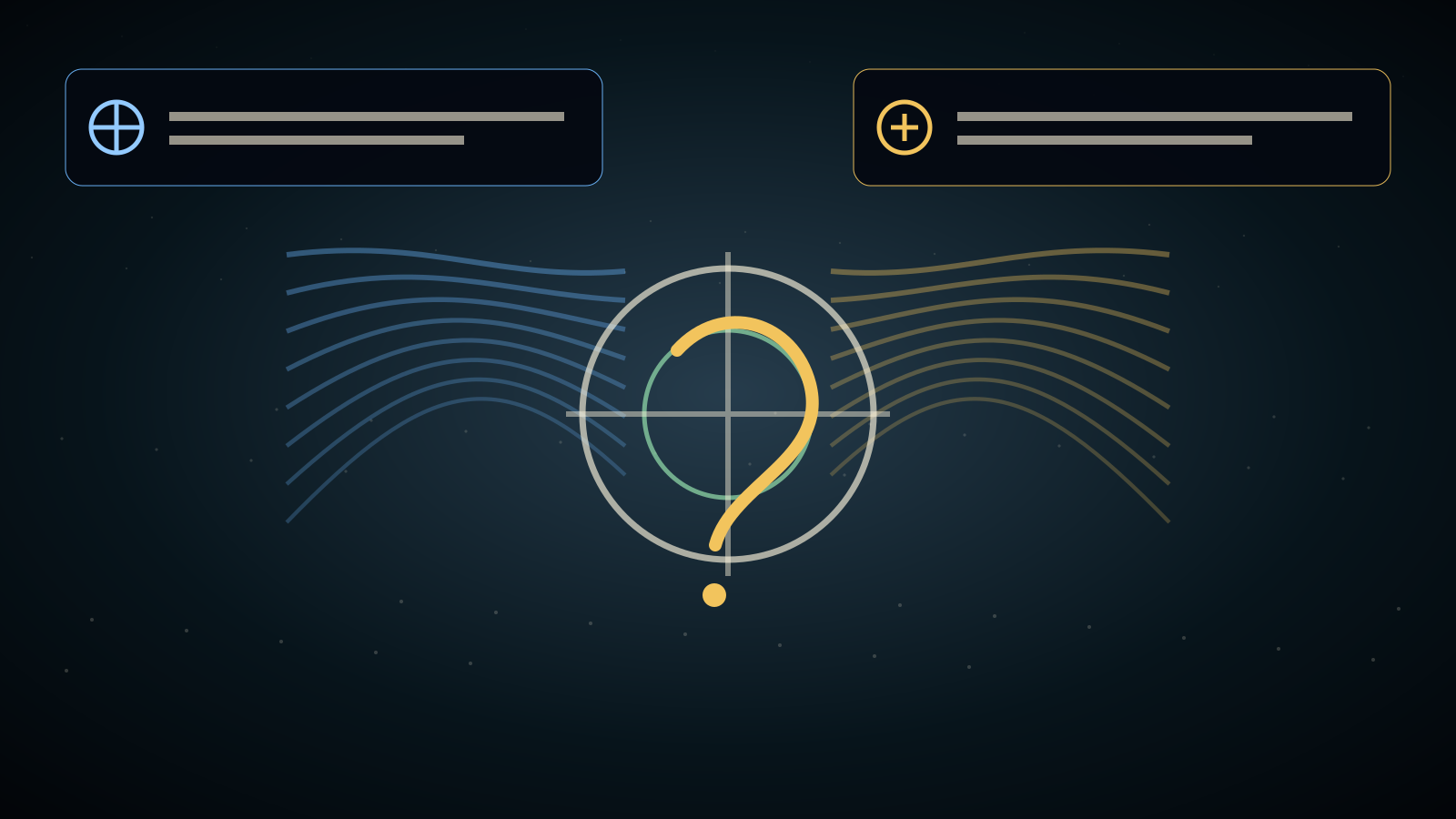
9 direct connectionsHow to read this map begins with the central question that organizes the whole map. AwakenMap is not a list of beliefs to accept as a block, nor an archive of automatic denial. It is an editorial atlas of narratives: historical, spiritual, political, scientific, conspiratorial and often crossed by more than one layer at the same time.

Each node should be read as an entry point, not a final sentence. A theme can have a documented basis, a symbolic layer, a spiritual reading, a conspiratorial version and a skeptical critique. The map's job is to show these layers without confusing narrative intensity with proof.
The first move is to ask where the idea came from. Some themes come from public documents, reports and official programs. Others come from religious traditions, esoteric schools, ancient myths or philosophy. Others appear in testimony, forums, documentaries, ufology books, spiritual channels or digital culture. Origin changes the weight of the reading.
The second move is to observe what the theory tries to solve. Many conspiratorial narratives emerge when something feels too large, unjust or strange for a simple explanation. The Cabal / Deep State / Illuminati tries to explain hidden power. The Matrix tries to explain imprisonment. The Secret Space Program tries to explain technology and military secrecy.
The third move is to look at connections. An isolated node may seem absurd; inside a network, it shows why certain ideas attract each other. Connection is not confirmation; it is context.
The fourth move is to separate fact, interpretation and claim. Fact is something verifiable through strong public sources. Interpretation is a reading of that fact. Claim depends on testimony, belief, non-auditable documents or incomplete evidence.
Simple summary
Read AwakenMap as a network of narratives, not a list of mandatory truths. Each node can contain facts, symbols, traditions, testimonies, suspicions and claims. Connections show context, not automatic confirmation.
References and starting points
- AwakenMap - Great Awakening
- AwakenMap - Full Disclosure
- AwakenMap - Collective Consciousness
- AwakenMap - Free Will
- AwakenMap - Secret Space Program
Why it belongs on AwakenMap
This guide belongs on AwakenMap because the map only works when the reader understands the difference between connection, evidence, symbol and claim.
Awakening here means learning to navigate without getting lost.
Keep exploring
You can open another path
 Map center Great Awakening 5/5 intensity Explore →
  Control systems Cabal / Deep State / Illuminati 4/5 intensity Explore →
  Consciousness and symbols Collective Consciousness 4/5 intensity Explore →
 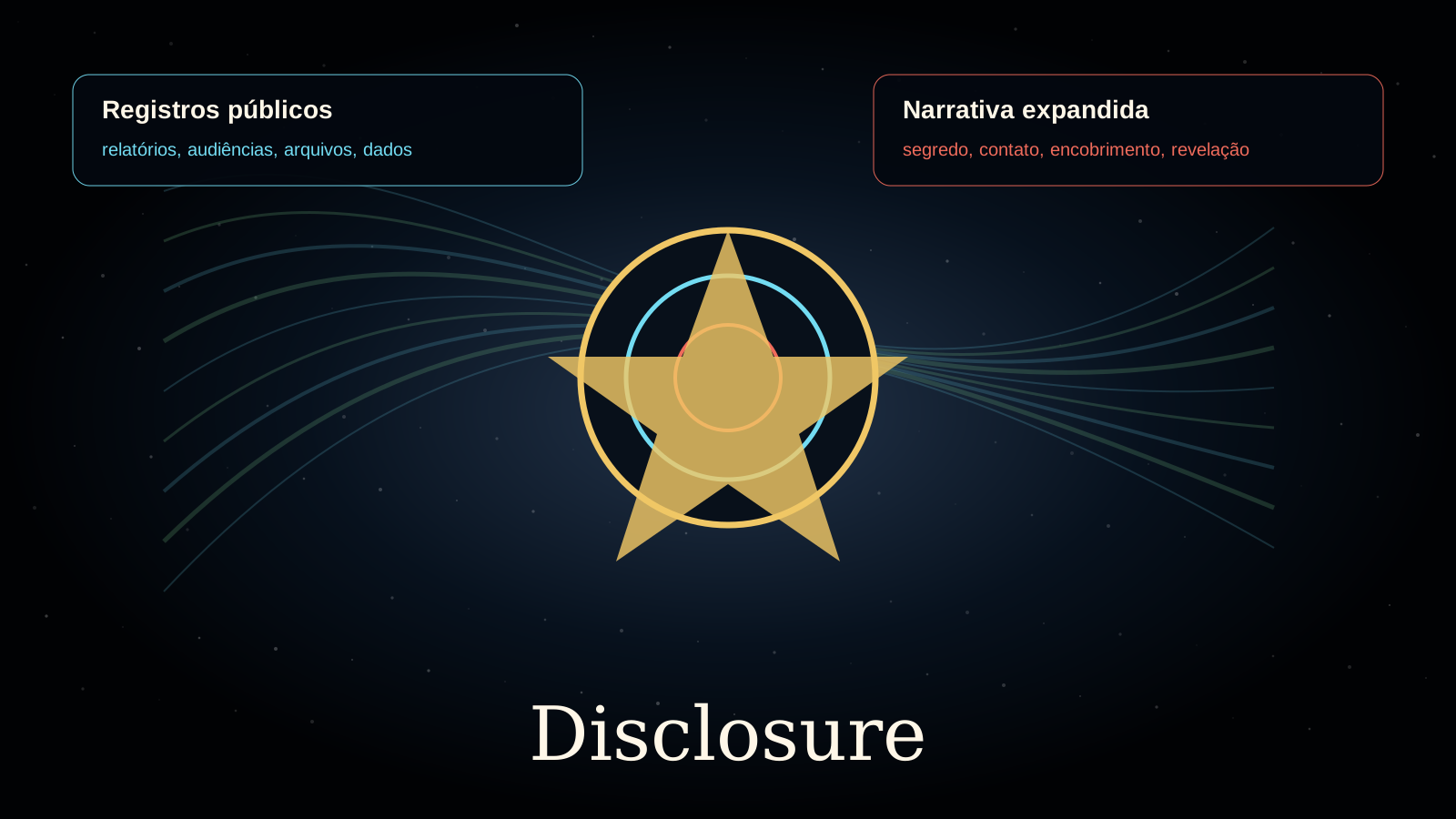 Map center Disclosure 4/5 intensity Explore →
  Return to Source Free Will 4/5 intensity Explore →
  Esoteric practices The Matrix 4/5 intensity Explore →
Join the conversation
Comments are moderated. Keep the discussion respectful and distinguish evidence, interpretation and personal experience.