Connection level
40 direct connectionsKabbalah names currents of Jewish mysticism that interpret God, creation, language, soul and repair of the world through symbols, texts and initiatory reading practices. The theme belongs to the question of when a symbol reveals depth without becoming a shortcut for accusing an entire people.
Where it came from
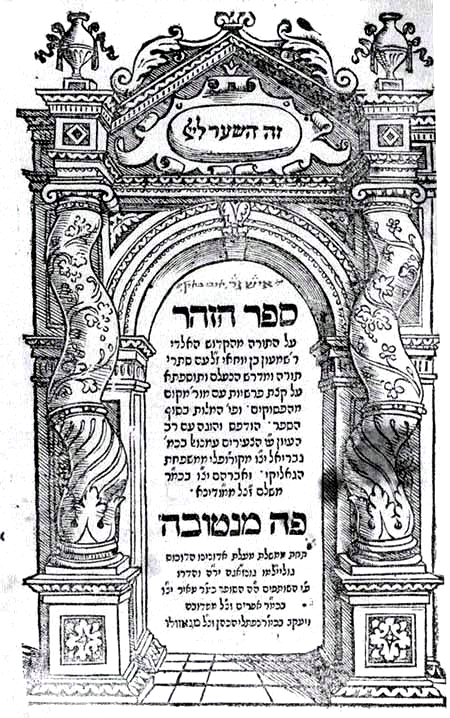
Kabbalah did not begin as a modern “secret society.” It formed inside medieval Judaism, especially in the 12th and 13th centuries in southern France and Spain, out of earlier traditions of Jewish mysticism, speculation on Hebrew letters, meditation, biblical commentary and cosmology. The Sefer ha-Bahir is one important work from this beginning, and the Zohar, publicized in Spain in the late 13th century around Moses de León, became the great textual body of the kabbalistic tradition.
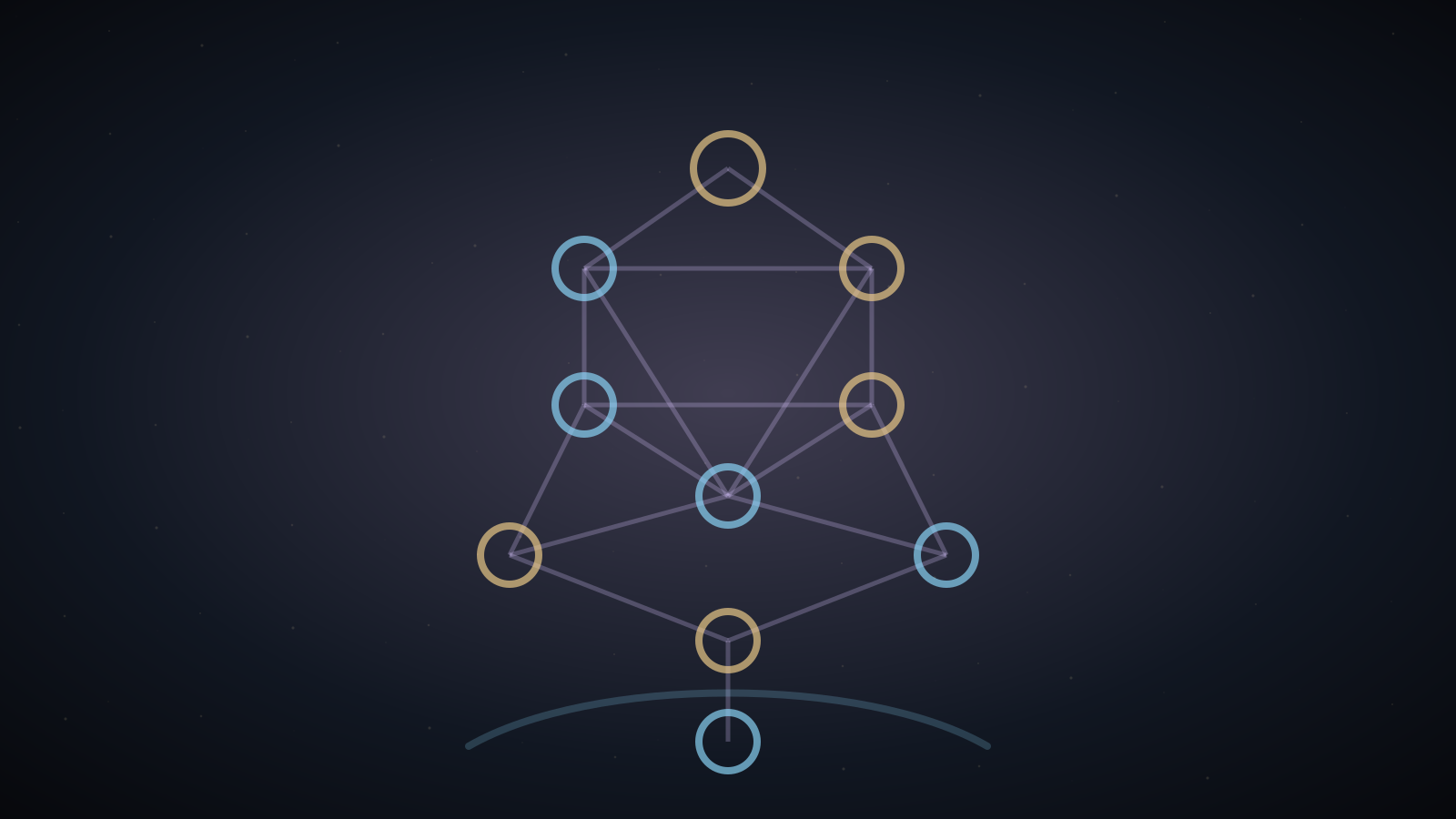
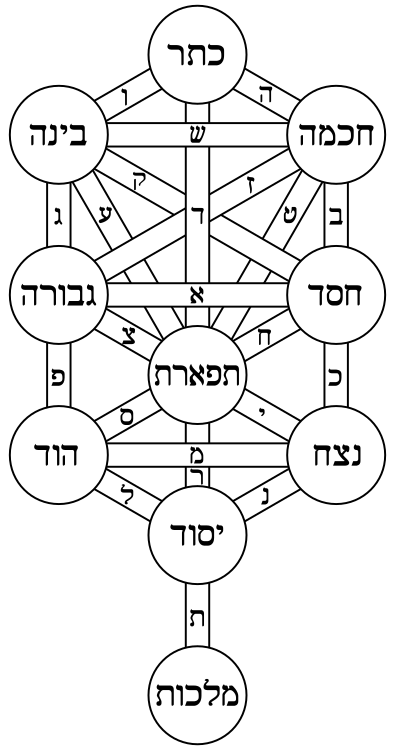
Inside Kabbalah, reality is not read only as matter and event. It is seen as language, emanation and relationship among levels of the divine. The Tree of Life, with the ten sefirot, organizes this imagination: crown, wisdom, understanding, mercy, strength, beauty, victory, splendor, foundation and kingdom. These spheres are not “secret planets” or physical gears; they are names for modes of manifestation, divine attributes, states of the soul and paths of repair.
The Zohar is central because it turns Torah reading into symbolic travel. Biblical characters, commandments, words and letters begin carrying cosmic dimensions. The text speaks of concealment and revelation, masculine and feminine within the divine, exile of the sacred presence, flow of blessing and human responsibility in repair. That is why Kabbalah is not only occult curiosity: it is a complex theology rooted in religious practice, Hebrew language and Jewish community.
In the 16th century, in Safed, Isaac Luria gave decisive shape to the kabbalistic imagination through themes such as divine contraction, breaking of the vessels, scattered sparks and repair. This vision influenced Jewish movements, liturgy, messianism, ethics and spirituality. Up to this point, the subject remains inside a Jewish religious question: how God creates, how the world breaks and how human beings participate in repair.
The modern suspicion begins when this Jewish body of thought receives a second life outside Judaism. In the Renaissance, Christian humanists such as Giovanni Pico della Mirandola and Johann Reuchlin read Kabbalah as a universal key able to confirm Christianity, decipher divine names and join the Bible, Platonic philosophy, Hermeticism and natural magic. This step matters: Kabbalah stops being only an internal Jewish tradition and becomes, for European Christian readers, a technology of hidden correspondences.
Later, Christian Kabbalah blends with alchemy, astrology, initiatory orders, Rosicrucianism, esoteric Freemasonry and, in the nineteenth century, systems such as Hermetic Kabbalah. The Tree of Life becomes a map for tarot, planets, angels, letters, colors, initiatory grades and magical operations. It is no longer only Torah commentary; it becomes a portable symbolic language. This is where conspiratorial thinking finds raw material: if everything seems connected through codes, names and symbols, someone can imagine that those codes also organize power.
The conspiratorial layer, then, does not arise because “Kabbalah proves a conspiracy.” It arises from the fusion of three things: the real existence of a reserved esoteric tradition, the European occult appropriation that spread its symbols through initiatory societies, and old anti-Jewish myths about a secret elite manipulating the world. In strong versions, the kabbalistic tradition becomes a spiritual technology used by elites to manipulate money, media, sexuality, ritual, language, music, cinema and architecture. Jewish, Hebrew or esoteric symbols are read as signatures of a hidden elite. From there come connections with Illuminati, Free Masons, Secret Societies, the Vatican Library, Saturn, the Black Cube and theories about Hidden History.
This is the delicate point. There is a documented history of Kabbalah being appropriated by Christians, occultists and initiatory societies. There is also a documented history of false accusations against Jews in which “secrecy,” “money,” “ritual” and “control” are used to turn a religious minority into a metaphysical enemy. Critiquing elites, banks, propaganda or initiatory groups is one thing. Turning an entire Jewish tradition into proof of Jewish world control is another. The first path can investigate real power; the second recycles an old pattern of accusation against Jews, replacing religious language with esoteric vocabulary.
Mystery and appropriation
The main fracture is between mystery and appropriation. Mystery is the attempt to read depth in text, soul, divine names and the symbolic structure of the world. Appropriation is when a specific tradition is torn from context, simplified, sold, accused or used as universal proof for any suspicion.
Without this difference, Kabbalah becomes caricature: either a self-help product with Hebrew names or a demonized password used to explain everything frightening. With this difference, the theme becomes much more interesting. It is possible to study sefirot, Zohar, Luria, gematria, Tree of Life, Christian Kabbalah and Hermetic Kabbalah without erasing Jewish origin or accepting totalizing accusations.
AwakenMap reads Kabbalah as one of the great examples of how symbols cross borders. A mystical map can serve prayer, contemplation, philosophy, magic, psychology, aesthetics, conspiracy or spiritual market. The decisive question is: who is using the symbol, in which tradition, with what intention, with what fidelity and with what ethical effect?

Relations on the map
On the map, Kabbalah connects to the Tree of Life, Sacred Geometry, Hermeticism, Gnosticism, Alchemy, Mystery Schools, Elohim, Merkaba, the Book of Enoch, the Book of Thoth, the Emerald Tablets, Jordan Maxwell, Illuminati, Free Masons, Secret Societies, Saturn and the Black Cube.
These connections form a corridor between Jewish mysticism, Western symbolism, Renaissance occultism, initiatory schools, conspiratorial reading and modern appropriations. The node does not claim Kabbalah is conspiracy; it shows why a tradition of reading the hidden became, for many people, imagined proof of hidden power.
Why it belongs on AwakenMap
Kabbalah belongs on AwakenMap because it forces us to think about the difference between symbolic depth and symbolic paranoia. Not every symbol is control. Not every reserved tradition is conspiracy. Not every critique of power needs to turn a religion into a secret culprit.
The philosophical connection lies in respect for mystery. Awakening is not taking an ancient diagram and using it as a weapon against any group. It is learning to read layers, honor contexts, recognize appropriations and ask when the search for the hidden is expanding consciousness or merely giving elegant form to fear.
Simple summary
Kabbalah is a tradition of Jewish mysticism formed in the Middle Ages through texts, symbols and interpretive practices. The Zohar, the sefirot and the Tree of Life are central elements. Over time, Kabbalah was appropriated by Christians, occultists, initiatory orders and modern spiritualities. The conspiratorial reading turns its symbols into proof of hidden control. The critical boundary is separating mystery, tradition, appropriation and accusation.
References and starting points
- Jewish Virtual Library - Zohar and Kabbalah
- Sefaria - library of kabbalistic texts
- Jewish Theological Seminary - medieval origins of Kabbalah
- Chabad - explanation of the ten sefirot
- Stanford - Gershom Scholem and the academic study of Jewish mysticism
- European History Digital Encyclopedia - the humanist encounter with Kabbalah
- Anti-Defamation League - the fantasy of secret Jewish power
- Wikimedia Commons - Zohar title page, Mantua, 1558
- Wikimedia Commons - kabbalistic Tree of Life diagram
Keep exploring
You can open another path
 Map center Great Awakening 5/5 intensity Explore →
  Esoteric practices Hermeticism 5/5 intensity Explore →
  Esoteric practices Tree of Life 5/5 intensity Explore →
  Control systems Cabal / Deep State / Illuminati 4/5 intensity Explore →
  Esoteric practices Gnosticism 4/5 intensity Explore → Esoteric practices Hermeticism 4/5 intensity Explore →
Join the conversation
Comments are moderated. Keep the discussion respectful and distinguish evidence, interpretation and personal experience.