Connection level
15 direct connectionsElohim is one of the most charged words in the Hebrew Bible. It enters the Great Awakening through the fracture between science and meaning: it can refer to the God of Israel, to gods, to spiritual beings, to heavenly powers or to a broader language of divinity. On AwakenMap, the theme matters because the same word that belongs to serious biblical study has also been reinterpreted by esoteric and ancient-aliens currents as a sign of non-human “creators.”
What Elohim means
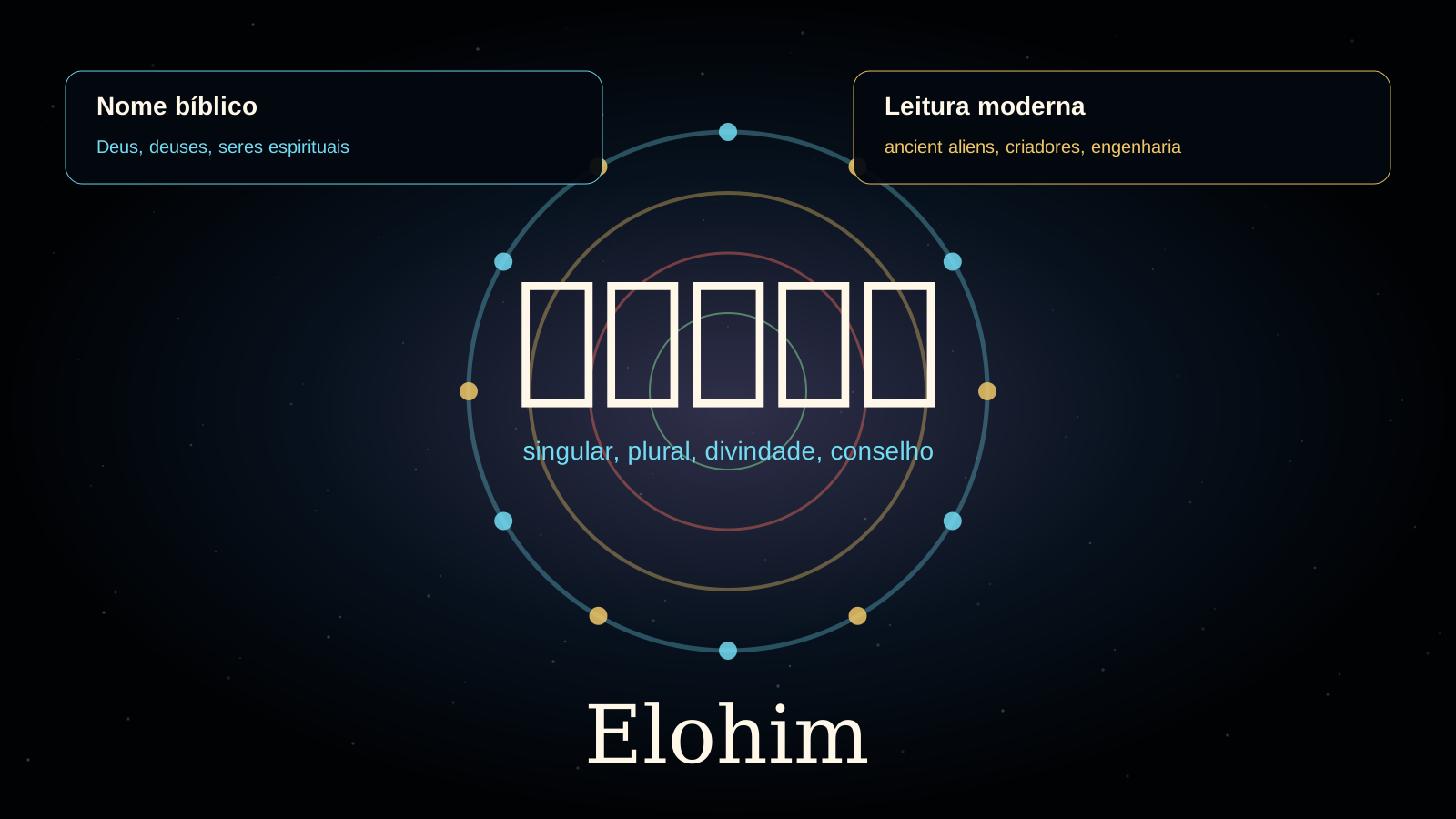
In Biblical Hebrew, Elohim has plural form, but often functions as singular when referring to the God of Israel. This grammatical detail is one reason the word attracts so much attention. It seems to carry unity and plurality at the same time.
Biblical usage is varied: Elohim can name God, foreign gods, spiritual beings or language of divine authority. It is therefore not a simple word to translate as if it had only one fixed meaning.
The biblical and Semitic context
Elohim belongs to a family of Semitic terms such as El, associated with god, strength or divinity. In the ancient Levant, divine names, heavenly councils and spiritual hierarchies were part of religious imagination. The Hebrew Bible preserves part of that language, but reorganizes it within Israelite theology.
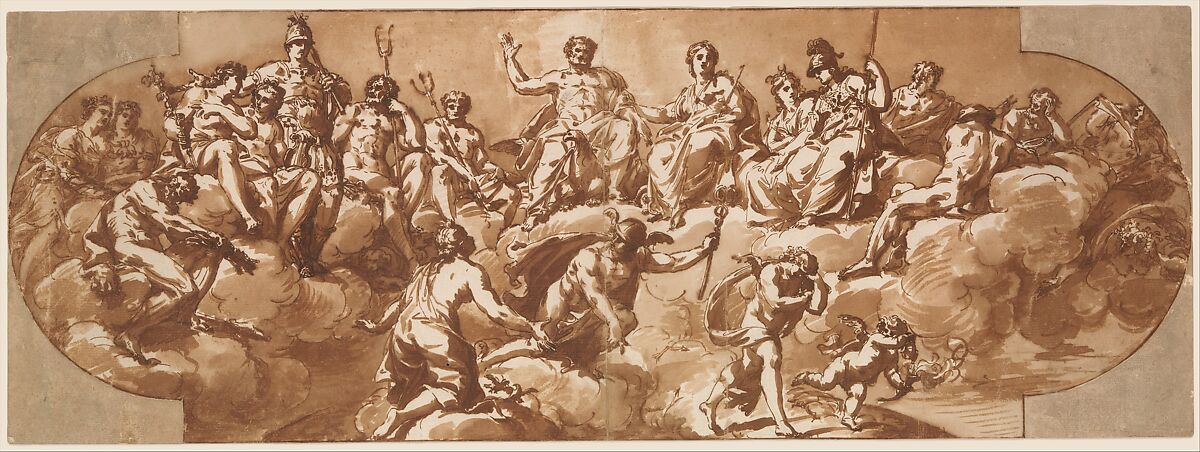
In Genesis 1, Elohim appears creating. In Psalm 82, the word appears in a scene that seems to involve a divine assembly. These texts feed legitimate debates between philology, history of religions, monotheism, monolatry and theological interpretation.
The plural that opens a door
The question that fascinates many people is: if Elohim is plural, does that mean “gods”? The honest answer is: sometimes the word functions as plural, sometimes as singular, and context decides.
The common mistake is taking the plural form and jumping directly to “extraterrestrial creators.” That leap may be narratively interesting, but it is not an automatic linguistic conclusion.

Elohim and ancient aliens
In ancient-aliens culture, Elohim is often reinterpreted as a group of advanced beings, genetic engineers or celestial visitors mistaken for gods. This reading brings Elohim near Ancient Aliens, Anunnaki and Sumerian Creation Story.
The power of this interpretation comes from a modern suspicion: perhaps the ancients were not speaking of religion, but describing technology with the language available to them. This hypothesis is seductive, but requires care. Ancient texts have their own layers of myth, ritual, politics and poetry; reducing them to extraterrestrial contact reports impoverishes the material.
Elohim, Enoch and heavenly beings
The theme also connects with Book of Enoch, because the imagination of watchers, angels, hybrid offspring and heavenly transgression fed many modern readings of non-human beings. The point is not to say Enoch “proves” extraterrestrial Elohim, but to notice how ancient texts offer powerful images for contemporary narratives of intervention from the sky.
When the meaning of “heaven” changes, the text changes with it. For an ancient reader, heaven could be divine domain; for a modern reader, it can become outer space.
Esoteric reading
In mystical currents, Elohim can appear as a name of power, creative order, divine emanation or structuring principle. Here it sits near Kabbalah, Tree of Life, One Infinite Creator, Mystery of Universal Creation and Pneuma.
This reading differs from the extraterrestrial hypothesis. It does not ask “who was piloting the craft?”, but “what kind of intelligence, order or word creates a world?”. Elohim becomes a symbol of the passage from chaos to form.
Risk of shallow reading
The common risk is turning a real ambiguity into easy certainty. “Elohim is plural” is not enough to prove simple polytheism, aliens, genetic engineering or religious conspiracy. It is also not enough to erase the historical richness of the word within Judaism, Christianity and academic biblical study.
A mature reading holds the tension: Elohim is grammatically intriguing, religiously deep and culturally fertile. For that reason, it should not be flattened.
Why it belongs on AwakenMap
Elohim mainly touches the fracture between science and meaning, but also the fracture between reason and intuition. Modernity taught us to read ancient texts as historical, linguistic and archaeological documents; that was a real advance. But many people feel that, in doing so, we lost the experience of mystery those texts carried.
The theme tries to recompose that division: study the word rigorously without killing its symbolic force. This impulse to reconnect ancient language, historical criticism and hunger for meaning is the same movement that runs through the Great Awakening as a whole. The question is not only “were Elohim gods or aliens?”, but “why do we need to turn an ancient word into a key for understanding our origin?”.
How to continue on the map
After this theme, explore One Infinite Creator, Mystery of Universal Creation, Origin of all one with the Creator, Book of Enoch, Ancient Aliens, Anunnaki, Sumerian Creation Story, Ancient Egypt, Kabbalah, Tree of Life, Gnosticism and Akashic Records.
Simple summary
Elohim is a Hebrew word with plural form that, in the Bible, can function as singular for the God of Israel or as plural in other contexts. It opens debates about divinity, divine council, monotheism, spiritual beings and creation. Esoteric and ancient-aliens readings turned Elohim into a possible name for non-human creators, but this is a modern and speculative interpretation, not an automatic conclusion from Hebrew.
References and starting points
- BibleProject - Elohim
- Jewish Encyclopedia - Names of God
- Britannica - El
- Britannica - Yahweh
- Sefaria - Genesis 1
- Sefaria - Psalm 82
- Blue Letter Bible - Strong's H430 Elohim
- The Met - Council of the Gods
FAQ
Does Elohim mean gods or God?
It depends on context. The word has plural form, but often functions as singular when referring to the God of Israel.
Does Elohim prove ancient aliens?
No. The extraterrestrial reading is a modern interpretation. It can be studied as cultural narrative, but it is not linguistic proof.
Why does this word fascinate people?
Because it seems to hold tension between unity and plurality, God and gods, ancient religion and modern cosmic imagination.
Keep exploring
You can open another path
 Return to Source Mystery of Universal Creation 4/5 intensity Explore →
  Return to Source One Infinite Creator 4/5 intensity Explore →
  Esoteric practices Sumerian Creation Story 4/5 intensity Explore →
  Esoteric practices Kabbalah 4/5 intensity Explore →
  Ancient civilizations Ancient Egypt 4/5 intensity Explore →
  Esoteric practices Anunnaki 4/5 intensity Explore →
Join the conversation
Comments are moderated. Keep the discussion respectful and distinguish evidence, interpretation and personal experience.