Connection level
35 direct connectionsGnosticism belongs on AwakenMap through the question of when awakening means breaking a prison of perception. The theme asks whether the deepest human captivity is political, material, spiritual or cognitive: what if the most efficient prison were a world that feels complete precisely because it teaches us to forget where we came from?
Gnosticism is a modern name used to gather religious and philosophical currents from the first centuries of the Christian era that gave special value to gnosis, meaning transformative inner knowledge. This knowledge was not mere information. It was a perception capable of revealing the origin of the soul, the structure of the world and the path of return to the divine.
The word covers different groups, different texts and theologies that did not always agree with one another. It is better to speak of gnostic traditions than of one single church. Some were Christian, others dialogued with Judaism, Platonism, Hermeticism and religions of the ancient Mediterranean. The most famous shared point is the suspicion that the visible world is not ultimate reality.
In many gnostic narratives, the supreme God stands beyond the material cosmos. Between that unreachable divine and the world appears a chain of emanations, errors, intermediate powers and ignorance. In some versions, the creator of the material world is the demiurge: not necessarily absolute evil, but a limited, blind or arrogant power that confuses its work with the totality of reality.
This is where the modern bridge appears with The Matrix, escape from samsara, mystery schools and enlightenment. The problem is not only suffering in the world. It is failing to notice identification with a smaller layer of existence.
The historical origin of the theme passes through ancient Christianity. Authors such as Irenaeus, in the second century, criticized groups that taught alternative cosmologies, secret revelations and unofficial readings of Jesus, creation and salvation. For a long time, much of what was known about gnostics came from their opponents. That changed when texts attributed to these circles began to appear more directly.
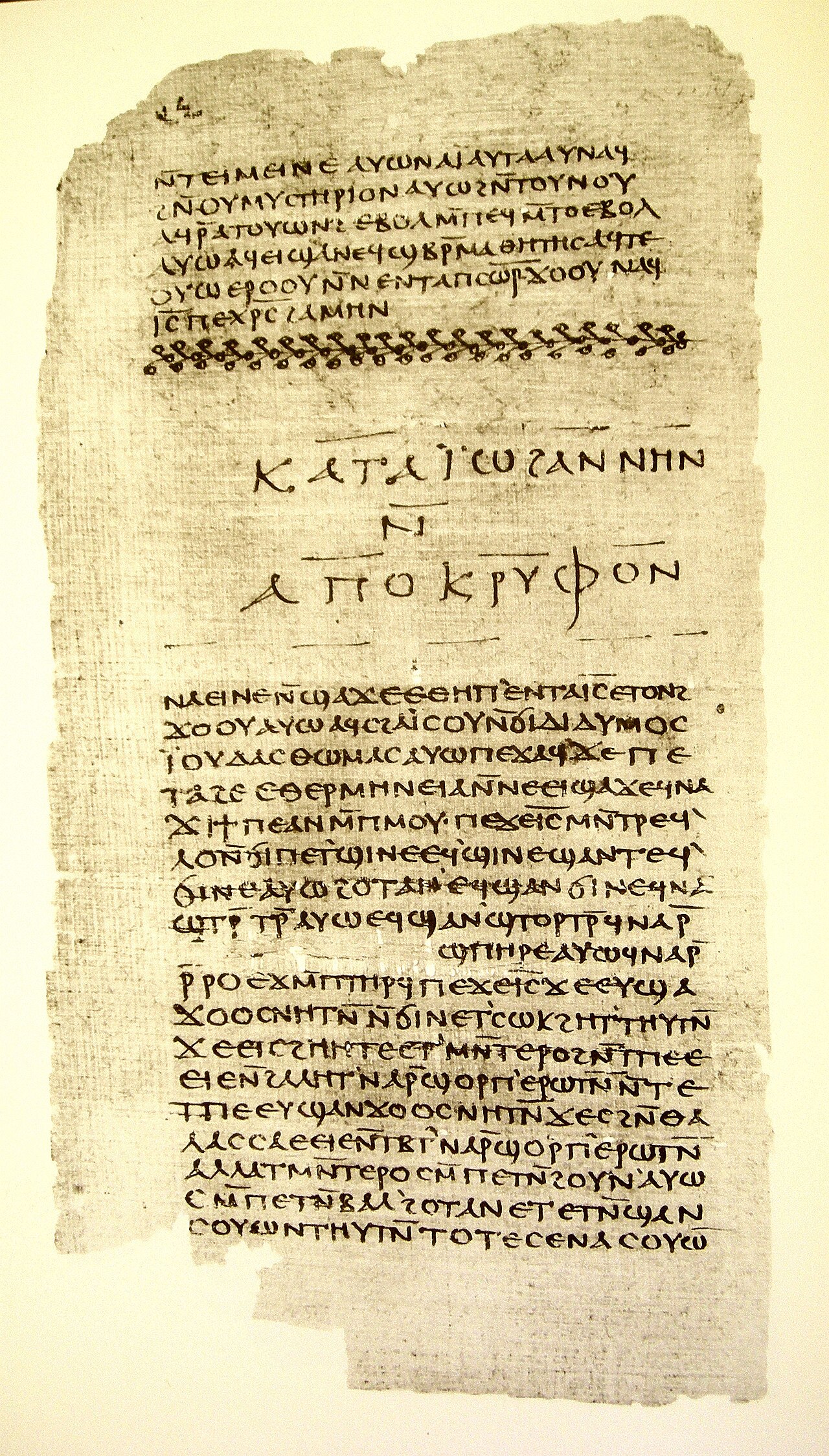
The most important discovery happened in 1945, near Nag Hammadi, Egypt. Coptic papyrus codices were found inside a jar, containing treatises such as the Gospel of Thomas, the Apocryphon of John, the Gospel of Philip, the Gospel of Truth and texts about the origin of the world, the soul, archons and revelation. The discovery did not prove that official history was false, but it showed that ancient Christianity was much more plural than many readers imagined.
The conspiratorial layer appears when that plurality becomes a narrative of total concealment. In this model, the Church, empires, elites or secret societies deliberately hid the true message of Jesus: not submission to an institution, but inner awakening. The demiurge becomes an image of a cosmic control system; the archons become invisible administrators of ignorance; official religion becomes a technology of spiritual domestication.
This reading is powerful because it touches a legitimate question: who decides which texts are sacred, which are heresy and which disappear? But it becomes weaker when it turns every historical process into one perfectly coordinated plan. There were power struggles, canonization, persecution, imperial politics, theology and fear of rival doctrines. That is real. The conspiratorial leap is saying that all of it automatically proves a cosmic prison administered by an infallible elite.
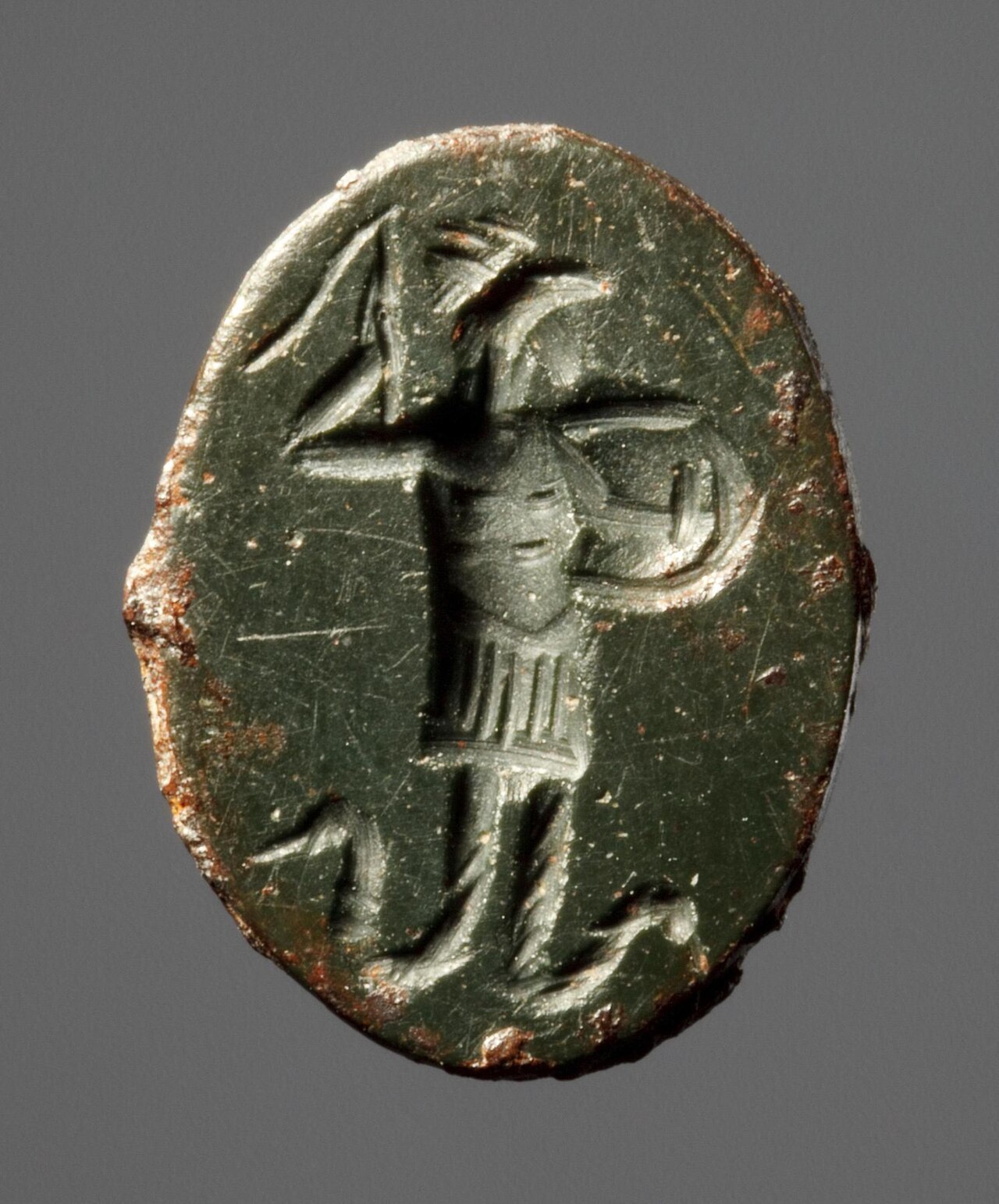
Abraxas is a good example of this mixture. On ancient magical gems, it appears as a hybrid figure, sometimes with a rooster head, human body, serpents and shield. In some gnostic and magical traditions, the name carries numerical and cosmic value. To the modern reader, this looks like secret code. To the historian, it is also evidence of an ancient world where religion, astrology, healing, protection and philosophy mixed in ways that do not fit simple categories.
That is why Gnosticism connects with Kabbalah, Book of Thoth, Emerald Tablets, Law of One and One Infinite Creator. All of these themes ask, in different ways, whether a deeper order stands behind the visible world. The difference is that Gnosticism places a radical suspicion at the center: perhaps the world we call normal is exactly where the divine spark forgets itself.
There is also a risk in this vision. When everything becomes prison, the body can be despised, matter can be treated as error, human relationships can appear as lower distractions and every institution can be seen as a trap. The search for gnosis can liberate, but it can also isolate. Discernment means asking whether knowledge makes a person more lucid, compassionate and responsible, or merely more convinced that everyone else is asleep.
A concrete case
The concrete case is the Nag Hammadi Library itself. The manuscripts were found in 1945, circulated in fragmented ways, passed through ownership disputes, slow editions, translations and academic debates. When they finally reached a wider public, especially in the second half of the twentieth century, they changed modern spiritual imagination.
The Gospel of Thomas, for example, does not narrate the life of Jesus like the canonical gospels. It gathers sayings attributed to Jesus, many in enigmatic form. The Apocryphon of John presents a complex cosmology with the supreme divine, Sophia, the demiurge and creator powers. These texts do not automatically replace the New Testament, but they show that communities were thinking about Jesus, creation and salvation through very different paths.
This case grounds the theory without exaggeration. Yes, alternative texts existed. Yes, many remained outside the canon. Yes, the discovery shook the idea of a simple and uniform Christian antiquity. But that does not by itself prove that one intact truth was hidden for two thousand years. It proves something perhaps more interesting: human spiritual history has always been a struggle over memory, power, language and inner experience.
Why it belongs on AwakenMap
Gnosticism belongs on AwakenMap because it gives religious form to a central intuition of the site: awakening is not only receiving forbidden information, but crossing a layer of perception. The world can be real and still not be the whole of reality. An institution can preserve something and hide something else at the same time. A tradition can contain wisdom and control in the same body.
The philosophical connection is this: the true question is not only “who hid it?” It is “what in me prefers not to see?” Gnosticism becomes powerful when it stops being a hunt for external culprits and becomes an investigation of forgetting, desire, fear and the structures that make the soul confuse limit with destiny.
How to continue on the map
After this theme, explore The Matrix, escape from samsara, mystery schools, secret societies, Kabbalah, Book of Thoth, Emerald Tablets, enlightenment, Law of One, luciferian force and mental and spiritual states.
Simple summary
Gnosticism gathers ancient traditions that sought liberation through inner knowledge. In many of them, the material world is governed by ignorance, intermediate powers or a limited creator, and the soul must awaken to its divine origin. The conspiratorial layer appears when this vision becomes a theory of total concealment: hidden texts, Church as spiritual control, archons as prison administrators. The Nag Hammadi Library shows that alternative texts really existed, but it does not automatically prove a perfect conspiracy.
References and starting points
- Britannica - Gnosticism
- The Gnostic Society Library - Nag Hammadi Library
- The Gnostic Society Library - Gospel of Thomas
- The Gnostic Society Library - Apocryphon of John
- The Metropolitan Museum of Art - magical gems with Abraxas
- Wikimedia Commons - Coptic page of the Apocryphon of John
- Wikimedia Commons - Abraxas gem
- Internet Archive - The Nag Hammadi Library in English
- Claremont Colleges Digital Library - Nag Hammadi collection
- Stanford Encyclopedia of Philosophy - Plotinus
Keep exploring
You can open another path
 Return to Source Escape from Samsara 5/5 intensity Explore →
  Map center Great Awakening 5/5 intensity Explore →
  Esoteric practices Hermeticism 5/5 intensity Explore →
  Esoteric practices The Matrix 5/5 intensity Explore → Esoteric practices Hermeticism 5/5 intensity Explore →
  Esoteric practices Mystery Schools 5/5 intensity Explore →
Join the conversation
Comments are moderated. Keep the discussion respectful and distinguish evidence, interpretation and personal experience.