Connection level
5 direct connectionsAkasha is a Sanskrit word connected with space, sky, ether and subtle field. In Indian traditions, it appears as a broad principle: that which gives room for things, allows the vibration of sound and functions as a kind of “space” subtler than the visible elements.
What Akasha means
Before becoming “akashic records” in modern esotericism, Akasha meant space, sky or ether. In many Indian readings, it is associated with the subtlest element among the great elements: earth, water, fire, air and space. Its classic quality is sound, because sound needs a “field” in which to manifest.
On AwakenMap, Akasha connects to meditation, energy, the Law of One, 5D Earth, Sacred Geometry, love and light and the Great Awakening. It works as a bridge between spirituality, vibrational language, memory and consciousness.
Akasha as subtle space
The simplest idea is this: Akasha is the space that allows everything to appear. Not only empty space, but a primordial openness. In symbolic language, it is the “place” where form, sound, thought and experience can arise.
That is why Akasha speaks so well to vibration themes. If everything vibrates, something must hold the vibration. If word, mantra and sound have spiritual force, Akasha becomes the field where that force resonates.
The cultural root of the theme
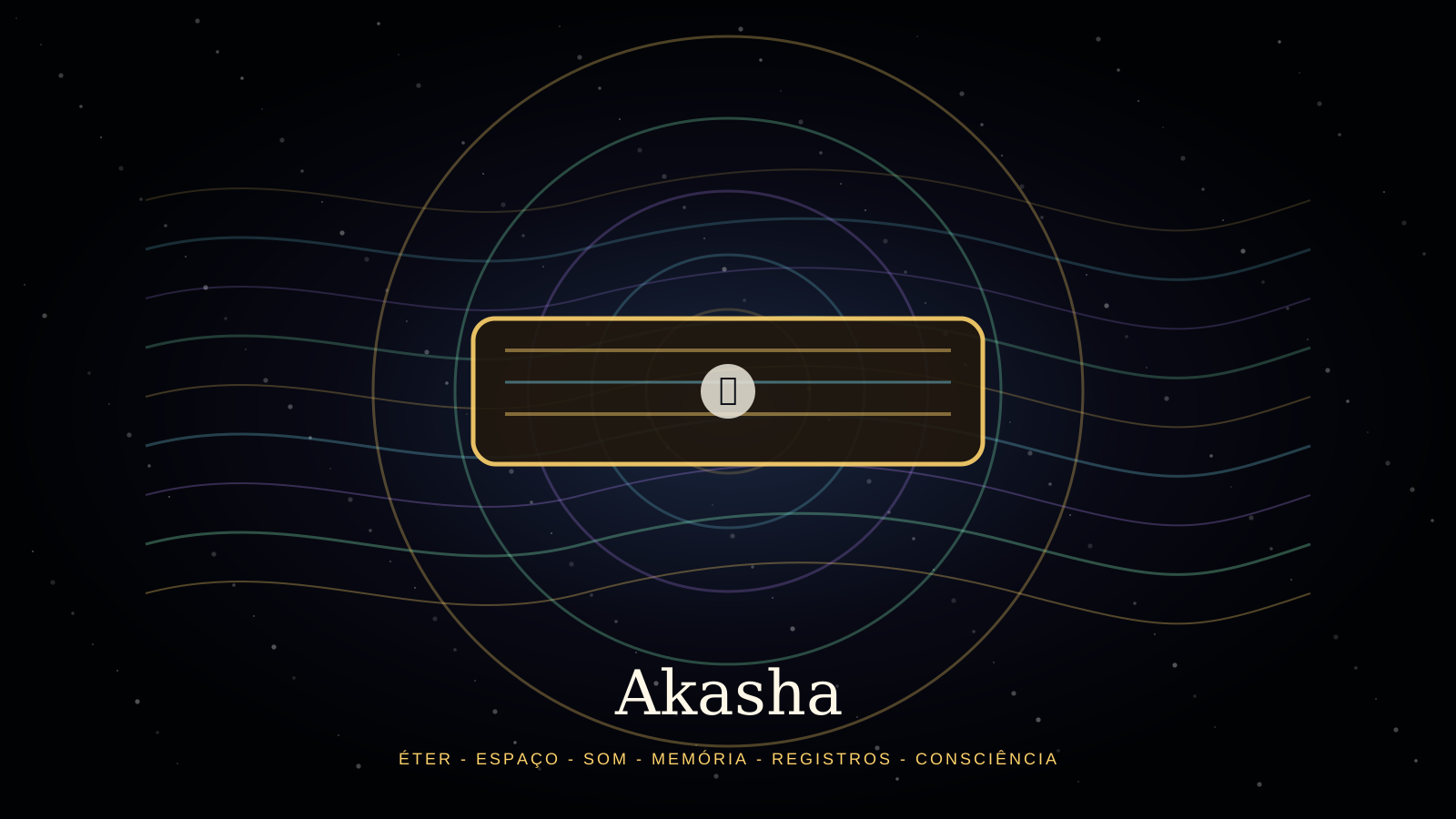
The word Akasha comes from a universe of Sanskrit texts, Indian philosophy and ancient cosmologies. The editorial image beside this text uses manuscript, sound and space to remember that root.
The important point is not to begin with the modern “cosmic archive” as if it were the original meaning of the word. First comes space/ether; later comes the Western transformation into akashic records.
From Akasha to the akashic records
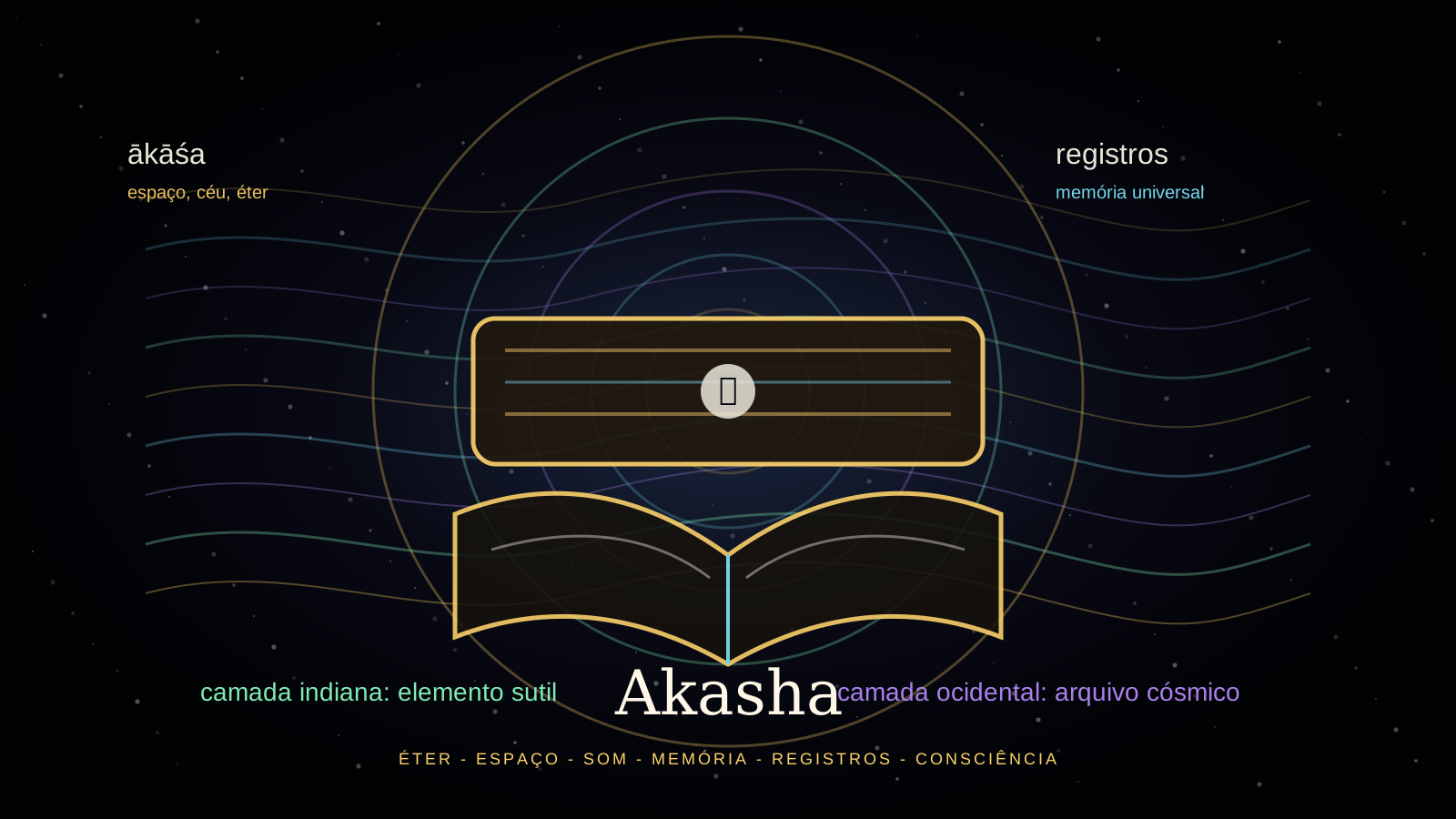
In the West, especially through nineteenth-century Theosophy, Akasha gained another use: the idea of a subtle record of everything that happens. In this context, “akashic records” would be a kind of invisible library containing thoughts, actions, emotions, memories and possibilities.
This image is powerful because it turns the universe into a living archive. Nothing is lost; everything leaves a trace. For someone seeking meaning, it creates a strong question: what if reality has memory?
Blavatsky, Leadbeater and Steiner
Theosophy helped carry the term into Western esotericism. Helena Blavatsky used Akasha inside a cosmology of subtle planes, life force and universal principle. Later theosophical and anthroposophical authors gave more shape to the idea of records.
Rudolf Steiner became known for texts and lectures that spoke of an “akashic chronicle”, using this image to narrate spiritual pasts, Atlantis, Lemuria and invisible histories of humanity. This layer matters for understanding the modern popularity of the term.
The difference between symbol and proof
Akasha can be read in three ways. As an Indian concept, it is space/ether. As a Western esoteric concept, it is subtle memory. As a modern practice, it is language used by intuitive readers, spiritual therapists and meditators to speak about access to soul information.
These three layers are not the same. Mixing everything without explanation weakens the article. Separating the layers makes the theme more honest and more interesting.
Akasha and meditation
In practical experience, Akasha often appears as wide silence. During meditation, a person may feel that thoughts arise inside a larger space. This space does not fight thought; it simply contains it.
This is where the theme becomes human. Akasha stops being only an ancient word and becomes an inner image: the silent field where memories, sensations and intuitions appear without needing to dominate the person.
Akasha as universal memory
The image of the akashic records grips people because it touches an old intuition: everything we live leaves a trace. A sentence, a choice, an emotion, an intention — nothing seems entirely isolated. The idea of the record gives spiritual form to that feeling.
In modern language, this approaches terms such as information field, collective unconscious, soul memory and cosmic library. Each term comes from a different tradition, but all try to say something similar: life may carry more information than ordinary mind perceives.
The necessary care
The theme loses strength when it promises infallible access to the past, the future or someone’s “absolute truth”. A more careful reading treats Akasha as symbol and interpretive practice: useful for reflection, meditation and meaning, but not a substitute for responsibility, investigation or psychological care.
In other words: if a person uses Akasha to know themselves better, it can be fruitful. If they use it to escape concrete life or hand decisions to an invisible authority, the symbol becomes a cage.
Why this theme grips people
Akasha grips people because it joins three human desires: to know where we came from, to understand why we repeat certain patterns and to feel that nothing is lost. It offers a beautiful image: the universe as sky, sound and memory.
This image also speaks to the digital age. Today everyone understands clouds, databases and archives. The akashic records feel like a spiritual version of that modern intuition: a cosmic “cloud” where experience is stored.
Connections to continue
After this theme, open meditation, energy, the Law of One, 5D Earth, Sacred Geometry, love and light and the Great Awakening. This path leads from Akasha as subtle space to practices of presence, energy, unity and spiritual transformation.
Simple summary
Akasha is a word connected with space, sky and ether. In Indian traditions, it points to a subtle element associated with sound. In Western esotericism, it became the basis for the idea of akashic records: an invisible memory of the universe. The theme works best when these layers are explained without confusing symbol with proof.
References and starting points
- Wisdom Library - Akasha definitions in Indian traditions
- Central European Journal of Contemporary Religion - The Akashic Records: Origins and Relation to Western Concepts
- Rudolf Steiner Archive - From the Akashic Records
- Harvard Library - Theosophy Collections
- Theosophy World - Planes in Theosophy
- Theosophical Society - Human principles in early theosophical literature
- UMass Dartmouth - Akasha (Space) and Shabda (Sound)
- Blavatsky Theosophy - Akasha and the Akashic Records
- Wikimedia Commons - Rigveda MS2097 manuscript image page
FAQ
Is Akasha the same as the akashic records?
Not exactly. Akasha is an older word linked with space/ether. Akashic records are a later Western esoteric interpretation.
Does Akasha relate to sound?
Yes. In many Indian readings, Akasha is associated with sound because sound is seen as the quality of subtle space.
Are the akashic records proven?
They are a belief and a spiritual language, not public scientific proof. They can function as a symbol of memory, reflection and self-knowledge.
Keep exploring
You can open another path
 Consciousness and symbols Universal Knowledge 5/5 intensity Explore →
  Esoteric practices The Gateway to All Understanding 4/5 intensity Explore →
  Esoteric practices Library of Porthologos 4/5 intensity Explore →
  Return to Source Ekpyrosis 3/5 intensity Explore →
  Esoteric practices Tree of Life 3/5 intensity Explore →
Join the conversation
Comments are moderated. Keep the discussion respectful and distinguish evidence, interpretation and personal experience.