
Connection level
9 direct connectionsH Blocks belong on AwakenMap through the question of when ancient excellence becomes proof of forbidden technology. The image is powerful: ancient stones, geometric profiles, straight cuts, repeated sockets and an almost industrial look. The conspiratorial leap happens when that precision stops being read as sophisticated Andean engineering and becomes evidence of lost machines, an earlier civilization or non-human intervention.

The concrete case is Puma Punku, part of the Tiwanaku archaeological site in Bolivia's high Altiplano, near Lake Titicaca. UNESCO recognizes Tiwanaku as the spiritual and political center of a powerful Andean culture. Puma Punku is famous for sandstone and andesite blocks, platforms, channels, sockets and pieces with profiles that resemble the letter H.
Archaeological dating places initial construction around the sixth and seventh centuries CE, within the Tiwanaku world. This is not fifteen thousand years ago, literal Atlantis or technology without a surrounding culture. It is a complex Andean tradition with social organization, religion, agriculture, material circulation, specialized labor and monumental form.
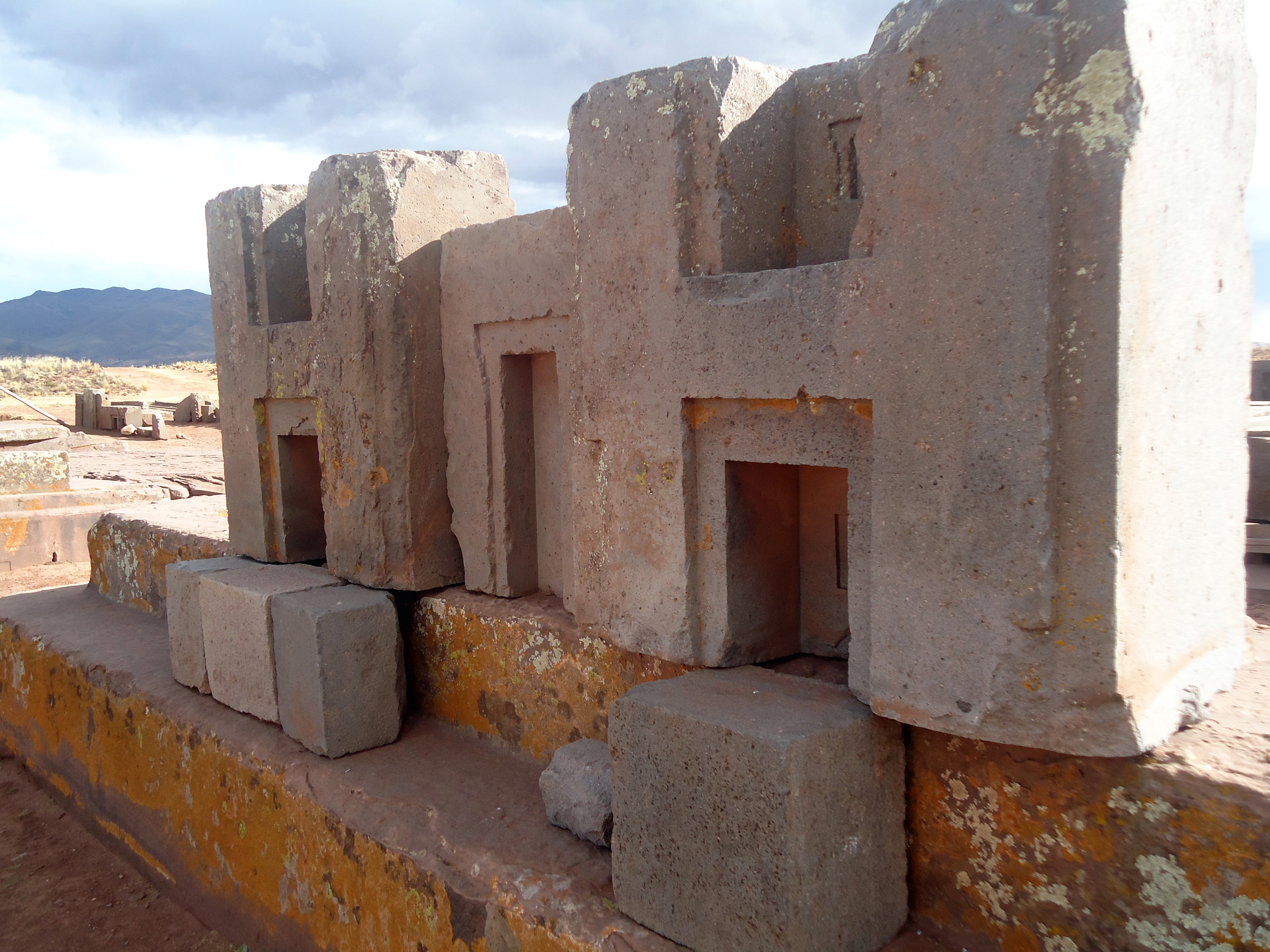
The H blocks spread online because they look modular. Some have recesses, sockets, channels and internal angles that suggest planned repetition. In isolated photographs, without context, they can look like machine components or prefabricated stone pieces. The modern eye recognizes “industry,” “mold,” “precision cut” and “stone lego,” even when looking at the ruins of ritual and political architecture.
The conspiratorial layer appears when Puma Punku is pulled out of the Tiwanaku world and placed inside the Ancient Builder Race narrative. In that reading, the H blocks become remnants of an earlier global architecture made by advanced builders, cataclysm survivors or non-human beings. The same image then connects to ancient aliens, Ancient Builder Race technology and stargates.
Archaeology offers a more sober reading, but not a dull one. Studies of Tiwanaku and Puma Punku point to stonecutting techniques, modular planning, stones from different sources and fitting systems. Scholars such as Jean-Pierre Protzen and Stella Nair noted the real difficulty of producing precise internal angles and flat surfaces in andesite, but that does not equal proof of ancient lasers. It means Tiwanaku technology deserves careful study.
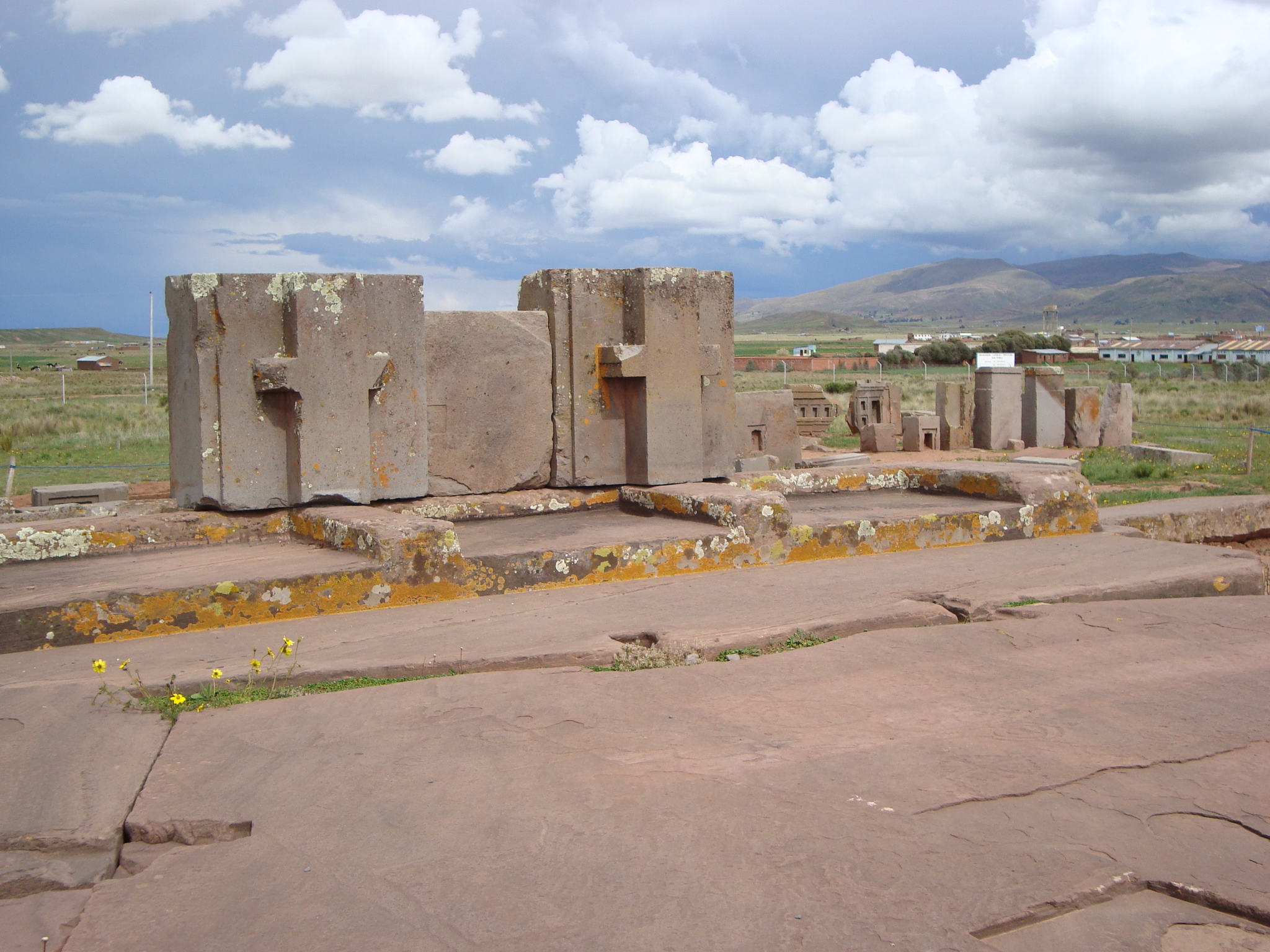
The internet often shows H blocks as isolated objects, without erosion, scale, destruction, stone reuse or ritual context. When the site is placed back in the Altiplano, with climate, ruin, looting, transport, partial reconstruction and centuries of wear, the question changes. The mystery is not “no one could do this,” but “how exactly did they organize labor, tools, design and assembly?”
This connects to ancient ruins, Ancient Builder Race pyramids, ancient Egypt and ancient India because the pattern repeats: when an ancient civilization does something technically impressive, part of the public concludes it received outside help. That can sound like admiration, but it often reduces ancient peoples. Instead of asking how Tiwanaku engineers developed their craft, the theory gives the merit to a lost race or cosmic visitors.
The best reading does not need to choose between banality and total fantasy. The H blocks are extraordinary as human work. They are strange enough to deserve attention and contextual enough not to become automatic proof of aliens. The right question is not “how did ignorant ancient people do this?” but “what technical, social and ritual knowledge was required to produce this complex?”
Simple summary
H Blocks are stone pieces associated mainly with Puma Punku, in the Tiwanaku complex of Bolivia. They impress through cuts, sockets and geometric repetition. Archaeology reads them within Tiwanaku engineering, while alternative theories turn them into signs of lost technology, the Ancient Builder Race, ancient aliens or an earlier global system.
References and starting points
- UNESCO - Tiwanaku, spiritual and political centre of Tiwanaku culture
- Wikipedia - Pumapunku, Tiwanaku and general archaeological data
- Protzen and Nair - study on Inca and Tiwanaku/Pumapunku stonecutting
- Public Archaeology - critique of popular alien archaeology uptake
- Wikimedia Commons - H-profile blocks at Puma Punku
- Wikimedia Commons - view of Puma Punku
Why it belongs on AwakenMap
The theme belongs on AwakenMap because it shows how a real ruin can become imagined proof of a hidden technical civilization.
Awakening here means admiring ancient precision without erasing the people who built it.
Keep exploring
You can open another path
 Ancient civilizations Ancient Aliens 5/5 intensity Explore →
  Ancient civilizations Ancient Builder Race 5/5 intensity Explore →
  Esoteric practices Ancient Civilizations 5/5 intensity Explore →
  Ancient civilizations Ancient Ruins 5/5 intensity Explore →
  Map center Great Awakening 5/5 intensity Explore →
  Ancient civilizations Ancient Builder Race Technology 4/5 intensity Explore →
Join the conversation
Comments are moderated. Keep the discussion respectful and distinguish evidence, interpretation and personal experience.