Connection level
10 direct connectionsProject Paperclip was the program that brought German scientists, engineers and technicians to the United States after World War II, linking V-2 rockets, the Cold War, NASA, moral dilemmas and secret military technology.
What Project Paperclip was
Imagine 1945: Nazi Germany collapses, tunnels are evacuated, files change hands, V-2 rockets become war trophies and scientists who worked for Hitler are suddenly being hunted by Americans, Soviets and British teams. Project Paperclip is born in that morally dark interval.
It was a U.S. program to bring German scientists, engineers and technicians into military and aerospace projects after World War II. On AwakenMap, it connects documented history with narratives of black projects, USAPs and the Secret Space Program.
Fact, account and speculation
The fact: the program existed. U.S. National Archives records describe dossiers for more than 1,500 German and other foreign scientists, technicians and engineers brought under Paperclip and similar programs. The Smithsonian explains that the program began as Overcast and later became known as Paperclip.
The historical account: the justification was to use German knowledge before it went to the Soviet Union. Rockets, engines, aerospace medicine and military technology were treated as strategic advantage in the early Cold War.
The speculation: in UFO and secret-program narratives, Paperclip becomes the forbidden question: if rockets and specialists came over, did stranger technology come too? That connects it to Nazi Bell, Nazi Bell Antigravity, TR-3B and the Philadelphia Experiment.
The real image that shows the turn
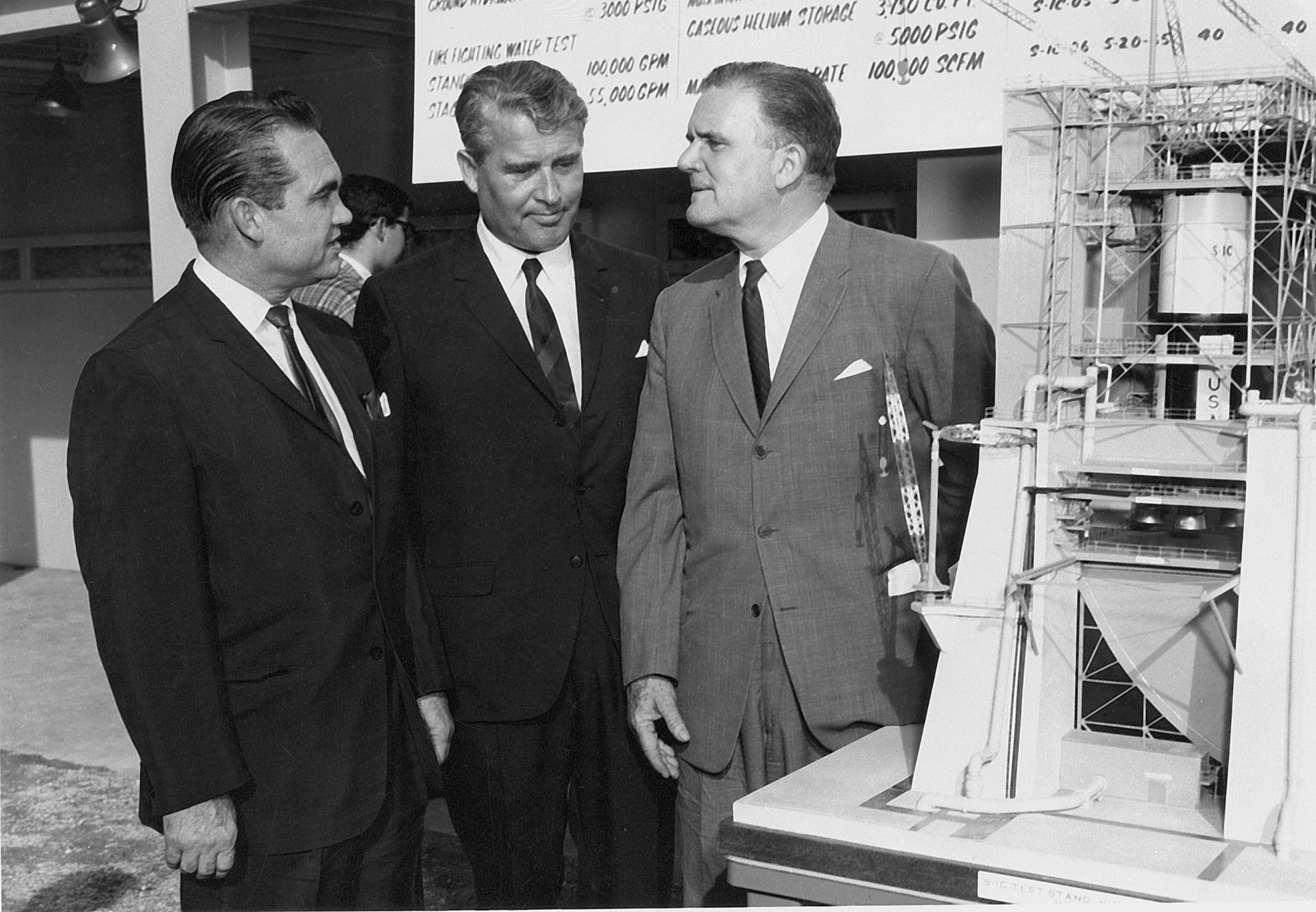
This NASA photo shows Wernher von Braun in 1965. It looks clean, technical, almost heroic: an engineer of the future looking toward the space age. But the weight of Project Paperclip is precisely what the photo does not show: Peenemünde, V-2, war, forced labor, cleaned files and the American choice to use compromised knowledge.
That is why Paperclip grips. It is not only a rocket story. It is a story of exchange: morality for speed, justice for advantage, dark past for technological future.
The human cost behind the rockets
This layer has to stay near the center. German rocket technology did not emerge from a neutral laboratory. It developed inside a regime of war, coercion and exploitation. The world that produced the V-2 included camps, underground factories and forced labor.
Institutions such as the USHMM document the scale of forced labor in Gross-Rosen and its subcamps. Paperclip did not carry only brilliant résumés; it carried biographies with shadows, omissions and difficult responsibilities.
Wernher von Braun: symbol and wound
Wernher von Braun became the most famous face of this transition. In Nazi Germany, he was connected to V-2 rocket development. In the United States, he became central to missiles, Saturn V and the path that took NASA to the Moon.
That contrast is the heart of the theme. The same man can appear as a pioneer of space exploration and as part of a war machine. Paperclip forces the reader to hold both images at once: the rocket rising and the shadow left on the ground.
Why the U.S. accepted the deal
The short answer is the Cold War. In 1945, the world was already beginning to split. The United States did not want German specialists to go to the Soviet Union. It also wanted to accelerate missiles, aviation, defense and military research.
Office of the Historian documents show discussions about using German specialists and expanding the program. The logic was pragmatic and hard: use the knowledge before another power used it.
Paperclip, NASA and secret-program myths
On the map, Paperclip connects directly to NASA, NASA Coverups, Nazi Bell, TR-3B and the Secret Space Program. It offers a powerful narrative question: if part of Nazi science was officially absorbed, what part may have been absorbed silently?
This is why Paperclip appears so often in stories about UFO / UAP, recovered discs, reverse engineering and exotic technology. The real program becomes a door; behind it, imagination places deeper laboratories, cleaner files and projects never admitted.
What exists publicly
What exists publicly is extensive: official documents, dossiers, historical articles, scientist files, biographies, academic research and institutional records. Paperclip is not a legend; it is documented history.
What is not proven is the UFO extension: that Paperclip transferred antigravity, discs, nonhuman technology or ready-made secret space programs. That layer belongs to AwakenMap's speculative field and should be read as a narrative bridge, not confirmed fact.
Simple summary
Project Paperclip brought German specialists to the United States after World War II to accelerate science, rocketry and military research. It helped shape the space race, but it carries a deep moral cost.
The theme is strong because it does not need mystery to be unsettling. The real fact is already uncomfortable: part of America's technological future was built with knowledge from a past many people preferred to file away with a paperclip.
References and starting points
- National Archives - RG 330 Project Paperclip dossiers
- Smithsonian National Air and Space Museum - Project Paperclip
- Office of the Historian - FRUS 1946 Paperclip document
- Office of the Historian - Expansion of Paperclip program
- NASA - Wernher von Braun
- NASA Images - Wernher von Braun photo
- USHMM - Gross-Rosen
- AARO - Official UAP records
FAQ
Did Project Paperclip exist?
Yes. It was a real program documented in official U.S. archives.
Did Paperclip create NASA?
Not by itself. But scientists brought through Paperclip, especially Wernher von Braun and his team, played an important role in the rocket technology that fed the American space program.
Does Paperclip prove alien technology?
No. Paperclip proves the postwar transfer of German specialists and knowledge. The connection to UFOs, antigravity or secret space programs is speculative.
Keep exploring
You can open another path
 Control systems Project Paperclip and NASA in 1958 5/5 intensity Explore →
  Earth and Antarctica Argentina 4/5 intensity Explore →
  Esoteric practices Hidden History 4/5 intensity Explore →
  Secret Space Program Nazi Bell 4/5 intensity Explore →
  Esoteric practices NASA 4/5 intensity Explore →
  Secret Space Program William Tompkins 4/5 intensity Explore →
Join the conversation
Comments are moderated. Keep the discussion respectful and distinguish evidence, interpretation and personal experience.