Connection level
13 direct connectionsMegalithic sites include standing stones, dolmens, circles and monumental tombs built by different societies. A guide to engineering, ritual, astronomy and pseudoarchaeology.
Megalithic does not mean one culture
The word megalithic literally means great stone. It describes a technique or monumental appearance, not one people spread across the planet. Standing stones, dolmens, circles, passage tombs and stone temples were built in different regions and periods.
When distant monuments look similar, comparison may reveal recurring human solutions. Formal resemblance alone does not prove a global civilization, builder race or shared lost technology. Context, dating and material culture must come first.
Standing stones, dolmens and passage tombs
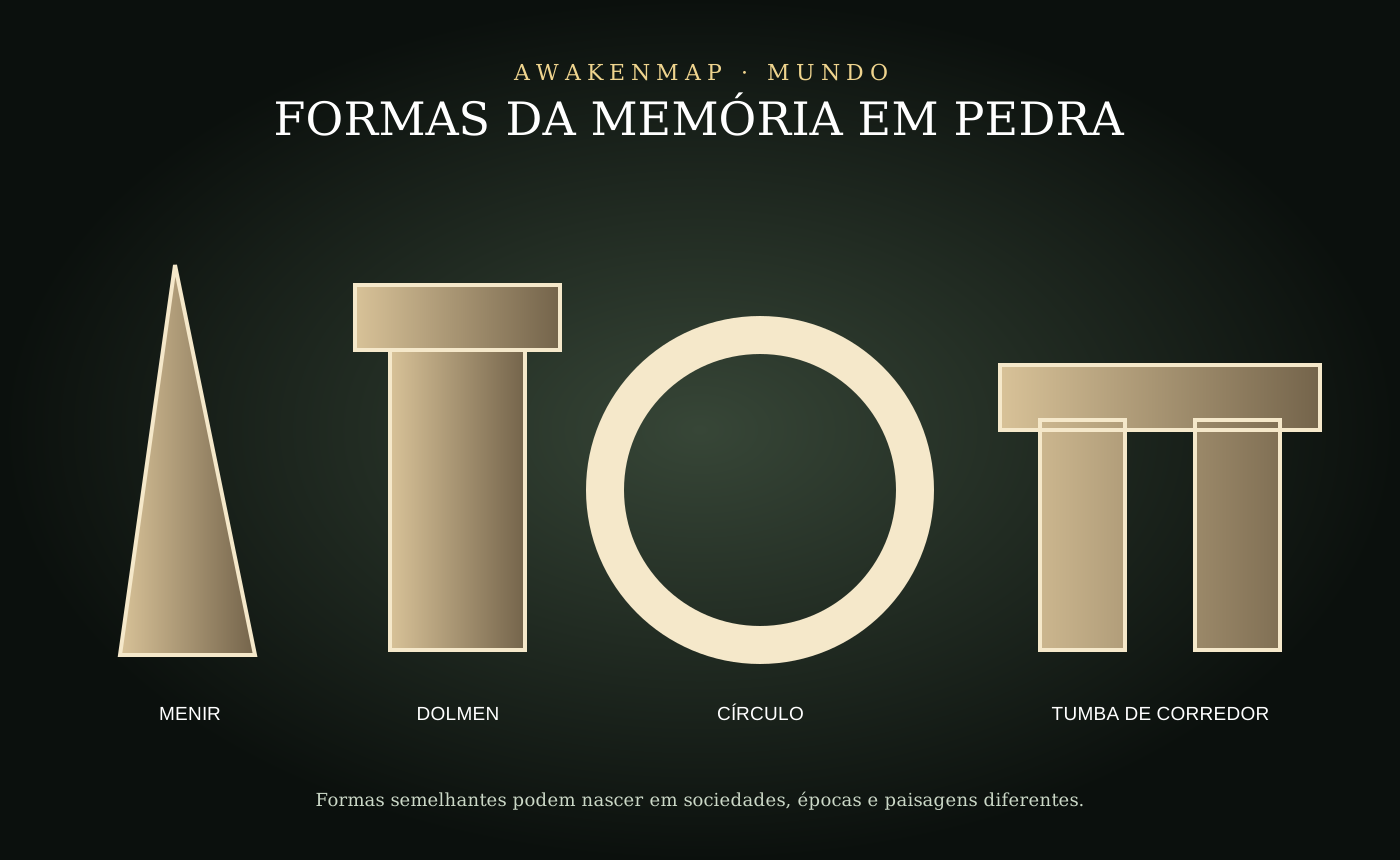
A menhir is a vertically erected stone, isolated or aligned. A dolmen generally describes a chamber of upright stones capped by a slab, often once covered by soil or smaller stones. Stone circles form curved or enclosed arrangements.
Passage tombs lead through a corridor into an inner chamber. These categories describe form but not complete function. One monument may combine burial, ritual, territory, seasonal observation and ancestral memory.
Building without modern machines
Moving heavy blocks requires planning, labour, material knowledge and organization. Archaeological experiments show that sledges, ropes, rollers, levers, ramps, lubrication and coordinated work can transport large stones without engines.
This does not make the task easy. Quarry choice, route preparation, food supply and knowledge transmission remain extraordinary achievements. Plausible methods do not diminish ancient builders; they restore their intelligence.
Stonehenge as a process
Stonehenge changed over many centuries. Its landscape began with ditches, posts and burials, received bluestones from Wales and later large local sarsens. The visible monument is one stage of a long history.
Popular attention focuses on the circle, but rivers, avenues, Durrington Walls and burial mounds formed a connected landscape. Stonehenge was not an isolated object but part of movement, gathering and relationships between living and dead.
Solstices and ancient astronomy
Stonehenge’s main axis relates to summer-solstice sunrise and winter-solstice sunset. At Newgrange, winter-solstice light enters the passage and illuminates the chamber. These orientations are observable and archaeologically relevant.
Care is needed not to turn every alignment into a precision observatory. Landscapes provide many possible targets and chance matches occur. Serious archaeoastronomy combines geometry, horizon, chronology, repetition and cultural context.
Brú na Bóinne and the architecture of light
Newgrange belongs to Brú na Bóinne, a Neolithic landscape of tombs, rock art and monuments. Its solstitial passage organized a rare experience of darkness, return and renewal.
Light need not be reduced to an agricultural calendar. It may articulate cosmology, ancestry and passage between worlds. Architecture brings the solar cycle into the house of the dead.
Carnac and the power of alignment
In Brittany, thousands of stones form alignments, enclosures and tombs around Carnac. Their scale suggests code or map. Interpretations include procession, territory, ancestry and horizon relationships.
No single explanation covers all rows. Genuine mystery follows from incompletely preserved practices without writing. This does not authorize every claim, but it leaves a real space for interpretation.
Malta and temples older than the pyramids
Malta’s megalithic temples were built in the Neolithic, some before Egypt’s great pyramids. Ħaġar Qim, Mnajdra, Tarxien and Ġgantija contain curved façades, chambers and carved decoration.
Their age challenges the assumption that monumentality requires states and kings. Island communities mobilized labour and made complex ceremonial architecture without a known empire or preserved writing.
Antequera and the incorporated landscape
The Antequera dolmens in Spain show that orientation need not point only to the Sun. Menga relates visually to Peña de los Enamorados, while other monuments engage mountains and solar events.
Landscape was not passive background. Mountains, rivers and horizons could act within memory and identity. Building a megalith selected what should remain visible and meaningful.
Orkney and villages of stone
Neolithic Orkney includes the Ring of Brodgar, Stones of Stenness, Maeshowe and Skara Brae. Monuments and settlements show domestic, ritual and landscape life in close relation.
Maeshowe receives winter light; Skara Brae preserves stone houses and furniture. The people who aligned monuments also cooked, slept, traded and organized families.
Megalithism and inequality
Collective monuments raise social questions. Who decided to build? Was labour communal, festive, compulsory or elite-controlled? Burials reveal differences, but not every site expresses the same organization.
Large works can create community while displaying power. Participation reinforces shared memory; ritual control can produce authority. Monumental stone is social technology as well as engineering.
Sound, body and ritual experience
Stone chambers alter reverberation, light, temperature and movement. Narrow passages control access; inner rooms gather bodies; drums and voices change. These effects may have shaped ritual experience.
Archaeological acoustics is legitimate when measurements connect to context. The problematic leap presents ordinary resonance as levitation, quantum healing or portals without material evidence.
Ley lines and the re-enchanted landscape
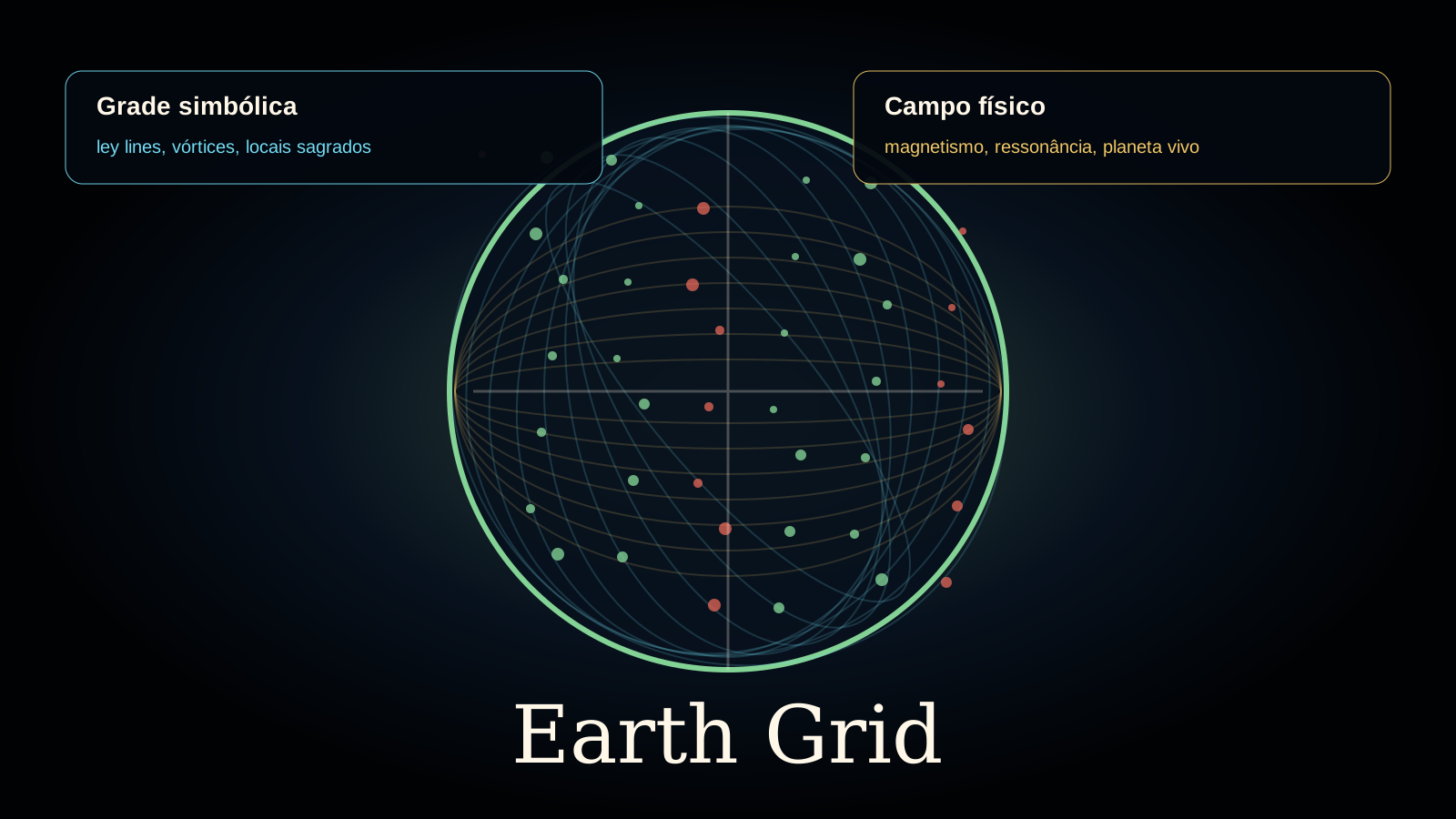
Modern ley lines began with Alfred Watkins, who observed alignments among ancient landmarks in Britain. First imagined as routes or sight lines, they were later reinterpreted as Earth-energy channels.
The concept encouraged attention to landscape, but enough points make lines easy to draw. An intentional network requires prior criteria, compatible chronology and evidence that builders recognized the system.
Giants, levitation and builder races
Folklore often credits great stones to giants, heroes, saints or supernatural beings. Modern versions add antigravity, sound, extraterrestrials and vanished civilizations.
How they built is a valid question. The error is turning our surprise into ancient incapacity. Simple tools, time, skill and organization create monumental results. Unknown technology becomes explanatory only when it leaves its own evidence.
Selecting stone and knowing material
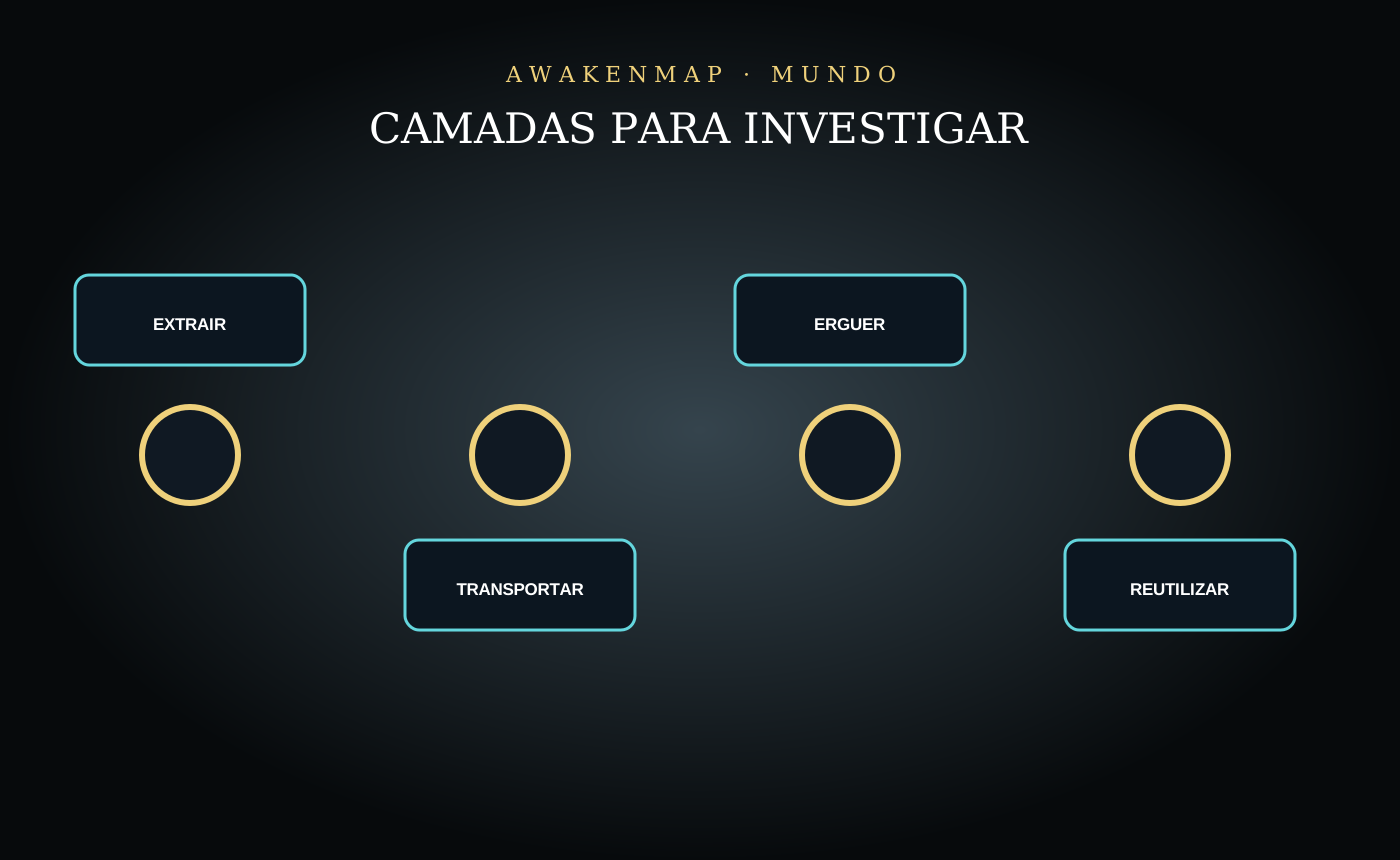
Builders distinguished rocks by hardness, fracture, weight and availability. Some stones came from nearby; others travelled long distances because material and origin could carry social or cosmological value.
Quarry and dressing marks reveal technical decisions. Knowing rock does not require modern metallurgy: accumulated experiment predicts where it breaks, how it slides and what support it needs in transport.
Transport as a communal event
Sledges, rollers in appropriate settings, rope, levers and prepared paths provide testable mechanisms. The central challenge may have been coordinating people and resources rather than discovering an unknown physical force.
Moving a stone could also be ceremony. Collective labour produces memory, alliance and authority. Modern efficiency is not the only measure for a society in which the journey itself carried meaning.
Monuments with biographies
Many sites were enlarged, repaired, dismantled or reused across generations. Bones, offerings and new stones entered during different phases. A monument has a biography rather than one date explaining everything.
This duration helps explain changing alignment and function. A space may begin as funerary, become a gathering place and later receive interpretations from peoples who no longer knew its earliest builders.
Visibility and territory
Position in the landscape matters: hills, valleys, water and mountains shape approach and horizon. Some structures visually dominate a region; others remain low and intimate.
Mapping what can be seen from a monument and where it is visible reveals social relationships. Landscape is not a neutral background but part of the architecture.
Preservation, tourism and reconstruction
Excavation exposes stone and soil to rain, erosion and visitors. Restoration can stabilize a site while creating an appearance more complete than evidence permits.
Responsible presentation distinguishes original material, repositioning and reconstruction. Digital models help test hypotheses without turning one possibility into a permanent scene.
Who could enter and who could be remembered
Monuments also organize inclusion and exclusion. Tomb size, stone position and access to ceremonies may reveal differences of status, kinship and authority.
This dimension prevents romanticizing megalithic society as perfectly egalitarian. Monumental cooperation could unite communities while also consolidating power.
Regional traditions rather than one lost civilization
Megalithic architecture appears across broad areas, but dates, forms and practices vary. Atlantic passage tombs, Mediterranean temples and standing-stone landscapes should be compared without being collapsed into one global culture.
Contact certainly occurred across prehistoric networks. Demonstrating one vanished world civilization, however, requires shared material packages and chronological continuity beyond the fact that communities used large stones.
Experimental archaeology and practical limits
Modern teams can move and raise large stones with simple equipment, testing labour estimates and mechanical possibilities. Experiments do not recreate every ancient decision, but they show whether proposed methods are physically credible.
The best experiments publish conditions, crew size, surface, rope, timber and time. A demonstration becomes evidence when others can repeat it, not merely when a dramatic video reaches the desired result.
Ethics of excavation
Many megalithic sites contain human remains and remain culturally sensitive. Research must balance scientific questions with descendant communities, legal protection and respect for the dead.
Mystery tourism should not encourage climbing, removal of stones or unauthorized digging. Curiosity becomes sustainable when the site survives for future investigation.
The monument is not only an image or a theory. It is a finite physical record whose damage removes information that no later reconstruction can fully recover.
Megalithic Sites in AwakenMap
In AwakenMap this node connects Stonehenge, stone circles, pyramids, Göbekli Tepe, Ancient Builder Race, sacred geometry, ley lines and ancient astronomy.
The node teaches a reading method: preserve wonder while separating documented monument, archaeological interpretation, local tradition and contemporary speculation.
How to investigate a monument
Begin with location, dating and construction sequence. Ask whether the monument was rebuilt, where stones originated, what was found nearby and which parts disappeared.
For alignments, define the astronomical target and error margin in advance. For technology claims, seek tools, residues, working marks and experimental repetition. A strong mystery survives precise questions.
Critical reading
Megaliths demonstrate extraordinary technical capacity and social organization. Alternative explanations must be compared with dating, tools, context and experiment, not merely a feeling of impossibility.
References and starting points
- UNESCO — Stonehenge, Avebury and Associated Sites
- English Heritage — History of Stonehenge
- UNESCO — Brú na Bóinne
- UNESCO — Megalithic Temples of Malta
- UNESCO — Archaeological Site of Antequera Dolmens
- UNESCO — Heart of Neolithic Orkney
- French Ministry of Culture — Carnac Megaliths
- University College London — Stonehenge Riverside Project
Frequently asked questions
Were all megaliths built by one people?
No. Megalithic monuments occur in different regions and periods. Similar form does not demonstrate one worldwide civilization.
How were such large stones moved?
Sledges, ropes, levers, ramps and coordinated labour provide plausible and experimentally testable mechanisms.
Was Stonehenge an observatory?
It has important solstitial alignments but also funerary, ritual and social roles. Calling it only an observatory reduces its complexity.
Are ley lines proven?
There is no archaeological consensus for an ancient energy network. Alignments require statistical, chronological and cultural criteria.
Do megaliths have acoustic effects?
Stone chambers genuinely alter sound and reverberation. This does not prove healing or levitation machines.
Is Göbekli Tepe megalithic?
It has monumental pillars and expands debate about early ritual construction, while belonging to its own context and chronology.
Keep exploring
You can open another path
 Ancient civilizations Ancient Civilizations, Mysteries and Forbidden Archaeology 5/5 intensity Explore →
  Ancient civilizations Giants 4/5 intensity Explore →
  Earth and Antarctica Earth Grid 4/5 intensity Explore →
  Earth and Antarctica Ley Lines 4/5 intensity Explore →
  Ancient civilizations Ancient Builder Race 4/5 intensity Explore →
  Ancient civilizations Atlantis 4/5 intensity Explore →
Join the conversation
Comments are moderated. Keep the discussion respectful and distinguish evidence, interpretation and personal experience.