
Connection level
29 direct connectionsMeditation practice belongs on AwakenMap through the question of when looking inward becomes a form of deprogramming. Meditation is not merely “relaxing,” nor does it automatically mean contacting higher planes. In its simplest form, it trains attention, body and relationship with experience. In its spiritual form, it can become a path of self-knowledge, compassion, silence, prayer, contemplation, insight and liberation. In the esoteric-conspiratorial field, however, meditation also appears as a technique for mental deprogramming, energetic activation, escaping the matrix and accessing hidden information.
The practice is ancient and diverse. Meditative forms exist in Indian, Buddhist, Jain, Christian, Sufi, Taoist, Jewish and modern mindfulness schools. Some work with breathing, others with mantra, visualization, prayer, investigation of mind, compassion, posture or choiceless observation. Speaking of “meditation” as if it were one technique impoverishes the theme. What unites many of these practices is the attempt to train the relationship with thought, sensation, emotion and presence.
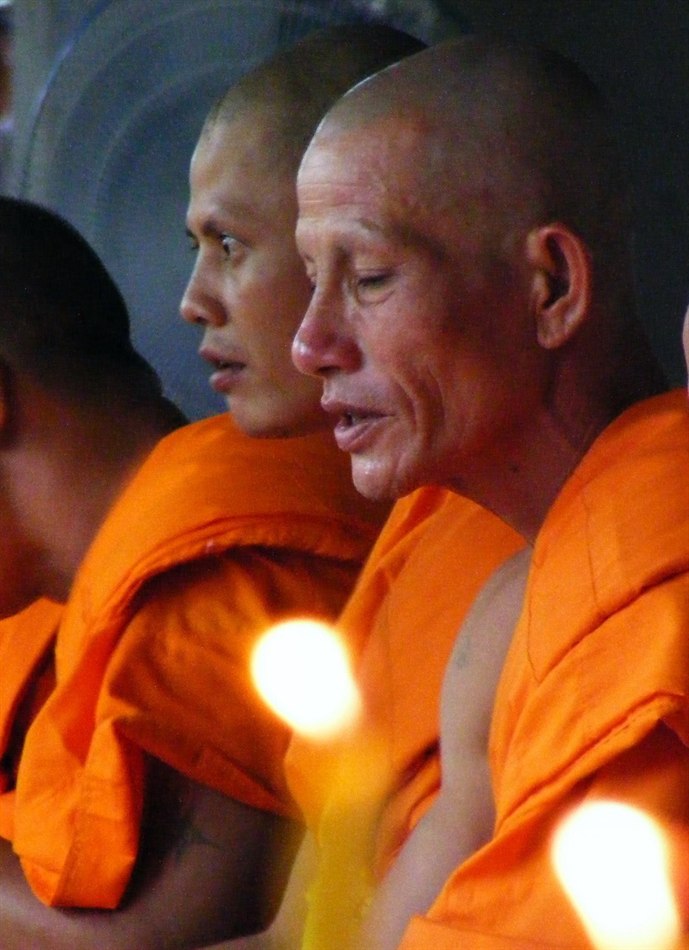
The image beside this text shows a Buddhist monk meditating at Wat Khung Taphao in Thailand. It is contextual, not exclusive definition. Meditation does not belong only to Buddhism, but the figure remembers something essential: practice requires body, repetition, time and discipline.
On AwakenMap, that detail matters. Without concrete practice, “meditation” becomes a beautiful word for any inner fantasy.
One concrete case in recent history is Mindfulness-Based Stress Reduction, developed by Jon Kabat-Zinn at the University of Massachusetts from 1979 onward. He adapted contemplative practices into a secular clinical environment, with a structured course, attention to breath, body scan, mindful movement and observation of thoughts and emotions. This helped bring meditation into hospitals, universities, psychology and behavioral medicine.
This case matters because it shows a real bridge between tradition and modernity. Meditation moved from monasteries, temples and spiritual lineages into clinical, corporate and educational contexts. This brought benefits: more research, more access and fewer religious barriers. It also brought risks: turning deep practice into a productivity tool, emotional anesthesia or wellness product sold without ethical context.
The relationship with meditation is direct. The general node speaks of meditation as a broad field; meditation practice focuses on the repeated act: sitting, breathing, observing, returning, noticing distraction, beginning again. This simplicity is the hardest part. The mind wants extraordinary experience; practice often begins with boredom, restlessness, sleepiness and resistance.
The meditation retreat deepens this process. In retreat, a person reduces stimuli, speech, obligations and distractions to observe the mind with more continuity. This can be transformative, but also intense. Old emotions may surface. Memories may appear. Vulnerable people may become dysregulated. This is why tradition, preparation, guidance and responsibility matter.
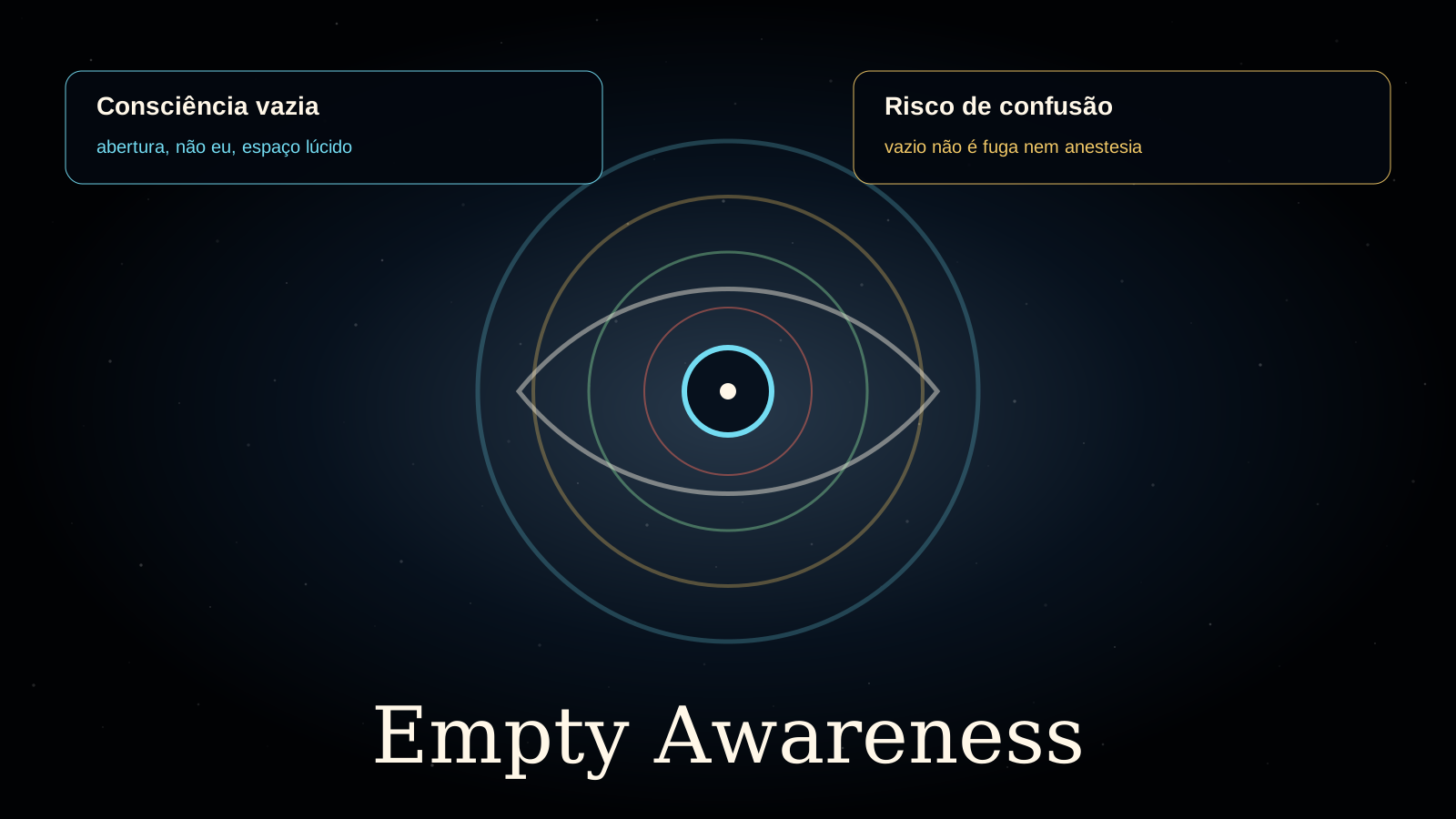
rigpa meditation and empty awareness point to subtler forms of practice. In Tibetan traditions, there are teachings on recognizing the nature of mind, open awareness and unfabricated presence. This is not the same as “thinking nothing.” Often it is learning to recognize thoughts without merging with them. The difference is fine, but it changes everything: meditation is not amputating the mind; it is changing the relationship with it.
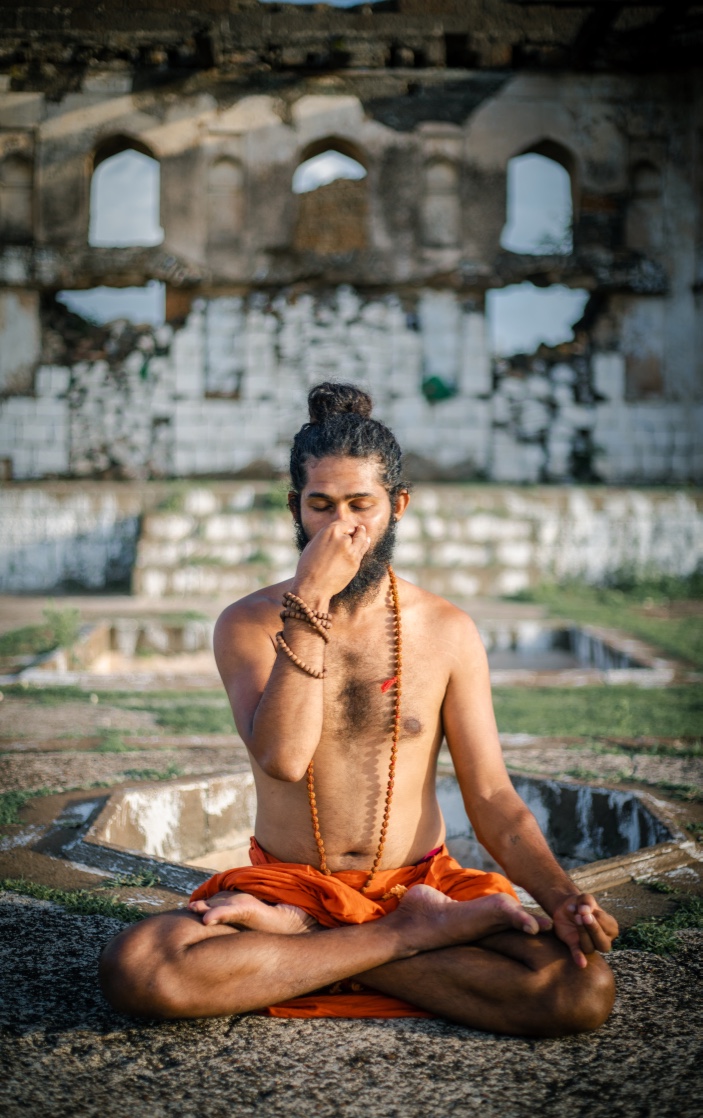
breathwork is one of the most accessible doors. Conscious breathing anchors attention in the body and shows how emotion, nervous system and thought influence one another. On AwakenMap, breathing and meditation belong together because both touch presence, energy, trauma and regulation. The trap is promising that any breathing technique works for everyone at any intensity. The body has limits too.
Mahamudra enters as an example of advanced meditation aimed at the nature of mind. Instead of seeking only calm, it investigates who perceives, what thought is, how experience arises and where the “I” that tries to control everything is. This kind of practice shows why meditation can be philosophical, not only therapeutic.
The bridge with escape from samsara and return to Source comes from the classic spiritual question: why do we repeat suffering? Meditation can reveal patterns of desire, aversion, fear and identification. In AwakenMap language, this becomes a path of return: not fleeing the world, but perceiving the layers of conditioning that make us confuse impulse with identity.
collective consciousness and the consciousness renaissance appear when practice stops being only individual. Meditation groups create a social field of silence, listening and intention. Some theories claim collective meditations directly change external events. Evidence for large direct social effects is controversial. Still, something concrete exists: people who train attention and compassion tend to relate differently, and that can change environments.
chakras, kundalini, pineal gland and third eye and the third eye form the energetic layer. Many traditions work with subtle centers, channels, rising energy and internal perception. Meditation can intensify bodily sensations, heat, trembling, images, inner lights and state changes. Some experiences are benign; others can frighten. The mistake is interpreting everything as enlightenment or everything as pathology. Discernment matters more than spectacle.
telepathy appears when meditators report strong intuitions, synchronicities, a sense of shared field or wordless communication. AwakenMap can register this layer without selling it as established fact. Sometimes silence increases real social sensitivity: a person notices microexpressions, tone of voice, bodily tension and emotional patterns. Other times, the mind projects meaning into ambiguity.
frequency, sound healing and holistic healing enter because meditation is often combined with music, bells, mantras, bowls, frequencies and healing practices. Sound can support regulation, focus and ritual. But “frequency” in spiritual vocabulary often works as metaphor for internal state, not necessarily as physical measurement. Good practice does not need to exaggerate science to have value.
higher mind represents the promise of accessing a clearer, less reactive and wider mind. This can be read psychologically as metacognition: perceiving thoughts as mental events, not commands. It can also be read spiritually as contact with a higher intelligence. Both readings can coexist if the person does not use the second to escape the first.
The link with astral travellers and lucid dreaming appears because meditation changes the relationship with imagination, sleep, dream and subtle body. People who train attention may better recognize transitions between waking and sleep, observe hypnagogic imagery or have lucid dreams. This does not automatically prove literal astral travel, but it explains why meditative practices feed reports of shifts in consciousness.
5D Earth and ascension appear when meditation becomes a spiritual technology of planetary transition. In awakening groups, meditating would stabilize a higher frequency, prepare the body for solar changes, open the heart and participate in a brighter timeline. As symbol, this can inspire discipline and ethics. As literal certainty, it can generate passivity, grandiosity or escape from ordinary life.
mass meditation is a special case. Global collective meditations promise to reduce conflict, raise planetary vibration or anchor peace. Even when these promises are hard to prove, they reveal a legitimate desire to act nonviolently at collective scale. The care is not to replace concrete action with visualization. Meditating for peace does not remove the need to build peace in relationships, institutions and material choices.
The conspiratorial layer appears when meditation is presented as a key for escaping mental programming, media, fear, energetic control and matrix. There is a partial truth: trained attention can reduce reactivity and make a person less manipulable by stimuli. But this does not make every meditator immune to propaganda. Sometimes a person merely exchanges one programming for another, now with spiritual appearance.
There is also a less discussed risk: meditation can be used to dissociate. People may call emotional escape detachment; call freezing silence; call inability to feel transcendence. Mature practice does not erase humanity. It increases presence for the body, for others and for the world.
A mature reading separates three levels. First, meditation as training of attention, breathing and regulation. Second, meditation as a spiritual path of self-knowledge, compassion and liberation. Third, meditation as esoteric technology for activation, psychic defense, access to subtle planes and matrix deprogramming. The theme becomes stronger when these levels are distinguished, not mixed.
Meditation practice matters because it is one of the few AwakenMap doors that do not require believing anything before beginning. A person can sit, breathe and observe. Then they can ask what changed. If there is light, good. If there is boredom, that too is material for investigation. The most honest awakening may begin exactly there: the instant a person stops fleeing their own experience.
Simple summary
Meditation practice is repeated training of attention, body, breath and presence. It appears in many spiritual traditions and also in modern health and stress-reduction contexts. On AwakenMap, it connects meditation, breathwork, empty awareness, rigpa, Mahamudra, chakras, kundalini, pineal gland, telepathy, sound healing, collective consciousness, return to Source, 5D Earth and ascension. The critical layer is distinguishing real practice from magical promise.
References and starting points
- NCCIH - meditation and mindfulness: effectiveness and safety
- UMass Memorial - Mindfulness-Based Stress Reduction program
- Jon Kabat-Zinn - reflections on the origins of MBSR
- Britannica - meditation as religious and mental practice
- Mayo Clinic - meditation and stress reduction
- Wikimedia Commons - Buddhist monk in meditation
Why it belongs on AwakenMap
It belongs because meditation is a bridge between concrete discipline and spiritual language. It can help reduce reactivity, observe conditioning and open inner space, but it can also become fantasy of power or emotional escape. Its value lies in practicing with lucidity, body, ethics and discernment.
Keep exploring
You can open another path
 Esoteric practices Breathwork 5/5 intensity Explore →
  Return to Source Empty Awareness 5/5 intensity Explore →
  Map center Great Awakening 5/5 intensity Explore →
  Esoteric practices Meditation 5/5 intensity Explore →
  Esoteric practices Chakras 4/5 intensity Explore →
  Consciousness and symbols Collective Consciousness 4/5 intensity Explore →
Join the conversation
Comments are moderated. Keep the discussion respectful and distinguish evidence, interpretation and personal experience.