Connection level
18 direct connectionsHolistic Healing is a view of care that sees body, mind, emotion, environment, relationships and meaning as parts of one life, without abandoning medical discernment.
Healing is not only removing symptoms
Holistic Healing begins from a strong intuition: a person is not a broken part. Pain, illness, anxiety, exhaustion or suffering rarely exist in isolation. Body, sleep, food, work, environment, relationships, history, emotions, spirituality, economy and meaning cross each other all the time.
Britannica defines holistic medicine as a preventive and therapeutic doctrine that emphasizes looking at the whole individual, including body, mind, emotions and environment, rather than isolated functions or organs. This definition is simple but powerful: it shifts the question from which part is failing? to what life is trying to speak through this symptom?
In AwakenMap, Holistic Healing needs to occupy a place of balance. It cannot become rejection of conventional medicine, nor reduce human suffering to lab results. The better path is integration: science, body, relationship, practice, culture and meaning.
Holistic, complementary, alternative and integrative
These words are often mixed, but they are not the same. NCCIH explains that a non-mainstream approach used together with conventional medicine is complementary; when used in place of it, it is alternative. Integrative health seeks to combine conventional and complementary approaches in a coordinated way to care for the whole person.
This distinction is essential to avoid risks. Using meditation, acupuncture, massage, Reiki, herbal medicine, yoga or spiritual practices as support can be one thing. Abandoning necessary treatment for a miraculous healing promise is another.
Mature Holistic Healing does not say either medicine or energy. It asks: what has evidence? What is safe? What supports the person? What needs professional monitoring? What can interact with medication? What is symbol, and what is treatment?
Health of the whole person
NCCIH uses the expression whole person health for a view that does not treat only a specific disease, but seeks to restore health, promote resilience and prevent disease across a lifespan. This formulation helps give the theme serious grounding.
Caring for the whole person does not mean ignoring diagnosis. It means diagnosis does not exhaust the person. A patient with chronic pain also has sleep, fear, work, family, beliefs, movement, food, trauma, hope and exhaustion. A treatment that ignores all this may attack the symptom while missing the context that sustains it.
The holistic approach asks: which systems are speaking here? Is the body asking for rest? Is the mind in constant threat? Does the environment make the person ill? Has the person lost bond, purpose or rhythm? These questions do not replace medicine; they widen care.
The seduction of total healing
The word healing is dangerous because it promises closure. In spiritual marketing, it appears as total healing, quantum healing, ancestral healing, definitive healing, healing all blocks. These promises sell hope, but may exploit vulnerability.
Not everything can be healed in the sense of disappearing. Some conditions need management. Some wounds leave scars. Some losses are not resolved; they are integrated. Some illnesses require continuous treatment. An honest holistic view needs to distinguish healing, relief, adaptation, meaning, remission, care and follow-up.
Maturity lies in replacing grand promise with consistent presence. Sometimes healing is reducing pain. Sometimes it is learning limits. Sometimes it is asking for help. Sometimes it is living with dignity even when the symptom does not disappear.
Body, emotion and nervous system
One of the great contributions of the holistic view is remembering that emotion is not abstraction. Fear changes breathing. Shame changes posture. Grief weighs in the body. Chronic stress changes sleep, appetite, digestion, immunity and pain. The body records life.
This does not mean everything is psychosomatic in the vulgar sense of invented. It means the body is crossed by experience. A person can have a real biological condition and, at the same time, worsen or improve depending on support, rest, safety, movement and emotional regulation.
Holistic Healing should help the person inhabit the body better, not blame them for becoming ill. The body is neither enemy nor infallible oracle. It is a field of listening.
Environment also heals or harms
Looking at the whole person includes looking at environment. Home, work, noise, light, available food, violence, pollution, isolation, social media, city, family and money participate in health. It is superficial to tell someone to meditate if they live under constant threat or without basic resources.
The holistic view loses strength when it becomes spiritual individualism. Not every illness is a failure of attitude. Not all suffering is solved with positive thinking. There are social and material factors that need to be named.
A mature page on healing should include this dimension: healing is also sanitation, housing, rest, safety, bond, justice, time and community.
Holistic practices and evidence
The holistic field includes many practices: meditation, yoga, acupuncture, massage, herbal medicine, somatic therapy, breathing, Reiki, nutrition, sound, prayer, art, contact with nature and others. Some have better evidence for certain uses. Others have weak or inconsistent evidence. Others are mainly symbolic or cultural.
The correct question is not this is holistic, so does it work? The question is more precise: works for what, in whom, with which risk, compared to what, and with what quality of evidence? A practice can support relaxation and still not cure a disease. It can support well-being and still not replace treatment.
This criterion does not diminish spirituality. On the contrary: it protects vulnerable people and increases the credibility of care.
The role of meaning
Medicine measures many aspects of health, but it does not always reach the question of meaning. Why continue? What does this crisis reveal? What life do I want to rebuild? How do I live with limitation? How do I transform suffering into maturity without romanticizing it?
Holistic Healing gains depth when it includes meaning. People do not need only protocols; they need narrative, belonging, realistic hope and space to integrate what happened. Religion, philosophy, art, therapy, community and spirituality can help in this dimension.
But meaning should not become pressure. No one is obligated to find a beautiful lesson in every pain. Sometimes the first form of meaning is simply surviving with support.
The danger of savior therapists
The holistic universe can attract generous people, but it can also open space for charlatanism. Guaranteed cure promises, diagnoses without training, fear of negative energy, endless package sales, rejection of doctors and emotional dependence are warning signs.
A good complementary therapist knows limits. Refers when necessary. Does not tell people to stop medication. Does not promise miracles. Does not use spiritual language to control. Does not turn vulnerability into market.
Ethics is part of healing. Without ethics, any beautiful technique becomes risk.
Holistic Healing in AwakenMap
In AwakenMap, Holistic Healing connects with Reiki, Auras, Chakras, Kundalini, Sound Healing, Meditation, Love and Light, Mental and Spiritual States and Return to Source. It is a node that organizes care practices around the whole person.
This theme also serves as a critical brake. The map deals with energy, spirituality and mystery; Holistic Healing needs to remember that real body requires real responsibility. If there is chest pain, bleeding, severe depression, psychotic crisis, infection or risk, the path is professional care, not only ritual.
At the same time, it widens the medical question: how does this person live, feel, sleep, love, work, hope, suffer and find meaning? The whole human matters.
The best way to read this theme
Read Holistic Healing as integration, not opposition. The body needs science. The mind needs listening. Emotion needs space. Environment needs care. Spirituality needs honesty. Community needs presence.
The poor reading says: conventional medicine is cold, holistic therapies cure everything. Another poor reading says: only the biomedical matters, everything else is nonsense. The mature reading asks: how do we join safety, evidence, bond, meaning and whole-person care?
Read this way, Holistic Healing stops being a wellness slogan and becomes an ethic of care: not treating the person as a machine, and not selling mystery as an easy solution.
Critical reading
Holistic Healing should be read as whole-person care, not as automatic replacement for medicine. The theme is strong when it integrates body, mind, environment, meaning and evidence; it is dangerous when it promises total healing without responsibility.
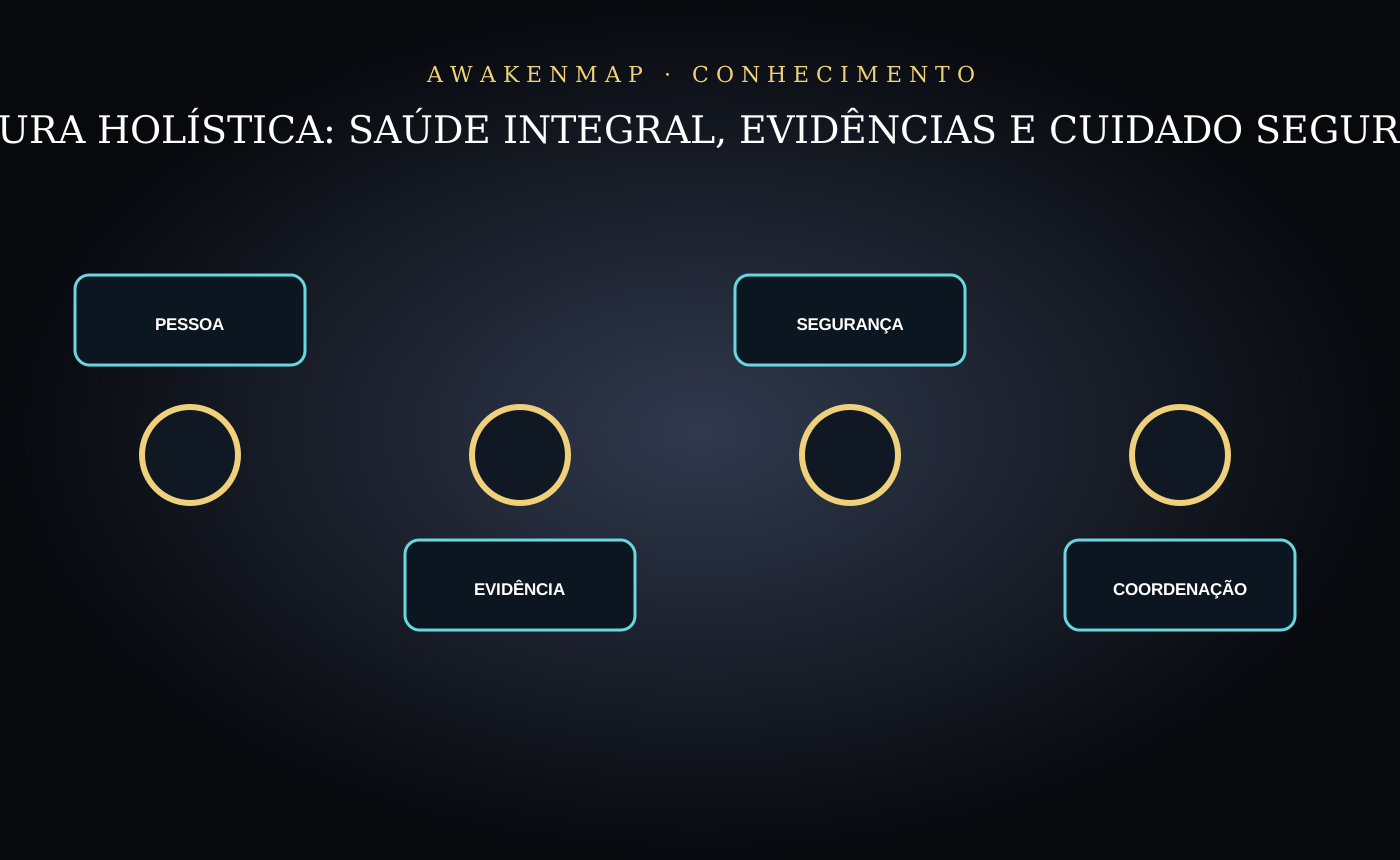
Whole-person health is not one therapy
Looking at the whole person means considering biological, behavioral, social and environmental domains. This principle may guide conventional medicine, primary care and complementary practices. “Holistic” describes a perspective; it does not validate a product.
Two therapies using the same label may have very different evidence and risks. Adapted yoga, herbs, homeopathy, Reiki and manual treatment should not be evaluated as one block.
Complementary does not mean replacement
A complementary approach is used alongside conventional care; an alternative replaces it. The distinction is decisive for cancer, infection, diabetes, severe mental illness or another condition requiring diagnosis and monitoring.
A practice may support sleep, stress or quality of life without treating the disease's cause. An auxiliary benefit does not justify abandoning necessary medication, surgery or surveillance.
How evidence is evaluated
Testimonials describe experience but do not isolate cause. Symptoms fluctuate, treatments combine and people seek help during periods of worsening that may naturally improve. Controlled studies attempt to separate intervention, expectation and the condition's course.
Useful evidence considers effect size, study quality, comparison, risk and replication. “There is a study” does not equal consensus or clinically meaningful benefit.
Direct and indirect risk
Direct risk includes injury, infection, toxicity and drug interaction. Indirect risk arises when a practice delays diagnosis, replaces effective treatment or consumes essential resources.
A gentle intervention may seem harmless and still cause damage when accompanied by absolute promises. Safety depends upon context, person and use.
Natural products and interactions
Natural does not automatically mean safe. Herbs and supplements contain active compounds, vary in dose and may interact with anticoagulants, sedatives, immunosuppressants and other medicines.
Pregnancy, surgery, liver or kidney disease and use in children require special caution. Informing the whole health team about every product reduces risk and duplication.
Mind-body practices
Meditation, tai chi, yoga, hypnosis and relaxation may help some people with specific conditions, particularly as support for stress and pain management. Results are not the same for everyone.
Instructors should adapt movement and recognize contraindications. Trauma, glaucoma, injury, pregnancy and cardiovascular problems may require modifications or another approach.
Reiki and energy fields
Reiki offers light touch or hands held near the body within a ritual relationship of care. People may report relaxation, but research has not clearly shown effectiveness for health purposes, and scientific evidence does not support the proposed energy field.
Relaxation during a session is not proof of mechanism. Reiki should not replace assessment or treatment. Consent, hygiene and professional boundaries remain essential.
Chronic pain and realistic goals
Complete cure is not always possible in chronic pain. Goals may include function, sleep, movement and participation in life. Some complementary approaches show modest evidence of benefit for specific conditions.
Multimodal plans combine education, activity, psychological support, medical treatment and strategies selected with the person. Coordination prevents contradictory messages.
Placebo, care and context
Expectation, attention and ritual may modify symptom perception. This does not mean pain is imaginary. It means embodied experience responds to context.
Contextual effects do not justify deception. Ethical care remains honest about evidence and uncertainty without removing hope.
Choosing a practitioner
Check training, licensing where applicable, scope, costs and willingness to work with other professionals. Be cautious of secret diagnoses, guaranteed cures, aggressive sales and instructions to stop medicine.
A good practitioner documents consent, recognizes limits and refers when necessary. Charisma does not replace competence or accountability.
A safety plan
Define a goal, time frame and review criterion. Record symptoms and adverse effects. If worsening, allergic reaction, severe pain or major change occurs, stop and seek appropriate assessment.
Emergencies are not the moment to experiment with alternative therapy. Acute warning signs require proper medical services.
Additional references
- NCCIH — Whole Person Health
- NCCIH — Considering a Complementary Health Approach
- NCCIH — Reiki
- NCCIH — Chronic Pain and Complementary Approaches
References and starting points
- Britannica - Holistic medicine
- Britannica - Complementary and alternative medicine
- NCCIH/NIH - Whole person health
- NCCIH/NIH - Complementary, alternative, or integrative health
- NCCIH/NIH - Considering a complementary health approach
- Mayo Clinic - Integrative medicine
FAQ
Does holistic healing replace medical treatment?
No. The safe reading is complementary and integrative. Serious symptoms, diagnosed diseases and risk situations require appropriate professional care.
Does every holistic practice work?
No. Each practice needs to be evaluated by safety, evidence, objective, context and risk. A technique may help relaxation and well-being without curing a disease.
Keep exploring
You can open another path
 Healing and energy Orgone / Wilhelm Reich 4/5 intensity Explore →
  Healing and energy Sound Healing 4/5 intensity Explore →
  Healing and energy Wireless Energy / Nikola Tesla 4/5 intensity Explore →
  Esoteric practices Ayahuasca 4/5 intensity Explore →
 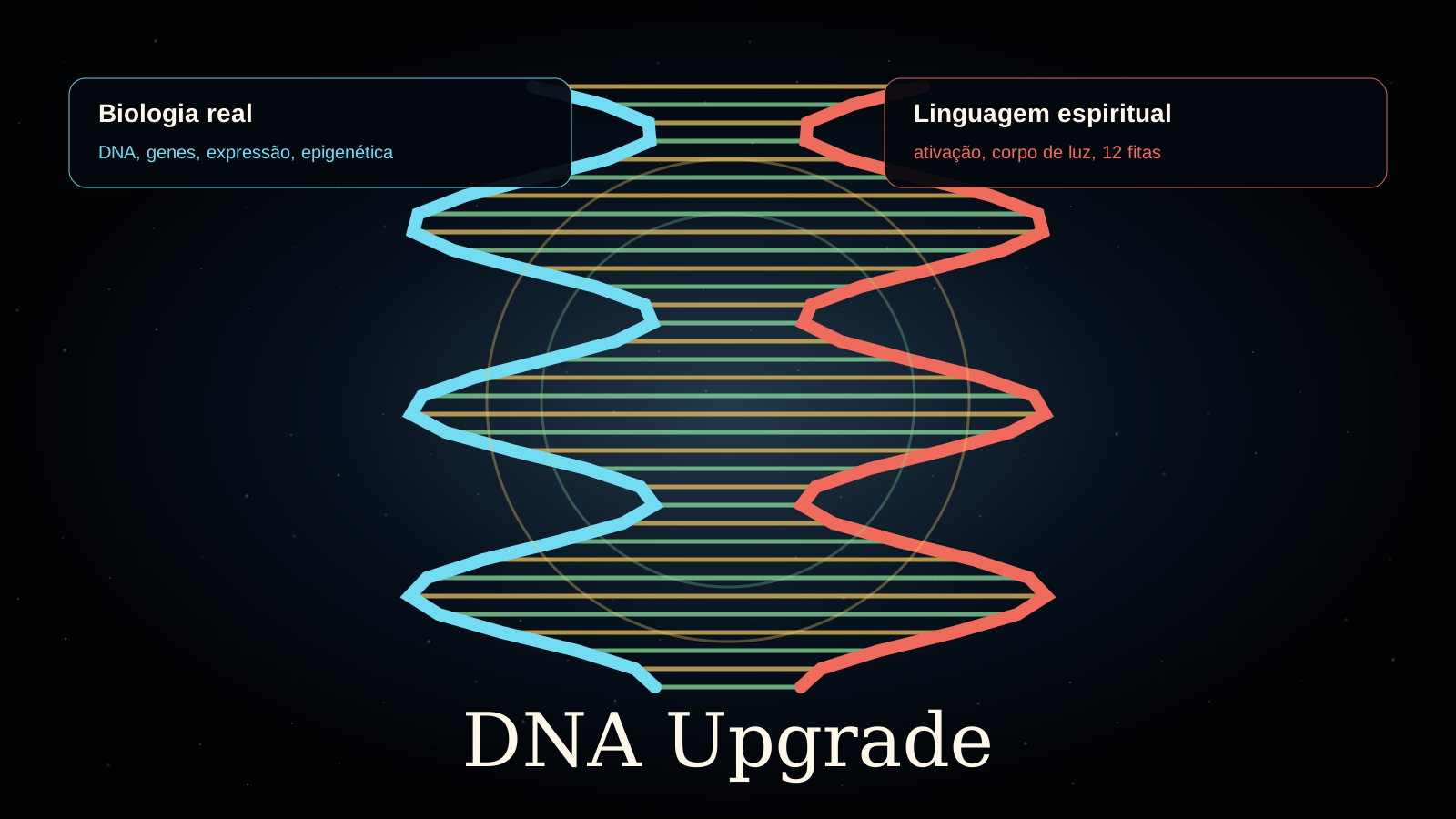 Healing and energy DNA Upgrade 4/5 intensity Explore →
  Esoteric practices Lightworkers 4/5 intensity Explore →
Join the conversation
Comments are moderated. Keep the discussion respectful and distinguish evidence, interpretation and personal experience.