Connection level
14 direct connectionsSound Healing brings together chants, frequencies, bowls, gongs, mantras and music therapy as paths of relaxation, regulation, presence and complementary care.
Sound as invisible body
Sound Healing begins from a simple experience: sound does not stay outside us. It crosses skin, breath, memory, emotion and nervous system. Music can calm in seconds. Noise can irritate. A chant can make someone cry. A drum can organize movement. Before any spiritual theory, sound already shows that the body is permeable.
In contemporary spirituality, this theme appears in sound baths, Tibetan bowls, crystal bowls, gongs, tuning forks, mantras, overtone singing, solfeggio frequencies, binaural beats, shamanic drums and sound meditation practices. Some approaches speak of energetic vibration; others speak of relaxation, attention and regulation.
In AwakenMap, Sound Healing needs to be read in layers. There is clinical music therapy, with professional training and therapeutic goals. There are ancient spiritual rituals of chant and drum. There are modern wellness practices. And there are exaggerated promises about frequencies able to heal everything.
Music therapy is not the same as a sound bath
Britannica defines music therapy as a clinical discipline in which music is used for nonmusical goals, such as movement, cognition, speech, language and mental health. A music therapist works with listening, composition, improvisation, lyrics, memory, voice and therapeutic relationship within defined goals.
A sound bath, on the other hand, is usually an immersive meditative experience. Cleveland Clinic describes a sound bath as immersion in deep vibrations from gongs, bowls or similar instruments, with reports of relaxation, improved mood, body awareness and sleep. The same source recommends seeing it as complementary, not a replacement for treatment.
This distinction matters. Calling everything sound healing can confuse clinical practice, ritual, relaxation and spiritual entertainment. The page should help the reader understand what they are receiving and which promises are appropriate.
Resonance, rhythm and nervous system
Sound acts through several pathways. Rhythm can synchronize breathing and movement. Melody can evoke memory. Timbre can produce a sense of safety or alert. Repetition can induce light trance. Silence between sounds can open presence. The body responds before the mind forms a belief.
This explains why mantras, liturgical chants, drums, bells and hymns appear in so many traditions. Sound organizes groups, marks passage, sustains prayer, creates belonging and changes state of consciousness. There is no need to reduce everything to mysticism or deny the mystery: physiology, culture and symbol work together.
A mature sound practice observes concrete effects: does breathing slow? Does the body relax? Do emotions appear safely? Does the person leave more present? Or does the sound merely produce intensity without integration?
Frequencies: between symbol and exaggeration
The internet turned frequencies into promise. 432 Hz, 528 Hz, 963 Hz, solfeggio, frequency of love, DNA healing frequency, abundance frequency. Some people use these tracks as meditative support and report subjective benefits. The problem begins when numbers are treated as guaranteed universal keys.
Frequency is a real physical property of sound. But saying that a specific frequency heals trauma, reconstructs DNA or attracts prosperity is a much larger claim. It requires proportional evidence, not only reports and spiritual aesthetics.
The balanced reading is simple: sounds can affect emotional state, attention and relaxation. Certain frequencies or timbres may be pleasant, symbolic or useful for meditation. This does not authorize turning every number into invisible medicine.
What research supports better
NCCIH summarizes that music-based interventions may help in some contexts, with limited or variable evidence depending on population and condition. In materials for professionals, the agency mentions favorable evidence for effects on pain intensity and emotional distress associated with pain in some analyses.
Recent PubMed reviews also investigate music for chronic pain, anxiety, surgical procedures and other contexts. Some results suggest reductions in pain or distress, but effects depend on intervention type, study quality, population and goal.
The honest conclusion is: music and sound can be relevant resources for relaxation, pain, anxiety, mood and quality of life in certain contexts. But this does not prove all spiritual claims about frequencies, chakras or energetic fields.
Mantra and repetition
Mantra shows an ancient form of sound healing. Repeating a syllable, divine name or sacred phrase can stabilize attention, regulate breathing, create devotion and reorganize inner language. Repetition is not empty; it cuts a groove in body and mind.
Even outside religious tradition, repeating a phrase rhythmically can reduce dispersion. Sound occupies the mind enough to reduce mental noise, but not so much that it prevents presence. For this reason, many people who struggle with silent meditation find in sound a more accessible door.
The care is not to tear mantras from their contexts as exotic objects. Some words belong to living traditions. Respect includes learning origin, pronunciation, meaning and limit.
Gongs, bowls and sound bath
Modern sound baths use gongs, metal or crystal bowls, chimes, tuning forks and voice to create a continuous soundscape. The participant usually lies down, closes the eyes and allows layers of sound to guide attention. The effect can be deeply relaxing.
For some people, the experience can also be intense. Low sounds, high volume, long vibration and dark environments may awaken anxiety, memories or sensory discomfort. People with trauma, auditory sensitivity, migraine, epilepsy, tinnitus, psychosis or certain neurological conditions should be careful and speak with professionals when necessary.
A good facilitator informs volume, duration, instruments, possibility of leaving, limits and contraindications. Sound Healing also begins in sensory consent.
Sound and community
Singing together changes the field of a group. Breaths draw closer, bodies enter rhythm, voices create belonging. Hymns, Indigenous chants, choirs, drum circles and collective mantras are not only music; they are social technologies of cohesion.
This point connects Sound Healing to Collective Consciousness and Mass Meditation. A group that sings or listens together can share emotional state. This does not need to be interpreted as miracle; it is already strong as human experience. Sound builds a bridge between individuals.
The ethical question is: what kind of field is sound creating? Presence, listening and care? Or manipulation, forced ecstasy and loss of autonomy?
The shadow of the vibrational market
Like every wellness practice, Sound Healing also became a market. There are quick courses, fragile certificates, expensive instruments, miraculous frequency promises and sessions sold as universal solution. The risk is turning sonic sensitivity into magical product.
This does not invalidate good professionals. But it asks for criteria. Does the facilitator know how to handle difficult emotions? Understand safety? Avoid medical promises? Respect silence and consent? Refer when something exceeds their competence?
Sound can be healing, but it can also be manipulation. Volume, repetition and environment alter states of consciousness. That requires responsibility.
Sound Healing in AwakenMap
In AwakenMap, Sound Healing connects with Holistic Healing, Reiki, Chakras, Auras, Meditation, Mental and Spiritual States, Love and Light, Sacred Geometry and Collective Consciousness. It is a node between body, vibration, ritual and science of care.
It matters because it shows a real bridge between spirituality and measurable experience: sound changes breathing, emotion, attention, movement and memory. At the same time, it requires criticism, because frequency language is one of the most exaggerated areas in digital spirituality.
The best page should allow enchantment without naivety: listen deeply, feel the body and still ask what is being promised.
The best way to read this theme
Read Sound Healing as a practice of regulation, presence and meaning. It can be spiritual, therapeutic, aesthetic, communal and somatic at the same time. Each layer requires criteria.
The poor reading asks: which frequency heals everything? The mature reading asks: which sound helps this body, in this situation, with safety, intention and context? Does sound make me more present or merely deliver an intense experience?
Read this way, Sound Healing stops being a vague promise of vibration and becomes an art of listening: listening to the world, listening to the body, listening to the silence between one wave and another.
Critical reading
Sound Healing should be read as a practice of listening, regulation and presence, not as proof that one specific frequency heals everything. Its value grows when it joins bodily experience, safety, context and evidence.
Listening, prediction and emotion
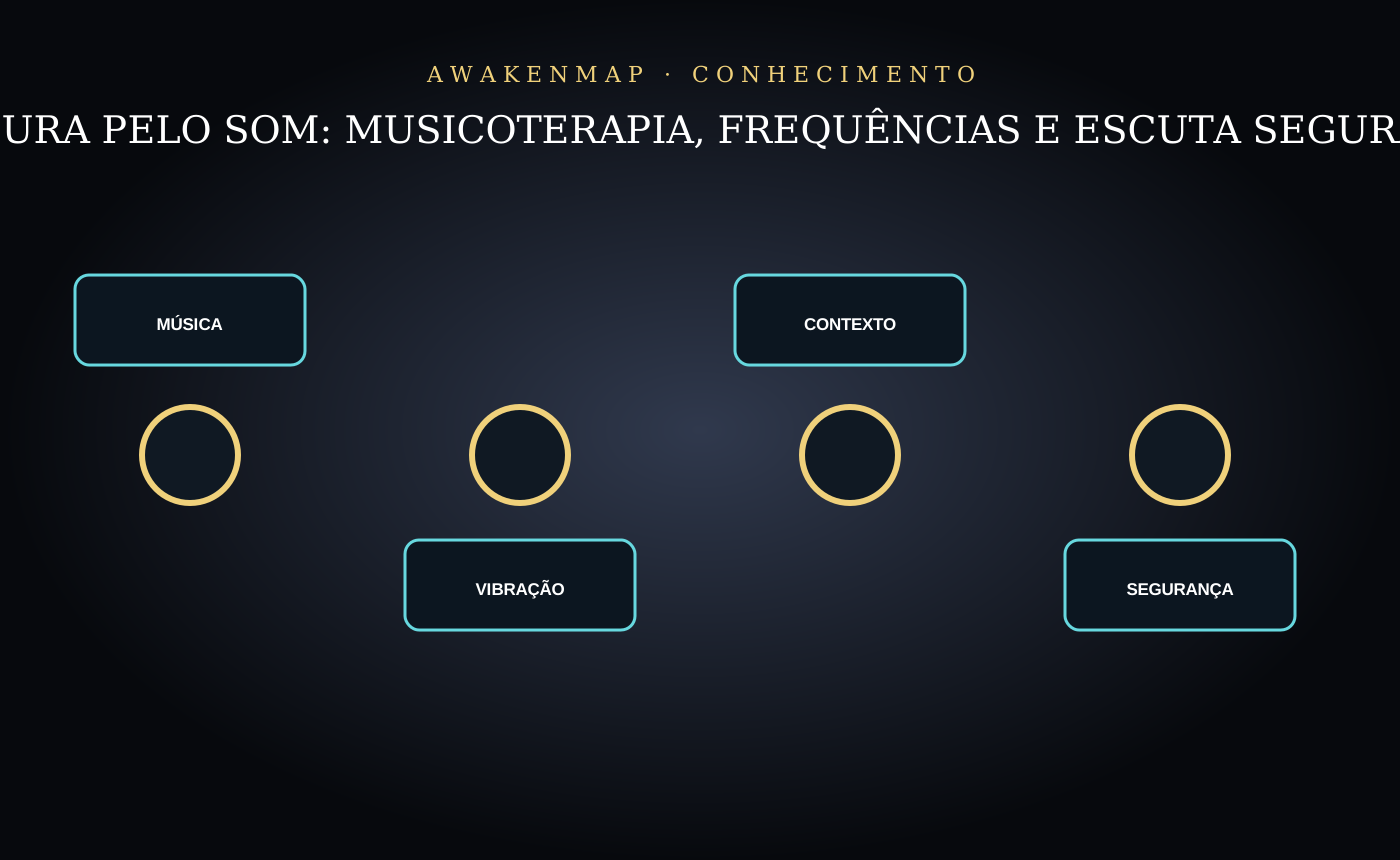
The brain anticipates rhythm, melody and resolution. When music confirms or surprises expectation, attention and emotion change. Personal and cultural memories make the same sequence comforting to one person and uncomfortable to another.
There is therefore no universal emotional frequency producing the same effect for everyone. Preference, context, volume and relationship with the facilitator all participate in the outcome.
Clinical music therapy
Music therapy is a profession using musical experiences within therapeutic goals and a professional relationship. It may involve listening, singing, improvising, composing or playing instruments according to need and therapist training.
Music interventions show possible benefits for pain, anxiety and quality of life in some contexts, although study quality varies. This does not make every playlist or sound bath equivalent to clinical care.
Frequency, pitch and timbre
Physical frequency, measured in hertz, contributes to perceived pitch, but a real sound also contains harmonics, intensity, duration and timbre. Reducing musical experience to one number removes much of the phenomenon.
Claims that 432 Hz, 528 Hz or another tuning repairs DNA or organs require specific tests. Preferring a tuning or using it symbolically differs from asserting a biomedical mechanism.
Resonance without excessive metaphor
Resonance occurs when a system responds strongly to certain frequencies. Instruments, rooms and body structures possess real resonant properties. This does not demonstrate that a bowl “tunes” every cell or dissolves disease.
A metaphor may organize experience without acting as diagnosis. Language should show when it describes physics and when it describes sensation.
Volume and hearing protection
Therapeutic sound can also cause harm. Risk depends on intensity, duration and repetition. Prolonged exposure above safe levels can produce tinnitus or permanent hearing loss.
Sessions with gongs and speakers nearby should allow distance, protection and exit. Pain, pressure, ringing or muffled hearing are reasons to stop and reduce exposure.
Trauma, consent and surprise
Sudden sounds, intense bass and loss of control may activate trauma responses. Facilitators should explain format, duration and intensity and avoid playing instruments close to the body without consent.
Participants need freedom to move, use protection and leave without embarrassment. A strong reaction should not automatically be called release or healing.
Tactile vibration and bone conduction
Sound does not arrive through air alone. Vibration may be felt through skin and transmitted by body structures. Bone-conduction technologies use this measurable principle.
Feeling vibration in the chest or skull is real without determining medical benefit. Intensity and application should respect hearing, implanted devices and individual conditions.
Evaluating a session
Define a concrete goal: relaxation, reduced anxiety before a procedure, supported expression or simply an aesthetic experience. Observe effects during and afterward, including sleep, pain, mood and auditory symptoms.
Be cautious of guaranteed cures, frequency diagnosis and mandatory instrument sales. Responsible practice recognizes limits and does not request abandonment of treatment.
Additional references
- NCCIH — Music and Health: What the Science Says
- NIH Music-Based Intervention Toolkit
- NIDCD — Noise-Induced Hearing Loss
- WHO — Safe Listening
References and starting points
- NCCIH/NIH - Music and health
- NCCIH/NIH - Music and health: what the science says
- Cleveland Clinic - What are sound baths?
- Britannica - Music therapy
- PubMed - Music therapy for chronic pain
- PubMed - Technology-based music interventions for anxiety and pain
FAQ
Does a sound bath replace medical treatment?
No. It can be used as a complementary practice for relaxation and presence, but it does not replace diagnosis, therapy, medication or necessary medical care.
Do specific frequencies cure diseases?
There is no robust evidence for broad promises of that kind. Sounds and music may help relaxation, pain, anxiety and mood in some contexts, but that is different from claiming guaranteed cure through a frequency.
Keep exploring
You can open another path
 Esoteric practices Frequency 5/5 intensity Explore →
  Healing and energy Holistic Healing 4/5 intensity Explore →
  Esoteric practices Ayahuasca 4/5 intensity Explore →
  Esoteric practices Dolphins and Whales 4/5 intensity Explore →
  Healing and energy Kundalini 4/5 intensity Explore → Esoteric practices Frequency 4/5 intensity Explore →
Join the conversation
Comments are moderated. Keep the discussion respectful and distinguish evidence, interpretation and personal experience.