Connection level
27 direct connectionsChakras are subtle centers of energy and consciousness in the body, used as a symbolic map to integrate instinct, emotion, will, heart, voice, vision and transcendence.
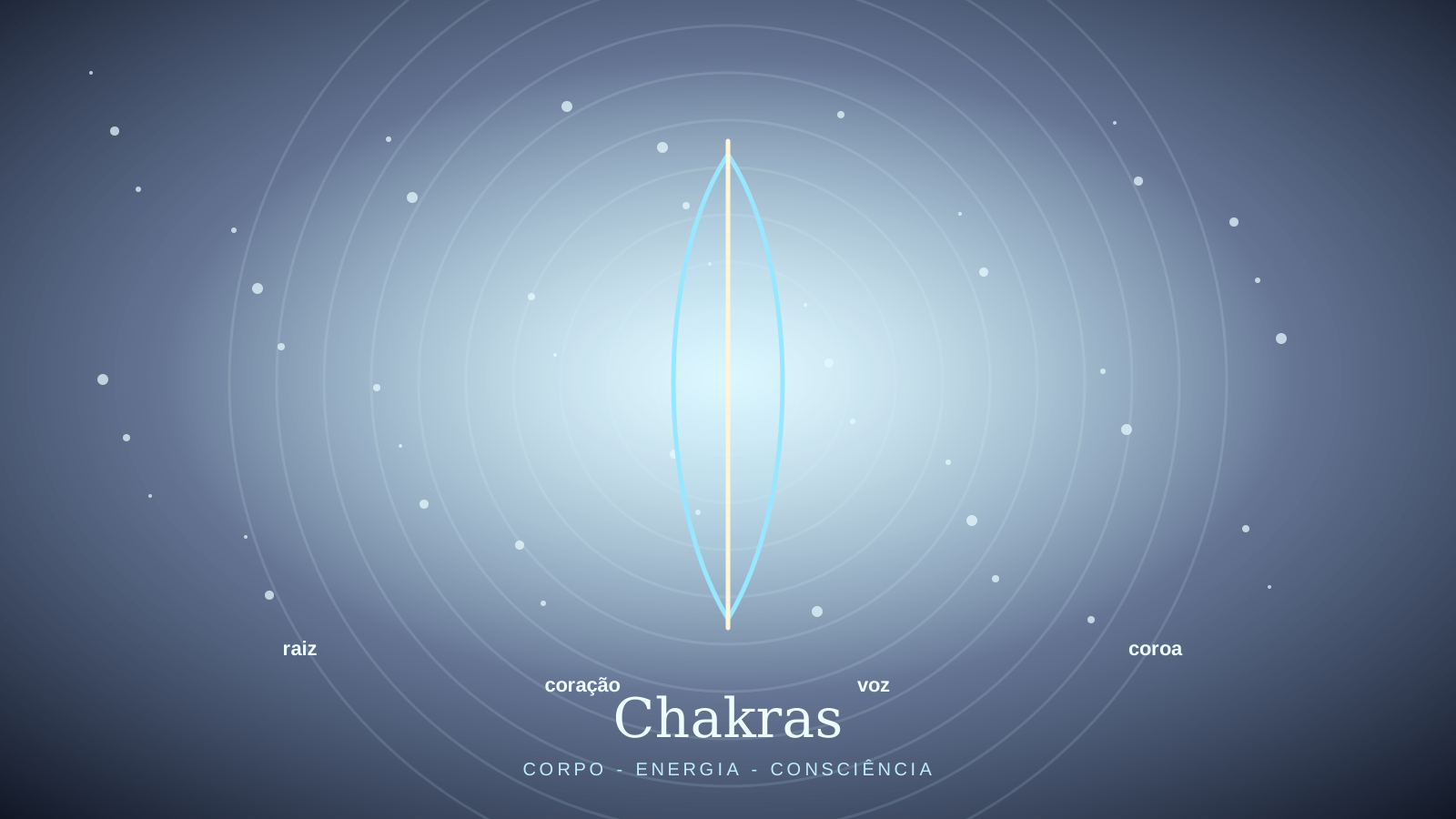
A vertical map of the human being
Chakras are one of the best-known images in modern spirituality. They appear in guided meditations, energy therapies, yoga, crystals, color therapy, Reiki, self-knowledge maps and conversations about emotional blocks. In their popular form, they are described as energy centers aligned through the body, each linked to physical, emotional and spiritual themes.
But the real strength of this map is not merely saying there are colored points in the body. Its strength lies in organizing human experience into layers. Survival, pleasure, power, love, expression, vision and transcendence stop being separate subjects and form an axis. The body becomes text. Inner life gains geography.
In AwakenMap, Chakras needs to be treated as symbolic and practical map, not esoteric decoration. The theme deserves depth because it stands at the crossing of Indian tradition, subtle body, somatic psychology, meditation, Kundalini and contemporary therapeutic language.
Origin and tradition
Britannica describes chakra as a center of psychic energy in certain forms of yoga and in the physiological practices of Tantric Hinduism and Vajrayana Buddhism. The term means wheel or disk in Sanskrit. In tradition, these centers are part of a subtle anatomy also composed of channels, breaths and concentration practices.
This origin matters because it prevents superficial reading. Chakras were not born as a quick personality test or generic wellness chart. They belong to spiritual systems that combine cosmology, mantra, visualization, bodily discipline, breath, initiation and the search for liberation.
The modern version simplified this universe greatly. That does not make current use automatically useless, but it requires honesty: when we speak of chakras today, we are often using a Western, therapeutic and popular translation of much more complex traditions.
Seven centers and many versions
The list of seven main chakras became the most famous: root, sacral, solar plexus, heart, throat, third eye and crown. But history is more varied. Different texts and traditions describe different numbers, names, locations, deities, mantras, petals and correspondences.
The standardization of seven centers helped make the map teachable. It creates a simple narrative: from base to crown, from matter to spirit, from instinct to consciousness. For modern audiences, this structure is clear and useful. The problem is forgetting that it is a synthesis, not the only possible form.
A good page should sustain this nuance. The seven-chakra map is useful as a language of integration, but it should not be presented as simple universal anatomy, identical for all traditions and proven in the same way as physical organs.
Root: safety and incarnation
The root chakra is usually associated with the base of the spine, survival, body, money, territory, family, fear and belonging. When the theme is treated deeply, root does not simply mean red energy. It means the basic question of life: can I be here?
People with histories of instability, trauma, poverty, migration, abandonment or bodily insecurity may feel this layer very concretely. It is not enough to say balance the root chakra as a pretty phrase. Sometimes root asks for sleep, food, therapy, routine, financial safety, home, bond and contact with earth.
Spirituality matures when it understands that transcendence without root becomes escape. Before rising, one needs to incarnate. Before opening the crown, perhaps one needs to learn to breathe inside the body without fear.
Sacral: pleasure, desire and flow
The sacral chakra is associated with pelvis, sexuality, creativity, water, pleasure, desire and relationship. It touches a delicate area because many people carry shame, repression, abuse, compulsion or confusion in this layer. For this reason, speaking of this center requires care.
Pleasure is not the enemy of spirituality. Desire is not either. The problem is when desire governs without consciousness or when a person disconnects so much from pleasure that vitality is lost. A healthy sacral center is neither excess nor blockage; it is flow with presence.
This center asks: can I feel without getting lost? Can I desire without manipulating? Can I create without depending on approval? Can I inhabit the body as a place of life, not merely as an object of control?
Solar plexus: will and personal power
The solar plexus usually represents will, self-esteem, decision, symbolic digestion, action and personal power. It is the center of I can. When imbalanced, it may appear as submission, shame, procrastination, accumulated anger or the need to control everything.
This is one of the most important chakras for avoiding passive spirituality. It is not enough to feel love or imagine light. The person needs to decide, act, sustain boundaries, assume responsibility and turn intention into gesture. Without solar plexus, spiritual life can become promise without form.
At the same time, personal power should not become domination. The mature question is: do I use my strength to serve life or to compensate fear? Can I act without crushing? Can I be firm without hardening?
Heart: bridge and integration
The heart chakra is often described as the bridge between lower and higher centers. It integrates body and spirit, instinct and vision, desire and compassion. This is why it is central in so many practices: love, forgiveness, grief, bond, care, gratitude and tenderness pass through it.
But heart is not sentimentalism. An open heart does not mean accepting everything, denying pain or abandoning boundaries. Mature heart feels, discerns and remains present. It allows love without self-abandonment and truth without cruelty.
In AwakenMap, this center speaks directly with Love and Light, Return to Source, Mass Meditation and Collective Consciousness. It asks whether spiritual expansion increases the ability to love real people, not only luminous ideas.
Throat: voice, truth and listening
The throat chakra is associated with communication, expression, truth, listening and verbal creativity. In modern readings, blockages in this area are linked to silencing, fear of speaking, lying, excessive speech or inability to listen.
The throat shows that spirituality is not only internal experience. What a person realizes needs to cross language. Apologizing, saying no, naming desire, denouncing abuse, singing, teaching, confessing, creating: all of this passes through voice.
The question of this center is: does my speech bring closer or manipulate? Is my truth courage or aggression? Do I listen to understand or only wait for my turn to react?
Third eye and crown: vision and transcendence
The third eye is usually associated with intuition, imagination, dream, symbolic vision and subtle perception. The crown points to transcendence, union, surrender, contemplation and openness to mystery. These centers fascinate because they promise seeing beyond the ordinary.
But they are also areas where fantasy and discernment need to walk together. Intuition without humility becomes delusional certainty. Vision without ground becomes escape. Crown without root can produce spiritual dissociation: the person speaks of the cosmos but cannot pay a bill, care for the body or sustain a difficult conversation.
Mature reading does not reject the higher centers. It roots them. Seeing more should make the person more lucid, not more arrogant. Opening to mystery should increase reverence, not contempt for ordinary life.
Chakras and body: metaphor or reality?
The common question is whether chakras are real. The answer depends on the level of reading. As physical organs, they are not described by biomedical anatomy. As symbolic map, they are extremely effective for organizing bodily attention, emotion and reflection. As subtle reality, they belong to the field of spiritual traditions and subjective experiences.
Research on interoception and body awareness helps build a bridge. Studies on contemplative practices discuss how attention to the body modifies internal perception, emotional regulation and sense of self. This does not literally prove chakras, but it shows that bodily maps can reorganize experience.
Honesty strengthens the page. We do not need to pretend there is scientific consensus on invisible energy wheels. Nor do we need to reduce every subtle experience to error. We can say: this is a spiritual map many people use to feel, interpret and integrate life.
The risk of therapeutic simplification
On the internet, chakras became quick diagnosis. Sore throat? Blocked throat chakra. Financial problem? Blocked root. Sadness? Closed heart. This logic is seductive, but it can be shallow and even dangerous.
Symptoms have multiple causes. Pain may be medical. Anxiety may be trauma, poor sleep, social context, hormones, food, stress or grief. Attributing everything to energetic blocks can delay proper care and increase guilt.
Responsible use is different: chakras can function as questions, not sentences. What does this area of the body remind me of? Which emotion appears here? Which life theme repeats? What needs concrete care?
Chakras in AwakenMap
In AwakenMap, Chakras connects with Kundalini, Meditation, Reiki, Auras, Light Body, Merkaba, Sacred Geometry, Love and Light, Return to Source and Mental and Spiritual States. It is an articulation node between body, symbol and practice.
This theme helps the map not become merely mental. Many AwakenMap subjects are cosmic, historical or conspiratorial. Chakras bring the question back to the body: where does this live in me? How does this knowledge alter breathing, posture, speech, desire, fear and bond?
The best function of this node is pedagogical. It teaches that spirituality is not escaping the body, but learning to read the body as a place of consciousness.
The best way to read this theme
Read Chakras as a map of integration. It is not necessary to accept every detail as literal fact to perceive its symbolic usefulness. Nor is it necessary to reduce everything to modern psychology and erase the system's spiritual origin.
The poor reading asks only which chakra is blocked. The mature reading asks: which layer of my life asks for attention? Safety, pleasure, will, love, voice, vision or surrender? Which concrete practice can help this layer mature?
Read this way, chakras stop being colored labels and become a pedagogy of the conscious body: a way of remembering that awakening must pass through every level of life, from root to crown.
Critical reading
Chakras should be read as a subtle and symbolic map of integration, not as automatic diagnosis. The theme gains strength when it joins tradition, body, practice and discernment; it loses strength when it becomes a quick label for any symptom.
References and starting points
- Britannica - Chakra
- Britannica - Kundalini
- Britannica - Yoga
- Britannica - Tantrism
- NCCIH/NIH - Meditation and mindfulness
- PMC - Interoception and contemplative practice
- PMC - Body awareness and mindfulness
FAQ
Are chakras scientifically proven?
Not as physical organs or consensual anatomical structures. As a symbolic and meditative map, however, many people use them to organize body awareness, emotion and spiritual practice.
How many chakras are there?
The most popular modern version speaks of seven main centers, but different traditions describe varied numbers and systems. The seven-center map is a useful synthesis, not the only historical form.
Keep exploring
You can open another path
 Healing and energy Kundalini 5/5 intensity Explore →
  Consciousness and symbols Consciousness, Spirituality and Inner Practices 5/5 intensity Explore →
  Esoteric practices Yoga 5/5 intensity Explore →
  Esoteric practices Meditation 4/5 intensity Explore →
  Healing and energy DNA Upgrade 4/5 intensity Explore → Healing and energy Kundalini 4/5 intensity Explore →
Join the conversation
Comments are moderated. Keep the discussion respectful and distinguish evidence, interpretation and personal experience.