
Connection level
22 direct connectionsEquanimity belongs on AwakenMap through the question of when inner peace becomes lucidity or anesthesia: the question of when inner peace becomes lucidity or anesthesia. It is the capacity to remain whole amid pleasure and pain, praise and attack, gain and loss, without turning to stone inside.
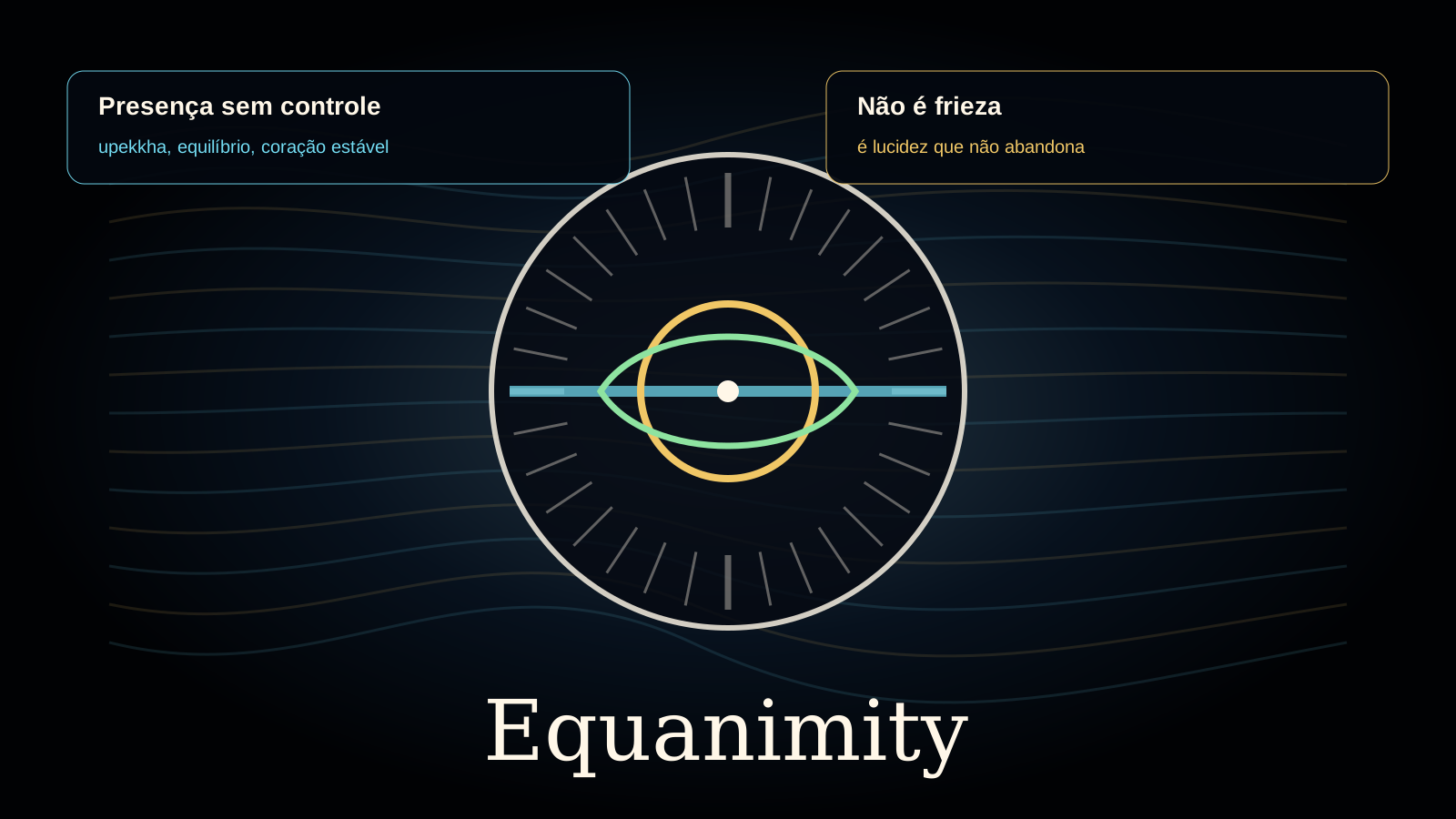
The best-known origin is Buddhist, especially the term upekkha, one of the four sublime abodes alongside loving-kindness, compassion and appreciative joy. Equanimity is not cold indifference; it is a stability that allows seeing without being dragged away. It supports the end to suffering because it reduces the compulsion to grasp the pleasant and reject the unpleasant.
Similar echoes appear in Stoicism, yoga, contemplative traditions and the Tao Te Ching: the center does not depend on controlling everything, but on not being destroyed by every movement of the world. Practice may appear through meditation, prayer, silence, breathwork, body observation, emotional work and ethical discipline.
The conspiratorial layer is subtle. Equanimity can be a tool of liberation, but it can also become a language of domestication. When someone suffers abuse, injustice or manipulation and receives only the command to “accept,” “raise vibration” or “not react,” a spiritual virtue can become a technology of obedience. The problem is not calm; it is calm used to prevent discernment and action.
The delicate point is distinguishing non-reactivity from passivity. Not reacting automatically can open intelligence. Never responding can erase free will and turn maturity into resignation.
This is why equanimity speaks to mental and spiritual states, collective consciousness, compassion and empty awareness. Without compassion, it becomes coldness. Without lucidity, escape. Without possible action, adaptation to captivity.
On the map, the theme also connects to propaganda. Power systems prefer reactive populations when they want polarization, but anesthetized populations when they want to avoid resistance. True equanimity is neither: it reduces emotional manipulation and increases the capacity to choose a response.
The spiritual dimension appears when a person stops confusing emotion with identity. Anger can arise without becoming destiny. Fear can arise without owning the mind. Joy can arise without becoming attachment. This quality is precious in healing processes, holistic healing, Kundalini and integration of intense experiences.
A concrete case
A concrete case comes from the neuroscience of meditation. In 2004, researchers including Antoine Lutz, Richard Davidson and Matthieu Ricard published a study with long-term Buddhist practitioners, observing gamma activity and brain synchrony during contemplative practices. The study does not “prove enlightenment,” but it shows that intensive mental training can be investigated in the laboratory.

This case is useful because it takes equanimity out of slogan territory. If contemplative practices alter attention, emotion and brain networks, calm is not just “positive thinking”; it can involve measurable training. At the same time, measurement does not turn every teacher, retreat or technique into absolute authority.
Critical care is essential: meditation studies investigate correlations, trained capacities and observable changes. They do not authorize selling emotional invulnerability, spiritual superiority or social submission as science. Healthy equanimity increases presence; counterfeit equanimity reduces sensitivity.
Why it belongs on AwakenMap
Equanimity belongs on AwakenMap because it crosses spirituality, psychology, emotional control, collective manipulation and inner freedom. It is one of the most necessary qualities for investigating extreme themes without becoming hostage to fear, euphoria or paranoia.
The philosophical connection lies in the difference between center and anesthesia. Awakening is not losing peace at every headline, but it is also not staying calm while one's perception is hijacked. Mature equanimity does not turn off the heart; it prevents the heart from being piloted by any stimulus.
Simple summary
Equanimity is conscious stability amid life's fluctuations. In Buddhism, it appears as upekkha, a quality of observation and balance, not indifference. It can help with the end of suffering, compassion and mental clarity. The critical layer appears when “acceptance” becomes passivity or a tool of control. The point is to separate lucid calm from spiritual anesthesia.
References and starting points
- Encyclopedia of Buddhism - upekkha/equanimity
- Insight Meditation Center - equanimity
- PNAS - long-term meditators and gamma synchrony
- PubMed - long-term meditators study abstract
- University of Wisconsin - Richard Davidson research
- Wikimedia Commons - EEG recording cap photo
Keep exploring
You can open another path
 Return to Source End to Suffering 5/5 intensity Explore → Return to Source End to Suffering 5/5 intensity Explore →
  Map center Great Awakening 5/5 intensity Explore →
  Consciousness and symbols Mental and Spiritual States 5/5 intensity Explore →
  Esoteric practices Breathwork 4/5 intensity Explore →
  Consciousness and symbols Collective Consciousness 4/5 intensity Explore →
Join the conversation
Comments are moderated. Keep the discussion respectful and distinguish evidence, interpretation and personal experience.