Connection level
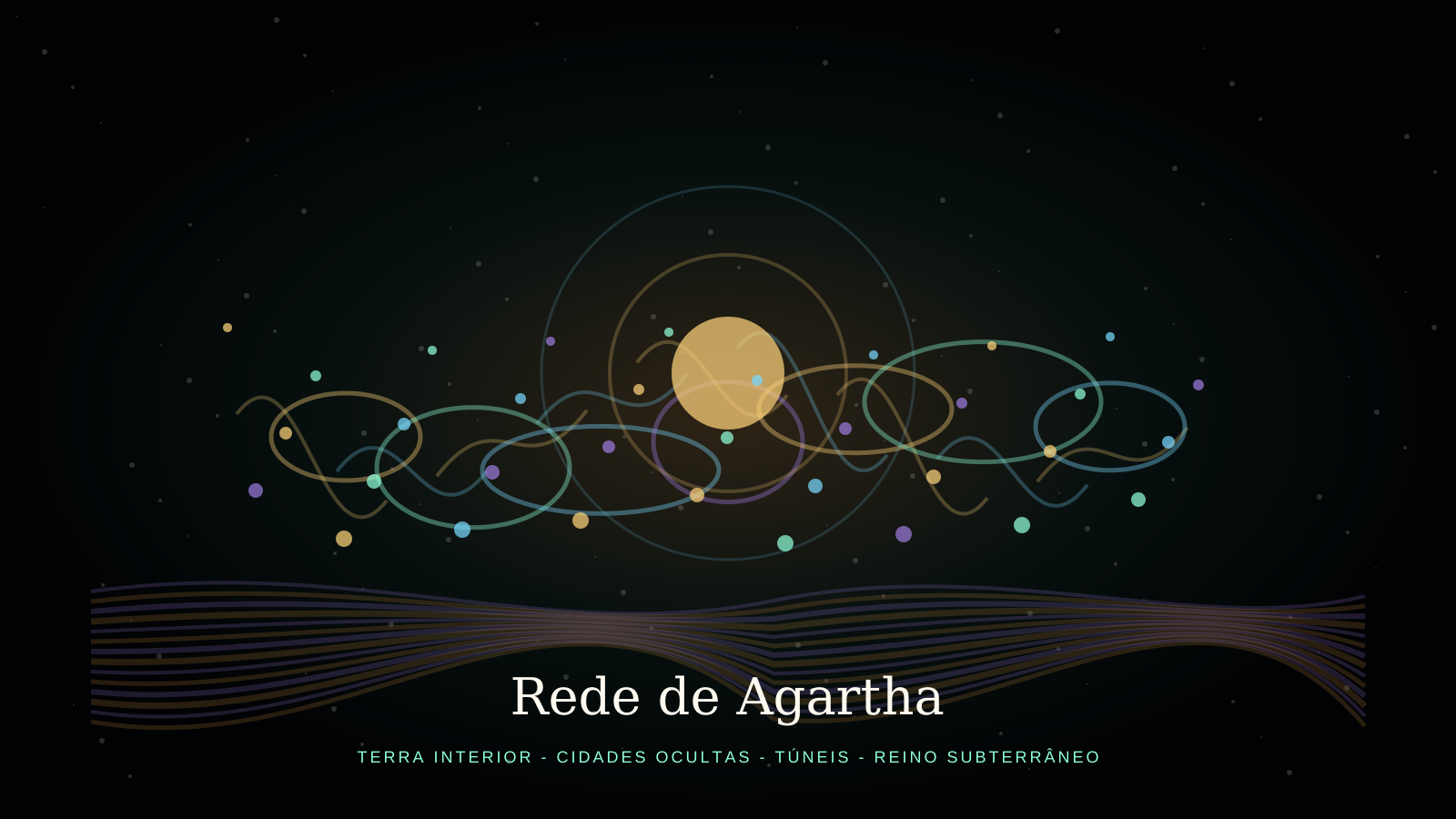
3 direct connectionsAgartha is the idea of an underground network linked to Inner Earth, inner civilizations, mythical tunnels, Shambhala and esoteric traditions about hidden centers of knowledge. Instead of a single lost city, Agartha appears as a world beneath the world: inhabited by spiritual guardians, ancient peoples or more advanced beings.
What the Agartha Network is
In AwakenMap, Agartha connects to Hollow Earth, Inner Earth civilization, Admiral Byrd, Antarctica and secret underground bases. The theme organizes an old question: what if Earth were not only surface, but also hiding place, temple and archive?
The best-known version speaks of an underground or inner kingdom, sometimes located beneath Central Asia, Tibet, the Himalayas, the poles or inaccessible regions. In other versions, Agartha is less geography and more symbol: the hidden spiritual center of Earth.
Where the idea comes from
Agartha became popular in modern esotericism from the nineteenth century onward, mixing European occultism, orientalist imagination, legends of hidden kingdoms and Hollow Earth theories. Over time, the myth moved closer to names such as Shambhala, underground worlds, hidden masters and ancient civilizations.
This matters because Agartha is not one clean tradition. It is a collage of many sources. In some, it looks like a spiritual kingdom. In others, a physical city. In others, an underground base. In others, a metaphor for hidden wisdom.
Shambhala and the hidden kingdom
Shambhala is a name associated with a mythical kingdom of harmony, wisdom and enlightened society in Buddhist traditions and modern interpretations. Agartha is not the same thing, but many popular narratives mix the two: a hidden kingdom, a wiser humanity and an invisible center watching the surface.
This mixture helps explain why Agartha grips people: it promises not only a hidden place, but a civilization that preserved what the surface lost.
The bridge with Hollow Earth
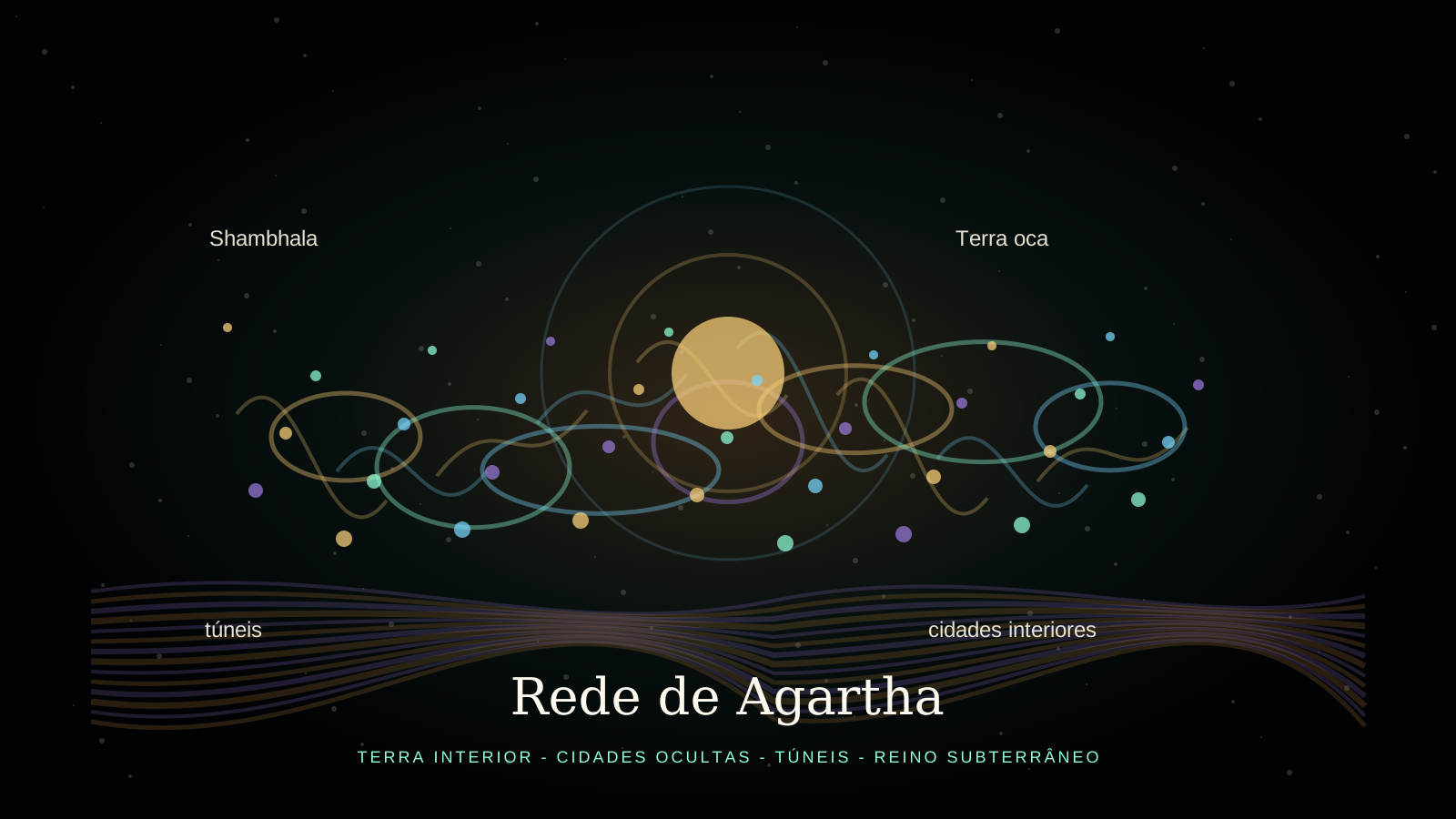
Hollow Earth is the most physical layer of the theme. In it, Earth would have large internal cavities, polar openings or habitable regions beneath the crust. Books such as The Smoky God, published in 1908, helped popularize the image of a journey into Earth’s interior, with a central sun, advanced inhabitants and underground landscapes.
Agartha enters as the organized version of this imagination: not only a cave, but a system of cities, routes and preserved knowledge.
Byrd, Antarctica and polar entrances
Admiral Byrd appears because his name became associated, in popular accounts, with alleged polar entrances to inner worlds. Antarctica also enters the network because it is remote, militarized in some periods, difficult to access and surrounded by treaties, scientific bases and geographic silence.
The historical documentation on Byrd speaks of polar exploration, aviation, strategy and real operations. The Agartha layer adds the mythical reading: poles as portals, ice as lid and incomplete maps as an invitation to mystery.
Underground cities and ancient memory
The theme also speaks to ancient ruins and the Library of Porthologos. In many versions, Agartha would preserve records of earlier civilizations, ancient technologies, spiritual genealogies and archives that surface humanity lost.
This point is powerful because it turns the underground into a library. Beneath Earth there would not be only stone: there would be memory.
Why this theme grips people
Agartha grips people because it reverses the direction of the search. Usually, we look to the sky when thinking of advanced beings. Agartha tells us to look down: mountains, caves, poles, deserts, tunnels and forgotten passages.
That reversal is powerful. It suggests mystery is not only in the stars, but beneath our feet.
How to read without mixing everything
A clear reading separates three layers. The first is geographical: real caves, historical underground cities and human bases. The second is mythical: Shambhala, hidden kingdoms and spiritual centers. The third is speculative: a physical Agartha network, polar entrances and advanced inner civilizations.
When these layers remain separate, the theme becomes richer. The reader can appreciate the myth without confusing symbol, literature and literal claim.
Connections to continue
After Agartha, open Hollow Earth, Inner Earth civilization, Admiral Byrd, Antarctica and secret underground bases. These pages form the Inner Earth path: from spiritual myth to the imagination of underground bases and forbidden territories.
Simple summary
Agartha Network is the myth of inner cities connected by tunnels and hidden centers of knowledge. It mixes Hollow Earth, Shambhala, polar exploration, underground civilizations and ancient memory. The theme is strong because it turns Earth’s interior into kingdom, archive and living mystery.
References and starting points
- Internet Sacred Text Archive - The Smoky God
- UNESCO - Landscape of Dauria / Shambhala cultural references context
- Shambhala - What is Shambhala?
- Discovery UK - Exploring Agartha Myths
- Britannica - Shambhala Buddhism
- The Arctic Institute - Richard Byrd and polar strategic interest
FAQ
Is Agartha a real city?
There is no public proof of a physical city called Agartha. The theme belongs mainly to mythical, esoteric and speculative territory.
Are Agartha and Shambhala the same thing?
Not exactly. They are different traditions, but many modern narratives mix them as images of hidden kingdom and preserved wisdom.
Why is Agartha linked to Antarctica?
Because Hollow Earth narratives often use the poles as possible entrances to inner worlds, and Antarctica feeds the imagination of remote and secret territory.
Keep exploring


Join the conversation
Comments are moderated. Keep the discussion respectful and distinguish evidence, interpretation and personal experience.