
Connection level
20 direct connectionsBuddhahood is the state of complete awakening: the realization of a mind free from ignorance, able to see reality clearly and act with compassion. The word can sound distant, almost monumental, but its center is simple: waking from the confused way we manufacture suffering.
What Buddhahood means
Buddhahood means the state of a Buddha. Buddha, in its basic sense, means awakened. It does not simply mean someone calm, lit by aesthetic light or superior to others. It means one who has deeply understood the origin of suffering, the possibility of its cessation and the path to liberation.
On AwakenMap, Buddhahood connects with meditation, Bardo, ascension, Return to Source, the One Infinite Creator, breathwork, collective consciousness and the Great Awakening. The central question is: is awakening an escape from the world, or a more lucid way of being in it?
The historical Buddha and the title Buddha
The historical Buddha is usually known as Siddhartha Gautama or Shakyamuni, the sage of the Shakya clan. Buddhist traditions say he left a protected life, confronted aging, sickness and death, sought teachers, practiced austerities and finally realized awakening.
But "Buddha" is not only a proper name. It is a title. Tradition speaks of past, future and cosmic buddhas. This changes the reading: Buddhahood is not only the biography of one exceptional individual, but awakening as a spiritual horizon.
Awakening is not anesthesia
A common confusion is to imagine Buddhahood as absence of feeling, perfect coldness or disconnection from life. The Buddhist path, however, does not try to turn a person into stone. It investigates attachment, aversion, ignorance, compulsive desire and the way mind projects permanence where there is change.
Awakening is not failing to feel. It is no longer being blindly dragged by every impulse. It is seeing arising and passing away with enough lucidity to respond differently.
The image of the seated Buddha
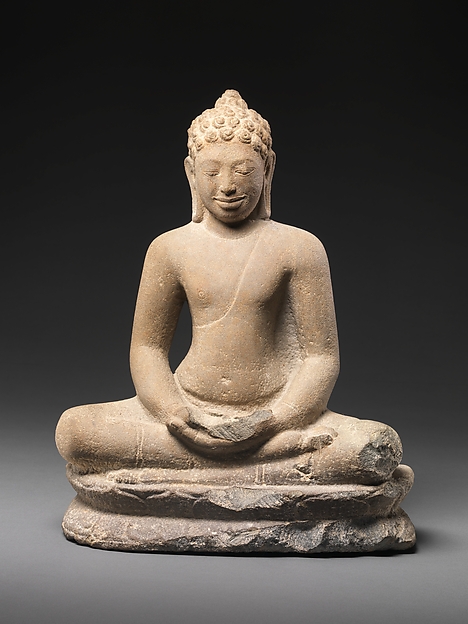
The Vietnamese sculpture beside this text helps clarify an important point: Buddhahood is not spectacle. The seated posture communicates concentration, stability and presence.
The body does not appear as a disposable prison, but as the seat of practice. Awakening happens amid breathing, attention, ethics and concrete life.
Theravada, Mahayana and Vajrayana
Buddhist traditions do not explain Buddhahood in only one way. In Theravada contexts, the ideal of the arahant receives strong emphasis: someone who realizes liberation by following the path taught by the Buddha. The Buddha is the one who discovers and teaches that path in an era when it had been forgotten.
In Mahayana, the bodhisattva ideal becomes central: one seeks awakening for the benefit of all beings. Buddhahood appears as the realization of wisdom and compassion on a vast scale. In Vajrayana, the path uses ritual, visualization, mantra and tantric methods to recognize awakened nature directly, always within lineage and discipline.
Bodhisattva: awakening in service
The bodhisattva is one of the most beautiful keys to the theme. A bodhisattva does not seek liberation as a private trophy. The vow points to a realization inseparable from care for other beings. In this sense, Buddhahood is not spiritual achievement but the maturity of compassion.
This idea speaks to the axis of the Great Awakening in the map: revelation without responsibility can become just another identity. Buddhist awakening measures lucidity by the way it reduces suffering.
Buddha-nature and the potential to awaken
In Mahayana, the notion of Buddha-nature says in different ways that beings have the potential for awakening. Texts connected with tathagatagarbha use images such as seed, embryo, hidden treasure or jewel covered by dirt.
This language is powerful, but delicate. Read carefully, it says: there is a deep capacity for awakening that can be discovered. Read poorly, it may become the idea of a fixed essence, almost an unchanging soul, which stands in tension with Buddhist teachings on impermanence and non-self. The better path is to preserve the tension rather than flatten it.
The marks of awakening
Traditions speak of wisdom, compassion, ethical conduct, inner freedom, meditative stability and right view. In simple language, Buddhahood points to a mind that no longer needs to turn everything into "I", "mine", threat or possession.
This does not mean rejecting the world. It means seeing it without the excess mental fabrication that increases suffering. Practice touches daily life: speech, intention, work, relationship, fear, desire, death and care.
Nirvana and samsara
Nirvana is often understood as the cessation of the fire of ignorance, attachment and aversion. Samsara is the conditioned cycle of suffering, desire and repetition. Buddhahood is the full realization of freedom from that cycle.
In some Mahayana readings, the difference between samsara and nirvana is seen more subtly: not as two separate places, but as two ways of knowing. Reality does not need to be abandoned; it needs to be seen without delusion.
The risk of spiritual ego
Buddhahood can be misused when it becomes a fantasy of superiority. Someone begins speaking of enlightenment in order to stand above others, avoid emotional responsibility or deny real conflicts. That is the old ego wearing sacred clothing.
So a mature reading asks less "am I enlightened?" and more "has my practice reduced attachment, cruelty, confusion and self-deception?". Awakening is measured by the quality of presence, not by the grandeur of the claim.
Images, art and culture
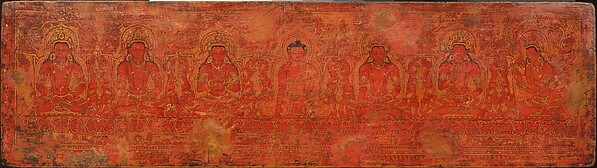
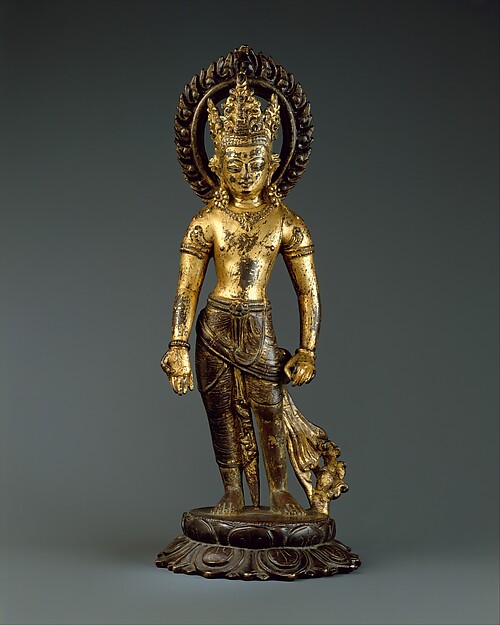
Buddhist art turned Buddhahood into visual language: meditation posture, mudras, halo, lotus, serene expression, scenes from Shakyamuni's life and assemblies of Buddhas and bodhisattvas. These images are not neutral decoration. They teach through form, gesture and silence.
Across Asia, the Buddha was represented in stone, bronze, painting, manuscript, stupa and mandala. Each culture translated awakening through its own materials and sensitivities. This shows that Buddhahood is a philosophical idea, a religious goal and also an aesthetic force.
How to read Buddhahood on AwakenMap
Here, Buddhahood should be read as a convergence node. It touches inner practice, death, compassion, return to origin, subtle body, collective consciousness and transformation. But it needs care: it is not a generic synonym for "high vibration" or a shortcut for every spiritual theory.
The theme becomes stronger when it respects its Buddhist roots while speaking to universal questions: what does it mean to wake up? What changes when mind sees itself clearly? How does a life less bound to ego manifest in the world?
How to continue on the map
After this theme, explore meditation, Bardo, ascension, Return to Source, the One Infinite Creator, breathwork, chakras and kundalini. This path moves through practice, death, subtle body, origin and transformation of consciousness.
Simple summary
Buddhahood is the state of complete awakening in Buddhism. It involves wisdom, compassion and freedom from the ignorance that produces suffering. It is not magical power or spiritual superiority: it is radical lucidity in service of liberation.
References and starting points
- Stanford Encyclopedia of Philosophy - Buddha
- The Metropolitan Museum of Art - Life of the Buddha
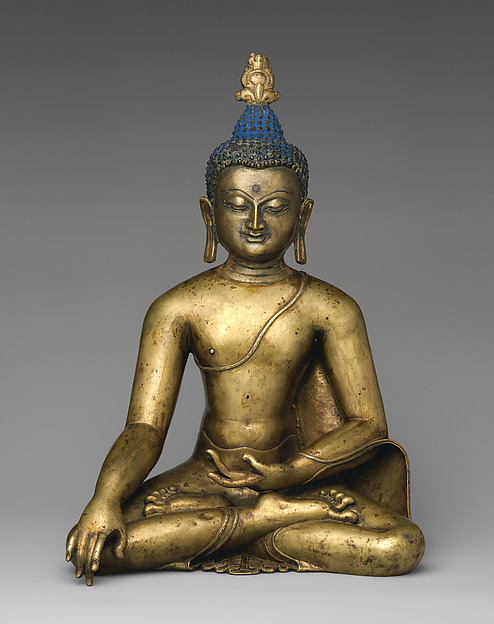
- The Metropolitan Museum of Art - Buddha Shakyamuni, Central Tibet
- The Metropolitan Museum of Art - Seated Buddha, Vietnam
- The Metropolitan Museum of Art - The Buddha Shakyamuni, Five Past Buddhas, and Maitreya
- National Museum of Asian Art - Yoga: The Art of Transformation
- Encyclopedia of Buddhism - Buddhahood
- Encyclopedia of Buddhism - Bodhisattva
- Encyclopedia of Buddhism - Buddha-nature
- 84000 - The Teaching of Vimalakīrti
- 84000 - The Stem Array
- Access to Insight - The Noble Eightfold Path
FAQ
Is Buddhahood the same as enlightenment?
In many contexts, yes: Buddhahood is the fully awakened state. But each Buddhist tradition explains awakening with its own emphasis.
Is the Buddha a god?
In classical Buddhism, the Buddha is not presented as a creator god. He is the awakened one, the one who realized and taught the path of liberation.
Can everyone attain Buddhahood?
Many Mahayana traditions affirm the universal potential for awakening. Other traditions formulate the question differently, distinguishing paths, capacities and periods of practice.
Keep exploring
You can open another path
 Return to Source Enlightenment 5/5 intensity Explore →
  Esoteric practices Breathwork 4/5 intensity Explore →
  Return to Source Return to Source 4/5 intensity Explore →
  Return to Source Compassion 4/5 intensity Explore →
  Return to Source Dogchen 4/5 intensity Explore →
  Return to Source Dream Yoga 4/5 intensity Explore →
Join the conversation
Comments are moderated. Keep the discussion respectful and distinguish evidence, interpretation and personal experience.