Connection level
13 direct connectionsMount Kailash is a sacred mountain in western Tibet, venerated by Hindu, Buddhist, Jain and Bön traditions. The theme belongs to the question of when reverence becomes proof of hidden technology.
Where it came from
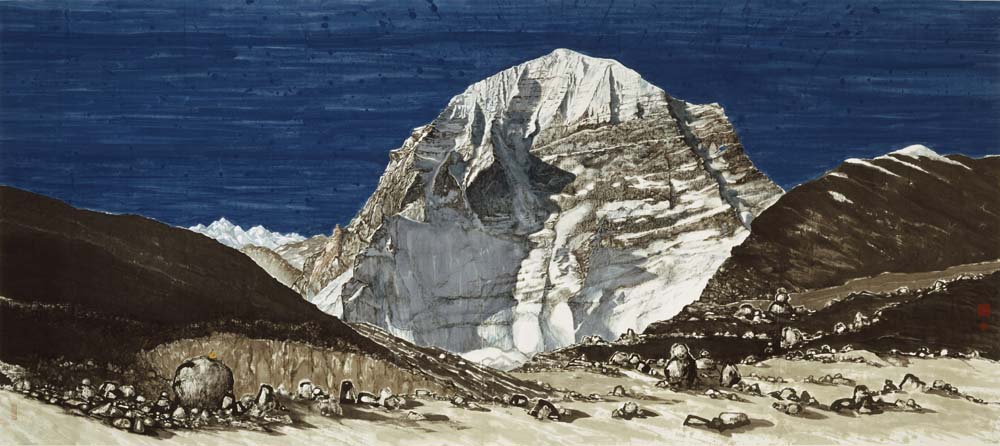
Kailash stands in the Transhimalaya, near Lakes Manasarovar and Rakshastal. It is not only a high mountain; it is a religious center. For many Hindus, it is associated with Shiva. For Tibetan Buddhists, it relates to Mount Meru and the mandala of Demchok. For Jains, it connects to the liberation of Rishabhanatha. For the Bön tradition, it also holds sacred status. The pilgrimage around the mountain, called kora, matters more than reaching the summit.
The fact that Kailash is not climbed is often misread. The main reason is not a “technological barrier,” but religious respect, political restrictions, altitude, isolation and a cultural consensus that the summit should not be profaned. The mountain functions as a natural altar. The central gesture is circumambulation, not conquest.
The conspiratorial layer appears when this inviolability is reread as a sign of material secrecy. If no one climbs, something must be protected. If the shape looks geometric, it must be an artificial pyramid. If several traditions treat it as an axis of the world, it must be an energy machine, portal or planetary antenna. The passage is subtle: religious language about a cosmic center becomes technical language about hidden technology.
This is how narratives arise about a giant pyramid, underground city, entrance to Agartha, axis of the planetary grid, connection with ancient beings and relation to dimensional portals. Some readings also connect Kailash to symbolic distances among monuments, energy lines and alternative maps of Earth.
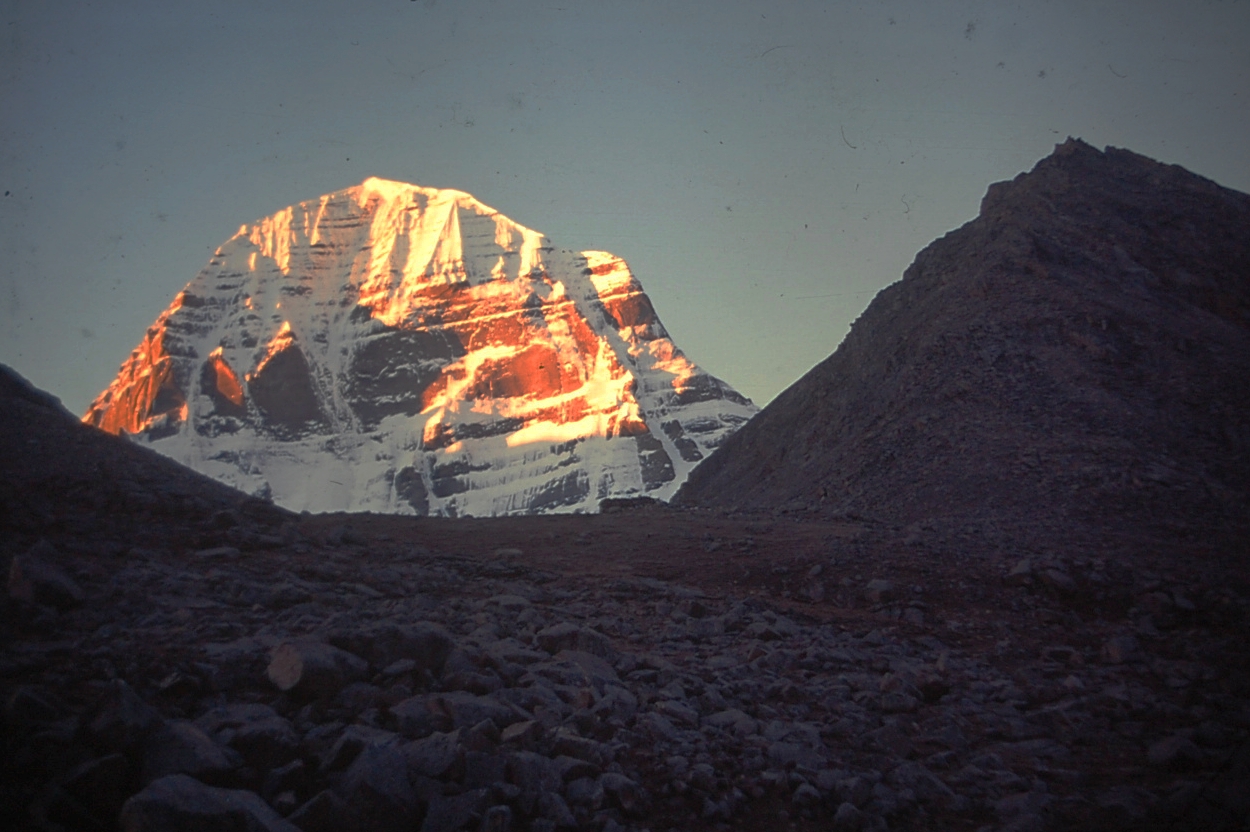
The “why” of the theory lies in the power of the place itself. Kailash combines four rare ingredients: striking visual form, difficult access, multi-religious sacredness and a symbolic prohibition of conquest. To a conspiratorial mind, this looks like code. To a historical and religious reading, this is exactly what many sacred places do: they remove a point from ordinary use and turn it into a center of spiritual orientation.
That does not make the theme poor. On the contrary. Kailash shows how a mountain can organize cosmology, pilgrimage, body, landscape and planetary imagination without needing to become an alien machine. The hidden-technology theory begins when sacred language is translated literally as engineering.
The delicate point
The delicate point is not reducing the sacred to “superstition” and not inflating the sacred into “technical proof.” For pilgrims, Kailash is already the center of the world in a ritual sense. That does not need to mean that an artificial installation exists inside the mountain.
On the map, Mount Kailash connects to ley lines, ancient aliens, pyramids, the Earth Grid, Agartha, Inner Earth civilizations, stargates and Tibetan Buddhism.
These connections show the passage from sacred mountain to energy map, pyramids, Inner Earth and portals. The node does not claim Kailash is an artificial construction; it shows why this kind of place becomes a natural candidate for theories about hidden planetary centers.
Why it belongs on AwakenMap
Mount Kailash belongs on AwakenMap because it teaches the difference between lived mystery and conspiratorial literalization. Some mountains are not important because they hide a machine. They are important because they reorganize the human gaze before the world.
The philosophical connection lies in the question of center. Every culture searches for an axis: a place where sky, earth, body and memory seem to align. The risk is confusing symbolic axis with secret equipment; the opportunity is understanding why certain places continue to summon reverence.
Simple summary
Mount Kailash is a sacred mountain in western Tibet, venerated by Hindus, Buddhists, Jains and Bön practitioners. Pilgrimage around the mountain is central, and the summit is generally not climbed out of religious respect and local conditions. The conspiratorial reading turns its shape, isolation and sacredness into signs of an artificial pyramid, portal, energy grid or underground city. The critical point is separating reverence, geography and myth from technical claims without proportional evidence.
References and starting points
- Britannica - Mount Kailash
- UNESCO - Sacred landscape of Mount Kailash and Lake Manasarovar
- Tibet Travel - Kailash kora pilgrimage
- Wikimedia Commons - Mount Kailash
- Wikimedia Commons - Kailash and Manasarovar
Keep exploring
You can open another path
 Esoteric practices Tibet 5/5 intensity Explore →
  Earth and Antarctica Ley Lines 4/5 intensity Explore →
  Ancient civilizations Ancient Aliens 4/5 intensity Explore →
  Ancient civilizations Pyramids 4/5 intensity Explore →
  Earth and Antarctica Earth Grid 4/5 intensity Explore →
  Map center Great Awakening 4/5 intensity Explore →
Join the conversation
Comments are moderated. Keep the discussion respectful and distinguish evidence, interpretation and personal experience.