Connection level
14 direct connectionsTibet belongs on AwakenMap through the question of when a spiritual tradition becomes a path of lucidity or a screen for occult projections. It is not only a place on a map. It is a historical, religious and political territory that became a mirror for Western dreams of initiation, hidden cities, secret masters, mental power and lost spiritual technology.
Tibet lies on the world's highest plateau, between the Himalayas, Central Asia, India and China. Its geography helped create the image of a remote and elevated world.
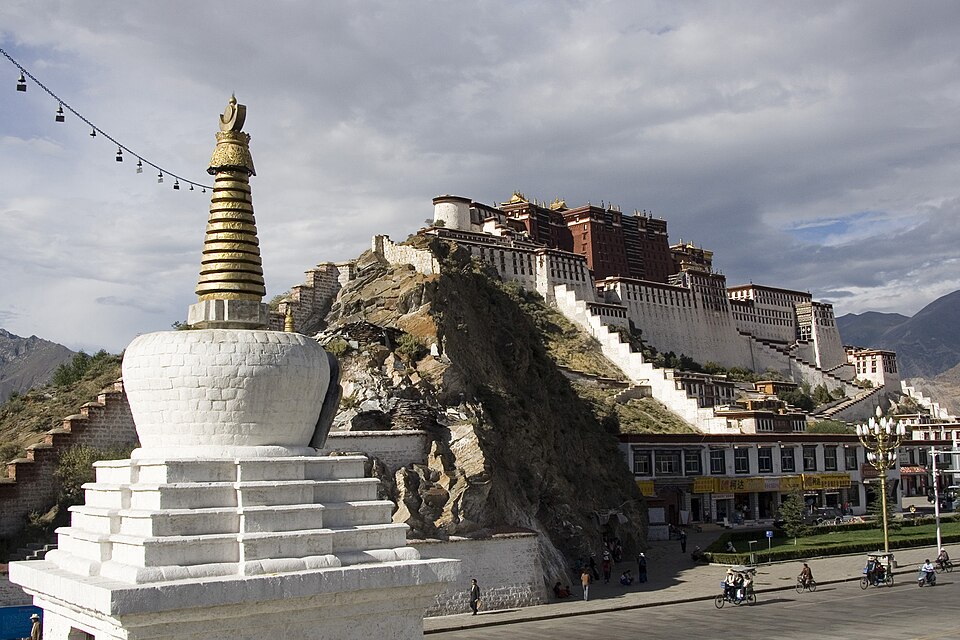
Historically, Tibet developed a distinctive religious culture through local traditions, Bön and Buddhism arriving from India. Lhasa and the Potala Palace became symbols of the synthesis between spiritual and political authority.
The image beside this text shows the Potala Palace in Lhasa. UNESCO recognizes it as part of a historic ensemble linked to the Dalai Lama tradition and Tibet's religious-political center.
It anchors the topic in architecture, institution, memory, conflict and concrete heritage.
Tibetan Buddhism is the main entry point. It preserves meditation, ethics, philosophy of mind, tantric ritual, visualization, mantra and refined commentaries on suffering, impermanence and compassion.
Dzogchen points to one of the tradition's deepest layers: direct recognition of mind before conceptual fabrication. Removed from context, it becomes a quick promise of enlightenment or hidden reality.
Bardo explains another part of the fascination. Intermediate states between death, rebirth and mental experience became important for modern spirituality and psychedelic culture.
rainbow body and Tibetan rainbow body ascension intensify the theme. Reports of rare practitioners manifesting luminous signs at death have been read as spiritual attainment or as technology of ascension.
Shambhala is where myth, religion and conspiracy meet most strongly. In the Kalachakra tradition, it is linked to a pure realm, lineage and protection of Dharma. In the Western imagination, it became a hidden city, subterranean civilization, invisible government or archive of lost spiritual science.
Mount Kailash expands the sacred geography. Conspiratorial readings turn reverence and mystery into claims about ancient technology or non-human presence.
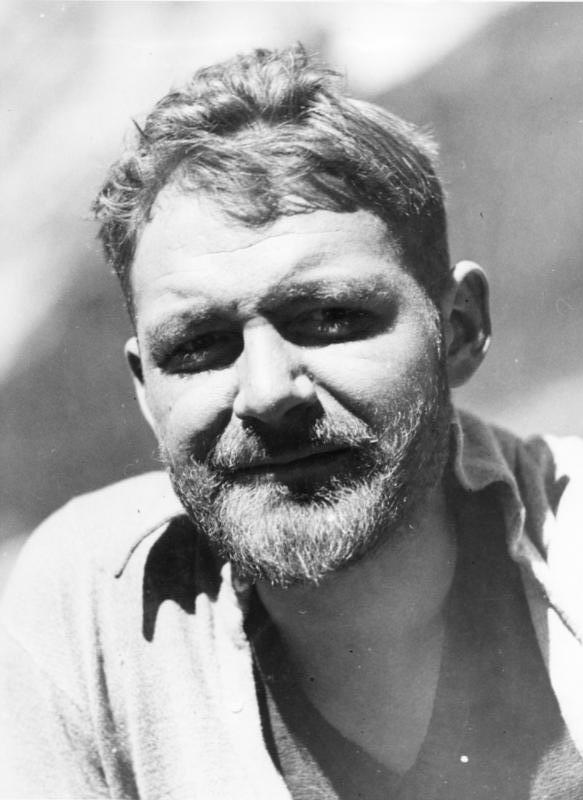
A concrete case is the 1938-1939 German expedition to Tibet, led by Ernst Schäfer. It was real and produced photographs, measurements, films and ethnographic material. Because it happened in Nazi Germany's context of racial and pseudoscientific interests, it became fuel for theories about Shambhala, Aryan origins, occult relics and secret masters.
The image beside this text shows Ernst Schäfer in Bundesarchiv material related to the German Tibet expedition. The historical case is real; the conspiratorial leap is the claim that the expedition found hidden technology, portals or evidence of a secret human origin.
This history connects to secret societies. Tibet was imagined as a place where closed groups preserved spiritual maps, mental techniques and secrets of human origin.
hidden history appears when Tibet becomes evidence of a prior advanced humanity. Monasteries become forbidden archives, mandalas become technological diagrams and legends become literal maps.
The link with the Ancient Builder Race comes from that archaeo-esoteric reading. Mountains, caves, monasteries and symbols are reinterpreted as traces of an ancient builder civilization.
meditation is the sober core. Before any theory about portals, Tibet preserves practices of attention, compassion, visualization and investigation of mind.
Akashic Records enters because many readers associate Tibet with subtle libraries, invisible lineages and Earth's spiritual memory.
Return to Source appears in the search for an origin before ego and ordinary history. consciousness renaissance closes the arc: awakening can mean discipline, compassion, contemplation of death and historical responsibility, not only secret accumulation.
Simple summary
Tibet is a historical, religious and political territory that became a symbol of spiritual initiation, hidden masters, Shambhala, Bardo, Dzogchen, rainbow body, Mount Kailash and secret archives. The conspiratorial layer appears when real traditions are turned into proof of subterranean cities, lost spiritual technology, secret societies or hidden human origins.
References and starting points
- Britannica - historical and religious overview of Tibet
- UNESCO - Historic Ensemble of the Potala Palace, Lhasa
- Study Buddhism - Shambhala, Kalachakra and Tibetan tradition
- Wikimedia Commons - Potala Palace, Lhasa, 2006
- Wikimedia Commons - Ernst Schäfer during the German Tibet expedition
Why it belongs on AwakenMap
It belongs because Tibet links sacred geography, spiritual practice, death, meditation, Shambhala, Western occultism, political history and theories about hidden knowledge.
Keep exploring
You can open another path
 Return to Source Bardo 5/5 intensity Explore →
  Esoteric practices Dzogchen 5/5 intensity Explore →
  Map center Great Awakening 5/5 intensity Explore →
  Esoteric practices Mount Kailash 5/5 intensity Explore →
  Return to Source Tibetan Buddhism 5/5 intensity Explore →
  Consciousness and symbols Consciousness Renaissance 4/5 intensity Explore →
Join the conversation
Comments are moderated. Keep the discussion respectful and distinguish evidence, interpretation and personal experience.