
Connection level
10 direct connectionsNorman Bergrun was an engineer and scientist associated with Ames Research Center who became known in conspiratorial circles for the book Ringmakers of Saturn. The theme belongs to the question of when a technical image becomes cosmic revelation.
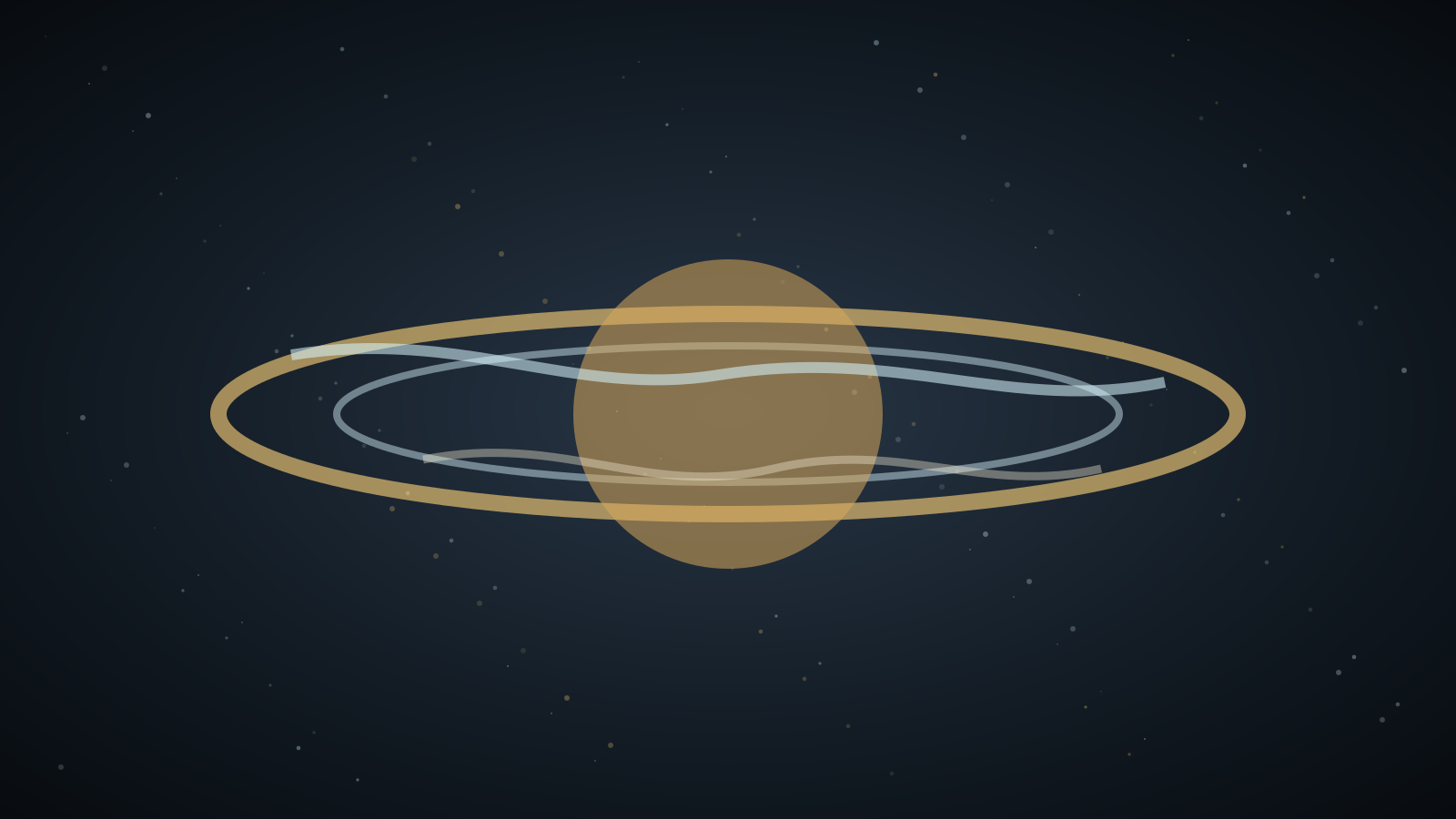
The story begins with a real credential. Bergrun did not appear only as an internet mystic. He worked in aeronautical engineering, thermal ice prevention, aircraft and missile stability, passed through Ames Research Center and later Lockheed. That technical biography is part of the fascination: when someone with a scientific résumé reads Saturn images as signs of giant machines, the claim gains a different aura.
In 1986, Bergrun published Ringmakers of Saturn. In the book, he used public NASA photographs, especially from the Voyager flybys, and applied his own enhancements and interpretations. His conclusion was radical: enormous elongated energetic or electromagnetic objects were operating near Saturn and producing, organizing or disturbing the rings. These alleged vehicles became known as ringmakers.
The conspiratorial layer begins exactly there: if the images are public and the reading looks technical, why was the interpretation not incorporated into official science? For Bergrun's followers, this suggests concealment. NASA released the photos, but not the true conclusion. Saturn stops being only a planet and becomes a cosmic industrial zone, a base of immense craft or part of an architecture tied to the Secret Space Program.
The problem is that space imagery does not speak by itself. Noise, compression, contrast, perspective, particles, shadows, processing and unfamiliar ring dynamics can produce seductive forms. Enhancement can reveal detail, but it can also manufacture visual certainty where there was ambiguity.
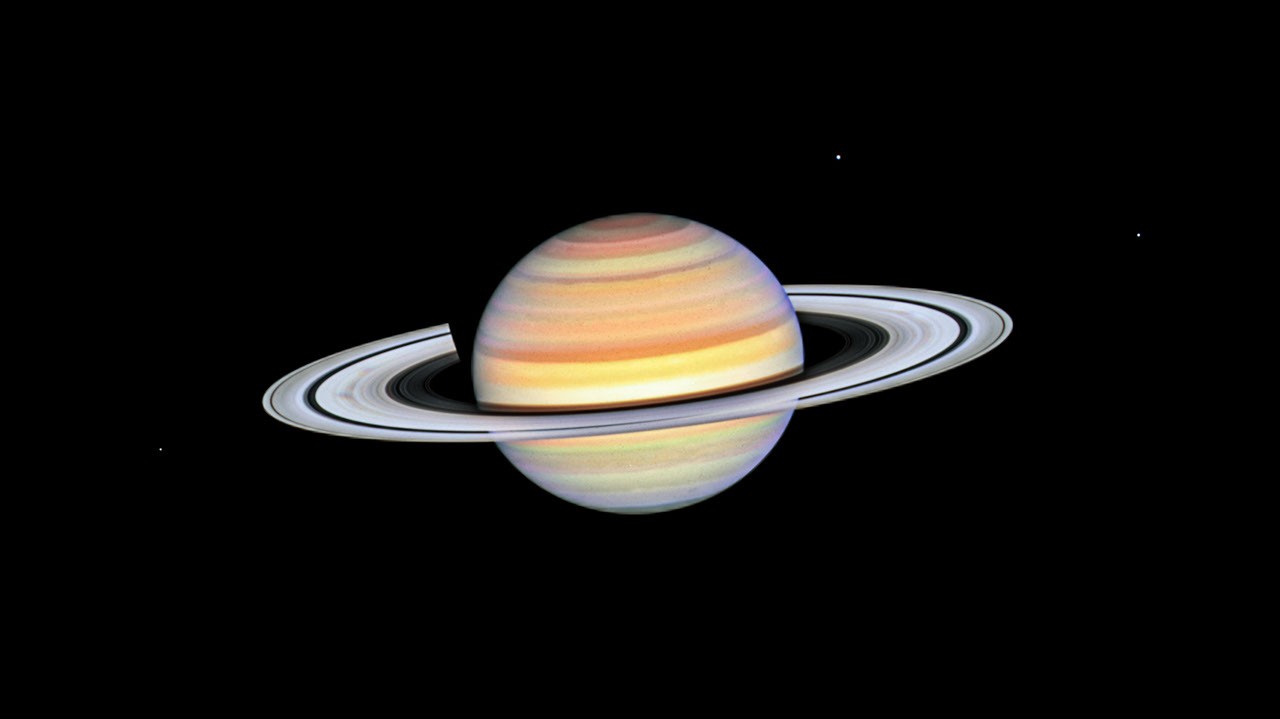
The delicate point is separating three things: Bergrun as a real engineer, Ringmakers of Saturn as a speculative work and the science of Saturn's rings as a living field. NASA and other researchers study real ring structures: waves, gaps, moonlets, spokes, dust levitated by electrostatic forces, magnetic interactions and seasonal effects. None of this requires giant craft. But it also does not make the rings simple; they are complex enough to generate legitimate awe.
This is why the theory grips people. Saturn already carries symbolic weight: time, limit, order, prison, lord of the rings, geometry and occultism. When someone claims there are colossal machines in the rings, the image touches the same territory as the Council of Saturn, Iapetus, the black cube, hyperdimensional physics and cosmic disclosure. The planet stops being an astronomical object and becomes a scene of cosmic administration.

On the map, Norman Bergrun connects to NASA, the Council of Saturn, Iapetus, the Secret Space Program, cosmic disclosure, UFO / UAP, ancient aliens, hyperdimensional physics and the black cube.
These connections show the node's role: it links space ufology, suspicion toward official agencies, Saturn symbolism and the idea of huge technology operating at planetary scale. The node does not claim Bergrun proved these machines; it shows how an image interpretation can become a central piece of an alternative cosmology.
A concrete case
The best concrete counterpoint is the history of spokes in Saturn's rings. These radial marks were photographed by Voyager 2 in 1981, reappeared in Cassini mission data and continue to be monitored by Hubble. In 2023, NASA highlighted a new spoke season tied to the approach of Saturn's equinox. The marks can stretch longer than Earth's diameter and still have no perfect theory.
This case is valuable because it shows exactly where real mystery meets extrapolation. Science recognizes strange phenomena in the rings, works with magnetic fields, solar wind, dust and electrostatic forces, and still does not need to conclude “craft.” Bergrun looked at the same family of visual strangeness and made another leap: he saw machines, intention and external engineering.
For AwakenMap, that interval is the theme. The question is not whether Saturn is banal or whether Bergrun was automatically right. The question is how a visual anomaly passes through instruments, processing, technical biography and desire for revelation until it becomes a narrative of cosmic concealment.
Why it belongs on AwakenMap
Norman Bergrun belongs on AwakenMap because he represents a special kind of alternative authority: someone using technical language, real images and professional credentials to propose a reality much larger than accepted interpretation.
The philosophical connection lies in the seduction of the enlarged image. Seeing more does not necessarily mean understanding better. Sometimes enhancement brings us closer to data; sometimes it brings us closer to projection. Awakening here asks a simple hard question: where does detail end and narrative begin?
Simple summary
Norman Bergrun was an engineer and scientist tied to Ames Research Center, known in conspiratorial circles for the 1986 book Ringmakers of Saturn. He interpreted public NASA images as evidence of enormous vehicles operating in Saturn's rings. Science recognizes real and complex ring phenomena, such as spokes, dust, electrostatic forces and magnetic effects, but this does not prove giant machines. The conspiratorial layer appears when ambiguous imagery, technical credential and Saturn symbolism become a narrative of cosmic concealment.
References and starting points
- Smithsonian - Dr. Norman Bergrun on the Wall of Honor
- Obituary - Norman Bergrun's career and Ringmakers of Saturn
- Archive.org - Ringmakers of Saturn
- NASA - Saturn image with ring spokes
- STScI - Hubble watches spoke season on Saturn
- arXiv - 2024 survey of Saturn ring spokes
Keep exploring
You can open another path
 Map center Great Awakening 5/5 intensity Explore →
  Esoteric practices NASA 5/5 intensity Explore →
  Esoteric practices Cosmic Disclosure 4/5 intensity Explore →
  Secret Space Program Iapetus 4/5 intensity Explore →
  Secret Space Program Secret Space Program 4/5 intensity Explore →
  Secret Space Program UFO / UAP 4/5 intensity Explore →
Join the conversation
Comments are moderated. Keep the discussion respectful and distinguish evidence, interpretation and personal experience.