Connection level
11 direct connectionsHuman Face is the theme that asks why the mind recognizes face, intention and presence in stone, shadow, cloud, planet, religious image or visual noise. It belongs to the question of when recognition becomes revelation.

What the term means
On AwakenMap, Human Face is not only anatomy. It is the moment when an ambiguous form seems to look back. This effect appears in mountains, craters, stains, religious icons, space photographs and common objects. The experience can be poetic, spiritual or simply perceptual.
The main fracture is perception and projection. Perception recognizes a real pattern of light, shadow and form; projection adds intention, authorship and message before enough evidence exists.
How the idea formed
The history of this theme comes from three layers. The first is biological: humans are extremely sensitive to faces, because recognizing expression, gaze and threat has always mattered for social life. The second is symbolic: cultures see faces in gods, saints, ancestors, mountains and sky. The third is technological: space cameras and digital images expanded the search for recognizable forms in distant places.
That is why the human face is so strong. It turns a surface into a character. When the form seems to have eyes, nose and mouth, the brain tends to ask who is there, not only what is there.
The Face on Mars case
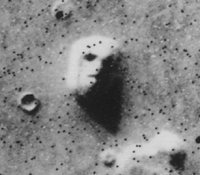
The most famous example is the Face on Mars, in Cydonia. The image was recorded by the Viking 1 probe on July 25, 1976. A few days later, a NASA public release observed that the formation resembled a human head. From there, the photograph took on a life of its own.
Some authors and commentators, such as Richard Hoagland, began to read the face together with supposed nearby structures, such as an ancient city or the Cydonia Pyramids. For that imaginary, the form was not only a hill; it was a possible monument, trace of Martian civilization or sign of Ancient Aliens.
What the conspiracy claims
The conspiratorial theory is not simply “there is a face on Mars.” The stronger claim says the Face on Mars is an artificial signature, possibly left by an ancient Martian civilization or by a non-human intelligence connected to the secret history of the Solar System.
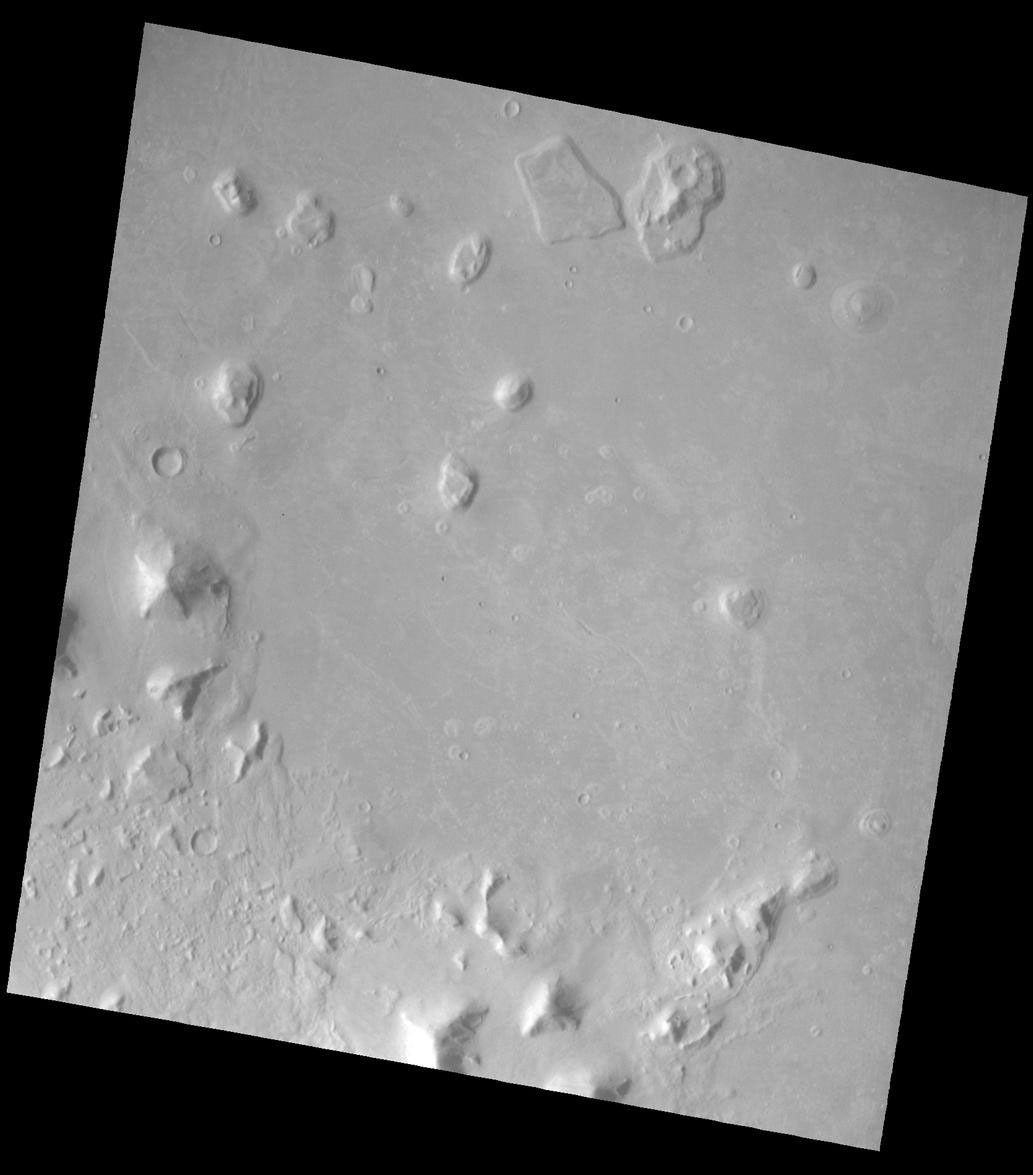
In that reading, Cydonia is not only a geological region. It is a ruin complex: face, pyramids, alignments and geometric forms composing a message or memorial. The conspiratorial accusation appears when NASA, JPL, ESA or planetary science are said to have deliberately reduced the case to optical illusion in order to prevent a Martian archaeology.
This narrative persuades because it mixes three emotional forces: the original image really does look like a face; Mars already lives in the human imagination as a neighboring planet and possible ancient home; and space institutions work with data most people cannot directly verify. From there, doubt becomes suspicion and suspicion becomes a cover-up story.
Alternative hypothesis and conspiratorial leap
The alternative hypothesis would be moderate: perhaps some Cydonia formations deserved careful visual, geological and comparative study. That question is legitimate while it remains open to better-resolution imagery, relief, illumination and geological context.
The conspiratorial leap happens when the suggestive form is already treated as a monument, when every later image that weakens the thesis becomes proof of manipulation and when lack of confirmation is read as confirmation of concealment. At that point, the face stops being evidence to investigate and becomes a symbol protected against refutation.
What later images changed
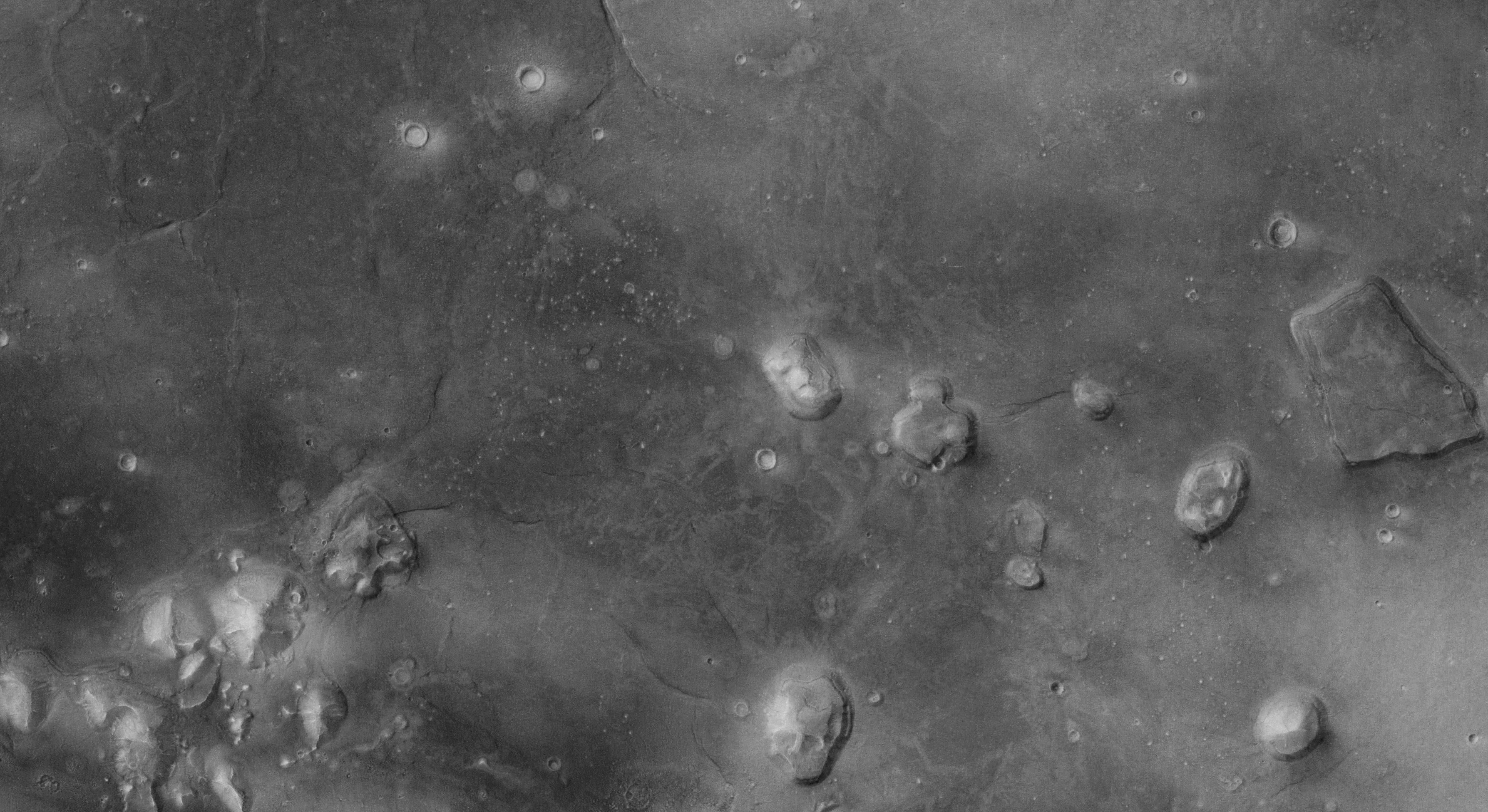
Later missions, with better resolution and other lighting angles, showed the formation as an eroded mesa or hill. NASA, JPL and ESA treat the case as an optical illusion linked to light, shadow, relief and visual expectation. This does not erase the fascination of the original image; it changes the weight of the conclusion.
The Face on Mars remains important precisely because it shows how one image can move through science, press, popular culture, ufology and Hidden History. It teaches that a visible pattern can be real as experience, but weak as proof of intelligent authorship.
Pareidolia and the search for meaning
Psychology calls pareidolia the tendency to perceive meaningful patterns in ambiguous stimuli. Faces are the most powerful case. This is not stupidity; it is the normal functioning of a perceptual system trained to recognize presence quickly.
This point is delicate: saying something is pareidolia does not mean the experience is empty. A face seen in stone can inspire art, prayer, dream or reflection. The error begins when the subjective force of the experience is used as objective proof of message, entity or architecture.
What is source and what is evidence
As source, we have space mission images, agency releases, studies on face perception, the history of ufology and cultural reports of faces in natural forms. As evidence of a construction, the pattern would require more: geometric repetition, archaeological context, fabrication marks, worked material, dating and independent confirmation.
A suggestive image can open a question. It does not close the investigation. In the Martian case, the strongest public evidence points to natural relief seen under specific lighting conditions.
Relation to other nodes
On the map, Human Face connects to the Face on Mars, Cydonia, the Cydonia Pyramids, Mars, Ancient Aliens, Hidden History, Collective Consciousness and the Secret Space Program.
These connections show a corridor between visual perception, extraterrestrial hypothesis, archaeological imagination and desire for revelation. When the theme touches the Secret Space Program, it enters a wider layer: Mars as a stage for ruins, hidden colonies, ancient technology and institutional cover-up. The node does not claim every face is false; it asks which path leads from image to conclusion.
Why it belongs on AwakenMap
The main fracture is between perception and projection. The face appears because the brain recognizes patterns; revelation only begins when interpretation survives context, comparison and evidence.
The philosophical connection on AwakenMap is this: awakening is not ceasing to see symbols. It is seeing symbols without handing them an authority they have not yet earned. The face can call attention; investigation decides what it supports.
How to continue on the map
After this theme, explore the Face on Mars, Cydonia, the Cydonia Pyramids, Ancient Aliens, Hidden History and Collective Consciousness.
Simple summary
Human Face is the theme of the tendency to recognize face and intention in ambiguous forms. The best-known case is the Face on Mars, photographed by Viking 1 in 1976. The conspiratorial theory says it could be an artificial monument and that space agencies reduced the discovery to pareidolia in order to hide Martian ruins. Later images favor the natural-relief reading, but the theme matters because it shows how a strong perception can become symbol, myth or conspiracy before it becomes evidence.
References and starting points
- NASA - high-resolution image of the Face on Mars
- JPL/NASA - the so-called Face on Mars in infrared
- ESA - Cydonia and the Face on Mars
- NASA - return to Cydonia in Astronomy Picture of the Day
- U.S. National Library of Medicine - face pareidolia in neural networks
- Johns Hopkins - science of seeing faces in nature
- Wikimedia Commons - Viking image of the Face on Mars
- Wikimedia Commons - Cydonia region in later imagery
Keep exploring
You can open another path
 AwakenMap theme Cydonia 5/5 intensity Explore →
  AwakenMap theme Face on Mars 5/5 intensity Explore →
  Map center Great Awakening 5/5 intensity Explore →
  AwakenMap theme Wanderers 5/5 intensity Explore →
  Ancient civilizations Ancient Aliens 4/5 intensity Explore →
 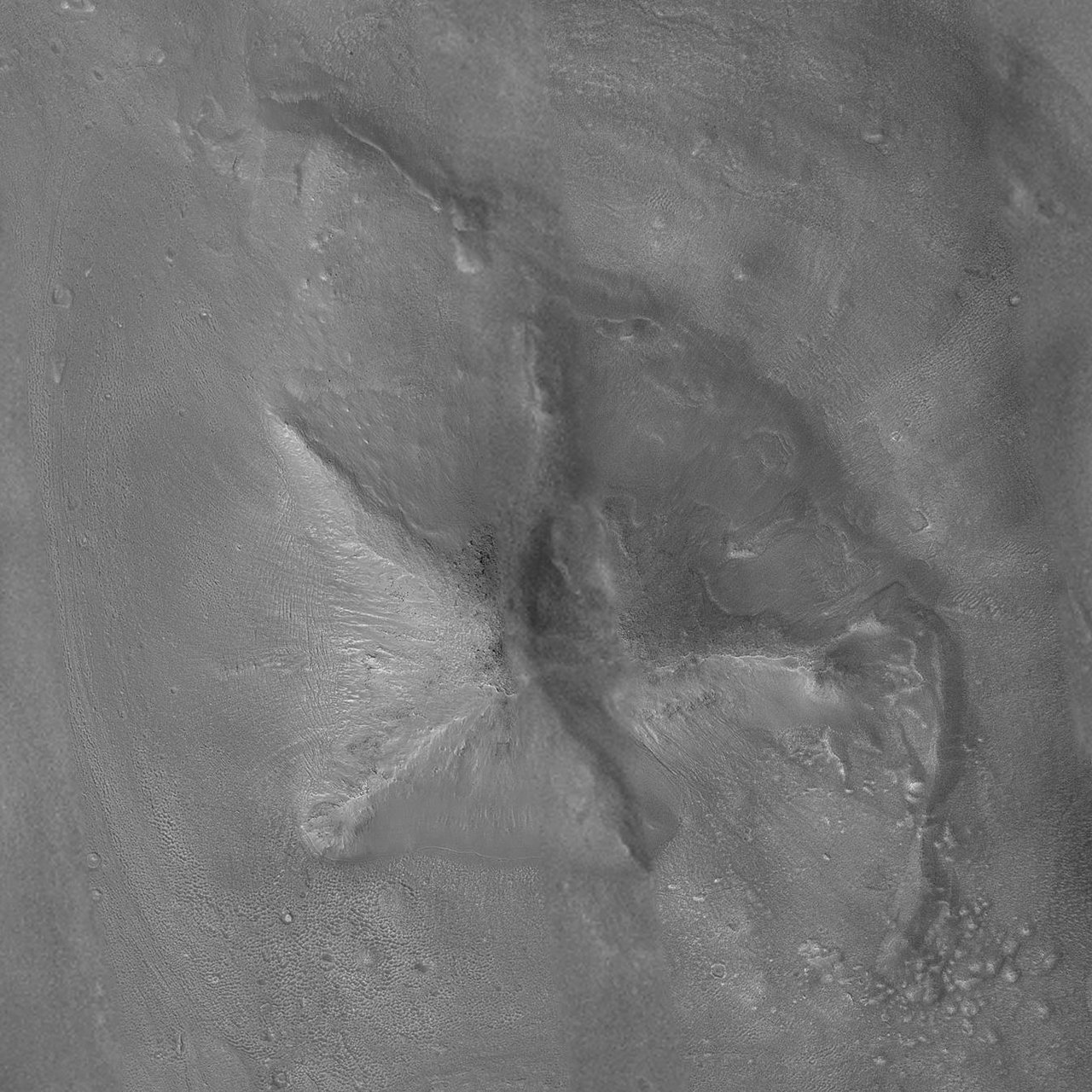 AwakenMap theme Cydonia Pyramids 4/5 intensity Explore →
Join the conversation
Comments are moderated. Keep the discussion respectful and distinguish evidence, interpretation and personal experience.