Connection level
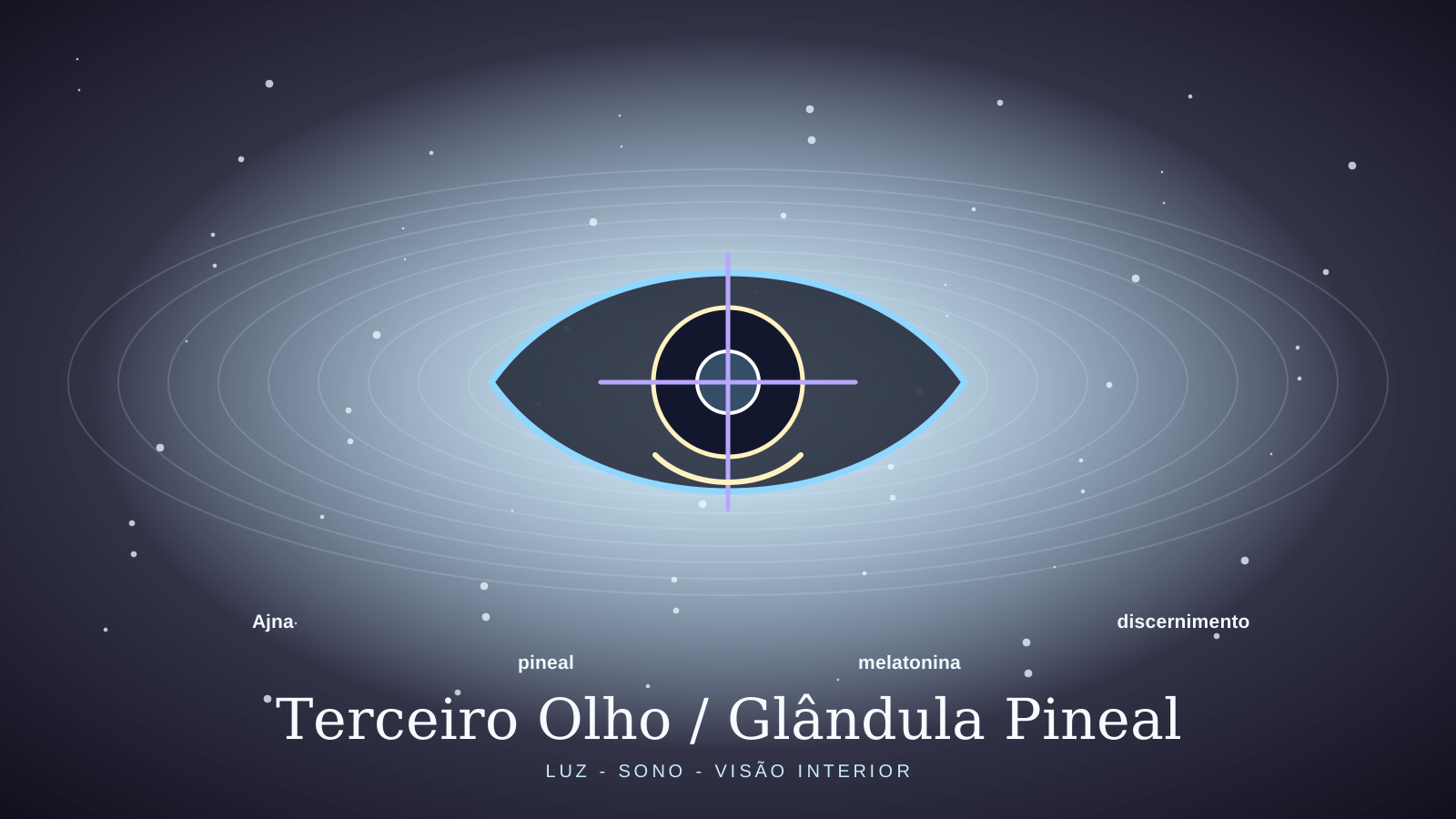
12 direct connectionsThe Third Eye unites Ajna, intuition, inner sight, the pineal gland, melatonin, sleep, light, meditation and the need to separate spiritual symbol from real neuroscience.
The eye that does not look outward
The Third Eye is one of spirituality's strongest images. It appears as the center of inner sight, intuition, discernment, lucid dreaming, subtle perception and awakening of consciousness. In many modern traditions, it is associated with the Ajna chakra, symbolically located between the eyebrows, and with the ability to see beyond appearances.
At the same time, the Third Eye became linked to the pineal gland, a small endocrine gland located in the brain. This association created a powerful bridge between mysticism and biology: if there is a real, deep structure sensitive to the cycle of light and darkness, perhaps it is the physical basis of spiritual perception.
In AwakenMap, the theme needs care. There is a legitimate symbolic layer about inner vision. There is a real biological layer about the pineal gland, melatonin and circadian rhythm. And there is a speculative layer, where DMT, calcification, fluoride, pineal activation, psychic powers and conspiracies appear. Mixing everything weakens the theme.
Ajna: the center of discernment
In the chakra system, Ajna is usually presented as the center between the eyebrows, linked to perception, intuition, concentration, imagination, spiritual vision and inner command. The word is often translated as command or perception. In yoga, meditation and tantra practices, this point can function as a focus of attention.
Ajna's force does not depend on proving there is a literal physical eye there. As symbol, it organizes a real human experience: sometimes we perceive something before we can explain it. Intuition, pattern reading, mental silence, dream and bodily perception can appear as inner sight.
Mature reading does not reduce Ajna to superstition and does not automatically turn it into a paranormal organ. It can be understood as a contemplative map: a way to train attention, discernment and the ability to observe thoughts without being dragged by them.
The real pineal gland
The pineal gland is a small structure located in the brain. Medical sources such as Britannica, Cleveland Clinic and NCBI describe its central function in producing melatonin, a hormone involved in regulating circadian rhythm and the sleep-wake cycle. It receives indirect information about light and darkness through neural pathways linked to the biological clock.
Endotext summarizes the pineal's main function as receiving information about the environmental light-dark cycle and conveying it through melatonin production and secretion. That is fascinating enough: a deep gland helps the body know when it is night.
This reality gives the symbol a strong poetic foundation. The pineal does not need to be turned into a proven interdimensional portal to be mysterious. It translates light into biological time. It reminds us that consciousness, sleep, environment and night sky are linked by bodily rhythms.
Why the pineal became the third eye
The association between pineal and third eye has several origins. In some vertebrates, pineal or parietal structures have a more direct relationship with light. In humans and higher mammals, the pineal does not function as a visual eye, but responds indirectly to light through circuits involving retina, circadian clock and nervous system.
Descartes called the pineal the seat of the soul, adding a philosophical layer to Western imagination. Later, esoteric and spiritualist traditions brought this gland closer to the inner eye. Its central position in the brain, small mysterious form and link with light and sleep did the rest.
It is important to say: the human pineal does not see images. But it participates in a biology of light. This difference allows a more beautiful and more precise reading. The third eye does not need to be a hidden camera; it can be a symbol of the relationship between light, inner time and deep perception.
Melatonin, sleep and states of consciousness
Melatonin is often called the hormone of darkness because its production increases at night and helps signal the rest period. Cleveland Clinic describes melatonin as a hormone produced mainly by the pineal, involved in the sleep-wake cycle and circadian rhythm. This connects the pineal to sleep, dreams, recovery and sensitivity to environment.
Intense spiritual states often depend on simple bodily conditions: adequate sleep, silence, low light, calm breathing, routine and reduced stimulation. A sleep-deprived person may confuse exhaustion with expansion. A regulated person may access meditation with more stability.
Therefore, working with the third eye should not mean obsession with powers. It can begin with sleep hygiene, less artificial light at night, regular meditation, attention to dreams, reduction of mental noise and care for the body. Spirituality becomes stronger when the nervous system is not at war.
Pineal calcification: fact, fear and exaggeration
Pineal calcification is real and common. Studies and reviews indicate that calcium deposits in the gland appear frequently, especially with aging. Some research investigates associations between calcification, melatonin and neurological conditions, but this does not mean every popular narrative about calcified pineal glands is correct.
On the internet, pineal calcification became an explanation for spiritual blockage, loss of intuition, social control and inability to awaken. It also appears associated with fluoride, diet, metals, toxins and conspiracies. Some of these hypotheses may point to legitimate environmental concerns, but specific claims often exceed the evidence.
Critical reading asks: what kind of calcification was measured? In which population? What causal relationship was demonstrated? Is there a proven intervention? What is common aging and what is pathology? Without these questions, biological fear becomes spiritual decalcification marketing.
DMT, pineal and psychedelic imagination
Another popular theme is the idea that the pineal would produce DMT in quantities capable of generating dreams, near-death experiences, mystical visions or interdimensional journeys. The hypothesis is seductive because it joins biology, psychedelia and mysticism in a simple narrative: the brain would have a secret visionary molecule.
The problem is that public evidence does not support many strong versions of this narrative. There is research on endogenous tryptamines and brain metabolism, but claiming that the human pineal releases enough DMT to explain all spiritual phenomena is a leap. Mystical experience is too complex to be reduced to a chemical phrase.
This does not reduce the mystery. It only means the mystery should be investigated carefully. Visionary experiences may involve neurochemistry, memory, trauma, expectation, meditation, breathing, culture and meaning. The pineal may be on the map, but should not become the only explanation.
Opening the third eye: promise and risk
The internet sells third-eye opening as fast access to clairvoyance, telepathy, aura vision, spiritual contact and entity perception. This language attracts because it promises expansion of consciousness and personal proof of the invisible. But it can also generate anxiety, dissociation, paranoia and rigid spiritual fantasy.
Intense attention practices need grounding. Meditation, visualization, fasting, sleep deprivation, strong breathing and substance use can alter perception. For some people, this is transformative; for others, disorganizing. Anyone with a history of psychosis, mania, severe trauma or dissociation should be extra careful and seek professional guidance.
Opening the third eye, in a healthy reading, is not seeing strange things at any cost. It is learning to perceive better: inner patterns, self-deception, bodily intuitions, signs of fear, ethical clarity and limits. Inner sight should make a person more lucid, not more lost.
Third Eye in AwakenMap
In AwakenMap, Third Eye connects to Pineal Gland, Chakras, Kundalini, Meditation, Telepathy, Auras, QHHT, Mental and Spiritual States, Dreams, DMT, Natural Light, Frequency and the Great Awakening. It is a node of perception, discernment and the boundary between biology and mysticism.
This theme matters because many users seek spiritual awakening through visual signs, dreams, synchronicities and intuitions. The page should offer a compass: there is a deep symbolic dimension; there is a real gland; there are speculative hypotheses; and there is mental health that must be respected.
The best version of the Third Eye is not sensationalist. It does not promise instant powers. It teaches clarity. Seeing better also means doubting better, feeling better, sleeping better, discerning better and acting with more responsibility.
How to read this theme
Read the Third Eye in four layers. The first is spiritual: Ajna, intuition, inner sight and meditation. The second is biological: pineal, melatonin, light and sleep. The third is speculative: DMT, calcification, psychic powers and activation. The fourth is psychological: imagination, attention, dream, dissociation and meaning.
When someone makes a promise, ask which layer it is in. If symbolic, assess whether it helps one live with more clarity. If biological, ask for medical sources. If healing, ask for clinical evidence. If psychic power, ask for humility and method. If it generates fear, stop and ground.
The Third Eye is strong because it reminds us that seeing is not only looking. Seeing is perceiving pattern, shadow, intention and direction. The pineal reminds us that light regulates the body. Ajna reminds us that consciousness needs focus. Between the two, there is a path of discernment.
Critical reading
The Third Eye should be read by separating spiritual symbol, real pineal gland and speculative claims. Intuition can be cultivated without turning biology into sensational promise.
References and starting points
- Britannica - Pineal gland
- NCBI Bookshelf - Physiology of the Pineal Gland and Melatonin
- Cleveland Clinic - Pineal gland
- Cleveland Clinic - Melatonin
- PMC - Pineal calcification, melatonin and aging
- PMC - Prevalence of pineal gland calcification
- Colorado State University - The Pineal Gland and Melatonin
FAQ
Is the pineal literally an eye?
Not in humans. It participates in light-dark regulation through indirect pathways and produces melatonin, but it does not form images like the eyes.
Is opening the third eye safe?
Gentle meditation and attention practices may be useful, but intense pursuit of visions, sleep deprivation or strong techniques can disorganize some people. Mental health and grounding are essential.
Keep exploring
You can open another path
 Esoteric practices DMT 4/5 intensity Explore → Esoteric practices Entheogens 4/5 intensity Explore →
  Healing and energy Kundalini 4/5 intensity Explore → Healing and energy Third Eye 4/5 intensity Explore →
  Esoteric practices Meditation 4/5 intensity Explore → Esoteric practices Lucid Dream / Astral Travellers 4/5 intensity Explore →
Join the conversation
Comments are moderated. Keep the discussion respectful and distinguish evidence, interpretation and personal experience.