Connection level
14 direct connectionsUniversal archetype belongs on AwakenMap through the question of why ancient images keep awakening something in us. The theme asks why certain images appear so often in dreams, myths, religions, films, rituals and conspiracy theories: the hero descending into the underworld, the terrible mother, the divine child, the shadow, the wise old man, the flood, the serpent, the labyrinth, the tree, the eye, the center. The answer can be psychological, cultural, spiritual or conspiratorial. The care lies in not mixing all of them as if they were the same thing.
The most influential modern formulation comes from Carl Gustav Jung, the Swiss psychiatrist born in 1875. Jung broke with Sigmund Freud and developed analytical psychology, in which the unconscious is not only a storehouse of repressed personal memories. For him, there was also a collective layer of the psyche, formed by inherited patterns of human experience. These patterns were not ready-made images, but forms that organize images: psychic matrices able to appear in myths, dreams and symbols.
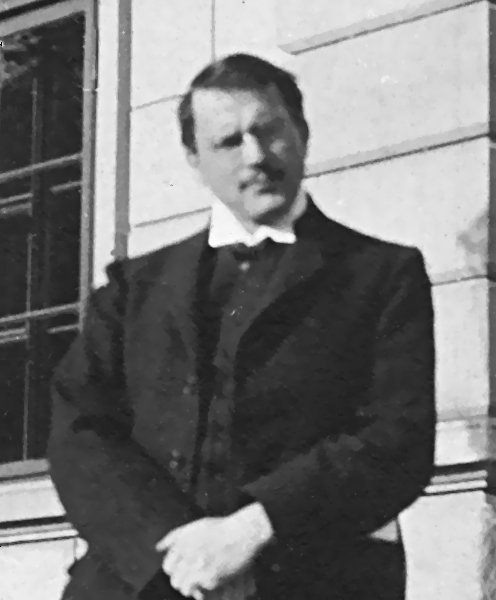
The image beside this text shows Jung around 1910, when he was still close to the international psychoanalytic movement, before his public break with Freud and before the consolidation of his own language about archetypes, collective unconscious, shadow, anima, animus and Self.
It matters because the universal archetype did not begin as an internet spiritual meme. It comes from debates in psychology, comparative religion, mythology, clinical work, dreams and cultural history.
A universal archetype is not simply a repeated symbol. A serpent can mean healing, danger, renewal, temptation, wisdom or power depending on the culture. The archetype lies deeper: it is the recurrence of a human situation. Crossing fear, being born, dying, separating from parents, facing the shadow, meeting the guide, falling, being reborn, returning home. This is why different cultures can produce similar images without one directly copying the other.
The connection with collective consciousness appears because the archetype suggests a common dimension of human experience. It does not need to mean collective telepathy or a mystical shared database. It can mean that human bodies, human fears, human childhood, human death and group life generate similar narratives. It can also be read spiritually, as if a larger symbolic memory crossed individuals.
The best-known concrete case is the hero's journey. Joseph Campbell popularized the idea that heroic myths from different cultures often follow a pattern: call, separation, trial, symbolic death, encounter with higher forces, transformed return. This model became so influential that it shaped modern scripts, including adventure and fantasy cinema. When an audience recognizes that path without needing explanation, the archetype is working.
But this is where the conspiratorial layer begins. If the same pattern appears in ancient religions, Greek myths, folk tales, films, brands, propaganda and politics, some people conclude that there is a central symbolic engineering: someone is using archetypes to program masses, control desire, manufacture heroes, induce fear or hide an ancient truth. Sometimes this points to something real, because propaganda and advertising do use symbols. The dangerous leap is claiming that every symbolic repetition proves one cabal operating history.
This is why the theme speaks to the Matrix. The archetype can feel like a crack in the scenery: suddenly, a person sees similar patterns everywhere and feels that reality is assembled by codes. In a balanced reading, this can open symbolic literacy. In a closed reading, everything becomes a sign of a simulation matrix: cinema, religion, logo, architecture and politics become layers of the same hidden program.
sacred geometry and the Flower of Life enter through another path. Forms such as circle, center, spiral, mandala, star, tree and flower appear in rituals, art, temples and spiritual maps. They can express order, wholeness, growth, protection or cosmos. The conspiratorial reading arises when the presence of the form is treated as an automatic signature of secret control, without asking who used it, in what context, with what intention and with what evidence.
The relationship with hidden history is strong because archetypes can feel too ancient to belong to the present. The sensation of finding the same symbol in distant civilizations can produce legitimate wonder. It can also feed the thesis that there was a erased primordial tradition, a lost spiritual science or an elite that inherited symbols from an earlier humanity. This hypothesis seduces because it turns resemblance into a clue of common origin.
secret societies and Kabbalah appear when symbols are read as passwords. Initiatory traditions really do preserve symbolic languages: numbers, letters, trees, ladders, temples, divine names, degrees, rites. The mistake is to look at any ancient symbol and declare that it proves hidden domination. In many cases, it is simply a human attempt to give form to the invisible.
The most beautiful part of the archetype is that it does not reduce religion to falsehood. It shows why an image can touch people even when they do not know its origin. A mother with child, a descent into darkness, a return home, a circle of protection, a light above, a crossing of water: all of this speaks to deep layers of the body and imagination. enlightenment can also be read this way: not only as an abstract idea, but as an archetypal image of clarity after darkness.
The dangerous part appears when a person confuses inner recognition with external proof. Feeling that a symbol “knows me” does not prove that it was planted by an elite. Dreaming of a serpent does not prove that an external force sent a message. Seeing the same pattern in three films does not prove secret coordination. The archetype explains why certain designs return; it does not authorize every conclusion about who controls the return.
ARAS, the Archive for Research in Archetypal Symbolism, is a concrete example of careful approach. It gathers thousands of symbolic images from different cultures with historical and psychological commentary. This kind of work shows that comparing symbols requires context. It is not enough to place images side by side and say “they are the same”. One must ask period, culture, ritual function, material, transmission, political use and possible interpretation.
A contemporary example of research is the attempt to reinterpret archetypes through the language of neuroscience and altered states of consciousness. Recent work discusses whether archetypal experiences could correspond to deep patterns of brain organization and perception. This does not turn Jung into hidden physics, but it shows that the question remains alive: why do certain symbols organize emotion and meaning so powerfully?
The connection with the Mandela Effect appears because collective memory and recurring image mix. Sometimes an entire community remembers a brand, phrase or scene differently. A psychological reading speaks of memory reconstruction and cultural contagion. A conspiratorial reading speaks of altered reality. The archetype stands in the middle: it shows that we remember the world through narrative molds, not as a neutral camera.
The link with return to source is spiritual. Many systems say universal symbols exist because all consciousness comes from a common origin. In this vocabulary, archetypes are echoes of source, not isolated inventions. This reading can be beautiful when it opens humility and contemplation. It becomes rigid when it turns into hierarchy: those who “understand the symbols” are awake; those who do not are programmed masses.
On AwakenMap, the mature reading separates four planes. First, the psychological plane: archetypes as patterns of human experience. Second, the cultural plane: images transmitted by myths, art, religion and media. Third, the spiritual plane: symbols as language of deep meaning. Fourth, the conspiratorial plane: the suspicion that these patterns are used to manipulate or hide a secret architecture of reality.
The universal archetype matters because it is a powerful and dangerous key. It helps us see that human life is not made only of facts, but of forms of meaning. At the same time, it can become a shortcut into exaggeration: seeing pattern where there is coincidence, seeing intention where there is cultural repetition, seeing central command where there is shared human imagination. The good question is not “does the symbol appear?”. The good question is “what changes when this symbol appears, who is using it and what evidence supports the reading?”.
Simple summary
Universal archetype is the idea that certain symbolic patterns repeat across dreams, myths, religions, rituals, films and conspiracy theories because they express deep human situations. The theme comes mainly from Jung and the collective unconscious, passes through Campbell and the hero's journey, and enters the conspiratorial field when recurring symbols are treated as proof of programming, hidden control or one secret tradition.
References and starting points
- International Association for Analytical Psychology - the collective unconscious
- International Association for Analytical Psychology - archetypes and the collective unconscious
- PMC - neuroscientific interpretation of Jungian archetypes
- ARAS - Archive for Research in Archetypal Symbolism
- Joseph Campbell Foundation - the hero's journey
- Wikimedia Commons - Carl Jung portrait in 1910
Why it belongs on AwakenMap
It belongs because the whole map is made of recurring symbols. The universal archetype helps read those repetitions with depth without turning every similarity into proof of manipulation. It is a tool for seeing better, not a license to conclude too quickly.
Keep exploring
You can open another path
 Consciousness and symbols Collective Consciousness 5/5 intensity Explore →
  Map center Great Awakening 5/5 intensity Explore →
  Esoteric practices The Hero's Journey 5/5 intensity Explore →
  Consciousness and symbols Consciousness Renaissance 4/5 intensity Explore →
  Return to Source Enlightenment 4/5 intensity Explore →
  Consciousness and symbols Flower of Life 4/5 intensity Explore →
Join the conversation
Comments are moderated. Keep the discussion respectful and distinguish evidence, interpretation and personal experience.