
Connection level
20 direct connectionsTime travel and temporal defense belongs on AwakenMap through the question of who controls the narrative when even the past seems disputable. The theme joins two ideas: the possibility of crossing or observing other points in time, and the hypothesis that history would require protection against interference. In its conspiratorial form, the question is not only whether someone could go back into the past; it becomes more political: who would have the authority to preserve one timeline and prevent other versions of history from surfacing?
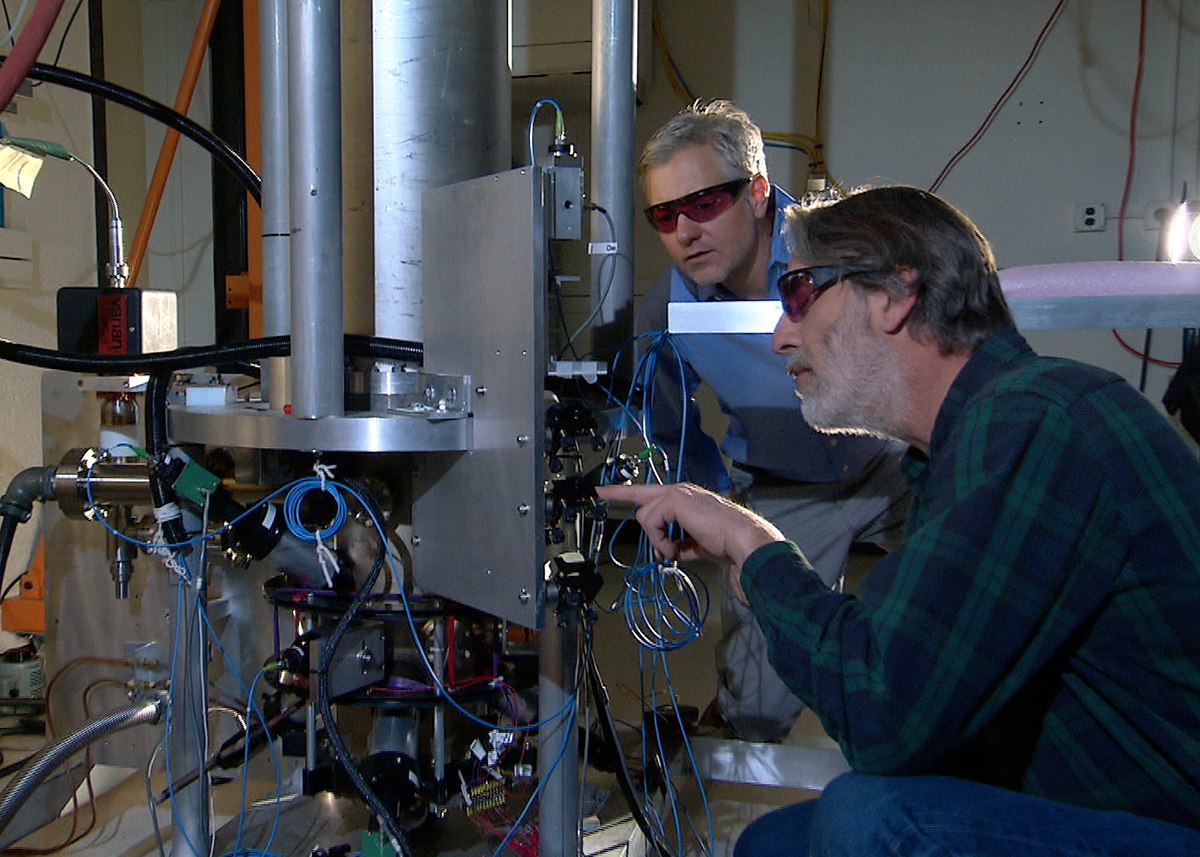
The real foundation has to be separated from fantasy. Modern physics does not treat time as an immobile background. Relativity, gravity, velocity and atomic clocks show that measured time can vary in tiny but real ways. Systems such as GPS depend on relativistic corrections to remain accurate. This does not prove time machines, visitors from the future or chronological warfare; it proves something more modest and still enormous: time, technology and measurement are already entangled at the center of modern infrastructure.
The image beside this text shows the NIST-F2 atomic clock, a cesium fountain used as a time standard. It grounds the theme. Before portals or temporal patrols, there is the engineering of measuring nanoseconds, synchronizing networks and testing Einstein's predictions.
The conspiratorial leap begins when that real precision becomes an imagination of historical control: if governments and laboratories can measure time so precisely, could they also map, correct or defend timelines?
One concrete case is the Hafele-Keating experiment in 1971. Joseph Hafele and Richard Keating carried atomic clocks on commercial aircraft, compared them with clocks left on the ground and found differences compatible with special and general relativity. The scale was tiny, but the philosophical point is powerful: two clocks can disagree because they followed different physical paths. Conspiratorial fiction takes that narrow door and imagines an entire avenue.
This is where time travel appears. In popular imagination, time travel means entering a machine, crossing a fold, receiving information from the future or altering a past event. In conspiracy narratives, the idea almost never stands alone. It arrives with secret files, military bases, compartmentalized projects, erased memories and witnesses who claim to have seen impossible technologies before their time.
temporal defense emerges as the answer to that threat. If someone could change a war, prevent a birth, accelerate a technology or erase a revelation, continuity would have to be protected. Temporal defense would then be an invisible police force of causality: agents, artificial intelligences, occult societies or military groups charged with maintaining the “correct” line of history.
Montauk is one of the strongest mythologies in this field. Stories about the Montauk Project involve mind control, portals, trained children, underground facilities and experiments capable of opening passages through time. There is no robust public documentation confirming those allegations as fact, but the narrative became influential because it merges fear of military technology, trauma, the Cold War and the suspicion that human memory can be managed from outside.
The Philadelphia Experiment functions as an earlier legend. The story speaks of naval invisibility, teleportation, temporal effects and horrific physical consequences for crew members. Skeptical researchers usually treat it as a modern legend, yet it provides a structure that would repeat many times: a military experiment goes out of control, opens a breach in space-time and is then buried by decades of silence.
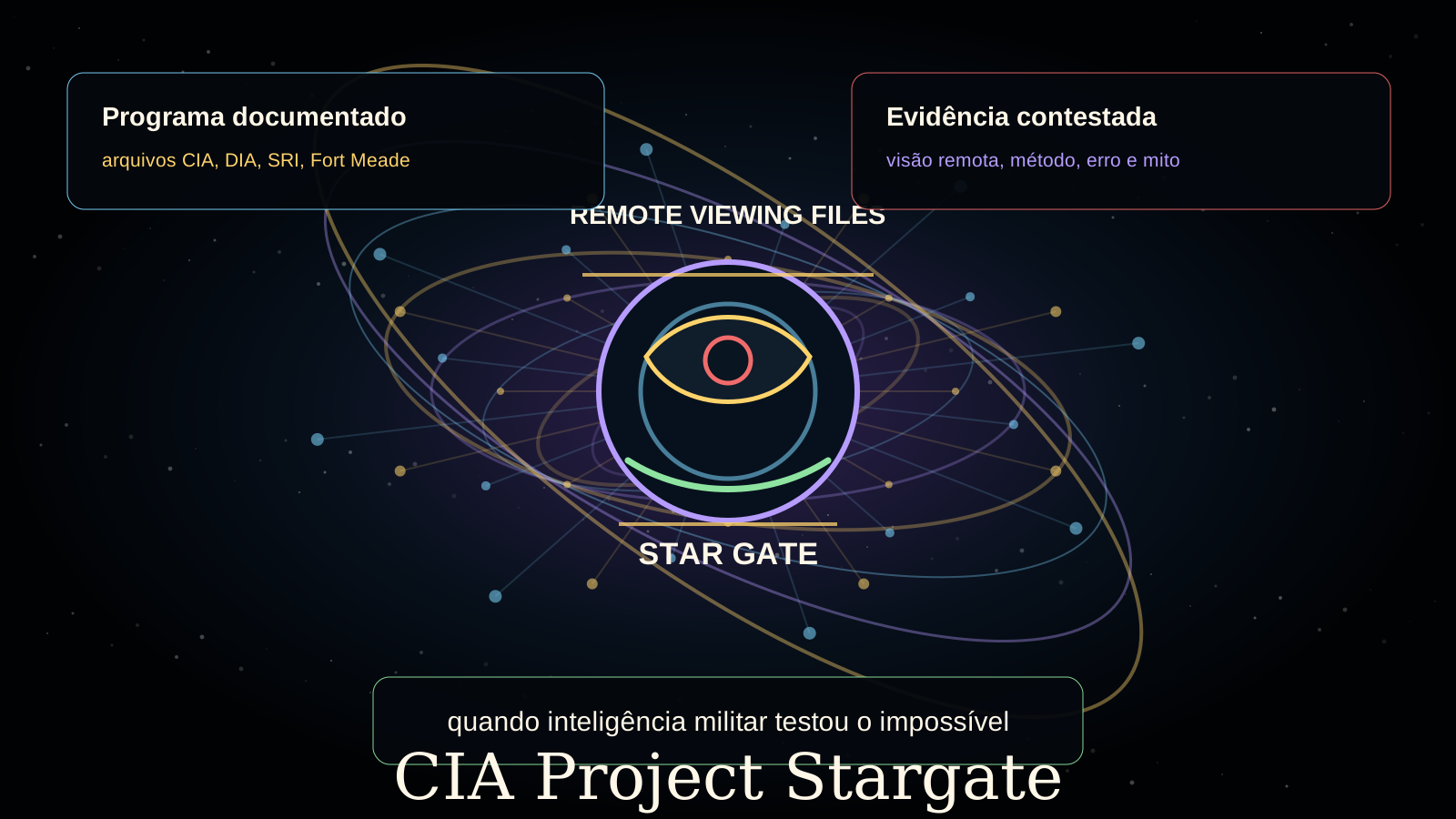
The connection with Project Stargate is subtler and more interesting. The United States government really did fund and evaluate remote viewing research in an intelligence context. It was not an official time-travel program, but it shows that mental capacities considered anomalous were studied inside state structures. The conspiratorial question is born there: if they tried to see across distance, did someone try to see across time?
The CIA Stargate program also helps explain why the theme survives. When an official file confirms that anomalous perception was investigated, even if the institutional conclusion is critical or insufficient, popular imagination gains an anchor. A conspiracy does not need to prove everything; it leans on one true piece and asks how many layers never reached paper.
timeline convergence and the optimal timeline take the theme in a spiritual direction. Some currents speak of probable lines, diverted lines, artificial lines and a more favorable line for human awakening. Temporal defense, in that sense, would not be only military technology; it would be protection of collective destiny. The future would be contested by choices, rituals, artificial intelligence, entities, secret groups and collective consciousness.
time-bubble slowdown brings the theme closer to local experience: fields where time seems to slow down, anomalous zones, lapses, memory gaps and reports of missing hours. These episodes do not prove temporal manipulation, but they explain the emotional force of the theory. When someone feels that time failed, the narrative offers an engineering explanation for that failure.
The Mandela Effect may be the nearest cultural example. Thousands of people remember names, scenes, logos or events differently from the dominant record. The simpler explanation involves collective memory, confabulation, circulation of similar versions and digital culture. The conspiratorial reading replaces that with a more dramatic hypothesis: divergent memories would be traces of timelines colliding or being corrected.
quantum physics is often invoked confusingly in this field. Terms such as superposition, observer, many worlds and collapse are used to suggest that choices create parallel realities. Real physics is far more technical than those popular versions. Even so, it provides seductive vocabulary for imagining time as a field of probabilities rather than a fixed chronology.
The simulation matrix and the matrix illusion make the idea even more radical. If reality is an editable structure, defending time means defending historical code against alteration. False memories, conflicting versions of events and strange coincidences stop being human failures and start being seen as signs of a system update.
free will is the philosophical center of the problem. If there is an optimal timeline, who chooses it? If a higher intelligence corrects the past to avoid catastrophe, are we still free? And if human groups claim to act in the name of the future, how do we distinguish legitimate protection from total control? Temporal defense sounds heroic until it becomes invisible government over destiny.
The bridge with the Secret Space Program and disclosure appears when secret technology, space, antigravity, non-human intelligence and classified files enter the same conversation. In stronger versions, full disclosure would include not only craft and bases, but records of temporal manipulation, wars between timelines and technologies capable of forecasting or editing events.
The intellectual danger is turning every historical contradiction into evidence of temporal alteration. Incomplete archives, propaganda, censorship, journalistic error, faulty memory and political dispute already explain a great deal. When every divergence becomes “they changed the timeline,” investigation loses method. The mystery grows, but the ability to verify shrinks.
A mature reading separates three planes. First, physical time measured by clocks, relativity and precision systems. Second, psychological and historical time, made of memory, trauma, narrative and power. Third, the conspiratorial hypothesis of technologies or groups capable of observing, altering or patrolling timelines. Confusing those planes produces false certainty; separating them reveals why the myth is so seductive.
Time travel and temporal defense matter because they reveal a deep fear: not only being deceived about the present, but having the past edited before we can understand it. The promise of protecting the correct line can sound liberating. But it can also become the perfect justification for invisible authority: someone, somewhere, claiming to know which future deserves to survive.
Simple summary
Time travel and temporal defense combine the idea of crossing or observing other points in time with the hypothesis of protecting historical lines from interference. The real foundation involves relativity, atomic clocks, GPS and precise time measurement. The conspiratorial layer appears in narratives about Montauk, the Philadelphia Experiment, Project Stargate, remote viewing, the Mandela Effect, simulation matrix, free will and disclosure. The critical point is to separate measured-time science, collective memory and claims of secret temporal warfare.
References and starting points
- NIST - testing relativity with atomic clocks
- NASA - why relativity is critical for GPS
- Wikimedia Commons - NIST-F2 atomic clock
- CIA Reading Room - evaluation of the remote viewing program
- AARO - historical report on secret program allegations
- Great Awakening Map - original poster
Why it belongs on AwakenMap
It belongs because many awakening theories do not only contest the future; they also contest the memory of the past. The theme asks who has authority to say which line is true, which future should be protected and when the search for historical coherence becomes paranoia about reality editing.
Keep exploring
You can open another path
 Map center Great Awakening 5/5 intensity Explore →
  Esoteric practices Temporal Defense 5/5 intensity Explore → Secret Space Program Time Travel 5/5 intensity Explore → Esoteric practices Time Bubble Slowdown 4/5 intensity Explore →
  Control systems CIA Project Stargate 4/5 intensity Explore →
  Return to Source Free Will 4/5 intensity Explore →
Join the conversation
Comments are moderated. Keep the discussion respectful and distinguish evidence, interpretation and personal experience.