Connection level
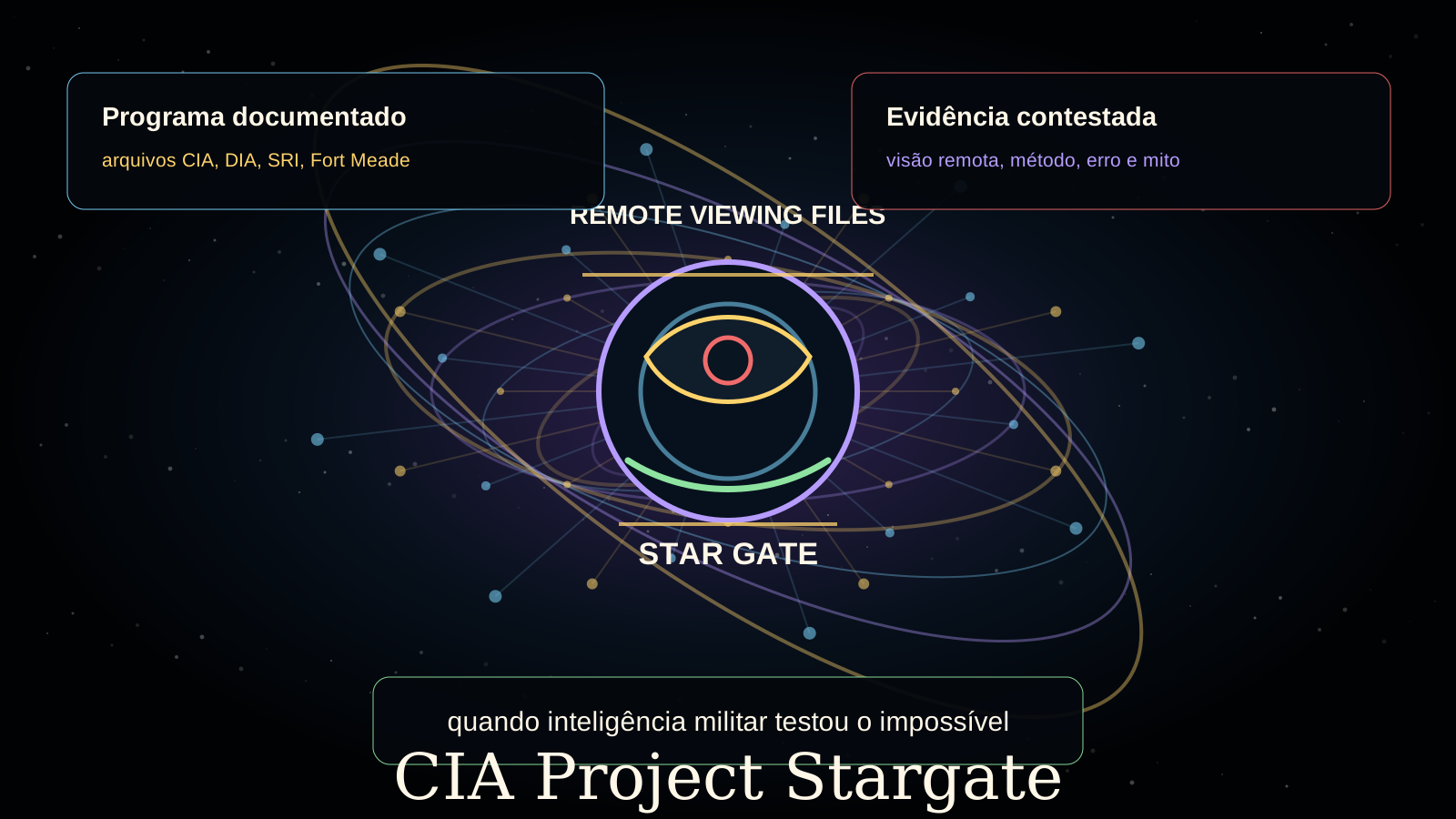
17 direct connectionsProject Stargate belongs on AwakenMap through the question of when a declassified file becomes proof, myth or projection. Unlike many themes on the map, this one has a verifiable historical core: United States intelligence agencies funded research and operations related to remote viewing, meaning the attempt to obtain information about distant targets through psychic means. The conspiracy begins when that real fact becomes the conclusion that governments command a secret mental science able to cross walls, predict events and manipulate collective perception.

The program grew inside the climate of the Cold War. The Soviet Union and the United States competed for every possible advantage: satellites, cryptography, rockets, weapons, sensors and also marginal areas of psychology. If there was even a small chance that psychic abilities could produce useful information, military logic said it was better to investigate before the adversary did so alone.
Its roots pass through research at Stanford Research Institute, with figures such as Harold Puthoff, Russell Targ, Ingo Swann and other participants associated with remote viewing. The goal was not to open a physical portal, despite the name suggesting that to modern audiences. It was to test protocols in which a person would try to describe a place, object or event without ordinary sensory access to the target.
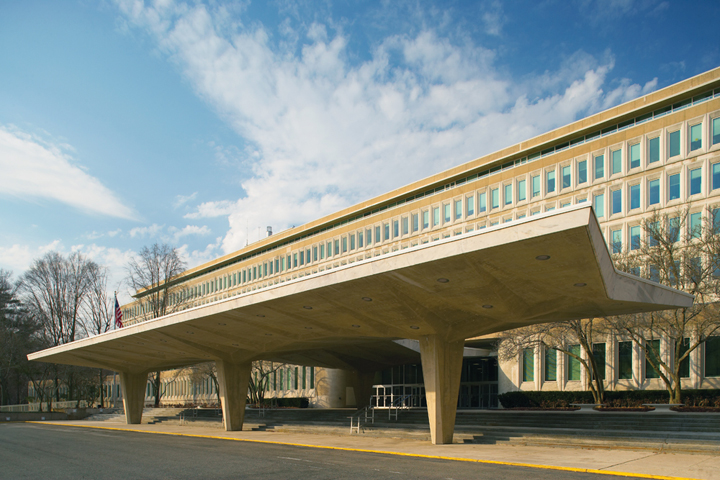
The image beside this text shows the seal of the CIA, an institutional anchor for the case. Stargate matters precisely because it is not merely forum legend. Declassified files, official evaluations, administrative documents and reports confirm government interest in remote viewing.
But the existence of a program does not prove that the method worked as its strongest defenders claimed. That is the central point.

In 1995, when the program was transferred to CIA oversight, the American Institutes for Research produced a retrospective evaluation. The report acknowledged that statistical data were debated by defenders of the phenomenon, but concluded that remote viewing had not demonstrated enough usefulness for intelligence operations. After that evaluation, the program was terminated and part of the material was declassified.
This is where the theme becomes important for AwakenMap. For a simple skeptical reading, Stargate shows waste, military curiosity and methodological limits. For a conspiratorial reading, the closure can be interpreted as theater: the public program was supposedly shut down only to hide a more effective, more secret and deeper version. The same declassification that should end suspicion begins to feed it.
The theme connects to the CIA Project Stargate because the map itself contains a duplication of language: “Stargate” can mean the institutional remote-viewing program or, through popular association, a dimensional doorway. This ambiguity pulls the node toward stargates, even when the real documents speak of mental perception, not physical tunnels through space. The name is too strong to remain neutral.
The connection with lucid dreaming and astral travel, the third eye and the consciousness renaissance appears because remote viewing depends on the idea that mind can access information outside ordinary sensory channels. This touches dreams, trance, visualization, intuition and altered states. The question is not only “does it work?”; it is who decides what counts as evidence when the experience is internal, subjective and hard to repeat.
The most cited concrete case is the public Stargate archive itself: a mass of documents where targets, sessions, drawings, coordinates and evaluations coexist with military bureaucracy. Seeing those documents changes the feeling of the theme. We are not dealing with a story invented from nothing; we are dealing with a gray zone where state curiosity, parapsychology, geopolitical fear and low operational reliability mixed together.
The conspiratorial layer expands when this gray zone is linked to Montauk, time bubble slowdown, the Secret Space Program and the matrix illusion. Remote viewing stops being an attempted psychic intelligence tool and becomes a piece of a larger engineering: reading timelines, astral exploration of secret bases, mental access to extraterrestrial installations, memory erasure and reality manipulation. The more themes connect, the greater the risk that concrete evidence disappears under a total narrative.
There is, however, an emotional reason the narrative survives. Stargate confirms something many people suspect: governments study strange subjects when they believe those subjects might produce advantage. That confirmation opens another, more dangerous question: if they studied this, what else did they study and not disclose? The theory grows in the interval between a real document and unrestrained imagination.
A mature reading has to hold two truths at once. Yes, official funding and interest in remote viewing existed. Yes, it was serious enough to produce documents, contracts and evaluation. But it is also true that the official evaluation did not find a robust operational basis for keeping the program. The fact that something was researched does not automatically turn the hypothesis into proven technology.
Stargate is valuable because it shows how a sophisticated conspiracy is born: not from a pure lie, but from a true file interpreted beyond what it supports. The document opens the door; imagination rushes through it. Discernment begins when the reader calmly asks which part is proven, which part is plausible, which part is testimony and which part has become myth.
Simple summary
Project Stargate was a real program linked to remote viewing and psychic research funded by United States intelligence agencies during the Cold War. It investigated whether people could obtain information about distant targets without ordinary sensory means. The conspiratorial layer appears when this real archive is interpreted as proof of secret psychic warfare, mind control, portals, timelines and hidden technologies still active.
References and starting points
- CIA - Electronic Reading Room Stargate archive
- CIA - declassified documents related to Stargate
- FAS - 1995 remote viewing program evaluation
- CIA - declassified 1983 analytical document
- AARO - historical report on secret-program claims
- Wikimedia Commons - CIA seal
Why it belongs on AwakenMap
It belongs on AwakenMap because Stargate shows the perfect mechanism of the ambiguous file: something real, documented and strange enough to open legitimate questions, but insufficient to prove the broader versions that grew around it. Awakening, here, means reading documents without turning every gap into confirmation.
Keep exploring
You can open another path
 Control systems CIA 5/5 intensity Explore →
  Control systems CIA Project Stargate 5/5 intensity Explore →
  Map center Great Awakening 5/5 intensity Explore →
  Consciousness and symbols Consciousness Renaissance 4/5 intensity Explore →
  Esoteric practices Lucid Dream / Astral Travellers 4/5 intensity Explore →
  Esoteric practices Montauk 4/5 intensity Explore →
Join the conversation
Comments are moderated. Keep the discussion respectful and distinguish evidence, interpretation and personal experience.