Connection level
5 direct connectionsMars Slave Colony is the story of secret colonies on Mars where people would be used as controlled labor by military programs and off-world corporations.
What Mars Slave Colony is
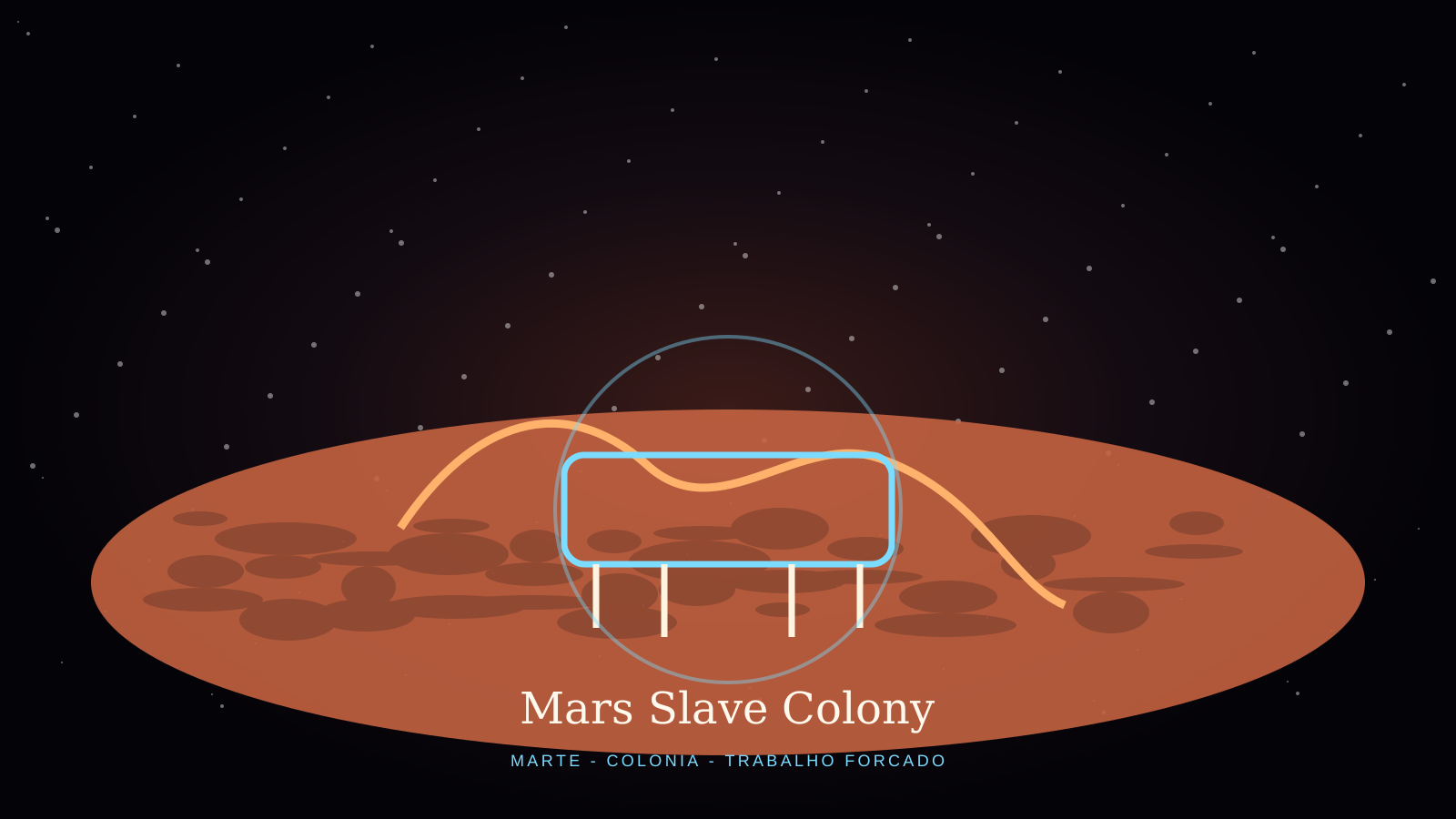
Mars Slave Colony is one of the darker narratives inside the Secret Space Program universe. It speaks of secret colonies on Mars where people would work under military, corporate or hybrid control. The theme is not only about a base on Mars; it involves recruitment, isolation, erased memory, debt, forced contracts and the difficulty of returning to ordinary life.
In plain language, it is the shadow version of Martian colonization: not a public futuristic city, but closed installations where people are used to build, mine, protect or maintain operations that do not appear in official space programs.
Where the story came from
The idea did not come from one single source. One older point is The Mars Records, published by Stephanie Relfe from Michael Relfe's accounts of recovered memories of service on Mars. Later, the theme gained another layer with Randy Cramer, also known as Captain Kaye, who said he served in the Mars Defense Force protecting civilian and corporate colonies.
Later, Corey Goode helped place Mars inside a wider structure: 20 and Back, Lunar Operations Command, Solar Warden, Dark Fleet and the Interplanetary Corporate Conglomerate. On that map, Mars stops being only the red planet and becomes a zone of labor, conflict, production and secrecy.
The real image that puts the reader on Mars
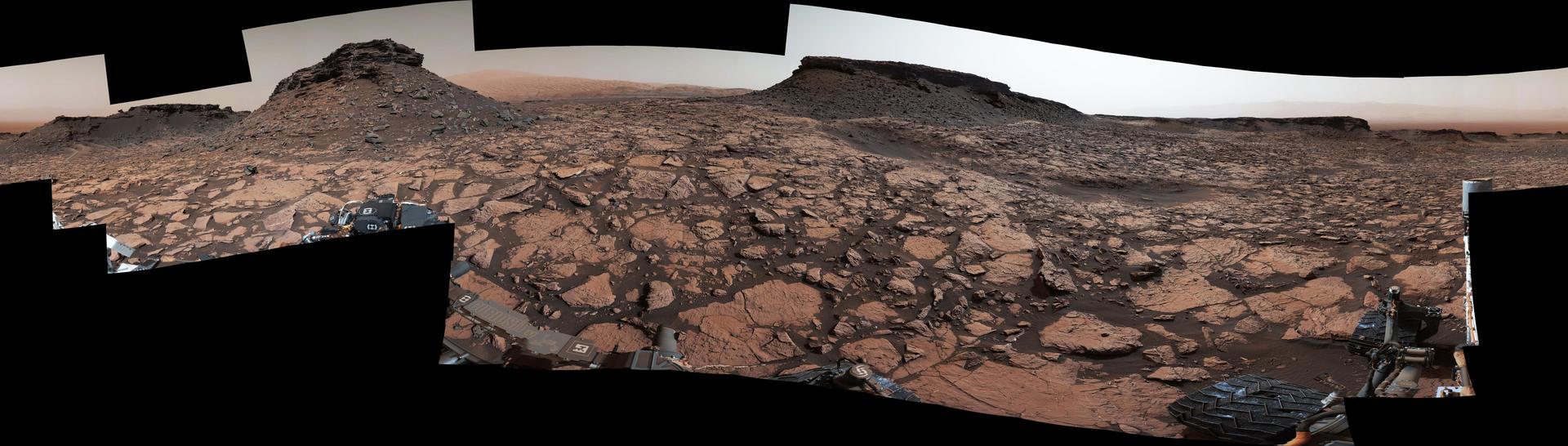
This NASA image shows a real landscape captured by the Curiosity rover in the Murray Buttes region. It does not show a secret colony. What it gives is scale: Mars has valleys, rock, horizon, dust, hills and a visual silence that feels perfect for stories about hidden bases.
When the reader sees a landscape like this, the question comes naturally: if a human project wanted to hide an installation beyond Earth, what kind of place would it choose? In that red emptiness, the Mars Slave Colony narrative gains force.
How accounts describe the colony
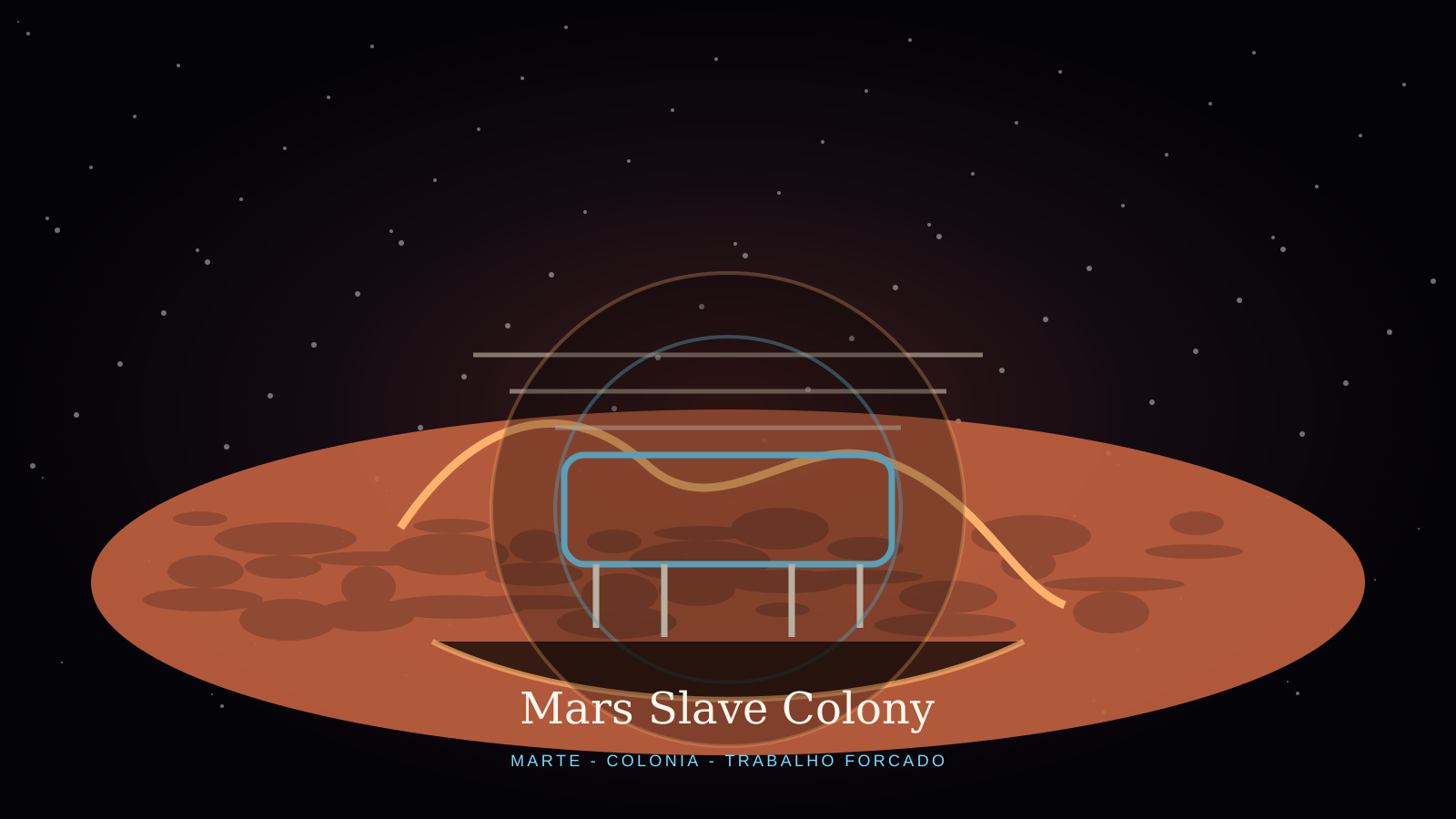
Versions vary, but several elements repeat: underground or partly covered installations, pressurized environments, heavy work, rigid command, long contracts, people displaced from Earth and technology far beyond ordinary industry.
In some stories, workers are recruited by military programs. In others, they are taken through darker means. There is also the corporate version: Mars as a place for mining, production, infrastructure and hidden agreements. That is why the theme connects directly to the Interplanetary Corporate Conglomerate.
Why Mars appears as a place of forced labor
Mars carries a powerful mix: it is close enough to seem possible, but far enough to feel unreachable. A person sent there, inside the narrative, could not simply leave. Distance becomes a prison.
The planet also fits the idea of a frontier. In human history, frontiers have been used for exploitation, mining, hard labor and control. Mars Slave Colony moves that memory beyond Earth: the old colonial logic, but on another planet.
LOC, 20 and Back, and the route to Mars
Inside this mythology, the path to Mars rarely appears as a direct trip. Many versions pass first through Lunar Operations Command, as if the Moon were a screening point before assignment to other operations. Then come 20 and Back cycles: a person serves for years beyond Earth and returns with altered or fragmented memory.
This structure is what makes the narrative so unsettling. It is not only about Mars; it is about losing time, losing autonomy and coming home unable to explain what happened.
Randy Cramer, Mars Defense Force and corporate colonies
Randy Cramer popularized a military version of the theme. In his accounts, he served for 17 years on Mars, connected to a defense force protecting human colonies and corporate interests. This part of the story is not only about workers; it is also about soldiers sent to protect structures that already exist on the planet.
That detail changes the tone. If soldiers are protecting colonies, then there is something to protect: infrastructure, people, resources, routes and secrets. That is why Mars Slave Colony connects with Dark Fleet, the U.S. Navy Space Fleet and the Interplanetary Corporate Conglomerate.
NASA and real programs
Real programs do not confirm the Mars Slave Colony narrative, but they help explain why it sticks in the imagination. NASA and other agencies have studied Mars for decades, mapping the planet, sending rovers and analyzing climate, soil, ice, radiation and future exploration possibilities.
When the public sees detailed maps, rovers working for years and real Moon-to-Mars planning, the popular mind creates a parallel question: what if someone had already arrived through non-public routes?
What exists online
What exists are books, interviews, transcripts, videos, forums, real images of Mars and many concept artworks. There is no public photo recognized as a slave colony on Mars. Most material comes from personal accounts and authors in the ufological and exopolitical field.
The theme remains strong because it combines a real planet, real space exploration and a backstage narrative: Mars as a place where the future may have already begun, but in a hidden and unequal way.
Simple summary
Mars Slave Colony is the story of secret colonies on Mars where people would be used as labor, soldiers or technical personnel in structures controlled by military forces and off-world corporations.
It grips people because it turns Mars into something more human and darker: not only the planet of future missions, but a frontier where labor, secrecy, power and survival mix.
References and starting points
- Exopolitics - Mars Defense Force interview transcript
- Exopolitics - Randy Cramer tag archive
- Google Books - The Mars Records Book 1
- NASA Images - Rover Panorama Taken Amid Murray Buttes on Mars
- NASA Science - Mars Reconnaissance Orbiter
- NASA - Moon to Mars Architecture
- Corvisiero Literary Agency - Corey Goode
- AARO - Official UAP records
FAQ
Is Mars Slave Colony the same as Mars Colony?
Not exactly. Mars Colony can mean any colony on Mars. Mars Slave Colony points to the darker version: controlled labor, limited freedom and hidden operations.
Is there a photo of a secret colony on Mars?
There is no public photo recognized as a secret colony on Mars. There are real images of the planet made by space missions, such as rovers and orbiters.
Why does this theme connect to the ICC?
Because many versions describe Mars as a place of mining, production and infrastructure controlled by corporate interests beyond Earth.
Keep exploring
You can open another path
 Secret Space Program Interplanetary Corporate Conglomerate 5/5 intensity Explore →
  Secret Space Program Mars Colony 5/5 intensity Explore →
  Esoteric practices Slave Colony 5/5 intensity Explore →
  AwakenMap theme Draco and Reptilian Alliance 4/5 intensity Explore →
  Control systems Project Paperclip and NASA in 1958 3/5 intensity Explore →
Join the conversation
Comments are moderated. Keep the discussion respectful and distinguish evidence, interpretation and personal experience.