Connection level
3 direct connectionsImagine looking at the Moon since childhood and discovering that half of it has always had its back turned to you. It is not exactly dark. It is not a hole in the sky. It is a real region, lit by the Sun, full of craters, hidden from Earth's direct view. That is why “the dark side of the Moon” became one of the strongest phrases in the space imagination: it sounds scientific, but it feels like secrecy.
What the “dark side” of the Moon is
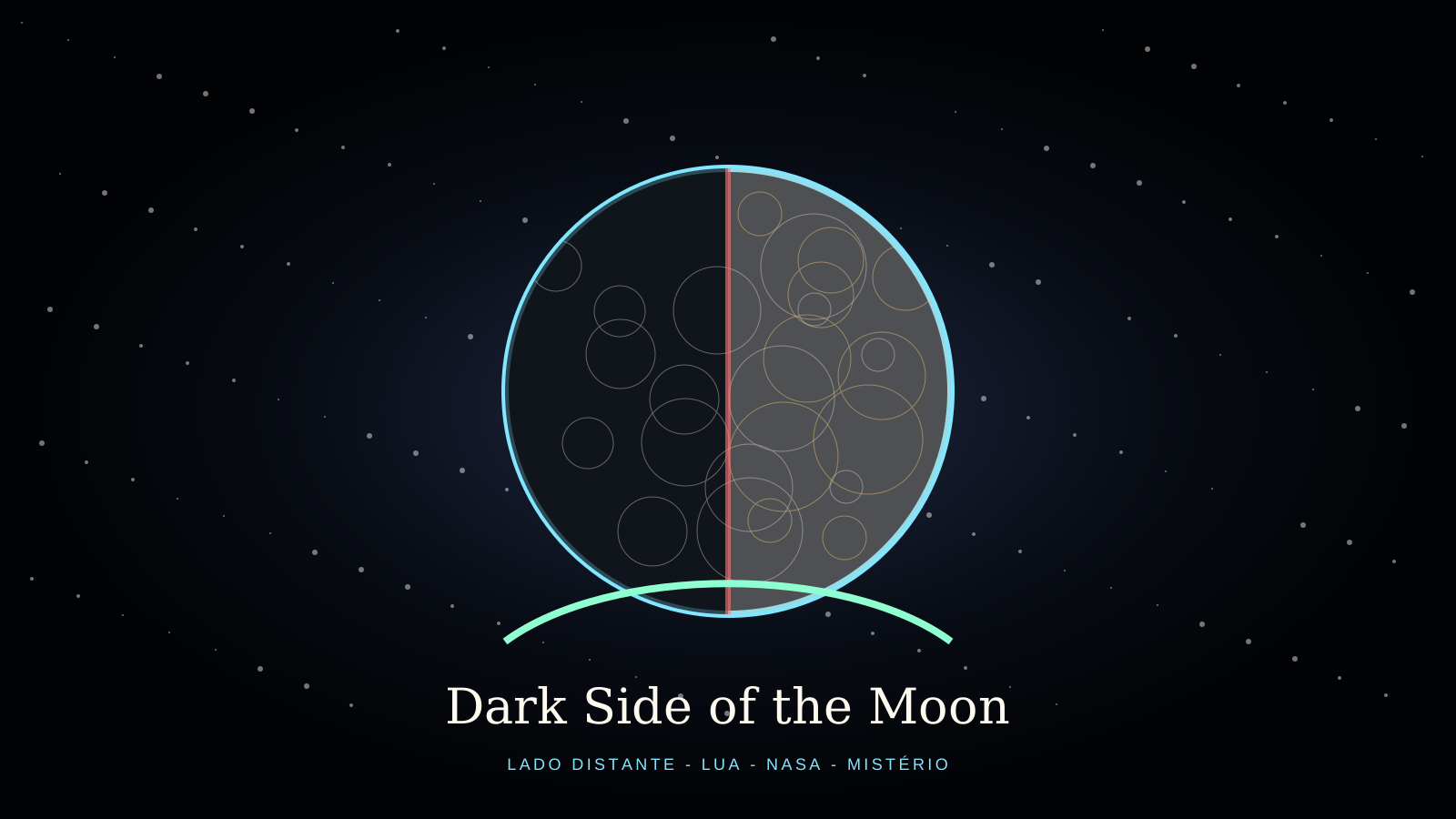
The more accurate name is the far side of the Moon. It is the half of the Moon facing away from Earth. Because the Moon rotates in sync with its orbit, we almost always see the same lunar face from here. The other side remained unseen by humanity until the space age.
“Dark” is misleading. The far side receives sunlight too. It has day and night like the side we see. The mystery does not come from lack of light; it comes from lack of direct sight. What we cannot see becomes territory for questions, fear and imagination.
Where the mystery came from
Until 1959, no one had seen that region in an image. That changed when the Soviet Luna 3 probe sent back the first photos of the far side. Decades later, missions such as NASA's Lunar Reconnaissance Orbiter created much more detailed maps of the lunar surface.
Even with maps and photos, the mystery remained. The reason is simple: the far side is not visible from Earth. When a spacecraft passes behind the Moon, the Moon itself can block direct communication with our planet. That interval of silence became a perfect symbol for hidden-operations stories.
Fact, technical account and speculation
Fact: the far side exists, has been photographed by probes and crewed missions, receives sunlight and differs from the near side. It has fewer dark maria and appears much more cratered.
Technical account: NASA explains that the Moon shows almost the same face because of synchronous rotation. LRO has mapped the lunar surface since 2009, allowing us to visualize regions that were once almost unknown.
Speculation: on AwakenMap, the far side is tied to bases, ancient structures, lunar operations, hidden space traffic and Secret Space Program narratives. This layer connects with Lunar Operations Command, Moon Operations Command, Ancient Builder Race on Moon and NASA Coverups.
The real image that shows the territory
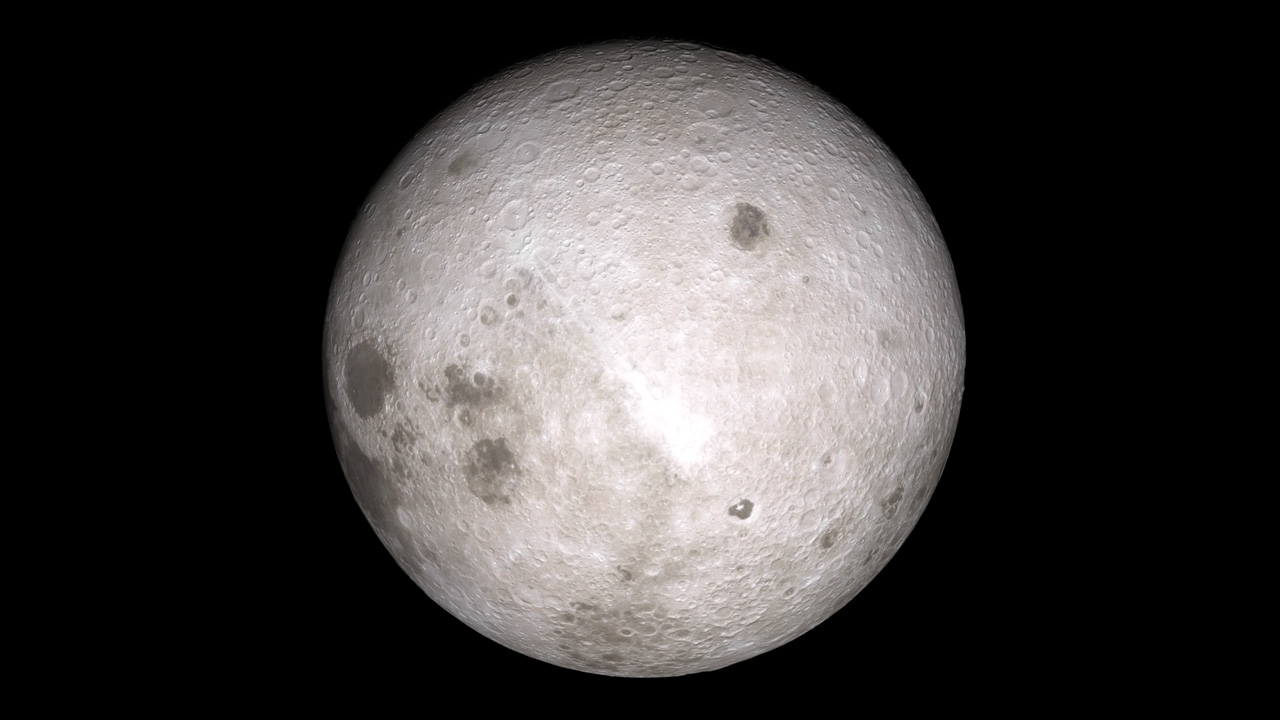
This NASA visualization was produced with Lunar Reconnaissance Orbiter data. It shows the far side of the Moon as a real, heavily cratered region, not as a wall of shadow. The image helps clear up an important confusion: “dark side” does not mean without Sun; in popular use, it means the side we do not see from Earth.
At the same time, the photo shows why imagination grows. It is an entire landscape outside ordinary human sight. The eye tries to fill what distance prevents.
Why the far side looks so different
The side we see from Earth has large dark patches called lunar maria. The far side has fewer of these regions and looks rougher, older and more cratered. That gives it a stranger appearance, almost like another world attached to the same body.
This visual difference feeds the myth. The public looks at the far side and feels it does not belong to the familiar Moon of calendars and romantic nights. It feels military, dry, secret and remote. It is a geography that asks for a story.
The silence behind the Moon
When a spacecraft is behind the Moon relative to Earth, direct communication can be blocked. This technical fact is one of the strongest pieces of the imagination. The silence does not prove secrecy, but it creates the right feeling: there is a moment when the spacecraft vanishes from human conversation.
In AwakenMap narratives, that silence is interpreted as a window for restricted operations: meetings, observations, bases, hangars or traffic zones outside public transmission. This is where the theme connects with Lunar Operations Command and Moon Operations Command.
Moon Operations Command and lunar bases
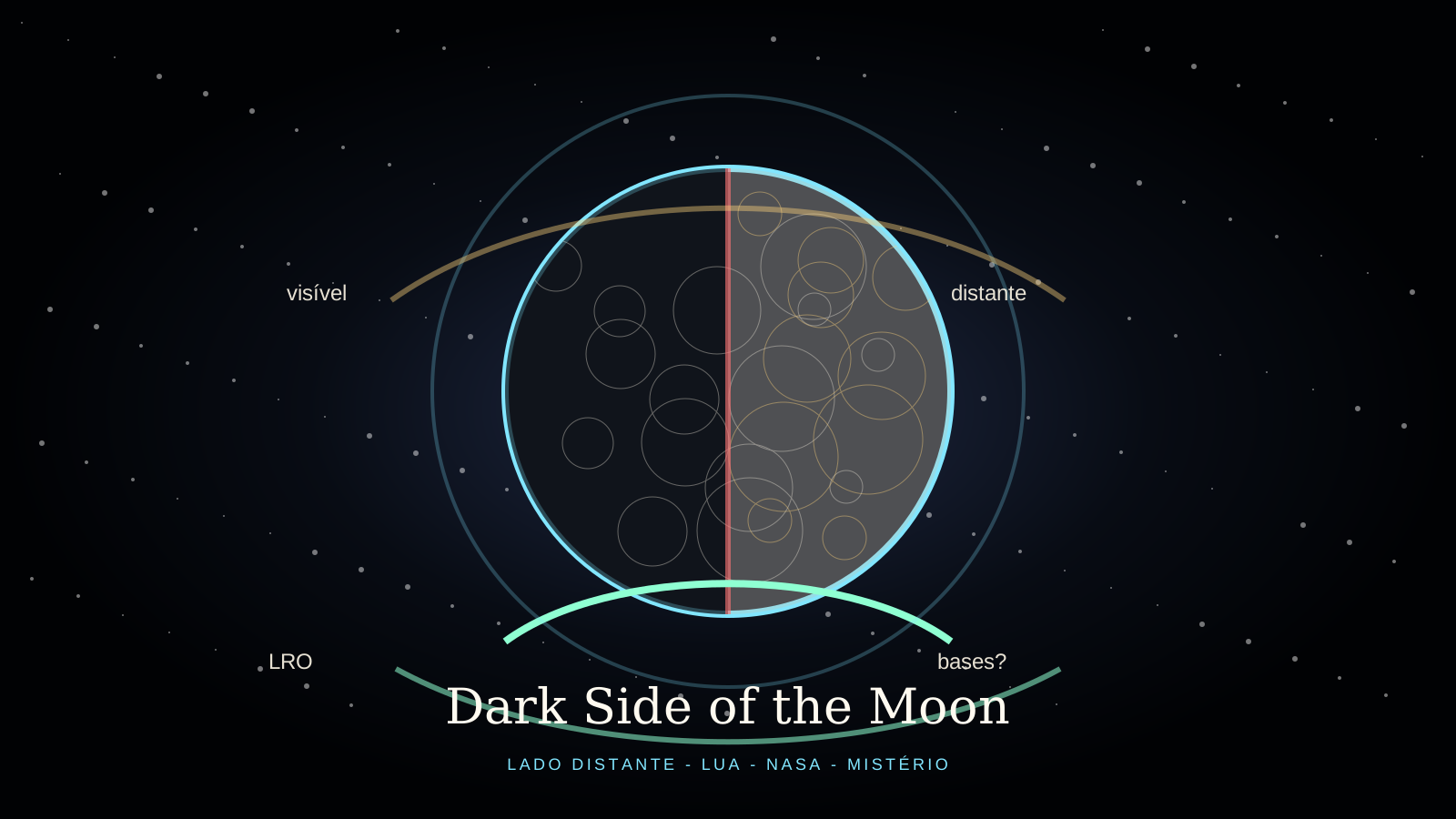
In secret space program accounts, the far side often appears as the ideal place for bases because it is outside direct Earth view. In some versions, Moon Operations Command or Lunar Operations Command functions as a control center, transit station or meeting point for off-world operations.
These accounts are not public proof. But they use strong narrative logic: if someone wanted to hide activity on the Moon, they would choose the side humanity cannot see from the backyard.
Ancient structures and the builder race
Another layer links the far side to ruins, towers, domes, artifacts and ancient civilizations. This is where Ancient Builder Race on Moon enters. Instead of modern human bases, the speculation speaks of something older: traces left by an earlier civilization, perhaps connected to the deep history of the Solar System.
This layer grips because it mixes imaginary archaeology with real astronomy. The Moon is ancient, silent and scarred. To the symbolic eye, each crater can look like impact; to the mythic eye, it can look like an entrance.
NASA Coverups and the image question
The far side also connects to NASA Coverups. If space photos undergo technical processing, if maps are assembled from data, if missions have complex communication, the public asks: what was cut, filtered or simply not explained?
That question should not be treated as automatic proof. It is the cultural heart of the theme. The Moon is the nearest celestial object, and yet half of it remained outside direct human sight for almost all of history. That is enough for mystery to survive.
What exists publicly
There is a lot of public information: Luna 3 photos, Apollo mission images, LRO maps, NASA visualizations, lunar studies and scientific records about the surface. The far side is not unknown as it once was.
What does not exist as public proof is the extreme layer: confirmed secret bases, official ancient civilizations, hidden military traffic or recognized nonhuman presence. That remains in AwakenMap's speculative field.
Simple summary
Dark Side of the Moon is the popular name for the Moon's far side. It is not always dark; it simply does not face Earth. It is a real, photographed and mapped region, but it carries mystery because it was invisible for most of human history.
The topic grips because it touches a simple feeling: the most familiar object in the sky still has a side that, from here, never looks back at us.
References and starting points
- NASA SVS - The Moon’s Far Side
- NASA Science - Moon Facts
- Lunar and Planetary Institute - Apollo 16 view of the lunar farside
- NASA SVS - LRO Apollo site images
- NASA Science - Earthset from the lunar far side
- NASA - Apollo 11 Mission
- NASA - Lunar Reconnaissance Orbiter
- AARO - Official UAP records
FAQ
Is the dark side of the Moon really dark?
No. It receives sunlight. The popular name refers to the side we do not directly see from Earth, not a region that is always without light.
Why do we only see one side of the Moon?
Because the Moon's rotation is synchronized with its orbit around Earth. So almost the same hemisphere always faces us.
Does the far side prove secret bases on the Moon?
No. It offers a strong setting for those narratives, but secret lunar bases are not confirmed public proof.
Keep exploring

Join the conversation
Comments are moderated. Keep the discussion respectful and distinguish evidence, interpretation and personal experience.