Connection level
9 direct connectionsCrystals unite geology, beauty, symmetry, technology and spirituality: quartz, amethyst, piezoelectricity, energy healing, ritual and the difference between symbolic meaning and clinical evidence.
The organized beauty of matter
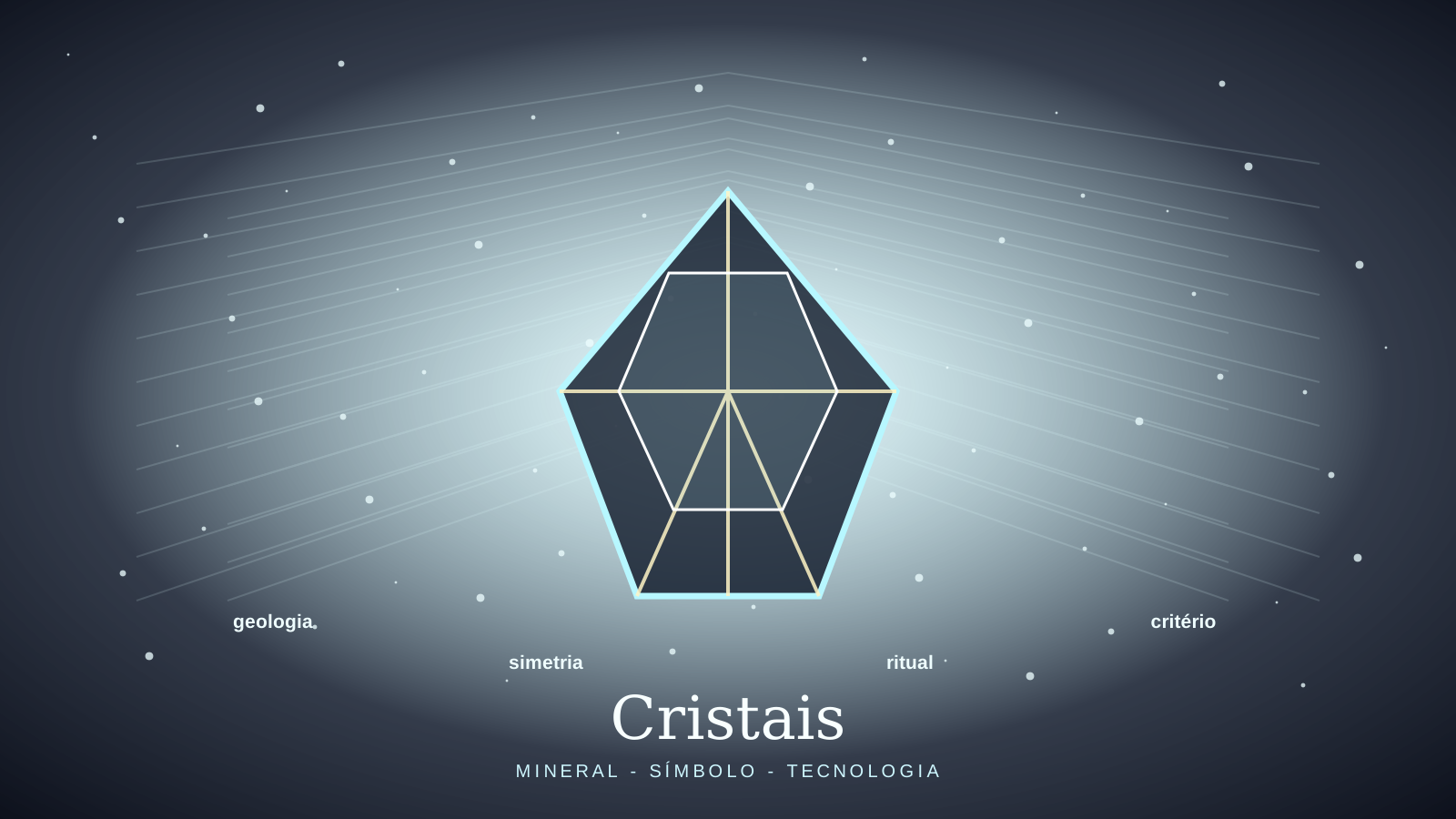
Crystals fascinate because they seem to reveal that matter has architecture. They are not only beautiful stones; they are solids in which atoms, ions or molecules organize into regular patterns. Britannica's definition points exactly to this: a crystal is a solid material whose internal organization expresses itself in regularity, symmetry and form.
This visible order has a powerful psychological effect. Before clear quartz, purple amethyst or geometric pyrite, we feel that nature is drawing with precision. The crystal seems to stand between mineral and symbol: an object of Earth, but also an image of clarity, focus, memory and presence.
In AwakenMap, Crystals need to be treated in layers. There is the geological layer, verifiable and beautiful. There is the technological layer, where real crystals are used for physical properties. There is the ritual and spiritual layer, where stones function as anchors of intention. And there is the therapeutic layer, which requires great care when it promises healing.
How crystals form
Crystals form when chemical units organize repeatedly under specific conditions of temperature, pressure, time and composition. In rock cavities, mineral solutions may deposit material slowly until faces and points form. In magmas, salts, ice and metals, crystallization also appears in different ways.
The beauty of the crystal comes from process, not haste. Many specimens took millions of years to grow. Quartz, for example, is one of the most abundant minerals in Earth's crust and appears in a wide variety of forms and colors. The Smithsonian highlights this diversity by showing quartz as both a common mineral and a source of rare monumental specimens.
This deep time changes the spiritual reading. Holding a crystal can be, before any energetic belief, touching a geological history far older than human history. The object condenses pressure, water, heat, empty space, erosion and mineral patience.
Quartz: the center of crystal imagination
Quartz dominates crystal culture. It appears as clear crystal, amethyst, citrine, rose quartz, smoky quartz, agate, jasper and many other varieties linked to impurities, structure and geological processes. It is abundant, resistant, visually strong and symbolically perfect for ideas of clarity and amplification.
The Smithsonian describes quartz as one of the most abundant minerals in Earth's crust and present on every continent. It also preserves impressive examples, such as the Berns Quartz, a cluster weighing thousands of pounds. This kind of specimen shows that crystals do not belong only to esoteric shops; they also belong to museums, geology, mining and natural history.
Quartz's popularity in spirituality comes from both appearance and real properties. It is associated with clocks, oscillators and piezoelectricity. The mistake is turning a specific technical property into proof of any desired metaphysical effect.
Piezoelectricity: the science that became spiritual argument
Piezoelectricity is a real property of certain crystals: when subjected to mechanical pressure, they can generate electric charge; when receiving an electric field, they can deform mechanically. Quartz is a famous example and has therefore been used in oscillators, clocks, sensors and electronics.
This fact is often used to defend crystal healing. The popular reasoning says: if crystals have electrical properties, then they can influence the human field, balance chakras or transmit intention. The first part is true in technical context; the second requires demonstration that does not automatically follow from the first.
A crystal in an electronic circuit works under well-defined conditions: cut, frequency, electrodes, voltage, packaging and measurement. A crystal in a pocket, altar or on the body is not necessarily producing a comparable physical effect. The bridge between laboratory and ritual needs to be built with evidence, not analogy alone.
Crystals as ritual objects
Even without clinical proof of healing, crystals can have ritual and psychological value. A beautiful, tactile and symbolic object can help someone remember an intention, mark a phase, create meditative focus, organize an altar, slow attention or give material form to an internal commitment.
Humanity has always used objects to sustain meaning: rosaries, talismans, images, stones, medals, rings, relics, instruments. Symbolic value is not inferior because it is not pharmacological. It operates in another layer: memory, presence, association, body, repetition and community.
The problem begins when ritual is sold as guaranteed medicine. Saying an amethyst helps someone remember to breathe is different from saying it cures insomnia, depression or chronic illness. The first statement may be subjectively useful. The second needs clinical evidence.
Crystal healing: hope and limit
Crystal healing claims that stones possess vibrations capable of balancing the body, clearing energy fields, activating chakras or supporting emotional processes. This language is common in holistic practices, energetic therapies and contemporary spirituality. It can be meaningful for those who live it as ritual, meditation or symbolic care.
From a medical point of view, however, there is no robust clinical evidence that crystals cure specific diseases. Reference sources in complementary health tend to make an important distinction: some practices may support well-being and quality of life, but treatment claims require rigorous research.
The responsible position is clear: crystals can be used as complements of meaning, beauty and personal focus, as long as they do not replace diagnosis, medical treatment, psychotherapy or necessary medication. The stone can be on the altar; health decisions need to be with qualified professionals.
Chakras, colors and correspondences
In spiritual use, crystals are frequently associated with chakras and colors: amethyst with the third eye, rose quartz with the heart, citrine with the solar plexus, black tourmaline with protection, selenite with clearing, obsidian with shadow, lapis lazuli with expression. These correspondences form a rich symbolic language.
This language works as poetic map. Colors affect mood, names evoke stories, forms suggest functions, traditions accumulate. Someone may choose rose quartz to work with emotional openness not because the stone has demonstrated alteration of heart tissue, but because it helps the person enter an attitude of softness.
The care is not confusing symbolic correspondence with universal mechanism. Esoteric systems vary between cultures, authors and schools. What one tradition calls protection, another may call grounding or purification. The diversity shows that we are dealing with language of meaning, not objective medical table.
Crystals, mining and ethics
A mature page about crystals also needs to speak of origin. Spirituality often treats stones as pure, but mining can involve environmental impact, precarious labor, economic exploitation, international transport and opaque trade. A healing crystal does not automatically become ethical because it is beautiful.
Asking where a stone came from is part of conscious practice. Was it extracted responsibly? Who worked on it? Which landscape was altered? Does the shop inform origin? Is there a local, reused or older collection alternative? This kind of question brings spirituality back to Earth.
The relationship with crystals can become deeper when it includes material responsibility. Honoring the Earth is not only placing a stone on the altar; it is also recognizing the soil, labor, water, energy and commercial chain that brought that object into the hand.
Crystals in AwakenMap
In AwakenMap, Crystals connect to Sacred Geometry, Chakras, Reiki, Holistic Healing, Orgone, Vibration, Frequency, Natural Light, Ley Lines, Atlantis, Lemuria and Ancient Civilizations. They are a bridge between mineral, technology and symbol.
This node matters because many themes in the map use crystals as energy amplifiers, ancient memories, lost technologies or tools of consciousness. In Atlantean and Lemurian narratives, crystals appear as power sources, libraries, healing instruments or communication structures. These ideas are fascinating, but belong to the mythical-speculative field when there is no archaeological evidence.
The best reading honors the strength of the symbol without abandoning the physical world. Crystals are real, ancient, structured, technologically useful and beautiful. That is already a lot. The rest must be read as ritual, imagination, tradition or hypothesis, depending on the claim.
How to read this theme
Read Crystals in four layers. The first is geological: composition, structure, formation, place of origin. The second is technological: piezoelectricity, optics, clocks, sensors. The third is symbolic: colors, chakras, altar, intention, beauty. The fourth is therapeutic: any healing promise, which requires evidence.
When someone says a crystal works, ask: works in what sense? As focus object? As ritual symbol? As electronic technology? As health treatment? Each answer changes the standard of proof. A crystal can be excellent for meditation without being medicine.
Crystals teach a beautiful lesson: order does not need to be rigid; it can be luminous. But the clarity of the crystal itself asks for clarity in language. The wonder grows when we know how to distinguish stone, symbol, instrument and promise.
Critical reading
Crystals are real as geology, useful in specific technologies and powerful as symbols. The care is not turning beauty, ritual or piezoelectricity into medical promise without evidence.
References and starting points
- Britannica - Crystal
- Britannica - Mineral crystal structures
- Smithsonian National Museum of Natural History - All Sorts of Quartz
- Smithsonian - Berns Quartz
- Britannica - Piezoelectricity
- NIH NCCIH - Complementary, Alternative, or Integrative Health
- EBSCO - Crystal healing overview
FAQ
Do crystals cure diseases?
There is no robust clinical evidence that crystals cure specific diseases. They may have ritual, aesthetic and meditative value, but should not replace medical or psychological treatment.
Does piezoelectricity prove energy healing?
No. Piezoelectricity is a real physical property under specific technical conditions. It does not automatically prove therapeutic effects of crystals used on the body or in rooms.
Keep exploring
You can open another path
 Ancient civilizations Crystalline Towers Glass Domes 4/5 intensity Explore →
  Ancient civilizations Atlantis 4/5 intensity Explore →
  Ancient civilizations Lemuria 4/5 intensity Explore →
  Esoteric practices Inner Earth Civilization 4/5 intensity Explore →
 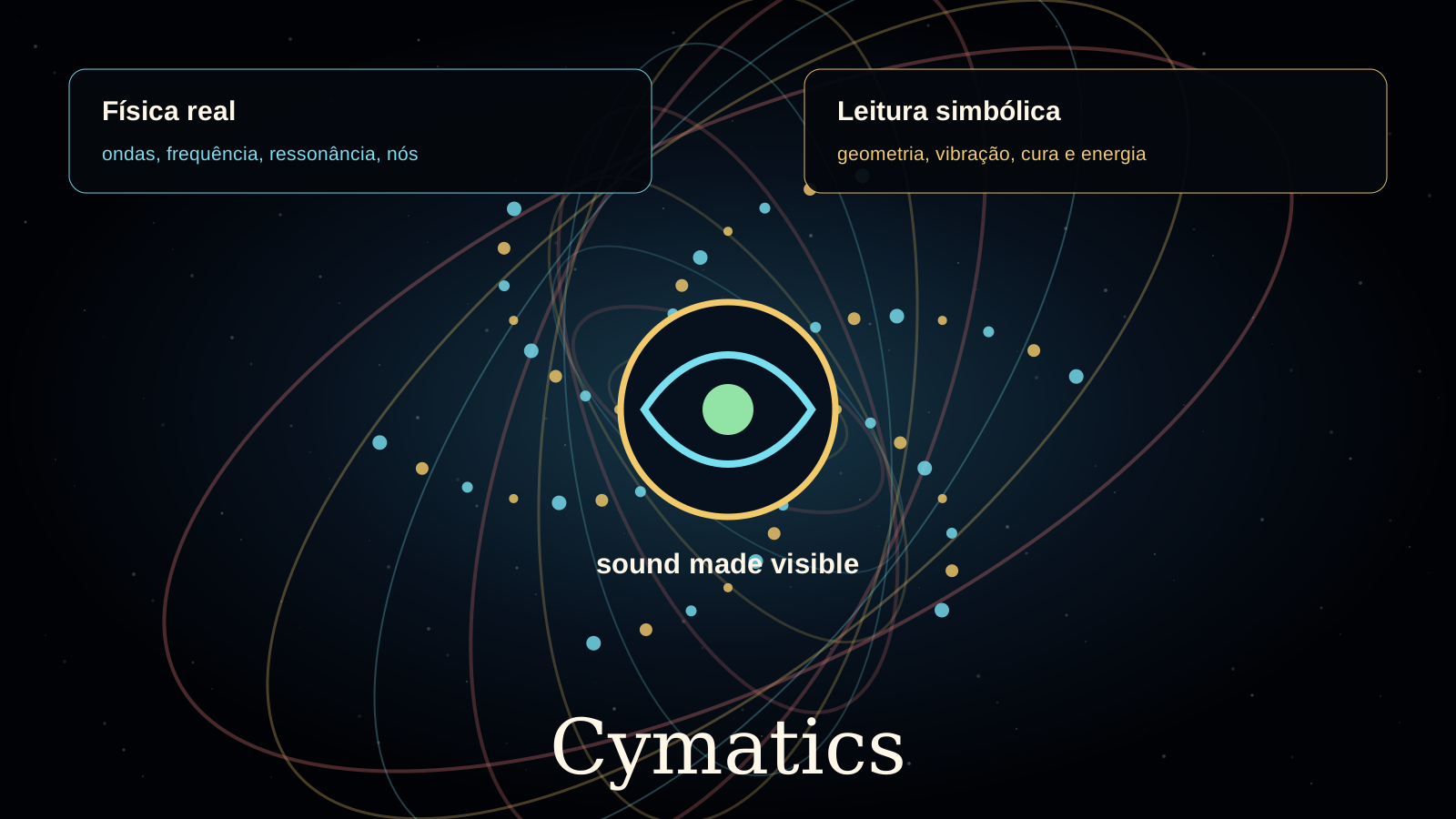 Healing and energy Cymatics 3/5 intensity Explore →
  Esoteric practices Indigos 3/5 intensity Explore →
Join the conversation
Comments are moderated. Keep the discussion respectful and distinguish evidence, interpretation and personal experience.