Connection level
11 direct connectionsIndigo Children are described in New Age spirituality as sensitive, intuitive children who do not fit rigid systems and may carry a spiritual mission. The theme belongs to the question of when spiritual identity protects a child without replacing real care.
Origin of the idea
The modern origin of the term passes through Nancy Ann Tappe, an author connected to intuitive readings of color. In her system, people have a “life color,” a constant tone associated with personality patterns. Tappe said she had noticed, from the late 1960s through the 1970s, an increase in children with an indigo tone. The idea reached popular scale in the late 1990s through Lee Carroll and Jan Tober, who turned the theme into the language of self-help, alternative education and family spirituality.
The important point is that “indigo” did not begin as a medical diagnosis or a scientific category. It began as an esoteric reading of aura, color and temperament. It later became a cultural narrative: the child who does not obey easily, questions authority, seems intense, sensitive or displaced becomes a sign that a new humanity is arriving.
The power of the myth lies in consolation. Many parents and children recognize the pain of not fitting school, family, religion or the expected model of behavior. Calling that difference a mission can restore dignity to an experience that might otherwise be treated only as a problem. That is why the theme speaks with Starseeds, Lightworkers, Ascension and Collective Consciousness: all describe people who feel they do not fully belong to the ordinary world.
But the same consolation can become a trap. When the word “indigo” replaces listening, evaluation, educational adaptation, psychological care or family support, the child stops being cared for and begins carrying an identity that is too heavy. They are no longer only a developing person; they become a sign of planetary change.
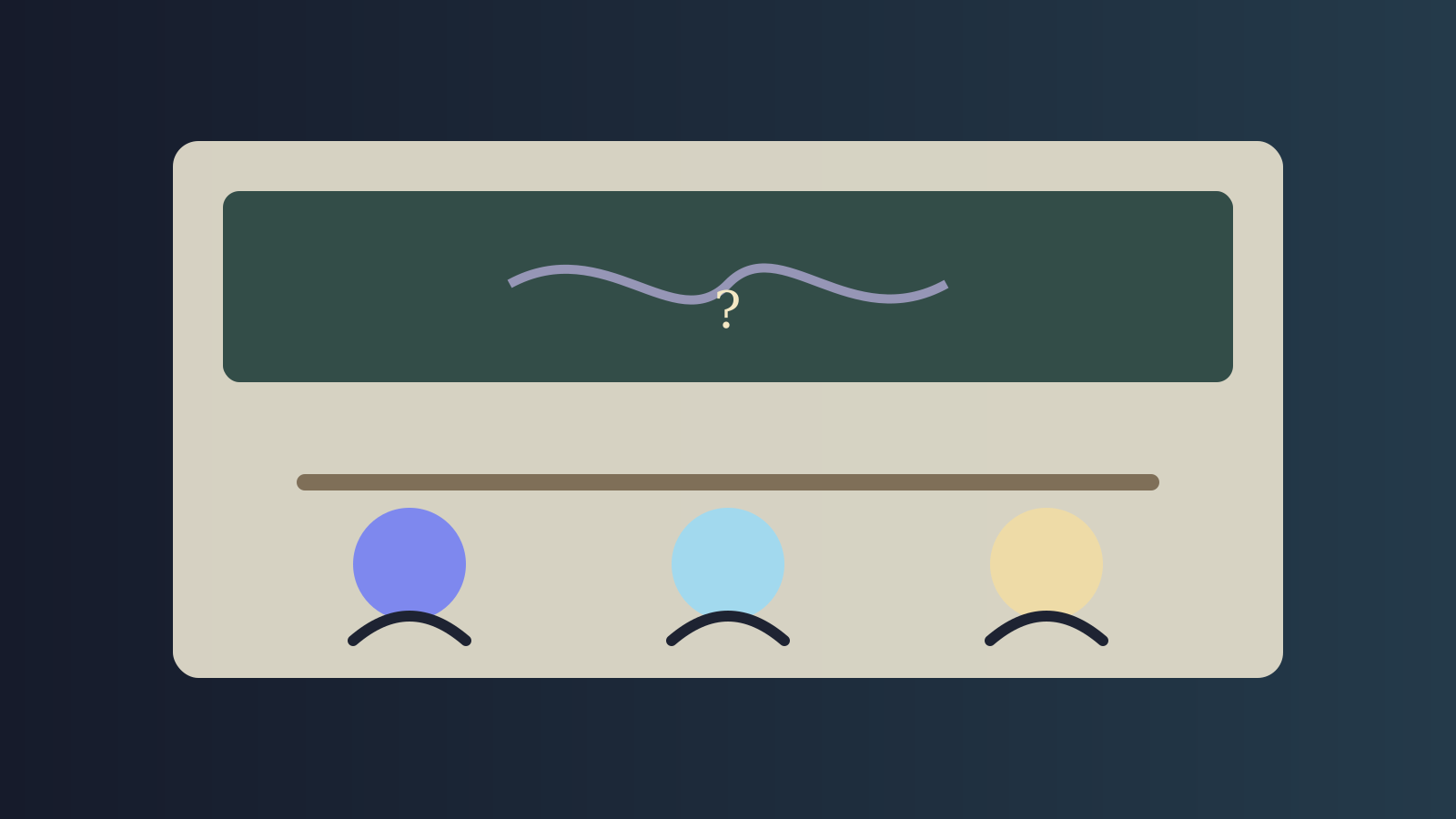
The conspiratorial layer appears when childhood difference is set against systems of control. In this reading, schools, the pharmaceutical industry, media, psychiatry and authorities are trying to domesticate more conscious children through labels, medication, norms and fear. The restless, intense or hypersensitive child is not only a child needing care; they are a threat to the old system, a generation sent to break hierarchies, awaken adults and prepare a collective transition.
This thesis touches a real wound: some children are misunderstood, some schools are inflexible, some diagnoses are rushed and some families feel trapped. But the existence of those failures does not prove a coordinated campaign against spiritually superior beings. The honest question is different: when does a narrative help a child be seen, and when does it prevent them from receiving concrete help?
The delicate point involves ADHD, autism, anxiety, giftedness, trauma, family environment and learning differences. Some traits attributed to Indigo Children, such as restlessness, resistance to authority, sensitivity, distraction, emotional intensity and difficulty at school, also appear in very different conditions. The ethical care is not to turn suffering into a spiritual medal, and not to turn difference into an automatic defect.
Chosen child and cared-for child
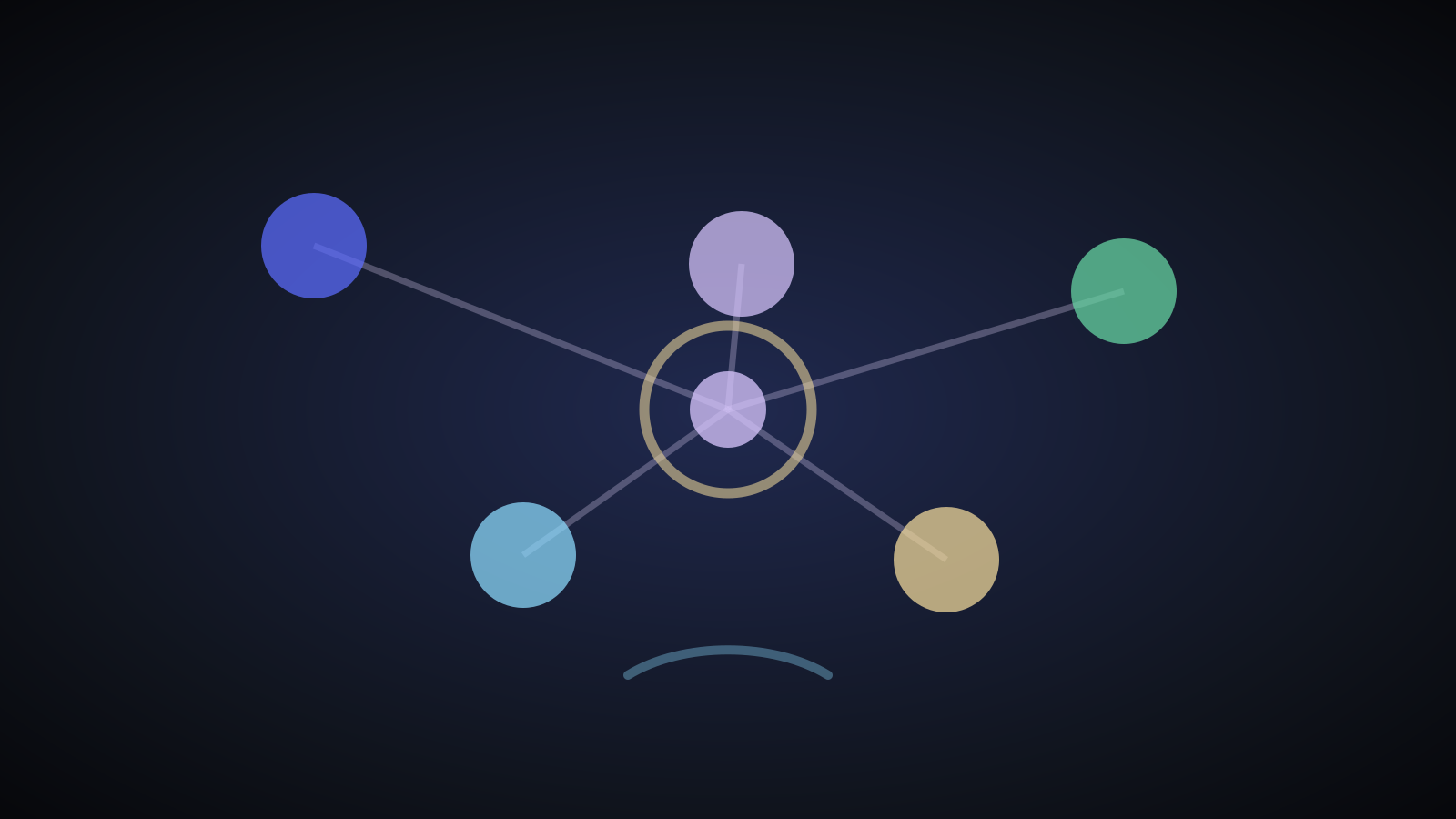
The main fracture is between chosen child and cared-for child. The chosen child becomes a character in the adults' story: here to save the world, break the system, vibrate higher, prove the family is special. The cared-for child is seen with more humility: what do they feel, what do they need, which boundaries help, which environment hurts, which clinical or educational support can ease real life?
This does not require rejecting the symbolic dimension. A child can be sensitive, creative, intuitive and deeply different. They may even recognize themselves in spiritual language. The problem begins when spiritual identity becomes a substitute for responsibility, careful evaluation and protection. No elevated label should authorize neglect, isolation, rejection of necessary treatment or pressure for a child to fulfill a mission they never chose.
That is why the theme must walk with Free Will and discernment. The best spiritual reading is not the one that declares the child superior, but the one that increases concrete freedom: more listening, less shame, healthier boundaries, less fear, more room to exist without becoming a mystical trophy.
Relations on the map
On the map, Indigo Children connect to Starseeds, Lightworkers, Ascension, Collective Consciousness, Consciousness Renaissance, Free Will, Love & Light, Chakras and Crystals.
These connections form a corridor between spiritualized childhood, New Age religion, alternative education, diagnosis, planetary mission and suspicion toward institutions. The node does not claim Indigo Children exist as an objective category; it shows why so many people preferred to narrate childhood difference as a sign of transformation.
Why it belongs on AwakenMap
Indigo Children belong on AwakenMap because the theme exposes a central question of contemporary awakening: when does a spiritual explanation heal shame, and when does it become an escape from care?
The philosophical connection lies in responsibility toward the vulnerable. If a child seems different, that is not enough to call them a cosmic messenger or reduce them to a disorder. The challenge is to hold mystery without abandoning evidence, protect uniqueness without manufacturing superiority and welcome sensitivity without trading care for myth.
Simple summary
Indigo Children are a New Age idea popularized through Nancy Ann Tappe, Lee Carroll and Jan Tober. The theory says certain children are more intuitive, sensitive and resistant to rigid systems, perhaps as part of planetary change. The conspiratorial reading accuses institutions of trying to domesticate this generation. The critical boundary is not letting spiritual identity replace clinical, educational and family care.
References and starting points
- Sarah Whedon - academic study on Indigo Children
- University of Cambridge - Beth Singler's research on Indigo Children
- Internet Archive - Carroll and Tober's Indigo Children book
- Google Books - Nancy Ann Tappe's work on life colors
- CDC - ADHD signs and symptoms
- American Academy of Pediatrics - ADHD clinical guideline
Keep exploring
You can open another path
 Return to Source Free Will 5/5 intensity Explore →
  Map center Great Awakening 5/5 intensity Explore →
  Return to Source Lightworkers Starseeds Wanderers Indigos 5/5 intensity Explore → Esoteric practices Starseeds 5/5 intensity Explore →
  Return to Source Ascension 4/5 intensity Explore →
  Consciousness and symbols Collective Consciousness 4/5 intensity Explore →
Join the conversation
Comments are moderated. Keep the discussion respectful and distinguish evidence, interpretation and personal experience.