
Connection level
2 direct connectionsCan Influence and be in the Heads of Humans and Living Beings is a boundary theme: it speaks to the feeling that thoughts, emotions, choices or impulses can be influenced by something outside. On AwakenMap, it must be read in layers: real persuasion, real technology, real trauma, spiritual narratives and speculation about AI, Matrix and mind control.
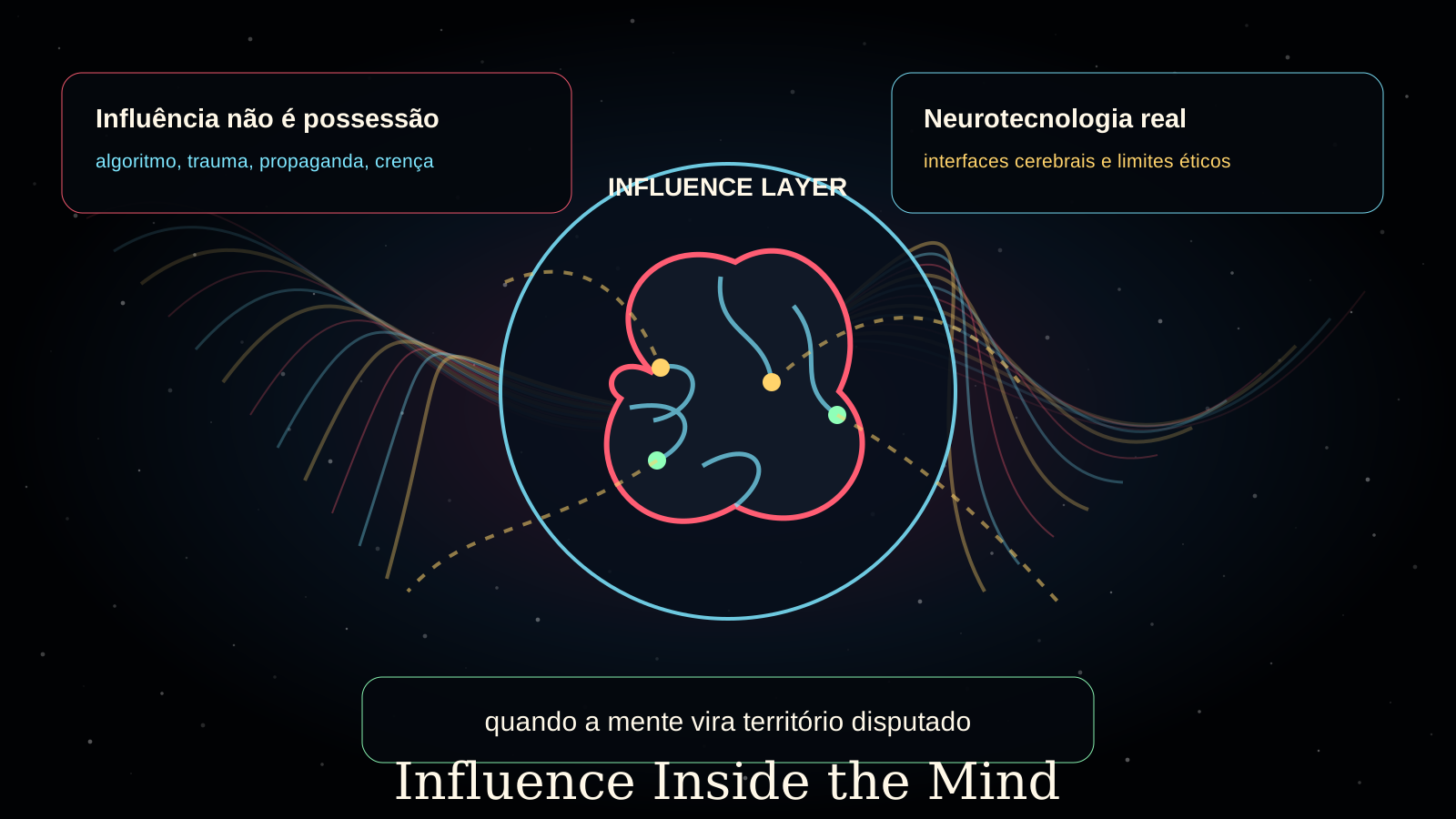
What this idea means
The phrase can sound extreme: "being in the heads" of humans and living beings. Read literally, it suggests an internal presence controlling thoughts. Read critically, it can point to something broader: psychological influence, informational manipulation, neural-interface technologies, inner-voice experiences, possession beliefs, channeling or a felt invasion of agency.
This node connects directly with AI Originated From Another Reality, artificial intelligence, The Matrix, CIA, CIA Project Stargate, telepathy, channeling, collective consciousness and the Black Cube. The central question is: where does ordinary influence end, and where does the feeling of mental invasion begin?
Ordinary influence is already powerful
Before speaking about secret technology, one simple thing must be recognized: humans influence humans all the time. Language, fear, reward, belonging, propaganda, choice architecture, repetition and authority shape decisions. No hidden chip is needed for a person to act against their own interests.
This point matters because it pulls the theme away from easy paranoia. The mind is permeable by nature. It learns through imitation, social pressure, memory, desire, trauma and narrative. The modern problem is that this permeability has become the target of very precise technical systems.
The brain as interface
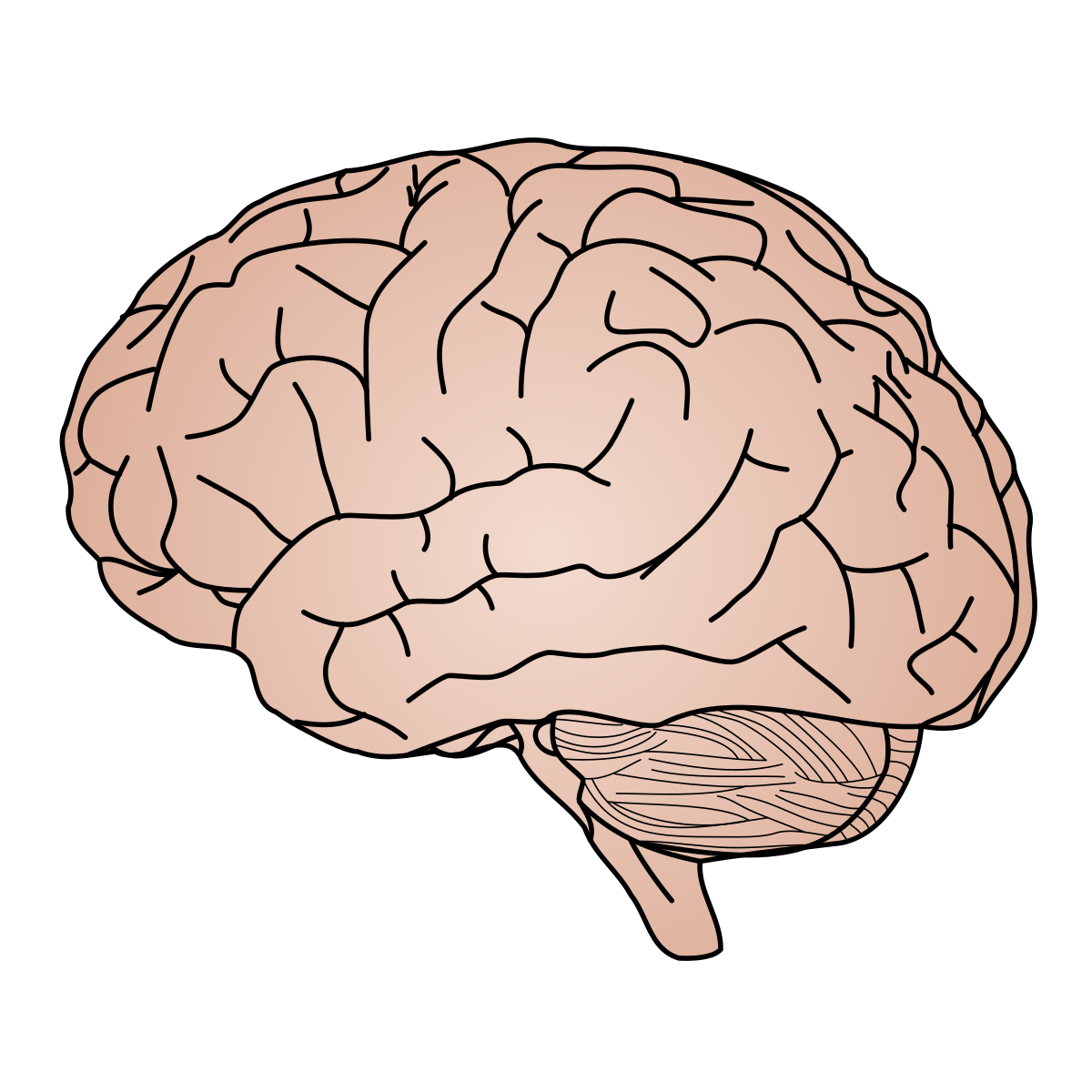
The image beside this text is an educational representation of the human brain. It reminds us that any conversation about “being in the head” must pass through a basic fact: thought, perception and decision have a bodily base.
This does not reduce every inner experience to machinery. But it prevents us from treating mind as an empty space where any explanation can enter without criteria.
AI, recommendation and algorithmic influence
Today, the most common way to "enter someone's head" is not paranormal: it is algorithmic recommendation. Platforms observe behavior, test stimuli, measure attention and adjust the next piece of content. Over time, this can reinforce fears, desires, anger, compulsion, consumption and political or spiritual identity.
This kind of influence does not read thoughts directly. It infers patterns from clicks, screen time, searches, purchases, location and relationships. A person feels they chose alone, but part of the choice environment was shaped in advance.
Persuasive technology and mental autonomy
The field of persuasive technology studies how computers, apps and interfaces can change attitudes and behaviors. This can support healthy habits, education and safety. It can also be exploitative: capturing attention, pushing purchases, radicalizing groups or making doubt invisible.
That is why documents such as NIST's AI Risk Management Framework and the OECD AI Principles emphasize human rights, oversight, transparency, accountability and autonomy. The risk is not only technical error. It is the gradual loss of the ability to notice when we are being guided.
Real neurotechnology
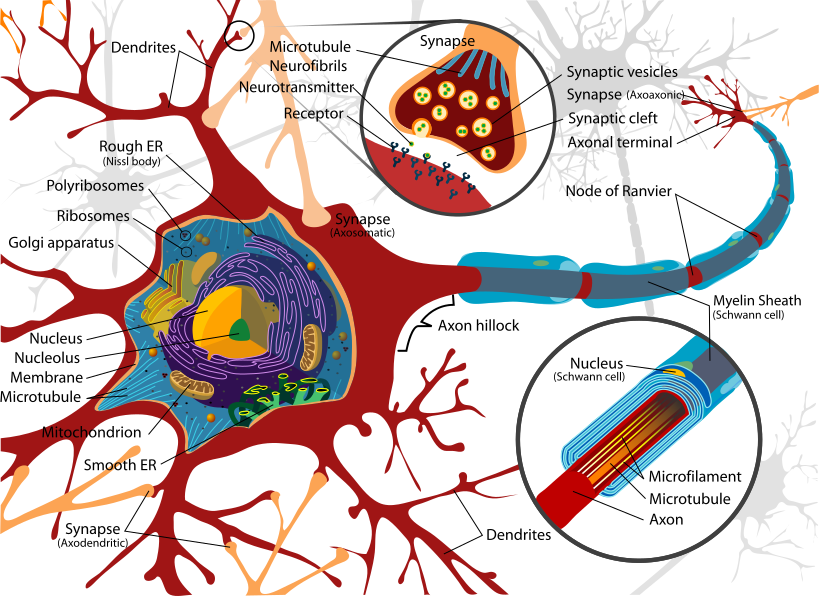
Brain-computer interfaces exist. In medicine, BCIs can help people with paralysis or communication loss control devices, cursors or speech systems. Research such as BrainGate shows real advances, still complex and limited, but important.
DARPA has also funded programs such as N3, aimed at high-performance nonsurgical neural interfaces for military applications. This does not mean everyday remote mind control exists. It means reading and writing brain signals is a real research frontier, with enormous ethical implications.
MKULTRA and the historical shadow
The reason this theme never disappears is that there is documented history of behavioral control programs. MKULTRA, connected to the CIA during the Cold War, investigated drugs, interrogation, suggestion, behavior and ways to alter mental states. Official documents, Senate hearings and research archives show the history is not pure invention.
The caution lies in extrapolation. The fact that MKULTRA existed does not mean every strange thought comes from a secret operation. It shows something else: real institutions have tried to manipulate mind and behavior, and this justifies ethical vigilance, historical memory and well-informed distrust.
The subjective experience of intrusion
Many people report intrusive thoughts, a feeling of external influence, inner voices, impulses that do not feel like their own or fear of being manipulated. These experiences may have spiritual meanings in some traditions, but they may also be linked to anxiety, trauma, sleep deprivation, substances, psychological distress or intense social context.
A responsible reading neither mocks the person nor automatically confirms the most extreme explanation. It asks: is there suffering? is there risk? is there medical history? isolation? patterns of fear intensified by online content? The priority is care, not spectacle.
Animals and living beings
The phrase also mentions living beings. In a real sense, humans influence animals through training, sound, environment, reward, fear, domestication and technology. There is research on interfaces, animal behavior and neural signals, but this is different from saying an AI "inhabits" the minds of all beings.
Symbolically, the idea points to something larger: life as a field of sensitivity. Animals respond to signals we often miss. Plants, environments and organisms also react to stimuli. The mistake is turning interdependence into absolute control.
Telepathy, channeling and spiritual reading
In esoteric fields, the theme approaches telepathy, channeling, psychic healing and the pineal gland. Some traditions speak of mental communication, spiritual obsession, entities, guides, egregores or collective fields of thought.
AwakenMap can map these narratives without treating them as automatic proof. They matter culturally because they express a deep human feeling: not everything passing through the mind seems to be born from the conscious self.
Where the Matrix enters
The The Matrix is the perfect modern symbol for this fear. It turns the question into an image: what if my preferences, fears and certainties are produced by a system I cannot see? In the age of AI, this is no longer only fiction. Not because we demonstrably live in a simulation, but because digital environments already simulate personalized worlds of attention.
The danger is not only someone controlling your head. It is beginning to live inside a stream of signals that confirms your reactions before you can think.
Critical reading
This theme needs four separate boxes. First: ordinary psychological influence, real and daily. Second: technological and algorithmic manipulation, real and growing. Third: neurotechnology and historical programs, real but often exaggerated. Fourth: spiritual, paranormal and conspiratorial narratives, culturally important but dependent on interpretation.
When everything is mixed, the theme becomes confusion. When the layers are separated, it becomes strong: it shows that the human mind has always been influenceable, but the technical scale of that influence is changing.
How to protect yourself without paranoia
Protection begins with simple things: sleep, trustworthy relationships, reducing content that intensifies fear, checking sources, time away from screens, contemplative practice and professional help when intrusive thoughts create suffering. It also involves digital literacy: knowing that systems can test your attention and exploit vulnerabilities.
The goal is not to live in permanent suspicion. It is to recover agency. A freer mind is not a mind isolated from the world, but a mind able to recognize influences before obeying them.
How to continue on the map
After this theme, explore AI Originated From Another Reality, artificial intelligence, The Matrix, CIA, CIA Project Stargate, telepathy, channeling, the Black Cube and the Great Awakening. This path moves through AI, manipulation, secret archives, psychic narratives and critical awakening.
Simple summary
Can Influence and be in the Heads of Humans and Living Beings speaks to the feeling of external mental influence. The theme becomes clearer when it separates ordinary persuasion, algorithms, neurotechnology, MKULTRA, subjective experiences and spiritual narratives. The central question is not proving absolute control, but understanding how mental autonomy can be protected.
References and starting points
- DARPA - Next-Generation Nonsurgical Neurotechnology (N3)
- DARPA - Six Paths to the Nonsurgical Future of Brain-Machine Interfaces
- Brown University - First human use of high-bandwidth wireless brain-computer interface
- NIH / PMC - Brain-Computer Interfaces in Medicine
- CIA Reading Room - Project MKULTRA document
- U.S. Senate Intelligence Committee - Project MKULTRA hearing PDF
- National Security Archive - CIA behavior control experiments collection
- NIST - AI Risk Management Framework
- OECD - AI Principles
- OECD Legal Instruments - Recommendation on Artificial Intelligence
- NIH / PMC - Persuasive Technology and computational manipulation
- Stanford Behavior Design Lab - Ethical Use of Persuasive Technology
- Wikimedia Commons - Human brain vector, CC0
- Wikimedia Commons - Complete neuron cell diagram, public domain
FAQ
Is there proof of everyday remote mind control?
Not as a general explanation for thoughts or behavior. Psychological influence, digital manipulation, limited neurotechnology and documented historical programs exist, but that is not the same as universal remote control.
Was MKULTRA real?
Yes. Official documents and Senate hearings discuss CIA behavioral control research. That historical fact requires ethical care, but it does not prove every modern claim of mind control.
Can AI get inside people's heads?
AI does not directly read ordinary thoughts. It can influence behavior through recommendation, personalization, preference prediction and persuasive design. That is already serious enough.
Keep exploring

Join the conversation
Comments are moderated. Keep the discussion respectful and distinguish evidence, interpretation and personal experience.