Connection level
14 direct connectionsThe Mandela Effect belongs on AwakenMap through the question of when a collective memory becomes a clue of awakening or simply a human reconstruction error. It begins with a simple disturbance: many people are certain they remember the same thing, while the public record says otherwise.
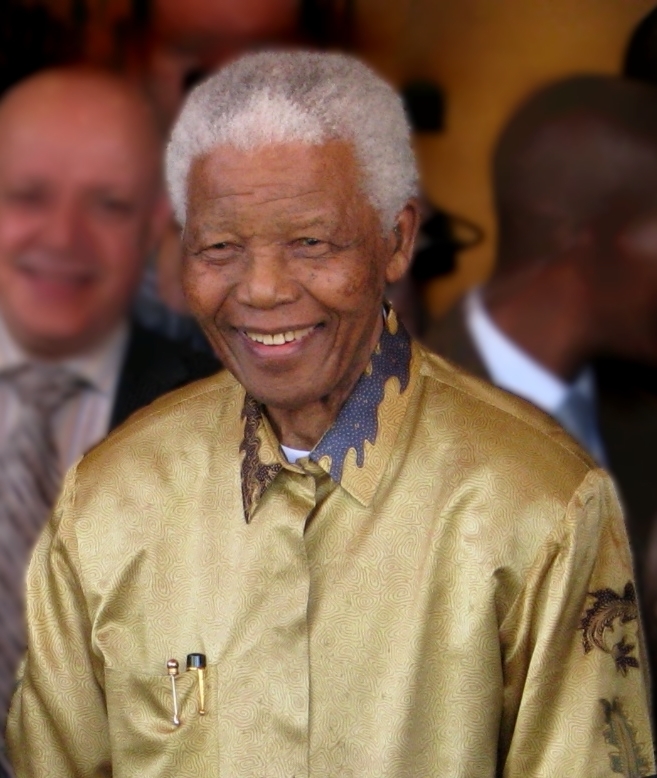
The name was popularized by researcher and writer Fiona Broome after she noticed that several people remembered Nelson Mandela dying in prison in the 1980s. Mandela was released in 1990, became president of South Africa in 1994 and died on December 5, 2013.
The image beside this text shows Nelson Mandela in 2008. It anchors the central case in a real person with a public biography, verifiable dates and enormous historical weight.
For some, the clash between private memory and public record reveals the fragility of memory. For others, it suggests timelines, editable reality or signs of a simulation.
Other internet classics followed: the Berenstain/Berenstein spelling dispute, remembered film quotes, product logos and childhood scenes that do not match archived material.
The psychological explanation begins with an uncomfortable point: memory is not a recording. It is reconstruction. The brain retrieves fragments, fills gaps and uses familiarity, emotion and repetition. Elizabeth Loftus's research on false memory and the misinformation effect showed how later information can alter what people remember.
The conspiratorial layer begins when the error is read as residue from another reality. People who remember a different spelling, a different death or a different movie line are interpreted as carrying traces from an earlier timeline.
This connects to collective consciousness: why do many people remember the same wrong thing? Skeptical answers point to shared culture and circulating misinformation. Esoteric answers point to a common mental field.
timeline convergence turns the phenomenon into evidence of crossed histories. optimal timeline gives it a spiritual direction: some realities are more destructive, others more aligned with healing and lucidity.
simulation matrix and Matrix as illusion give the theme its technological language. If reality is an interface, a divergent memory becomes a rendering error, system update or retroactive edit.
Matrix made that intuition culturally available. The Mandela Effect gives ordinary life the feel of a system glitch: a remembered fact that the archive denies.
CERN entered the mythology because the Large Hadron Collider deals with energies and particles most people cannot visualize. Forums and videos turned real scientific complexity into symbolic fuel: collisions might open portals, shift timelines or alter reality. CERN's own public material describes a machine for studying fundamental particles, not a cause of collective memory anomalies.
quantum physics requires care. Quantum physics really does challenge ordinary intuition, and wave-particle duality is strange to common sense. But this does not prove that a brand, book title or movie line was changed by parallel universes.
The phenomenon persists because memory is tied to identity. Childhood names, phrases and images feel like part of the self. When the world says “it was never that way,” the reaction can become existential.
Akashic Records offers another reading: a deeper memory field may preserve what the material archive no longer shows. hidden history reads divergent memories as clues that the past has been edited.
global control enters when distrust of both memory and public record makes people vulnerable to total explanations. propaganda amplifies the effect through memes, videos and repeated lists of “proofs,” because familiarity can feel like truth.
A mature reading keeps two layers alive: memory is malleable and sources matter; but collective certainty also reveals anxiety, nostalgia, trust problems and the desire to find signals of a larger order.
Simple summary
The Mandela Effect is when many people share a memory that does not match the documented record. It began with the false memory that Nelson Mandela died in prison in the 1980s, although he was released in 1990, became president in 1994 and died in 2013. Psychology explains it through reconstructive memory, familiarity, shared culture and the misinformation effect. The conspiratorial layer interprets it as traces of timelines, simulation, edited history or unstable reality.
References and starting points
- Fiona Broome - original archive of the Mandela Effect term
- Nelson Mandela Foundation - Mandela biography and timeline
- Elizabeth Loftus - false memories and misinformation-effect research
- CERN - Large Hadron Collider official page
- Wikimedia Commons - Nelson Mandela in 2008
Why it belongs on AwakenMap
It belongs because it connects collective memory, internet culture, psychology, simulation, timelines, misread physics and the fear of an editable reality.
Keep exploring
You can open another path
 Consciousness and symbols Collective Consciousness 5/5 intensity Explore →
  Map center Great Awakening 5/5 intensity Explore →
  AI and Matrix Matrix / Everything is an Illusion 5/5 intensity Explore →
  Esoteric practices Simulation Matrix 5/5 intensity Explore →
  Esoteric practices Timeline Convergence 5/5 intensity Explore →
  Esoteric practices Hidden History 4/5 intensity Explore →
Join the conversation
Comments are moderated. Keep the discussion respectful and distinguish evidence, interpretation and personal experience.