Connection level
13 direct connectionsMorgellons is the name given to a controversial cluster of symptoms in which people report skin lesions, crawling or stinging sensations, intense itching, fatigue and fibers or filaments that seem to emerge from the body. The theme belongs to the question of how to hold suffering without turning a medical gap into conspiratorial certainty.
Where it came from
The word Morgellons entered modern debate in 2002, when Mary Leitao, a Pennsylvania mother, used the term to describe fibers she believed she saw in her son's skin. The name was inspired by an old reference from English physician Thomas Browne in the seventeenth century, but the contemporary condition is something else: a modern syndrome organized by patient reports, the internet, support forums, media attention and conflict with physicians.
The reported suffering is real. People describe itching, wounds, crawling sensations under the skin, pain, fatigue, anxiety, isolation and humiliation when they feel disbelieved. The conflict appears when one asks where the fibers come from. For many patients, they are produced by the body or implanted by some external agent. For mainstream medicine, many cases resemble delusional infestation, chronic excoriations, skin irritation, textile contamination and psychosomatic or psychiatric suffering that needs care, not mockery.
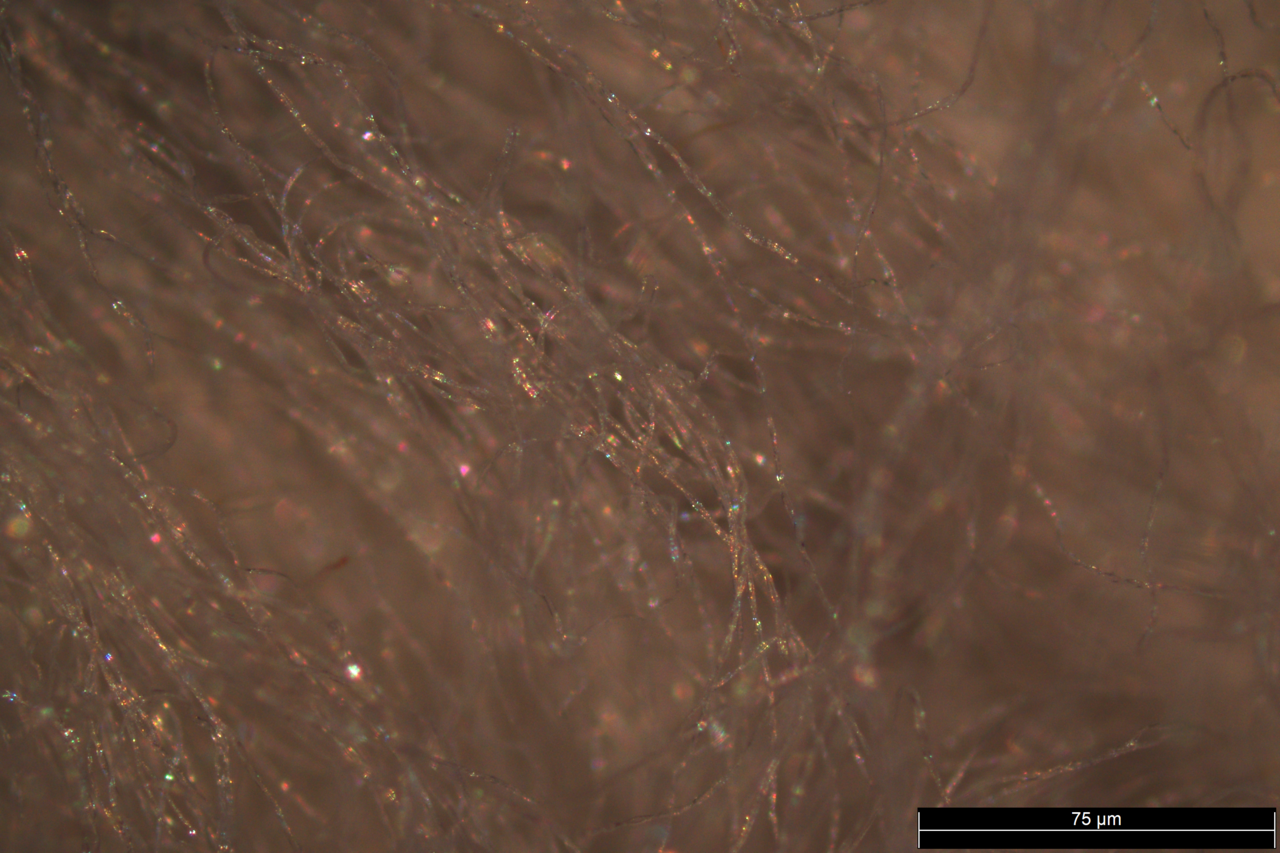
The most cited study was conducted by the CDC with Kaiser Permanente and published in 2012. The investigation analyzed patients with an “unexplained dermopathy” in northern California. It found no parasites or mycobacteria in the samples. Many lesions were compatible with bites, irritation or chronic excoriations. Most materials collected from the skin were composed of cellulose, likely cotton in origin.
That does not mean every patient “invented” pain. It means that, in that study, the hypothesis of a new infection or infestation by an unknown organism did not receive support. The distinction is crucial: invalidating the causal narrative does not invalidate the experience of suffering.
The conspiratorial layer appears when the gap between subjective experience and medical explanation becomes a story of external attack. In some versions, Morgellons is caused by chemtrails, nanoparticles, synthetic organisms, genetic engineering, biological weapons, environmental contamination or population-control experiments. In others, it is a disease related to Lyme disease and hidden by medical, pharmaceutical or government interests. More extreme versions speak of self-replicating nanotechnology and body-machine interfaces.
The “why” of this reading is understandable. A person feels something in the body, sees threads or particles, receives inconclusive tests, hears that the condition may have a psychiatric component and feels abandoned. The internet then offers a community that believes them and a total explanation: it is not delusion, it is coverup; it is not cotton, it is technology; it is not a wound from scratching, it is evidence emerging through the skin. The theory gives meaning, dignity and an enemy. It can also trap the person in dangerous treatments, isolation and distrust of any physician who tries another approach.

The delicate point
The delicate point is separating three things: symptom, explanation and identity. The symptom can be real and devastating. The explanation can be wrong, incomplete or still disputed. The identity of “Morgellons sufferer” can offer support, but it can also close the door to treatments that relieve itching, secondary infection, anxiety, insomnia, depression and compulsive skin checking.
AwakenMap does not treat Morgellons as a joke. It also does not treat it as proof of geoengineering, nanorobots or biological warfare. The theme matters because it shows how medical distrust begins when a person suffers, does not receive careful language and finds online an explanation that feels more humane than the consultation that wounded them.
On the map, Morgellons connects to chemtrails, geoengineering, holistic healing, organic food, DNA upgrade, virulent nanite AI, global control and mainstream media.
These connections show the narrative path: from skin symptoms to environment, from environment to technology, from technology to global control, and from global control to rejection of mainstream media and conventional medicine.
Why it belongs on AwakenMap
Morgellons belongs on AwakenMap because it forces a rare posture: compassion without automatic credulity. The suffering person must be taken seriously. The theory explaining the suffering must also be examined rigorously.
The philosophical connection lies in the relation between body and truth. When the body feels something that an institution cannot name well, the person looks for another map. Sometimes that map saves. Sometimes it imprisons. Morgellons shows how pain without translation can become a cosmology of control.
Simple summary
Morgellons is a controversial condition associated with skin lesions, itching, crawling sensations and reports of fibers. The modern term was popularized by Mary Leitao in 2002. The 2012 CDC study found no parasites or clear infectious cause and interpreted many filaments as cellulose, likely cotton. The conspiratorial reading links Morgellons to chemtrails, nanotechnology, Lyme disease, biological weapons and population control. The critical point is holding suffering without turning every medical gap into proof of hidden attack.
References and starting points
- CDC/PLOS One - unexplained dermopathy study
- CDC Stacks - clinical and epidemiologic study report
- Mayo Clinic - delusional infestation and Morgellons
- Cleveland Clinic - Morgellons symptoms and clinical approach
- JAMA Dermatology - modern origin of the Morgellons label
- Wikimedia Commons - cotton fiber microstructure
Keep exploring
You can open another path
 AI and Matrix Reptilian Nanite A.I. 5/5 intensity Explore →
  Control systems Geoengineering 4/5 intensity Explore →
  Map center Great Awakening 4/5 intensity Explore → AI and Matrix Reptilians Found Infected With Virulent Nanite A.I. 4/5 intensity Explore →
  AI and Matrix Virulent Nanite A.I. 4/5 intensity Explore → AI and Matrix The Borg 3/5 intensity Explore →
Join the conversation
Comments are moderated. Keep the discussion respectful and distinguish evidence, interpretation and personal experience.