Connection level
14 direct connectionsThe Borg belongs on AwakenMap through the question of when connection becomes assimilation. In Star Trek fiction, they are cybernetic organisms linked to a collective mind, known for assimilating species, technologies and cultures. On the map, though, the point is not only discussing a fictional race: it is understanding why the Borg became such a strong metaphor for artificial intelligence, transhumanism, social networks, surveillance, nanotechnology and fear of losing the self inside a system.
The cultural origin is clear. The Borg appear in Star Trek: The Next Generation, especially from the episode “Q Who”, aired in 1989. They brought together organic body, implants, cube-shaped ship, technological adaptation and a collective voice. The threat was not simply dying; it was being incorporated. A person continued to exist biologically, but ceased to own their own will.
The image beside this text does not show the Borg, but a flexible brain-computer interface. It appears here as a real/contextual case: technologies connecting brain, machine and communication already exist in medical research, especially for people with paralysis or loss of speech.
The contrast matters. In medicine, these interfaces can restore autonomy. In conspiratorial imagination, the same symbolic family becomes fear of mind capture, behavioral standardization and technological assimilation.
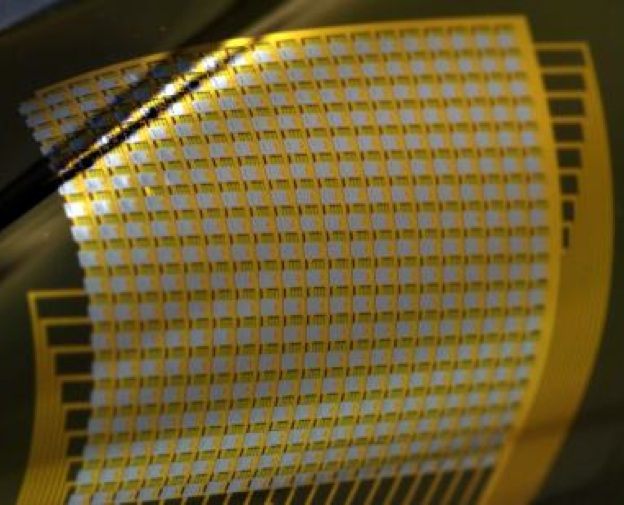
The most current concrete case is not an alien hive, but the brain-computer interface. Research reported by NIH shows systems able to translate brain activity into speech for people with paralysis. This kind of technology is deeply human when it restores communication. At the same time, it touches the Borg cultural nerve: when the mind speaks directly with the machine, where does the tool end and integration begin?
The power of the Borg lies in the word assimilation. They do not merely defeat enemies; they transform the enemy into part of their own network. This is why the theme speaks to the artificial intelligence signal and artificial intelligence. Modern artificial intelligence already reorganizes language, work, memory, decision, image, music, surveillance and social relation. The conspiratorial reading asks whether this is an external tool or the beginning of a technical collective mind that learns from us while reshaping us.
The connection with collective consciousness is direct. Collective consciousness can be imagined as union, empathy and coordination. But in the Borg image, collective means erasure of the individual. That difference is decisive. Healthy community preserves voices; total hive demands conformity. The Borg fear begins when connection stops expanding autonomy and starts standardizing perception.
The conspiratorial layer appears when the Borg stop being metaphor and become a hidden model of the future. In stronger versions, technocratic elites, artificial intelligence, nanotechnology, vaccines, digital networks, implants, biometric identity and programmable money all participate in gradual assimilation of humanity. The goal is not only controlling opinions, but integrating body, data, desire and behavior into one architecture.
This is where virulent nanite AI, reptilian nanite AI and reptilians infected with virulent nanite AI enter. Narratives about nanite AI imagine microscopic machines able to modify body, brain, immunity and will. Some use biological language; others use extraterrestrial or reptilian language. The pattern resembles the Borg: the invasion does not arrive as a visible soldier, but as invisible integration inside the organism.
The link with Morgellons follows the same symbolic logic. In some conspiratorial environments, bodily symptoms, skin fibers or strange sensations are reinterpreted as proof of artificial materials, nanorobots or technological contamination. Conventional medicine treats Morgellons differently, but the imagination approaches the Borg fear: the body is being transformed by a technology the person did not authorize.
The Borg also help think about the matrix and the simulation matrix. In the matrix, perceived reality may be system. In the Borg, the whole body becomes a terminal of the system. One theory works with prison of perception; the other with prison of integration. Together, they form a contemporary fear: living too connected until we no longer know which thoughts are our own.
technological superiority appears because the Borg are technologically superior but not spiritually elevated. They heal, adapt, travel and coordinate, but they do it by erasing freedom. This contrast is precious for AwakenMap: advanced technology does not prove wisdom. A machine may be brilliant and still serve an inhuman logic.
spiritual superiority enters through the reverse path. Many traditions speak of unity, dissolution of ego and collective consciousness. The Borg are the dark parody of that union: unity without love, telepathy without freedom, transcendence without soul. The philosophical question is strong: when does “being one” mean communion, and when does it mean capture?
The connection with global control is political. Fear of global control rarely stops at laws or governments; it imagines a total infrastructure where finance, health, media, identity, mobility and opinion become interoperable. The Borg imagination gives this a visual form: many bodies, one network, one central order, constant adaptation and little room for dissent.
telepathy also appears, but inverted. In spiritual traditions, telepathy can be conscious communion. Among the Borg, mental communication is collective command. The same symbol changes value depending on consent, reciprocity and preservation of the person. Without that, telepathy becomes mandatory hive noise.
The risk of the theme is turning any connective technology into an absolute threat. Prosthetics, neural interfaces, artificial intelligence, networks and implants can heal, expand ability and restore practical life to people. Critique should not demonize the tool. The point is asking about consent, governance, security, dependence, data extraction and the right to remain disconnected.
A mature reading separates three planes. First, the Borg as science-fiction creation and cultural critique. Second, real technologies integrating body, computer and network, especially in medicine and accessibility. Third, the conspiratorial hypothesis of technocratic assimilation of humanity by AI, nanites, surveillance and global control. Mixing everything creates panic; separating the planes shows why the metaphor is so powerful.
The Borg matter because they give a simple image to a difficult fear: perhaps the future threat is not a machine destroying us, but a machine making us too useful for it. AwakenMap's question is not whether we are literally Borg. It is whether we are building systems that make human freedom look more and more like a configurable option.
Simple summary
The Borg are a fictional Star Trek race made of cybernetic organisms linked to a collective mind. They assimilate beings and technologies, erasing individuality in the name of efficiency and adaptation. On AwakenMap, the theme works as a metaphor for artificial intelligence, brain-computer interfaces, nanotechnology, transhumanism, surveillance, global control and fear of losing autonomy inside a technical network. The conspiratorial part appears when this metaphor is treated as a real plan for human assimilation.
References and starting points
- Wikipedia - Borg in Star Trek
- Wikipedia - Q Who episode
- NIH - brain-computer interface restores natural speech
- PMC - brain-computer interfaces in medicine
- Wikimedia Commons - flexible brain-computer interface
- Great Awakening Map - original poster
Why it belongs on AwakenMap
It belongs because the Borg condense one of the central questions of our time: how connected do we want to be? Awakening here means distinguishing communion from assimilation, technological healing from data capture, collective intelligence from mandatory hive mind and technical progress from silent loss of self.
Keep exploring
You can open another path
 AI and Matrix Artificial Intelligence 5/5 intensity Explore →
  AI and Matrix Artificial Intelligence Signal 5/5 intensity Explore →
  Consciousness and symbols Collective Consciousness 5/5 intensity Explore →
  Map center Great Awakening 5/5 intensity Explore →
  AI and Matrix Virulent Nanite A.I. 5/5 intensity Explore →
  AI and Matrix Ancient Artificial Intelligence 4/5 intensity Explore →
Join the conversation
Comments are moderated. Keep the discussion respectful and distinguish evidence, interpretation and personal experience.