Connection level
13 direct connectionsI Ching, the Book of Changes, is an ancient Chinese system of consultation, philosophy and reading of cycles. It belongs to the question of when an oracle becomes a hidden code of reality.
The oracle as a language of change
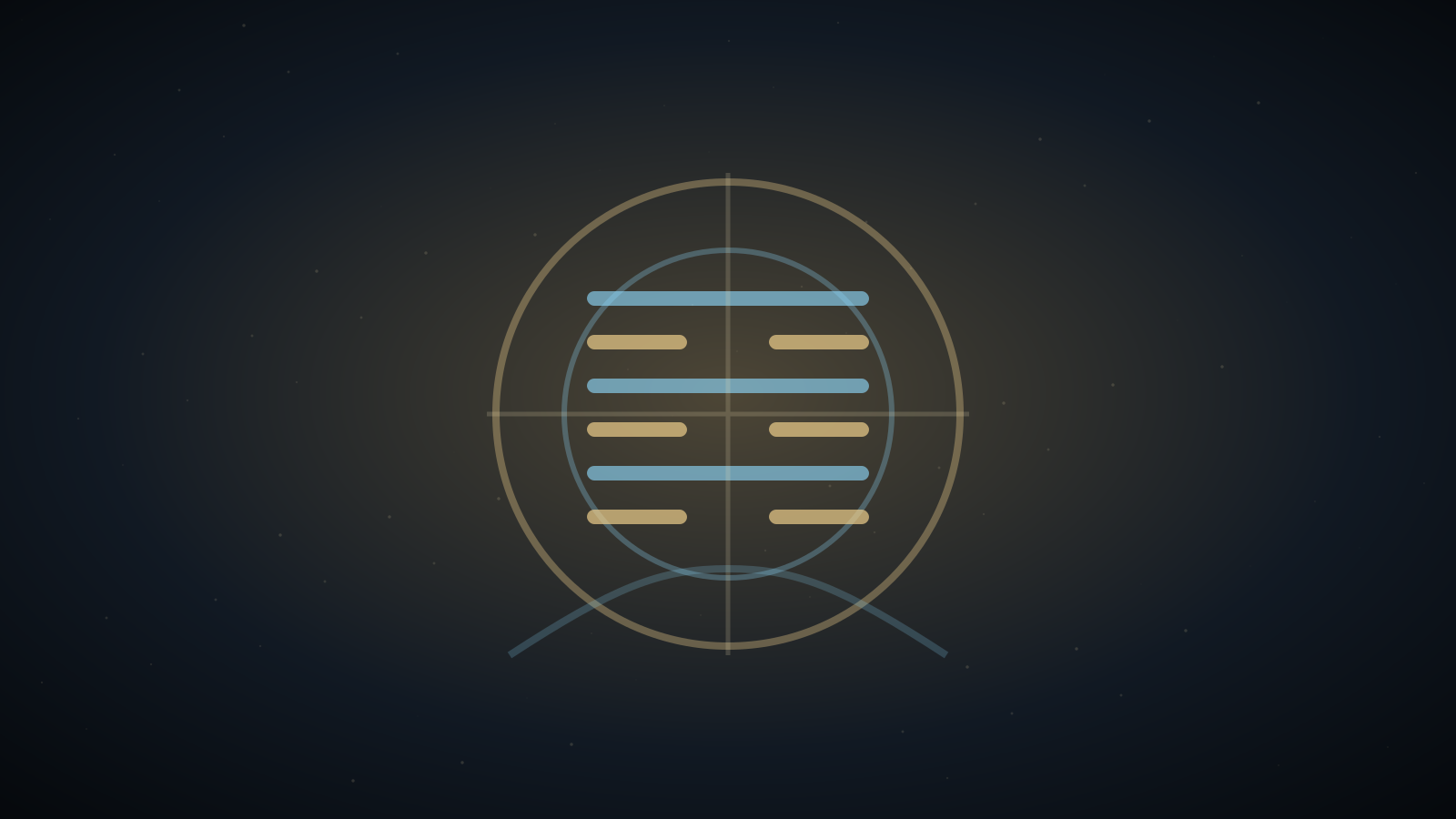
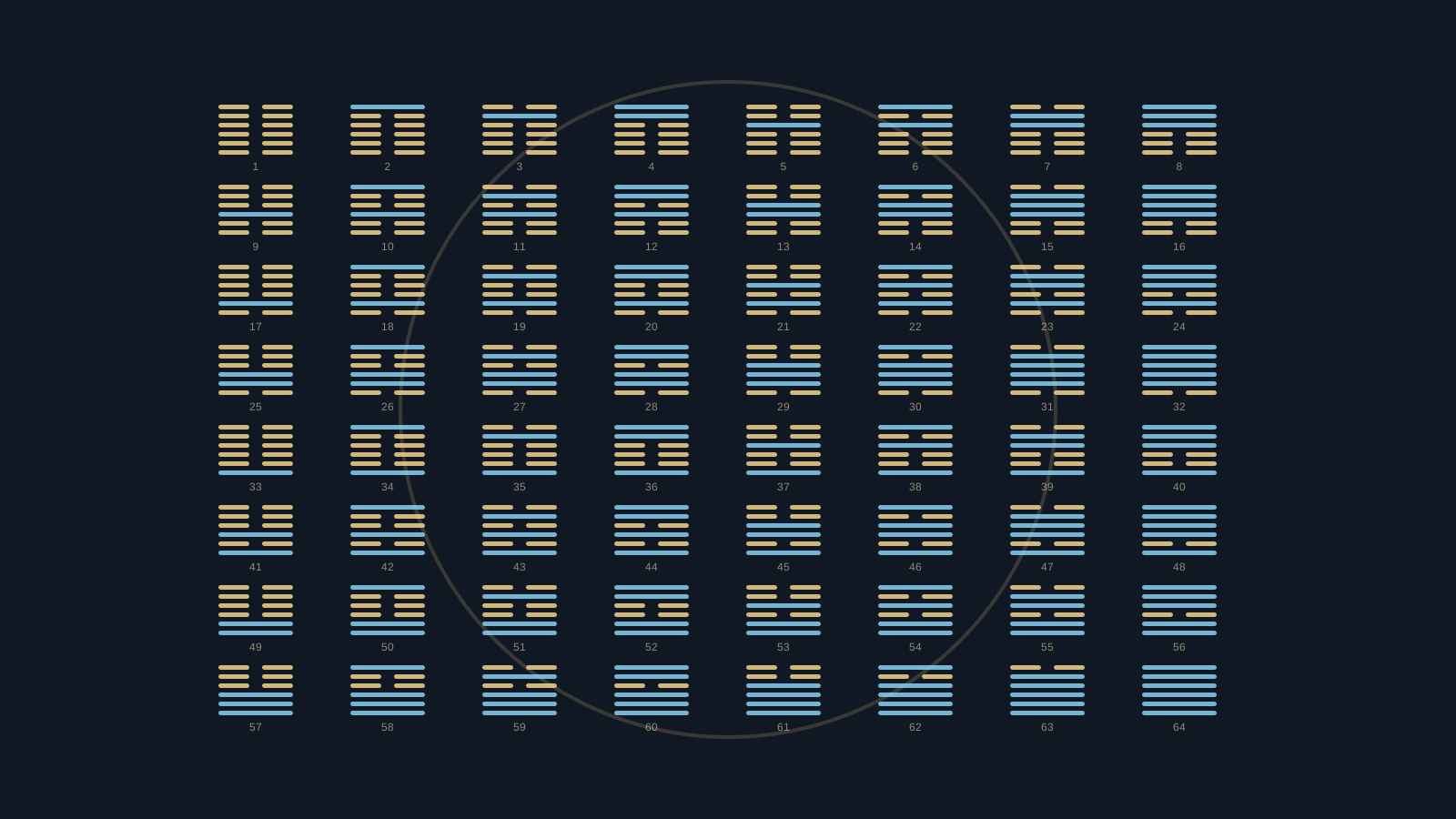
The I Ching did not begin as a conspiracy manual. Its oldest layer comes from Chinese divinatory practices linked to signs, rituals and political decisions. Over time, the 64 hexagrams became a symbolic grammar of change: heaven and earth, advance and retreat, tension and rest, decision and waiting. The consulter does not receive only a prediction; they receive an image for thinking their position inside a process.
This is the strength of the text. It does not promise to control the future mechanically. It suggests life moves through patterns, and that the right question can reveal the quality of the moment. That is why it naturally speaks with the Tao Te Ching, Free Will and Higher Mind: not as escape from choice, but as an attempt to decide within a larger field.
The conspiratorial reading grows when the 64 hexagrams stop being only symbols and start being seen as a kind of source code of the real. Since each hexagram is formed by six open or closed lines, the structure feels almost binary. This resemblance fascinated modern readers, especially when remembering that Leibniz took interest in the hexagrams while thinking about binary systems.
From there, the I Ching can be reinterpreted as something more radical: not a wisdom book, but an ancient information matrix; not a poetic oracle, but an interface with temporal patterns; not cultural tradition, but a trace of a lost science of probability, synchronicity and architecture of destiny.
This is where the theme enters the alternative imaginary. Some readers treat the I Ching as a synchronicity technology: the coin, yarrow stalks or chance would not be “randomly” selecting an answer, but opening a window into an invisible order. In stronger versions, that order would be the programming of the Simulation Matrix itself, a layer of Frequency or a pattern connecting mind, time and Collective Consciousness.
This idea is seductive because it preserves something many people have felt: the strange precision of a symbolic answer at the right moment. The problem begins when meaningful experience becomes total proof. A consultation that touches someone may be psychologically deep, but that does not demonstrate the whole universe is running on the 64 hexagrams, nor that elites know the book as a secret system of temporal manipulation.
Synchronicity and control
Carl Jung helped popularize in the West the reading of the I Ching as an example of synchronicity: meaningful coincidence that does not depend on simple mechanical cause. This idea opened a beautiful and dangerous door. Beautiful because it takes seriously the meeting between inner state and outer event. Dangerous because it can turn any coincidence into guaranteed cosmic order.
The main fracture is between synchronicity and control. Synchronicity allows the symbol to be heard without reducing it to superstition. Control begins when someone believes they have found a machine of destiny. The I Ching can refine attention, humility and timing; it can also become dependency, outsourcing of choice or belief that every event is already coded.
AwakenMap reads this point carefully. The mature question is not whether the I Ching “works” as a magic button. It is what happens when a wisdom tradition becomes a tool of certainty. The book can open reflection; it should not replace responsibility.
Relations on the map
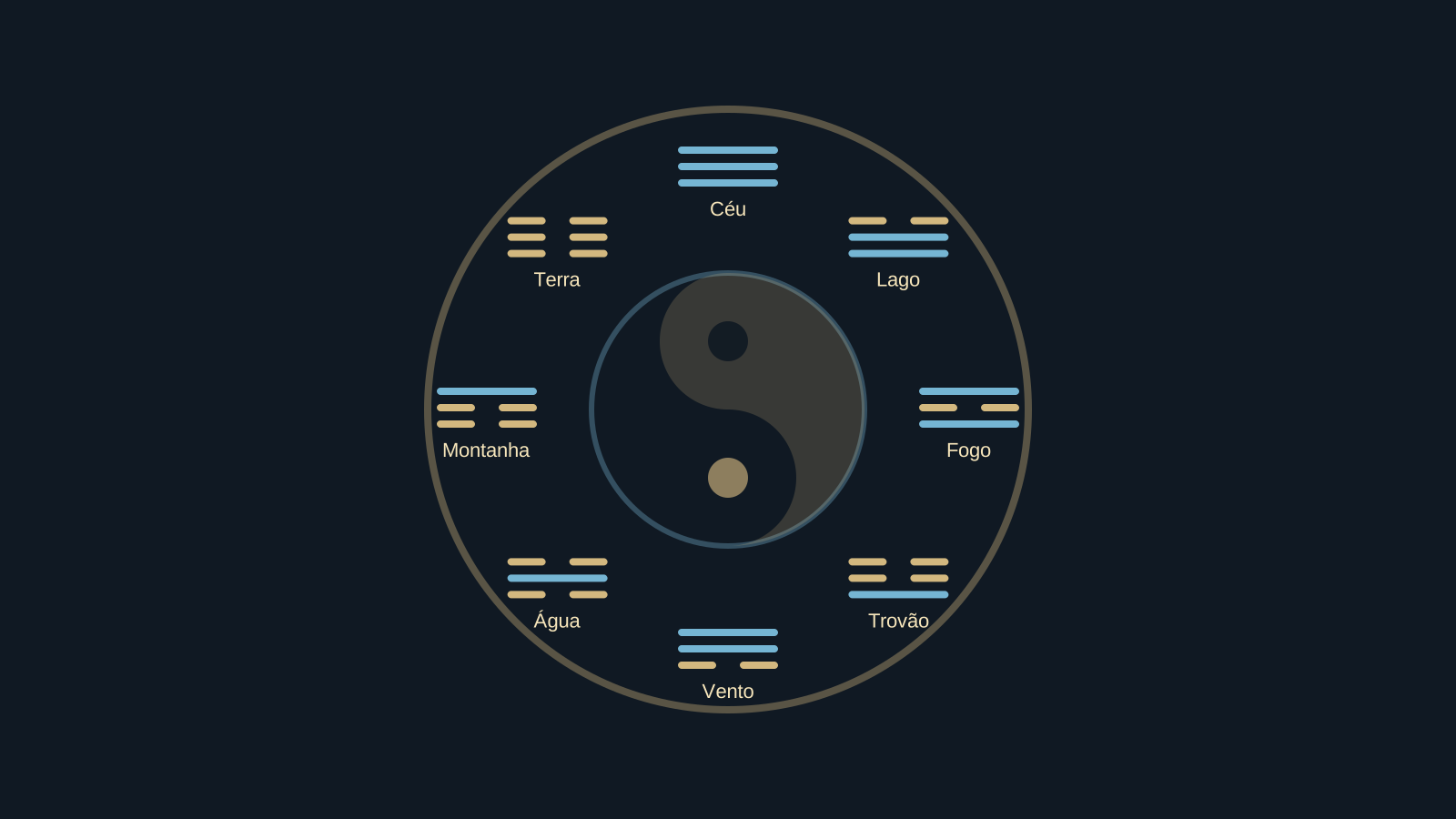
On the map, I Ching connects to the Tao Te Ching, Bardo, Collective Consciousness, Sacred Geometry, the Simulation Matrix, The Matrix, Free Will, Higher Mind, Frequency and Quantum Physics.
These connections form a corridor between oracle, Eastern philosophy, choice, symbol, matrix and pattern reading. The node does not reduce the I Ching to superstition or elevate it to proof of cosmic code. It asks how to distinguish symbolic wisdom from a total claim about the secret functioning of the world.
Why it belongs on AwakenMap
I Ching belongs on AwakenMap because it shows how an ancient system of change can be read on three levels at once: classical text, psychological mirror and conspiratorial hypothesis of temporal code.
The philosophical connection lies in the use of uncertainty. Awakening is not asking the oracle to choose for us. It is learning to ask better questions, recognize patterns without idolizing them and act without turning symbol into prison.
Simple summary
I Ching is the Book of Changes, a Chinese system of 64 hexagrams used to think about cycles, decisions and change. The conspiratorial reading sees it as an ancient code of reality, linked to synchronicity, matrix, time and destiny programming. The theme matters because it separates symbolic wisdom, meaningful experience and claims of hidden control.
References and starting points
- Britannica - I Ching, the Book of Changes
- Internet Archive - Wilhelm/Baynes translation of the Book of Changes
- Sacred Texts - Legge translation of the Book of Changes
- Internet Encyclopedia of Philosophy - ancient Chinese philosophy
- Stanford Encyclopedia of Philosophy - Leibniz and binary thought
- Wikimedia Commons - I Ching hexagrams
- Wikimedia Commons - bagua diagram
Keep exploring
You can open another path
 Map center Great Awakening 5/5 intensity Explore →
  Esoteric practices Time Wave / Timewave Zero 5/5 intensity Explore →
  Esoteric practices The Gateway to All Understanding 4/5 intensity Explore →
  Consciousness and symbols Collective Consciousness 4/5 intensity Explore →
  Return to Source Free Will 4/5 intensity Explore →
  Consciousness and symbols Sacred Geometry 4/5 intensity Explore →
Join the conversation
Comments are moderated. Keep the discussion respectful and distinguish evidence, interpretation and personal experience.