
Connection level
13 direct connectionsTerence McKenna belongs on AwakenMap through the question of when direct experience becomes a total cosmology. He was a writer, lecturer and ethnobotanist linked to psychedelic culture, known for advocating responsible use of visionary plants and fungi, and for speaking about language, shamanism, technology, the I Ching, DMT and a vision of time as accelerating novelty. His power lies less in “proving” a theory and more in turning visionary experience into a map of the world.
McKenna was born in 1946 and became one of the most recognizable voices of late twentieth-century psychedelic counterculture. He was not merely an advocate for substances; he was a narrator of cosmologies. His language joined biology, myth, literature, cyberculture, alchemy, popular anthropology and metaphysical speculation. For many, he opened imaginative doors. For critics, he mixed brilliant intuition with unsupported leaps.
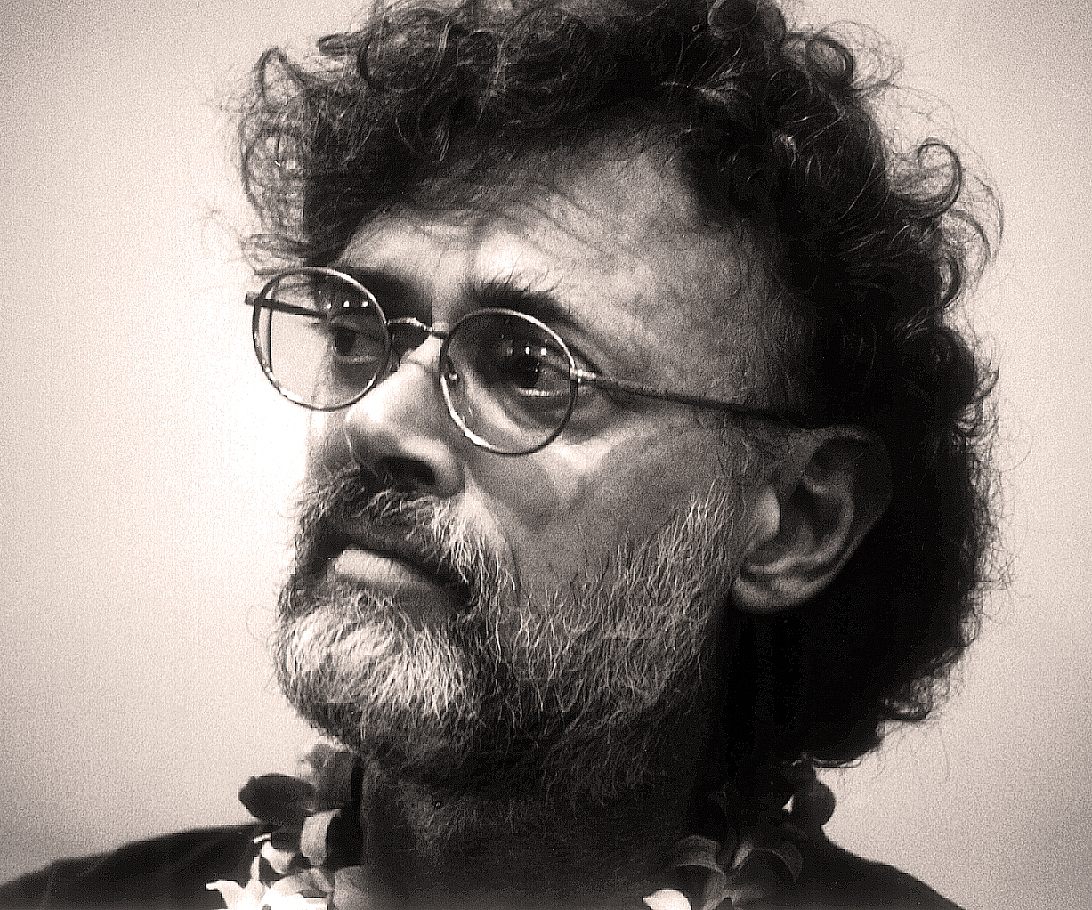
The image beside this text shows Terence McKenna in 1999. It matters because the theme is not abstract: McKenna was a public presence, with recorded lectures, books, followers, critics and real influence on digital psychedelic culture.
On AwakenMap, he appears as a passage figure between shamanism, entheogens, the internet, 2012 prophecy, theories of time and the search for contact with nonhuman intelligences perceived in altered states.
The central concrete case is La Chorrera, in the Colombian Amazon, in 1971. Terence and Dennis McKenna traveled there in search of visionary plants and lived through a psychedelic episode that later fed books, lectures and personal mythologies. The episode matters because it contains themes that run through the whole work: mushrooms, inner voice, language, the I Ching, transformation of consciousness and the feeling that the human mind can touch a larger intelligence.
The link with entheogens, psilocybin and psilocybin mushrooms is direct. McKenna saw psilocybin mushrooms as cultural and cognitive allies. His “stoned ape” hypothesis suggested that visionary fungi may have influenced language, imagination and human evolution. The idea is popular and powerful as a modern myth, but it is not scientific consensus. It works better as a provocation about coevolution, diet, perception and culture than as a proven explanation of human origins.
The connection with DMT comes from McKenna's emphasis on entities, autonomous worlds and a feeling of encounter with intelligences that seem external to the ego. He spoke of a communicating presence, often associated with the mushroom or visionary states. Here the conspiratorial and metaphysical layer begins: is psychedelic experience a product of the brain, or contact with a real ecology of invisible intelligences?
This question became even more relevant with modern psilocybin research. Controlled studies, including work at Johns Hopkins, showed that psilocybin can occasion mystical-type experiences with lasting personal meaning in certain contexts. This does not automatically validate McKenna's cosmologies, but it confirms that psychedelic experiences can have deep, measurable and transformative impact for participants.
ayahuasca and shamanism show the ethnobotanical side. McKenna helped popularize the idea that shamanic cultures preserve technologies of consciousness. This reading can correct modern contempt for traditional knowledge; it can also romanticize Indigenous peoples, remove practices from their contexts and turn complex rituals into tools for urban spiritual consumption.
The I Ching enters through the development of the Time Wave. From readings of the I Ching and mathematical patterns, McKenna formulated a theory of historical novelty that tried to describe time as a wave of increasing complexity. This theory became associated with 2012, cultural acceleration and the idea of an attractor at the end of time. The problem is that the Time Wave is widely treated as pseudoscience, dependent on interpretive and numerological choices.
Even so, the symbolic force of the Time Wave is large. It translates a real contemporary feeling: the world seems to accelerate. Technology, information, crises, networks, artificial intelligence, ecological collapse and cultural mutations create the impression that history is compressing cycles. McKenna offered a mythology for that feeling, calling it increasing novelty.
The conspiratorial layer appears when that acceleration stops being cultural reading and becomes hidden architecture. If time has an attractor, could someone manipulate it? If there is a wave of novelty, could elites delay, hijack or steer it? If visionary plants open contact with intelligences, would governments or institutions have an interest in prohibiting, controlling or ridiculing that access?
This is where McKenna speaks to the psychedelic renaissance. Today's psychedelic renaissance tries to reintroduce substances such as psilocybin and MDMA into clinical, scientific and therapeutic settings. McKenna precedes that movement as a cultural figure: less laboratory, more countercultural oracle. The tension is clear: how can powerful experiences become responsible care without emptying their mystery or enabling abuse?
The link with collective consciousness appears because McKenna spoke of language as an evolutionary force. For him, culture, symbols and communication were not accessories; they were technologies of reality. That intuition remains current. Social networks, memes, artificial intelligence and digital communities show that collective consciousness can be altered by linguistic environments. The difference is that today this alteration is also monetized, targeted and politically contested.
The matrix enters as a question about ontology. McKenna did not need the word matrix to suggest that the ordinary world is only one layer of reality. Psychedelic states seemed to reveal backstage areas, codes, entities, patterns and deep languages. The sober reading says this may be intense inner experience; the conspiratorial reading says they are glimpses of an objective hidden reality.
lucid dreaming helps explain the aesthetics of these experiences. Lucid dreams, hypnagogic states and psychedelic visions share the feeling of being awake inside a world that responds to mind. McKenna gave language and cultural courage to explore these territories, but also risked treating every vision as reliable revelation.
A mature reading separates three planes. First, McKenna as a historical figure of psychedelic counterculture, with books, lectures and real influence. Second, McKenna as a maker of modern myths about mushrooms, language, time and nonhuman intelligence. Third, McKenna as an entry point into conspiracy theories about prohibition of substances, control of consciousness and suppression of visionary contacts.
Terence McKenna matters because he gave voice to a question that remains alive: what if human consciousness is less closed than we think? The danger lies in confusing openness with certainty. His work is best read as an invitation to wonder and discernment, not as a literal manual of the cosmos. On AwakenMap, he is less a final prophet and more a node where experience, language and suspicion become inseparable.
Simple summary
Terence McKenna was a writer, lecturer and ethnobotanist linked to psychedelic culture. He connected psilocybin mushrooms, DMT, ayahuasca, shamanism, language, the I Ching, Time Wave, 2012 and theories about nonhuman intelligence. The La Chorrera episode in 1971 was central to his personal mythology. The conspiratorial part appears when visionary experiences are interpreted as real contact with hidden intelligences or as knowledge repressed by systems of control.
References and starting points
- Purdue Archives - Dennis and Terence McKenna papers
- McKenna Academy - La Chorrera: 50-year retrospective
- Wikimedia Commons - Terence McKenna, 1999
- PubMed - psilocybin and mystical-type experiences
- PMC - 14-month follow-up on psilocybin
- Great Awakening Map - original poster
Why it belongs on AwakenMap
It belongs because McKenna shows how an inner experience can expand into a theory of history, language, time and reality. Awakening here means preserving the power of direct experience without turning every ecstasy into proof, every vision into authority and every intuition into a closed map of the universe.
Keep exploring
You can open another path
 Esoteric practices DMT 5/5 intensity Explore → Esoteric practices Entheogens 5/5 intensity Explore →
  Map center Great Awakening 5/5 intensity Explore → Healing and energy Psilocybin Mushrooms 5/5 intensity Explore → Esoteric practices Psilocybin 5/5 intensity Explore →
  Esoteric practices Time Wave / Timewave Zero 5/5 intensity Explore →
Join the conversation
Comments are moderated. Keep the discussion respectful and distinguish evidence, interpretation and personal experience.