
Connection level
18 direct connectionsGlobal Warming belongs on AwakenMap through the dispute over whom to trust when the planet becomes evidence. The theme is not only a temperature measurement. It became a dispute over science, oil, media, government, public trust and the fear that climate crisis could become an entry point for new forms of control.

In physical terms, global warming is the long-term rise in Earth's average temperature. The central explanation is the buildup of greenhouse gases, mainly carbon dioxide, methane and nitrous oxide. They let sunlight enter but make it harder for part of the heat emitted by the surface to escape. This effect exists naturally and makes Earth habitable; the modern problem is intensifying that atmospheric blanket very quickly.
The scientific origin is old. In the nineteenth century, Joseph Fourier discussed the atmosphere's role in Earth's heat. John Tyndall showed that certain gases absorb infrared radiation. Svante Arrhenius calculated that changes in carbon dioxide could alter planetary temperature. In the twentieth century, Charles David Keeling's measurements at Mauna Loa showed the continuous rise of carbon dioxide. From there, the theme moved from the laboratory into international reports, public policy, economic dispute and culture war.
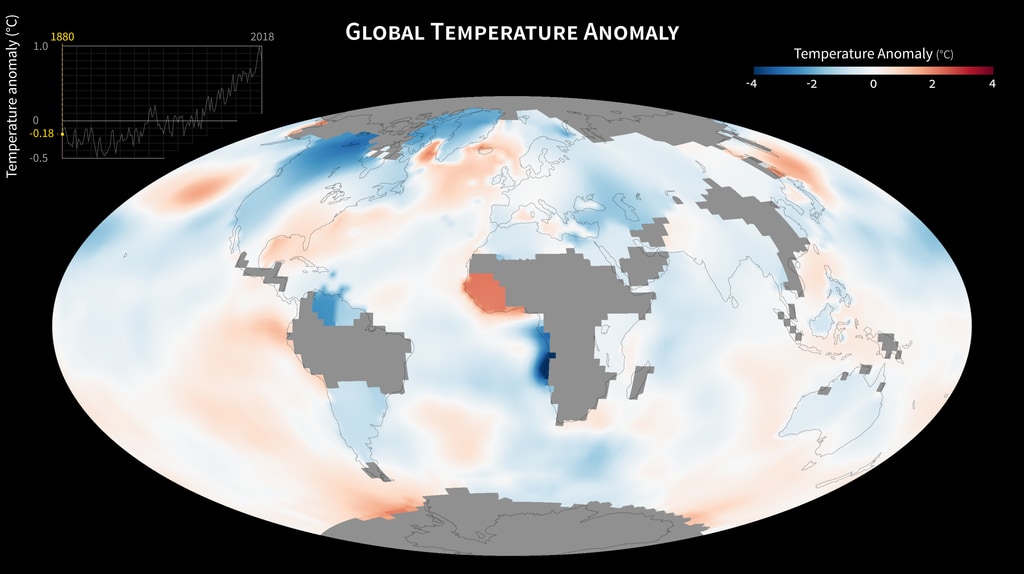
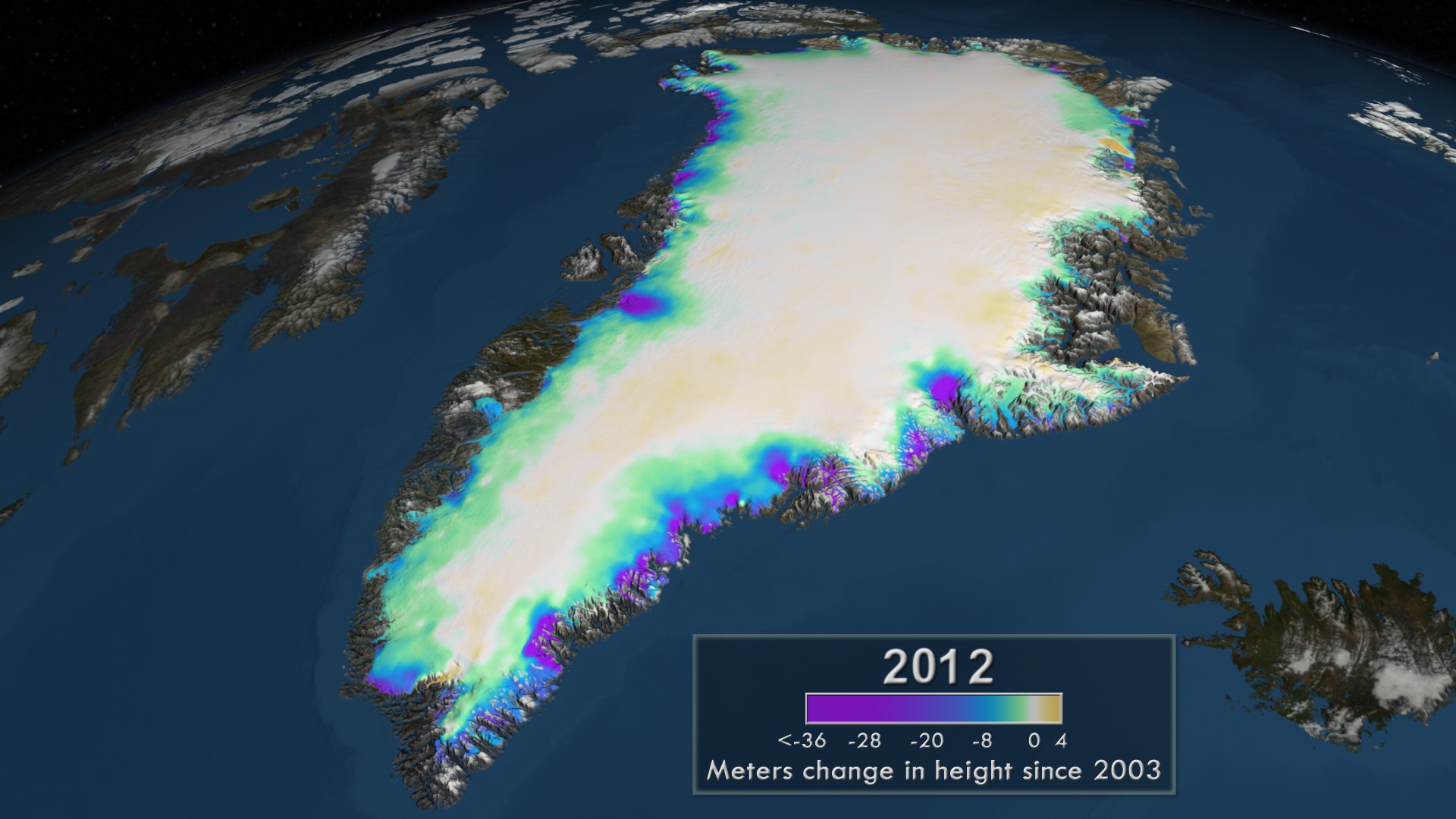
The IPCC states that human activities, mainly greenhouse gas emissions, have unequivocally caused observed global warming. NASA, NOAA and WMO track converging signals: rising average temperature, warming oceans, retreating ice, sea level rise and more frequent extreme heat. The important point is that this is not one isolated thermometer, but multiple lines of evidence reinforcing one another.
The conspiratorial layer appears when this scientific base is read as political staging. In one version, global warming is a fraud created to impose taxes, destroy industries, control energy, restrict meat, cars and travel, weaken national sovereignty and justify a technocratic world government. In another version, the crisis is real but has been caused or amplified by climate manipulation, geoengineering, chemtrails or hidden technologies.
These suspicions do not come from nowhere. There are enormous economic interests in energy, communication campaigns, funding networks, bad policy proposals, legitimate fear of distant bureaucracies and international language that often sounds too technical for ordinary life. The mistake is turning those elements into automatic proof that the entire climate field is invented.
There is also the opposite mistake: treating any criticism as ignorance. When people ask who pays for the energy transition, who profits from carbon markets, who decides targets, who audits models or who loses work, they are not necessarily denying physics. They may be asking about power. That is why the theme connects to global control, mainstream media, Operation Mockingbird and Cabal, Deep State and Illuminati.
The most honest debate separates four things. First: the physical phenomenon of warming. Second: the measured causes, with human emissions carrying the dominant weight in current scientific literature. Third: the policies proposed in response, which may be good, bad, fair or captured. Fourth: the conspiratorial narratives that turn everything into one domination plan.
Confusion begins when these layers are mixed. A person can accept that the planet is warming and still distrust certain solutions. They can criticize carbon markets without denying the greenhouse effect. They can question climate governance without claiming that satellites, oceans and glaciers belong to a world fraud. Discernment means refusing to hand everything to one explanation.
A concrete case

The most revealing concrete case is Climategate. In November 2009, shortly before the Copenhagen climate conference, emails and files from the Climatic Research Unit at the University of East Anglia were stolen and published online. Out-of-context excerpts circulated as if they proved data manipulation, suppression of critics and an organized fraud to sustain global warming.
The case caught fire because it touched the sensitive point of the theme: trust. If scientists spoke harshly in private, discussed graphs, journals and data access requests, that seemed to confirm for many readers the image of a closed community protecting a narrative. The conspiratorial theory did not arise from one climate spreadsheet; it arose from the feeling that exposed backstage talk explained the whole politics.
Investigations followed in the United Kingdom and the United States. Parliamentary reports, independent reviews and university inquiries criticized openness and communication problems in some areas, but did not support the central accusation of deliberate scientific fraud. For AwakenMap, the case matters because it shows both things at once: climate science did not collapse because of the emails, but public trust was genuinely damaged.
That is the heart of the theme. Global warming is a physical phenomenon, but it also became a symbolic field. For some, it is evidence that humanity has disturbed planetary balance. For others, it is evidence that elites use environmental fear to govern behavior. Both readings fight over the same emotion: the feeling that something too large is happening above ordinary people's heads.
Why it belongs on AwakenMap
Global warming belongs on AwakenMap because it forces the reader to distinguish evidence, politics and myth. Temperature can be measured, but trust does not automatically come from data. It depends on transparency, clear language, auditable institutions and a public debate that neither treats honest doubt as an enemy nor treats suspicion as proof.
The philosophical connection is this: awakening is not denying the planet when it changes, nor accepting any governing project in the name of climate. It is learning to ask precisely. Who measured? How was it measured? Who interprets? Who profits? Who decides? Who loses? Which part is data, which part is politics and which part is a control narrative?
How to continue on the map
After this theme, explore geoengineering, global control, chemtrails, weather modification, solar system climate change, Antarctica, mainstream media, Operation Mockingbird and frequency.
Simple summary
Global warming is the long-term rise in Earth's average temperature, explained mainly by the buildup of human-caused greenhouse gases. The conspiratorial theory appears when climate science, environmental policy and global governance are read as a fraud or as a mechanism of social control. Climategate shows why the theme is so sensitive: even though investigations did not confirm deliberate scientific fraud, the perception of closed backstage activity fed lasting distrust.
References and starting points
- IPCC - AR6 Synthesis Report, 2023
- NASA - climate change evidence
- NASA - carbon dioxide indicator
- NOAA Climate.gov - global temperature
- NOAA NCEI - Annual 2025 climate report
- WMO - 2025 among the warmest years on record
- University of East Anglia - Climatic Research Unit history
- UK Parliament - report on CRU climate data
- Penn State - investigation involving Michael Mann
- Wikimedia Commons - CRU Hubert Lamb Building
Keep exploring
You can open another path
 Control systems Geoengineering 5/5 intensity Explore → Control systems Geoengineering 5/5 intensity Explore →
  Control systems Global Control 5/5 intensity Explore →
  Map center Great Awakening 5/5 intensity Explore →
  Esoteric practices Solar-System Climate Change 5/5 intensity Explore →
  Earth and Antarctica Antarctica 4/5 intensity Explore →
Join the conversation
Comments are moderated. Keep the discussion respectful and distinguish evidence, interpretation and personal experience.