Connection level
16 direct connectionsEnd the Fed belongs on AwakenMap through the question of when money stops being a tool and becomes invisible government. The phrase condenses a radical suspicion: if an institution controls interest rates, liquidity, bank reserves and crisis response, perhaps it governs social life more deeply than many elected governments.

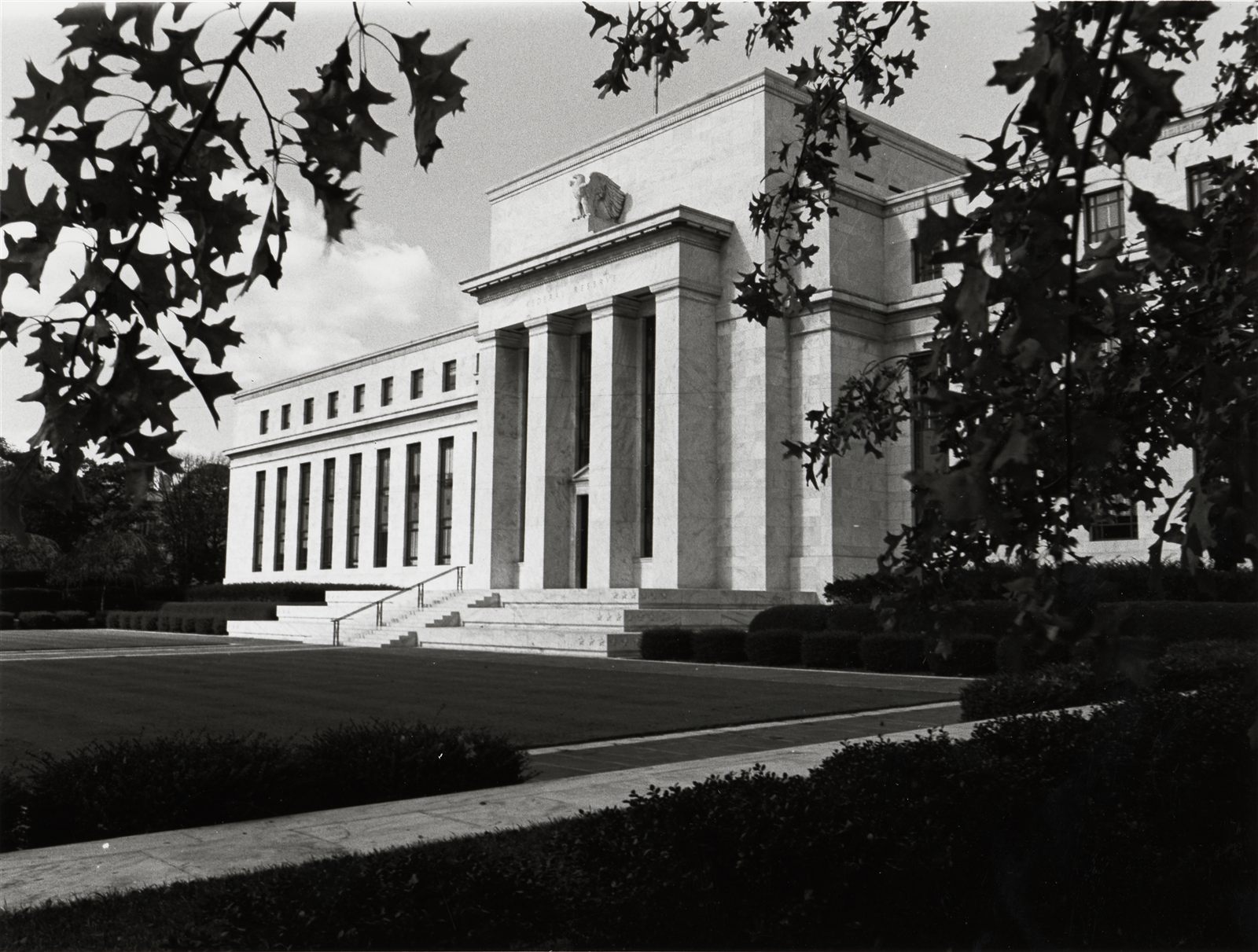
The target is the United States Federal Reserve System, created by the 1913 act signed by Woodrow Wilson on December 23 of that year. Officially, the Fed was created to give the country a safer, more flexible and more stable monetary and financial system after banking crises such as the Panic of 1907. In practice, it became the most influential central bank on the planet, able to move credit, interest rates, expectations and financial balance sheets worldwide.
The critique did not arise from one group. It gathers libertarian traditions, advocates of gold-backed money, critics of inflation, opponents of bank bailouts, supporters of broad audits, Austrian-school economists, populist sectors and people who see the monetary system as a form of political capture. Ron Paul helped popularize this language in the twenty-first century, especially after the 2008 financial crisis and his 2009 book.
The conspiratorial layer appears when monetary criticism becomes a total accusation. The Fed stops being only a debatable central bank and becomes the core of a banking cartel: a machine of central banking, Wall Street, public debt, wars, inflation, rescued banks, the Cabal / Deep State / Illuminati and the Deep State. In this reading, crisis is not accident; it is method. Inflation is not only an economic phenomenon; it is invisible taxation. Bank bailout is not stabilization; it is socialized loss.
The delicate point is that there are legitimate criticisms of the Fed: transparency, distribution of gains and losses, moral hazard, democratic independence, inflation effects and the power of large banks. But there are also narrative leaps that turn all monetary policy into a conscious plan of global enslavement.
This is why the theme speaks to the world gold heist, cryptocurrencies, global control, the Council on Foreign Relations, Operation Billionaires, the FBI and the CIA. The common question is: who really governs when money becomes opaque?
The debate is difficult because the Fed is both public and unusual. It was created by law, reports to Congress, publishes information, has audited financial statements and operates under a legal mandate. But its institutional design also protects technical independence, involves regional banks, private markets, highly watched meetings and decisions that affect millions without a direct vote.
That hybrid design is exactly what feeds the imaginary. For defenders, independence protects the currency from short electoral cycles. For critics, it creates a technical chamber able to decide the price of money without enough democratic responsibility. For conspiratorial readings, that distance becomes proof that visible democracy is facade.
A concrete case
The concrete case is the 2008 crisis and the GAO's one-time audit of the Fed's emergency programs. After the financial collapse, the Fed created lending and assistance facilities to stabilize markets. The Dodd-Frank Act required a one-time audit of those programs, and GAO published a 2011 report examining actions taken from December 1, 2007 to July 21, 2010.

This case matters because it shows both sides of the problem. On one side, there were indeed enormous emergency programs, technical, hard to understand and decisive for financial institutions. This helps explain why the demand to audit the Fed gained force: when public money, liquidity and systemic risk enter the picture, society wants to know who received help, on what terms and with what conflicts of interest.
On the other side, the case also shows that “the Fed is never audited” is a simplification. There are audited financial statements, inspector-general oversight, GAO reports in specific areas and regular publications. The real dispute is over the scope of audit, especially regarding monetary-policy decisions, market operations and institutional independence.
The mature question is not “is the Fed holy or demonic?”. The question is more precise: what powers does it have, what data does it publish, which decisions remain opaque, who benefits in crises, who pays the cost afterward and what kind of democratic control is possible without destroying monetary stability?
Why it belongs on AwakenMap
End the Fed belongs on AwakenMap because money is one of the central languages of invisible power. It does not need to look spiritual to shape human destiny: interest rates, credit, debt, inflation and bank bailouts influence work, housing, food, war, savings and freedom.
The philosophical connection lies in discernment between mechanism and myth. Awakening here does not mean repeating that bankers control everything, nor pretending that monetary policy is neutral. It means following the mechanism: law, balance sheet, audit, crisis, incentive, concentration, moral hazard, narrative and evidence.
Simple summary
End the Fed is the slogan of those who want to abolish or deeply reduce the power of the United States central bank. The critique involves inflation, bank bailouts, debt, lack of transparency, technical independence and financial power. The conspiratorial layer appears when the Fed is treated as the center of a cartel controlling wars, crises and governments. The 2008 crisis and the GAO audit show that there are real questions about transparency, but also that the phrase “there is no audit” oversimplifies reality.
References and starting points
- Federal Reserve History - Federal Reserve Act signed
- Federal Reserve - 1913 act and structure
- Federal Reserve - audited financial statements
- GAO - audit of Fed emergency programs
- Hachette - Ron Paul book
- Wikimedia Commons - Federal Reserve Eccles Building
Keep exploring
You can open another path
 Control systems Central Banking 5/5 intensity Explore → Control systems Central Banking 5/5 intensity Explore →
  Control systems Global Control 5/5 intensity Explore →
  Map center Great Awakening 5/5 intensity Explore →
  AwakenMap theme BRICS Alliance 4/5 intensity Explore →
  Control systems Deep State 4/5 intensity Explore →
Join the conversation
Comments are moderated. Keep the discussion respectful and distinguish evidence, interpretation and personal experience.