Connection level
5 direct connectionsAstral Travellers are people who report leaving the physical body, visiting subtle planes, seeing their own body from outside or crossing inner landscapes during sleep, meditation, trance or altered states of consciousness. The theme grips people because it sits exactly on the border between spiritual experience, lucid dreaming, neuroscience and mystery.
What it means to travel astrally
In esoteric language, astral travel is the idea that consciousness can move using a subtle body, also called the astral body. The person may feel vibrations, sleep paralysis, floating, rising out of the body or passing into an environment that feels more mental than physical.
This language connects to meditation, Akasha, ascension, 5D / 7D, energy, Kundalini, the Law of One and the Great Awakening. Across all these themes, the same question appears: is consciousness locked inside the body, or can it operate in subtler layers?
An old idea in modern clothing
Accounts of the travelling soul, visionary dream, spirit world and subtle body appear in many traditions. But the modern vocabulary of "astral plane" and "astral body" gained major force through Theosophy and other esoteric movements of the nineteenth and twentieth centuries.
The Harvard CSWR article on the astral plane shows how Theosophical ideas helped popularize subtle worlds and planes in modern imagination. The word "astral" stopped being only connected with the stars and became a name for a zone of spiritual experience.
The delicate point
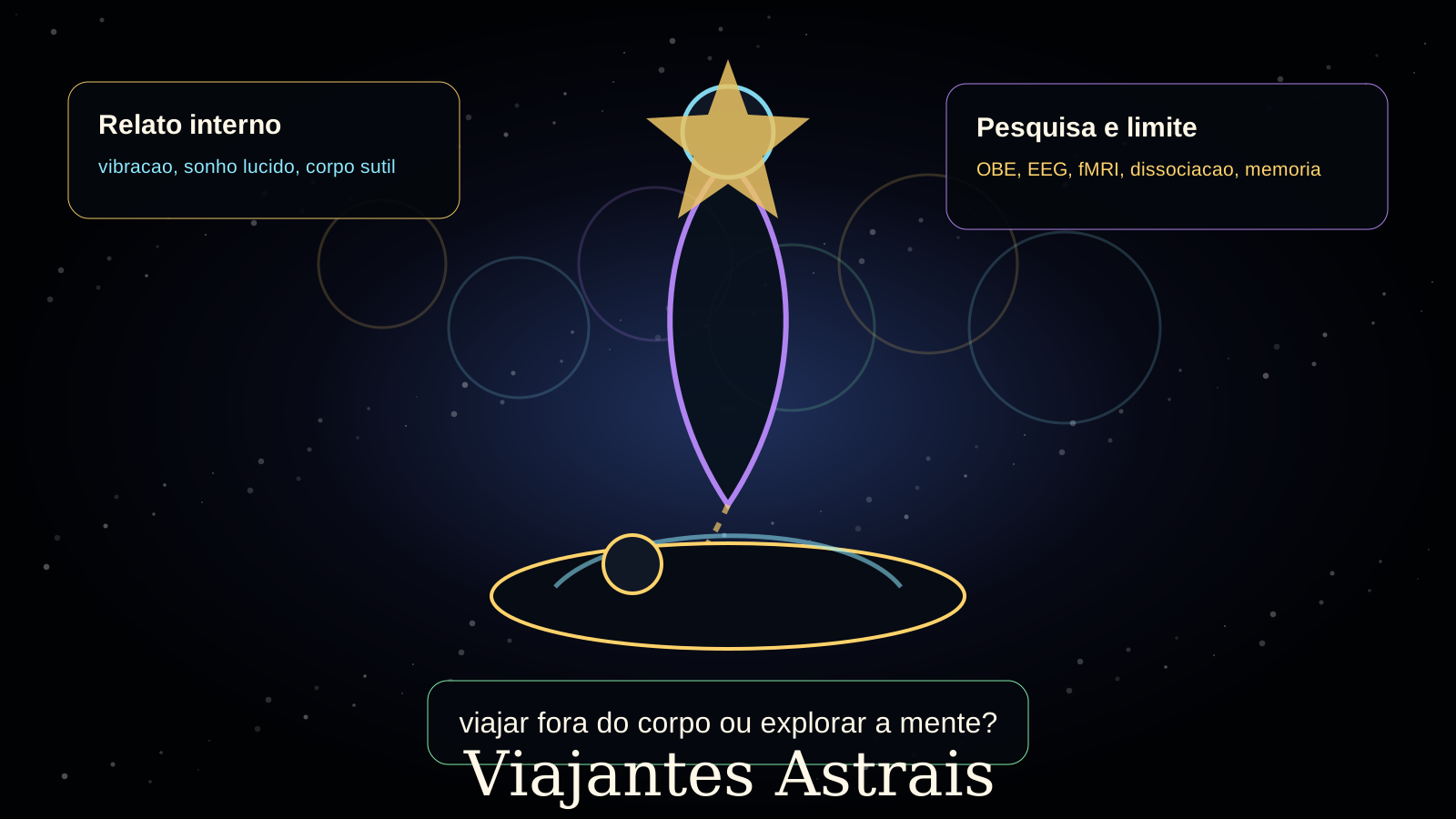
The image beside this text separates the layers: sleeping body, subtle body, symbolic cord and field of experience. For the person reporting it, the experience can be intense and transformative.
But subjective intensity is not automatically external proof. The article becomes stronger when it respects the report without selling false certainty.
Robert Monroe and the popularization of OBEs
In the twentieth century, Robert Monroe became a central figure. His book Journeys Out of the Body helped popularize the expression "out-of-body experience", or OBE. Later, the Monroe Institute developed consciousness-exploration programs, including Gateway Voyage and audio technologies known as Hemi-Sync.
Monroe matters because he moved part of the theme out of purely occult language and into a vocabulary of laboratory, training, sound, frequency and mind exploration. That did not settle the debate, but it changed how many people spoke about astral travel.
The CIA interest and the Gateway Process
The declassified CIA document on the Gateway Process made the theme even more popular online. It analyzed practices connected with the Monroe Institute, altered states, mental focus and possible applications of expanded consciousness.
This does not mean the CIA proved astral travel. It means agencies and military circles showed interest in investigating consciousness techniques, especially in the wider Cold War context of remote viewing and psychological competition.
What science can observe
Science usually studies the theme as out-of-body experience, dissociation, lucid dreaming, body perception and brain activity. Studies such as Charles Tart's Miss Z case tried to test out-of-body perception in a laboratory. Other work investigated OBEs with EEG, body posture and fMRI.
The overall result remains debated: there are strong reports and interesting neurological correlates, but no scientific consensus that consciousness literally travels outside the body.
Why the experience feels so real
People reporting astral travel often describe vivid details: vibrational sound, pulling sensations, seeing the room, encounters with beings, landscapes of light, fear of not returning and a sense of being more awake than in an ordinary dream.
This vividness explains why the theme crosses generations. Even someone interpreting it as a brain state must recognize that, for many people, the experience carries real emotional and spiritual weight.
Risks and care
The theme also requires care. Intense practices involving sleep deprivation, fear, isolation or obsession can increase anxiety, confusion and emotional destabilization. Some modern reports about Gateway and similar techniques show that not every altered experience is peaceful.
That is why a mature reading does not turn astral travel into a toy or an easy promise. It is better treated as inner exploration that asks for balance, mental health and discernment.
Astral travel, lucid dreaming and meditation
The difference between astral travel, lucid dreaming and meditation is not always clear. In lucid dreaming, the person knows they are dreaming. In deep meditation, there may be expansion or dissolution of body sense. In an OBE, the central mark is feeling located outside the physical body.
These experiences can overlap. A practitioner may call astral what a researcher would call a dissociative state, lucid dream or alteration of body image.
What the theme reveals about humans
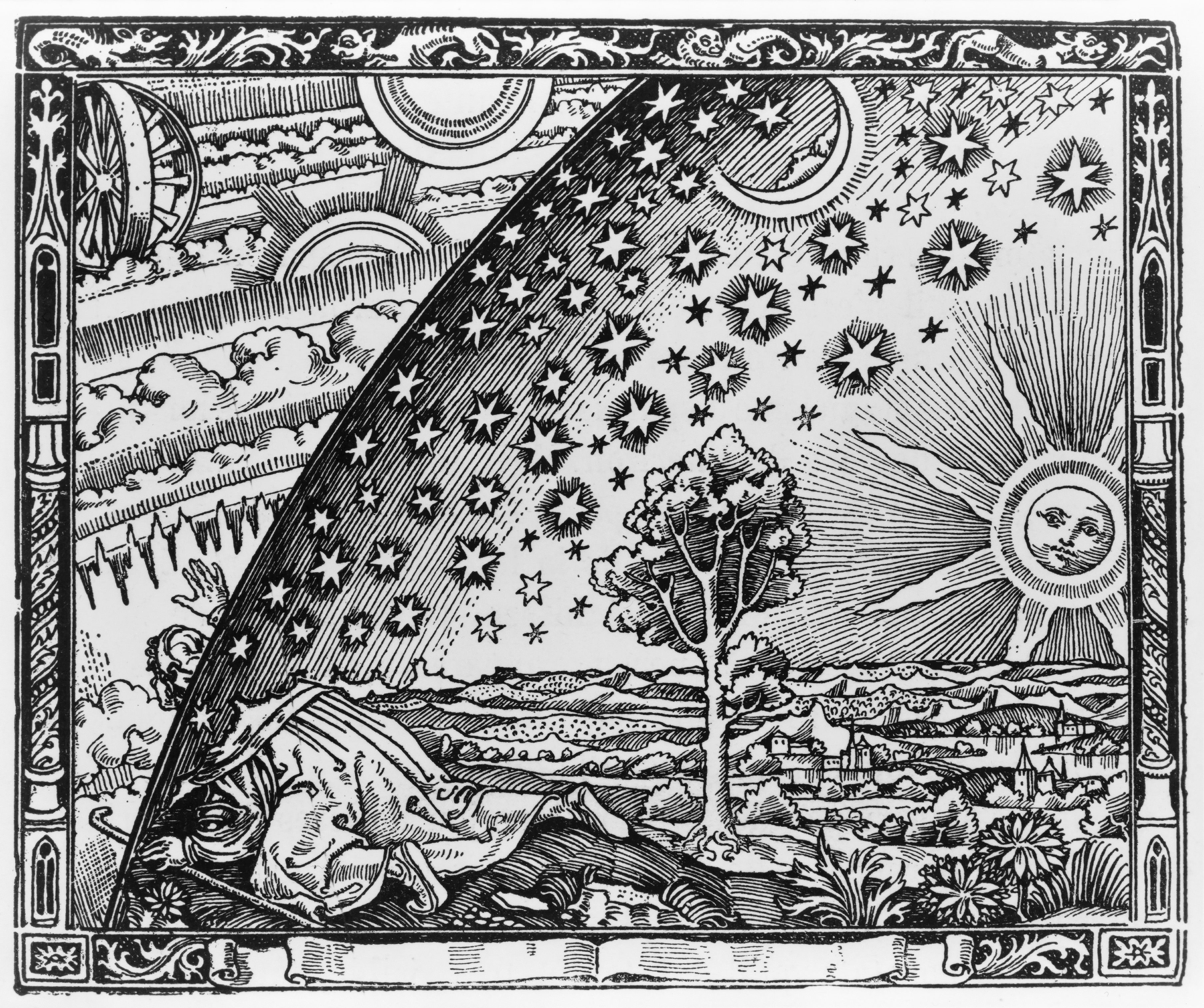
More than proving or denying everything, astral travellers reveal an old human hunger: to cross the wall of the ordinary world. The Flammarion engraving works so well here because it shows exactly that: someone putting their head outside the known sky to see whether something lies beyond.
That is the strength of the theme on AwakenMap: it speaks of map, travel, limit, body, mind and mystery at the same time.
How to continue on the map
After this theme, open meditation, Akasha, Kundalini, energy, ascension, 5D / 7D, the Law of One and the Great Awakening. This path leads from individual experience to the larger spiritual cosmology of the map.
Simple summary
Astral Travellers are people who report out-of-body experiences or movements of consciousness through subtle planes. The theme has esoteric roots, gained modern language through Theosophy and Robert Monroe, and is now also studied as OBE, lucid dreaming, dissociation and altered state of consciousness.
References and starting points
- NIH / PMC - Astral Projection and Out-of-Body Experience in Dissociative Identity Disorder
- Theosophy World - Astral Body
- Harvard CSWR - Re-orienting the Astral Plane
- The Monroe Institute - Robert Monroe and Gateway Voyage
- The Monroe Institute - About / purpose
- Amazon / Publisher listing - Journeys Out of the Body
- UNT Digital Library - Charles Tart, Six Studies of Out-of-Body Experiences
- Frontiers in Human Neuroscience - Voluntary Out-of-Body Experience: An fMRI Study
- University of Virginia DOPS - Out-of-Body Experiences and Physical Body Activity and Posture
- CIA Reading Room - Analysis and Assessment of Gateway Process
- Wired - The CIA Used This Psychic Meditation Program
- Wikimedia Commons - Flammarion engraving
FAQ
Is astral travel proven?
Not as a literal movement of consciousness outside the body. There are many reports and OBE studies, but no conclusive scientific consensus.
Are astral travel and lucid dreaming the same?
Not exactly. Lucid dreaming means knowing one is dreaming; OBE involves feeling outside the body. In practice, the experiences can overlap.
Is there risk?
For some people, intense practices can generate fear, anxiety or confusion. Balance, rest and mental health matter.
Keep exploring
You can open another path
 Esoteric practices Lucid Dream / Astral Travellers 5/5 intensity Explore →
  Return to Source Dream Yoga 4/5 intensity Explore →
  Healing and energy Shaman 4/5 intensity Explore →
  Esoteric practices Multidimensional Beings 3/5 intensity Explore →
  Consciousness and symbols Meditation Practice 3/5 intensity Explore →
Join the conversation
Comments are moderated. Keep the discussion respectful and distinguish evidence, interpretation and personal experience.