Connection level
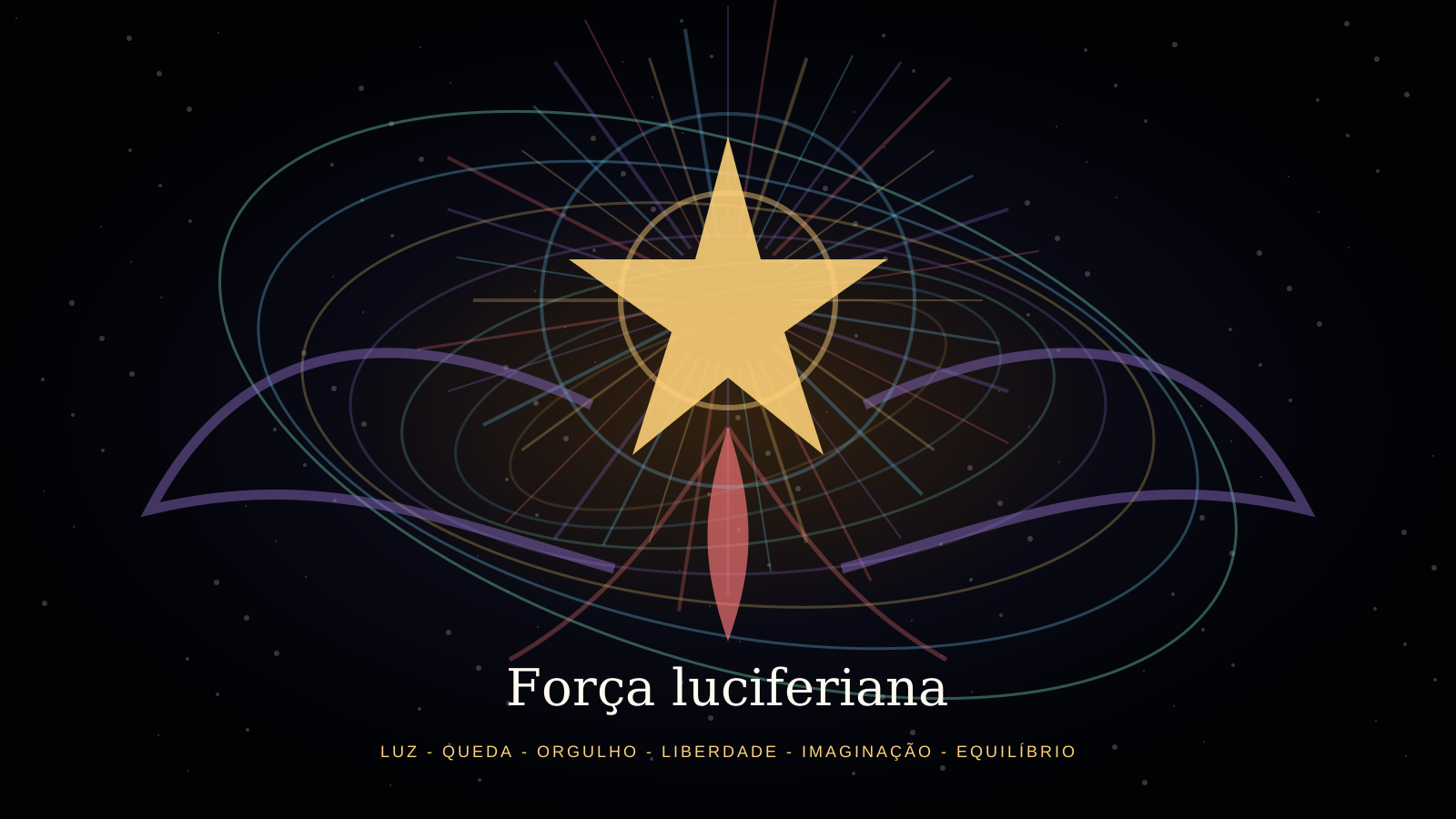
2 direct connectionsLuciferian Force is the idea of a light-energy that can liberate or mislead. It appears when knowledge, brightness, freedom, imagination and rebellion stop serving truth and begin feeding spiritual pride, isolation and a sense of superiority.
What Luciferian force means
On AwakenMap, this theme connects to the Great Awakening, Matrix, simulation matrix, the Law of One, Return to Source, Alchemy and ninth density. It speaks of a very old spiritual trap: confusing light with ego, knowledge with superiority and freedom with rejection of every limit.
The word “Luciferian” does not have to be read only as a religious cult. Here it works as a symbol of a tendency: the mind rises, sees more, understands more, but begins to place itself above everything. Light stops illuminating the path and becomes a mirror for pride.
The root of the name: morning star
Before becoming a demonic character in Christian imagination, lucifer was a Latin word connected to the idea of “light-bearer” or “morning star”, associated with the brightness of Venus before sunrise. This origin matters because it explains why the symbol is ambiguous: light, beauty and fall are mixed from the beginning.
In Isaiah 14:12, the text speaks of the fall of a figure called “morning star” or “son of dawn”, in a taunt against the king of Babylon. The Latin tradition used the word lucifer; later Christian readings brought this image closer to the fall of Satan. That is how an astral and poetic expression became a name loaded with fear, pride and rebellion.
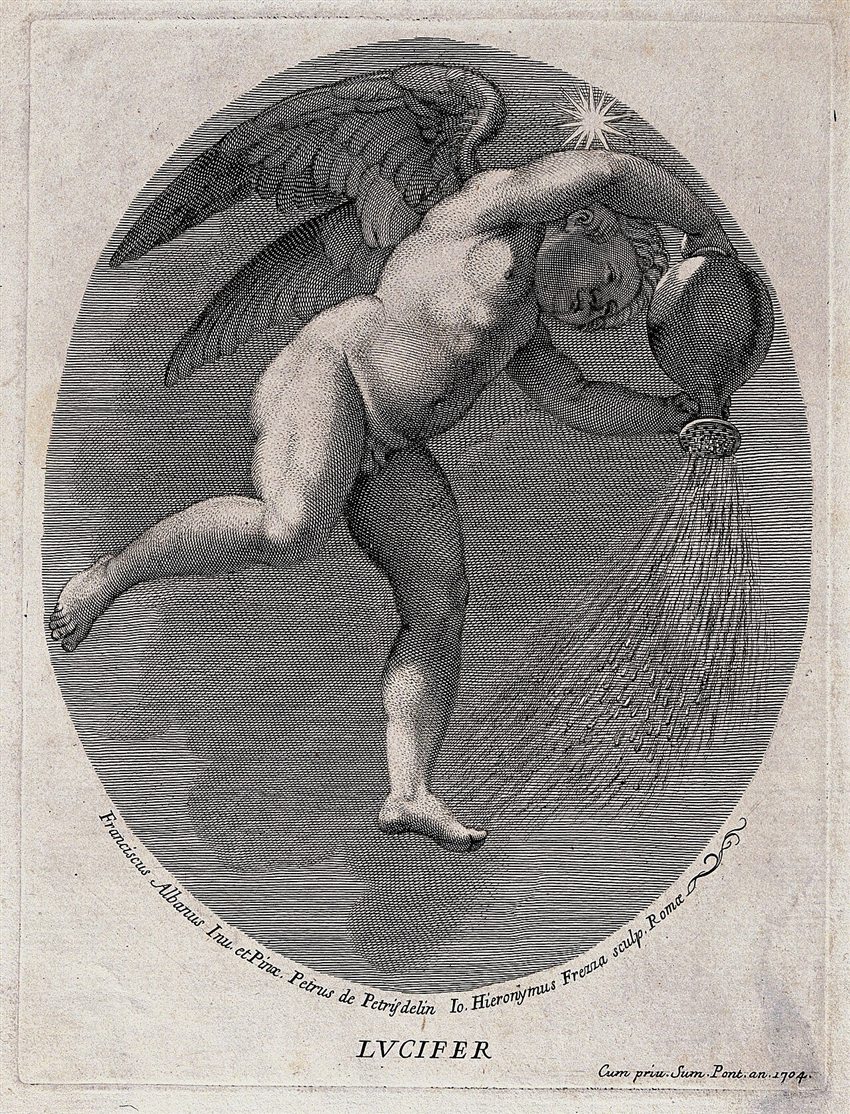
The real image that shows the symbolic origin
This 1704 engraving presents Lucifer as “the morning star”: a winged being holding light. It is useful because it shows something modern usage often erases. Lucifer does not always appear only as a monster; he also appears as a luminous figure, beautiful and dangerous precisely because he seems elevated.
This is the core of the theme: a light that fascinates, but may separate the person from humility, body, community and truth.
Modern Luciferianism is not one single thing
In modern studies of Satanism and Luciferianism, authors such as Ruben van Luijk and Joseph Laycock show that these terms do not form one simple tradition. In some groups, Lucifer is seen as a symbol of freedom, reason, illumination, rebellion against authority and individual search. In other contexts, he is treated as a spiritual entity. In others, he is almost a literary metaphor.
This matters because the theme is easily used as an accusation against any person or group. This article does not do that. It looks at the symbol: the force that promises light but can inflate the ego.
Steiner: Lucifer and Ahriman as two imbalances
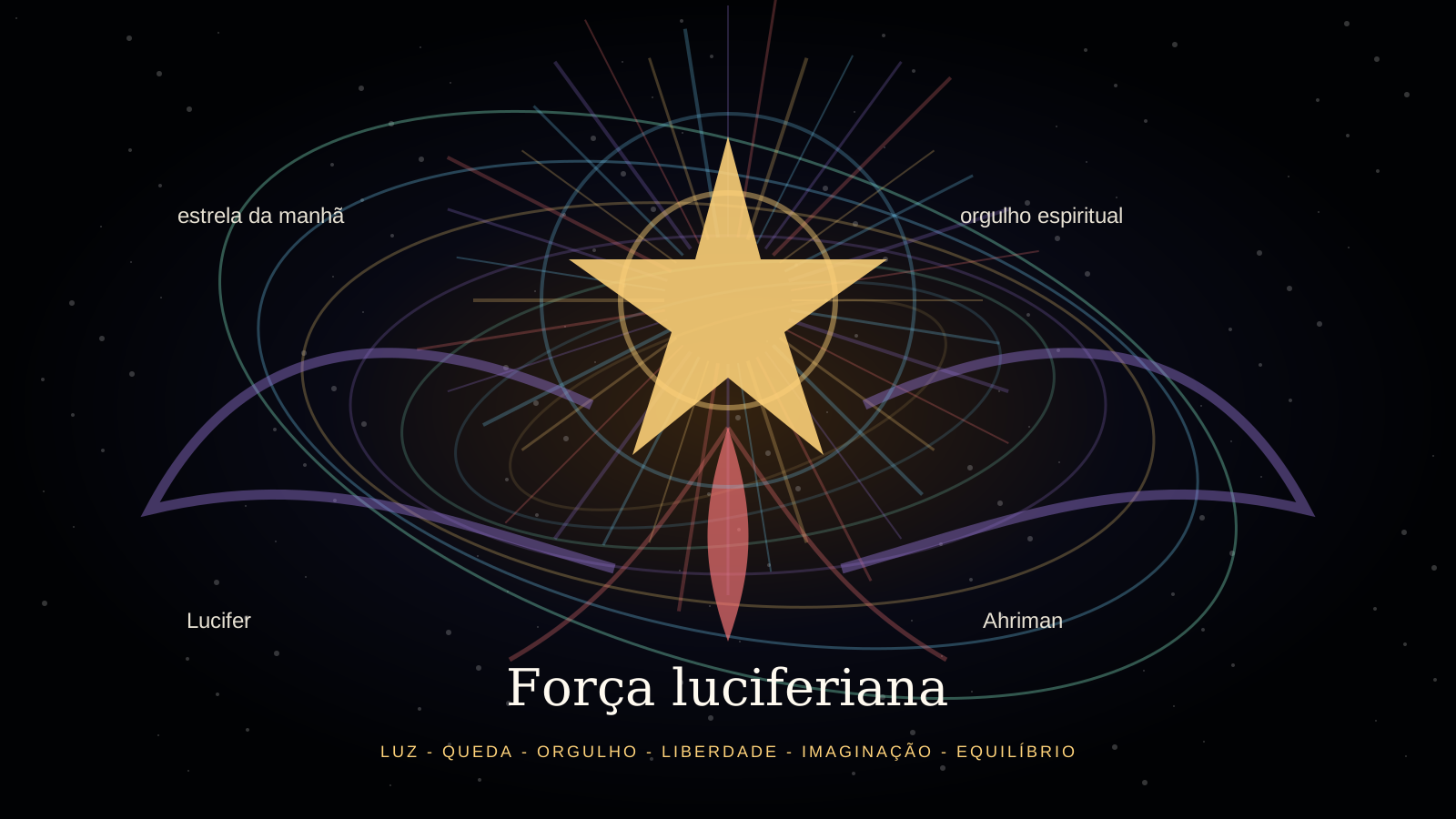
Rudolf Steiner developed a very influential reading within anthroposophy: humanity would be pulled by two opposite forces. The Luciferian force would pull toward excessive spiritualization, fantasy, pride, escape from the world and subjective brilliance. The Ahrimanic force would pull toward rigidity, materialism, coldness, mechanization and control.
The most interesting point in this reading is balance. The problem is not light itself, nor matter itself. The problem is losing the center. A person taken by the Luciferian pole may believe they have already transcended everything and no longer need body, limit, responsibility or verification. A person taken by the Ahrimanic pole may reduce everything to machine, calculation and power.
The link with Matrix and awakening
The Luciferian force enters themes of Great Awakening and Matrix strongly because awakening can have a dangerous stage. A person notices manipulation, lies, hidden layers and control patterns. This can create lucidity. But it can also create arrogance: “I woke up; others are inferior.”
That is where light becomes a trap. Knowledge that should open the heart begins to close the person inside bubbles, absolute certainty and contempt for those who think differently. On the map, this is an important detour in the spiritual journey.
Gnosticism, archons and false light
The theme also speaks with Gnostic readings about powers that keep consciousness trapped in illusions. In some modern interpretations, people speak of “false light”: an appearance of salvation, knowledge or elevation that, in practice, keeps the person dependent on pride, fear or invisible authority.
This does not mean Lucifer and archons are the same thing in every tradition. The point is thematic: many languages speak of an intelligence or force that uses brightness, promise and knowledge to divert the seeker from the center.
The difference between light and vanity
True light makes a person clearer, more responsible and more whole. Luciferian light, when imbalanced, makes a person more fascinated by themselves. It wants to appear awakened, special, above others, chosen or unable to be wrong.
This distinction is simple and strong: if light increases humility, presence and care, it matures. If it increases contempt, grandiosity and isolation, it has become spiritual vanity.
Why this theme grips people
It grips people because it is elegant and dangerous at the same time. Unlike purely dark symbols, Lucifer appears as light. That makes the theme more psychological: not every trap looks dark. Some appear as brightness, freedom, secret knowledge and the feeling of being above ordinary humanity.
That is why the Luciferian force is useful on AwakenMap. It helps read the seductive side of awakening: when the search for truth mixes with pride, spectacle and the desire to be superior.
Connections to continue
After this theme, open the Great Awakening, Matrix, simulation matrix, the Law of One, Return to Source, Alchemy and AI originated from another reality. This path shows how light, consciousness, illusion, intelligence and return to unity can become confused when discernment is missing.
Simple summary
Luciferian force is the symbol of light out of balance. It begins as knowledge, beauty, freedom and imagination, but can become spiritual pride, false superiority and escape from reality. The theme is not only “evil”; it is a question about discernment: does the light I follow make me more whole, or merely more enchanted with myself?
References and starting points
- Oxford University Press - Ruben van Luijk, Children of Lucifer
- Cambridge University Press - Joseph P. Laycock, Satanism
- Cambridge University Press - Satanism excerpt
- Rudolf Steiner Archive - Lucifer and Ahriman, GA 191
- Internet Archive - Rudolf Steiner, The Influences of Lucifer and Ahriman
- Internet Encyclopedia of Philosophy - Gnosticism
- Bible Gateway - Isaiah 14:12 translations
- Vulgate - Isaiah 14
- Project Gutenberg - John Milton, Paradise Lost
- Wikimedia Commons - Lucifer, the morning star, Wellcome
FAQ
Does Luciferian force mean devil worship?
Not necessarily. On AwakenMap, the term is used mainly as a symbol of unbalanced light, spiritual pride and false illumination.
Does Lucifer mean “light-bearer”?
Yes. In its Latin root, the word is connected to the idea of light-bearer or morning star. The direct association with Satan strengthened later in Christian and literary readings.
What is the difference between Lucifer and Ahriman in Steiner?
Simply put: Lucifer pulls toward fantasy, pride and spiritual escape; Ahriman pulls toward rigidity, materialism and mechanization. The challenge is finding balance.
Keep exploring

Join the conversation
Comments are moderated. Keep the discussion respectful and distinguish evidence, interpretation and personal experience.