
Connection level
0 direct connectionsSaying “more than 2 billion years old” changes the size of the conversation. We are no longer speaking about forgotten empires, buried cities or ruins thousands of years old. We are entering deep time: a scale so ancient that all of humanity looks like a recent scratch on Earth’s surface.
What this theme means in AwakenMap
In the map, “more than 2 billion years old” works as a bridge between real geology and narratives of extreme antiquity. It connects to the Ancient Builder Race, Ancient Builder Race technology, the technology barrier and the Ancient Builder Race pyramids.
The central question is simple and powerful: when we find something extremely ancient, are we looking at a natural process, primitive life, symbolic interpretation or a trace of forgotten history?
The real layer: Earth allows this kind of age
Earth is about 4.54 billion years old, according to geological estimates based on radiometric dating and meteorites. So an age above 2 billion years is not absurd for rocks, minerals, geological formations and ancient signs of life.
What changes is interpretation. A 2-billion-year-old rock is normal on this planet. A 2-billion-year-old technology would be an extraordinary claim requiring much stronger evidence.
Oklo: the real case that feels like fiction
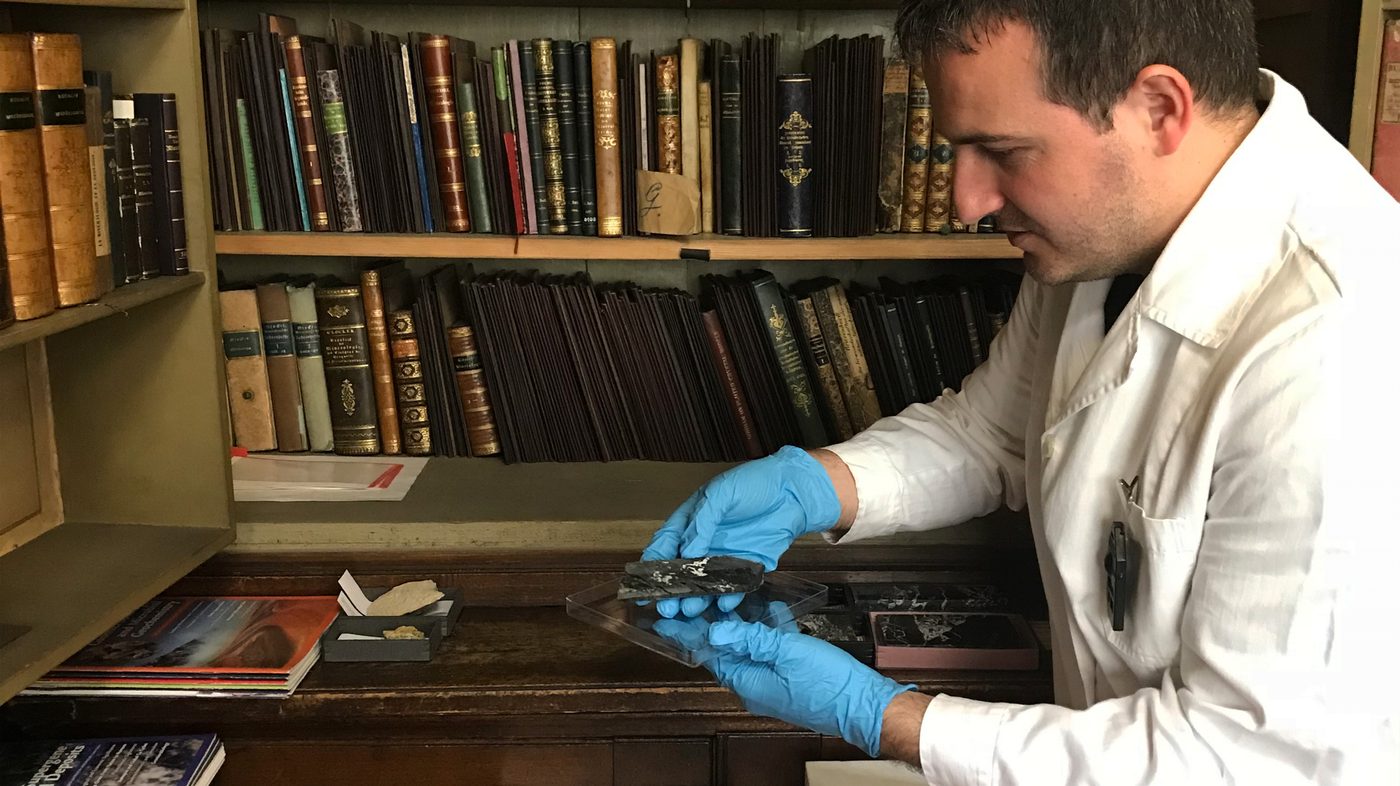
The strongest example is Oklo, in Gabon. In 1972, scientists analyzed uranium ore from that region and noticed a difference in uranium-235. The investigation led to a surprising conclusion: natural nuclear reactions had occurred there around 2 billion years ago.
It was not a secret power plant. It was geology: uranium in the right concentration, water acting as moderator and natural conditions capable of sustaining intermittent fission.
Why Oklo feeds the imagination
Oklo grips people because it combines words that seem not to belong together: “natural” and “nuclear”. For many, nuclear fission means modern technology, laboratories and engineering. Discovering that nature did something similar billions of years ago creates a reversal: the planet was already doing, by itself, something humans would learn much later.
This is where alternative interpretations appear. Some read Oklo as proof of ancient technology. The scientific reading is more specific: the reactions occurred through rare and well-studied natural conditions.
Gabonionta: complex life much earlier than expected
Gabon also appears in another debate: fossilized structures around 2.1 billion years old, sometimes called Gabonionta or the Francevillian biota. Some researchers have interpreted them as possible ancient multicellular organisms linked to changes in Earth’s oxygen.
This case is still debated, but it is fascinating because it suggests Earth experimented with complex forms long before the better-known Cambrian explosion. Even with debate, it opens a real window into a very ancient and unfamiliar Earth.
Where the Ancient Builder Race enters
In Ancient Builder Race narratives, the billion-year scale is used to suggest civilizations older than current humanity, capable of leaving ruins, technologies or protective systems on planets and moons. This reading links to the Ancient Builder Race on Moon, Ancient Builder Race pyramids and the idea of a technology barrier limiting access to certain technologies.
The narrative force lies in scale: the older the date, the stronger the sense of mystery. The editorial challenge is to keep the layers separate: rocks and natural reactors belong to geology; billion-year civilizations belong to contemporary claims and mythologies.
Why this theme grips readers
It grips readers because it breaks human scale. A thousand years already feels old. Ten thousand years feels prehistoric. Two billion years almost stops being time and becomes an abyss. When a reader finds a rock, fossil or natural nuclear reaction at that age, imagination searches for a story large enough to match it.
That is the central point: the fascination does not come only from the number. It comes from the feeling that Earth holds chapters too old for human memory.
How to read without mixing everything
A good reading separates three things. First, geological facts: Earth’s age, minerals, fossils and Oklo. Second, scientific debates: ancient structures that may or may not represent complex life. Third, speculative narratives: earlier civilizations, lost technologies and ancient systems spread through the solar system.
When these layers are clear, the subject becomes stronger. Readers do not have to choose between wonder and care. They can explore both.
Connections to continue
After this theme, continue with the Ancient Builder Race, Ancient Builder Race technology, Ancient Builder Race on Moon, the solar system energy cloud and 12-Strand DNA. These pages show how AwakenMap connects deep time, body, technology, space and consciousness change.
Simple summary
“More than 2 billion years old” is a theme about deep time. In science, it appears in ancient rocks, the natural Oklo reactor and possible complex fossils from Gabon. In AwakenMap narratives, it also opens the door to ideas about civilizations far older than current humanity.
The mystery grows when real geology already feels stranger than fiction.
References and starting points
- IAEA - Meet Oklo, the Earth’s two-billion-year-old only known natural nuclear reactor
- USGS - Geologic time: the age of the Earth
- CNRS News - Life Was Already Moving 2.1 Billion Years Ago
- Nature - Ancient macrofossils unearthed in West Africa
- National Geographic - The Oklo natural nuclear reactor
- Divine Cosmos - Ancient Builder Race legacy
FAQ
Was Oklo an ancient nuclear power plant?
Not in a technological sense. The scientific explanation is that Oklo was a natural nuclear reactor formed by rare geological conditions.
Are there 2.1-billion-year-old fossils?
There are ancient structures in Gabon interpreted by some researchers as possible complex life forms, but the subject still involves scientific debate.
Does this prove a 2-billion-year-old civilization?
No. It proves ancient geology and impressive natural phenomena. The idea of civilizations on that scale belongs to speculative narratives.
Join the conversation
Comments are moderated. Keep the discussion respectful and distinguish evidence, interpretation and personal experience.