Connection level
16 direct connectionsTrump belongs on AwakenMap through the question of when politics becomes a myth of collective salvation. The point is not to say that Donald Trump is a conspiracy theory. The point is to understand how a real political figure, with public biography, elections, government and concrete opposition, also became a symbolic character: for some, a national restorer; for others, an authoritarian threat; for conspiratorial sectors, the chosen agent meant to dismantle a hidden network of power.
Donald John Trump was born on June 14, 1946, in Queens, New York. Before politics, he became famous as a real-estate businessman, brand owner and television personality. That part matters because Trump's public figure was not born at a rally. It was built for decades as a spectacle of wealth, negotiation, confrontation and victory. When he entered presidential politics, he arrived with a ready-made persona: the man who promises to win where traditional institutions say it is not possible.
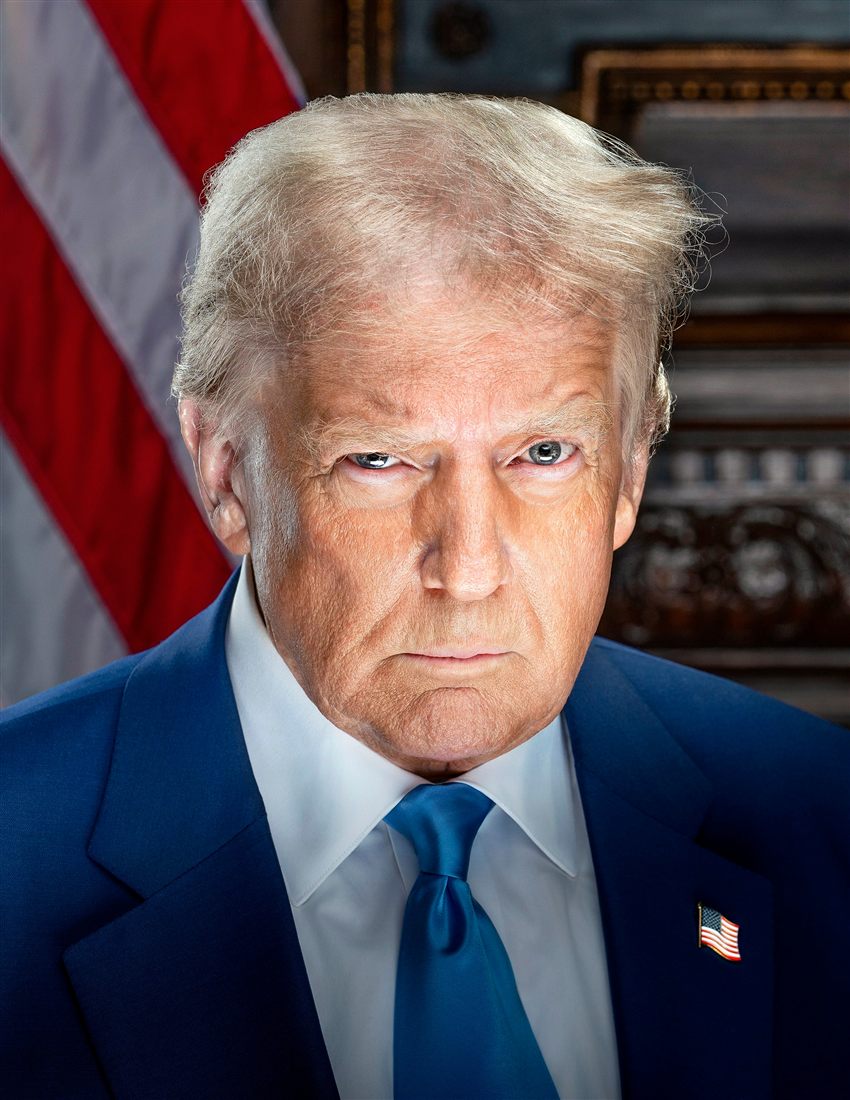
The image beside this text is the official presidential portrait released in 2025, when Trump returned to the White House as the 47th president of the United States. Here it functions as visual documentation, not propaganda: it shows the institutional figure behind the symbol circulating through memes, political cults, secret-war theories and disputes over public truth.
On AwakenMap, that distinction is essential: there is the elected politician, the media character and the Trump imagined by conspiracy networks. Mixing all layers without separation makes the article shallow.
In 2016, Trump won the presidential election with a campaign marked by nationalism, rejection of political elites, attacks on the mainstream press, promises to protect borders and direct language against the establishment. For many voters, this finally seemed to give voice to accumulated resentments. For critics, the same language normalized institutional hostility and enemy politics. The power of the phenomenon lies there: Trump was not only a candidate; he became a screen onto which millions projected loss, revenge, hope and identity.
The conspiratorial layer forms when this political promise is read as invisible war. Starting in 2017, QAnon placed Trump at the center of a narrative in which he was supposedly fighting a secret elite linked to pedophilia, Satanism, global corruption and institutional control. Academic research describes QAnon as an umbrella conspiracy theory, able to absorb many different suspicions into one story of final battle.
The term Deep State is central to this reading. In ordinary political use, it can mean bureaucracies, agencies and permanent interests that resist elected presidents. In conspiratorial use, it becomes an almost total entity: a hidden government controlling courts, intelligence, media, finance and elections. Trump is then seen not only as president, but as someone inserted inside the system to destroy it from within.
This is where GEOTUS appears, an acronym for “God Emperor of the United States”. Its origin lies in memes, irony and internet culture, but the symbolic effect is serious. The meme exaggerates the leader to the edge of political messianism. In a healthy community, it can be a joke. In a captured community, the joke becomes devotion, and devotion begins to discard criticism.
The Storm is another decisive axis. In the QAnon imagination, it represents the moment when arrests, revelations and the fall of elites would happen at once. This promise creates a powerful emotional structure: the present may look confused, but a secret operation is supposedly organizing everything; defeats become disguises; silence becomes strategy; delay becomes proof of complexity. Normal politics gives way to apocalyptic waiting.
The most important concrete case is the 2020 election and the attack on the Capitol on January 6, 2021. After the electoral defeat, claims of widespread fraud circulated intensely among supporters. The final report of the House committee on January 6 described the attempt to overturn the result and documented how political mobilization escalated into the invasion of Congress. Without reducing all Trump supporters to conspiracy believers, this episode shows how a stolen-election narrative can leave the screen and enter institutional history.
The node also speaks to patriots and White Hats. In many conspiratorial channels, true patriots are ordinary people, military figures, loyal agents or invisible operators working against the global elite. Trump functions as the public face of this imagined network. The important detail is that patriotism changes meaning: it stops being commitment to a plural political community and becomes loyalty to one specific interpretation of reality.
The connection with the Cabal, Deep State and Illuminati comes from the need for a total enemy. The narrative becomes stronger when every political conflict is reorganized as a struggle against a single cabal: media, Hollywood, banks, universities, international agencies, parties, NGOs, courts and multilateral organizations. Real corruption exists; concentrated interests exist; abuse of power exists. The conspiratorial leap happens when all of this is fused into one secret, morally absolute enemy.
Pizzagate helps explain the emotional origin of this field. Before QAnon grew, the fantasy accusation involving a Washington pizzeria already showed how fear of child abuse, political leaks and delusional code-reading could combine. QAnon inherited that imagination and expanded it. Trump entered as the character who, according to the belief, was protecting children and preparing punishment for the guilty.
The mainstream media is indispensable to this story. Trump built part of his strength by confronting newspapers, networks and experts. For supporters, this looked like courage against an arrogant press. For critics, it was an attack on a shared basis of facts. In the conspiratorial field, mainstream media is not only biased or flawed; it becomes part of a concealment operation. Any negative report can therefore be discarded before it is even read.
After the 2024 election, Trump returned to the presidency on January 20, 2025, becoming the 45th and 47th president of the United States. This return reinforced the mythic reading for his most intense followers: someone defeated, investigated, attacked and yet restored to power. For many opponents, the same return confirmed warnings about personalism and institutional erosion. The symbol became even more charged.
The link with global control appears when Trump is placed inside a worldwide dispute against globalism, international organizations, immigration, financial elites and multilateral agreements. This critique can exist as ordinary politics. The problem appears when all international cooperation is read as a plan of global enslavement, and any diplomatic compromise becomes betrayal. Foreign policy becomes a theater of spiritual war.
disclosure and full disclosure enter because part of the public expected Trump to reveal secret files, hidden technology, state corruption, truths about UFOs or elite crimes. This expectation of total revelation is bigger than any specific government. Trump became, for some, the temporary name of an old promise: someone would finally open the archives and expose everything.
The mature reading separates three levels. First, Trump as a real politician, elected, with decisions, alliances, defeats, victories and historical responsibility. Second, Trump as a media character, built by television, personal branding, social media and permanent conflict. Third, Trump as conspiratorial myth: the secret savior, the chosen one against the cabal, the signal that truth is about to break the surface.
Trump matters to AwakenMap because he shows how awakening can be captured by the desire for a chief. When a community tired of lies finds a leader who promises to reveal everything, it is easy to confuse lucidity with loyalty. The hard question is not whether Trump pleases or displeases. The question is: when does the search for truth become dependence on a central figure?
Simple summary
Trump is a real political figure who also became a symbol inside conspiratorial narratives. On AwakenMap, he connects to QAnon, Deep State, GEOTUS, The Storm, patriots, White Hats, Pizzagate, mainstream media, global control and disclosure. The conspiratorial layer appears when his leadership is interpreted as a secret mission to defeat a hidden elite and reveal total truth.
References and starting points
- White House - official biography of Donald Trump
- Trump Presidential Library - biography and second term
- PMC - QAnon, authoritarianism and conspiracy in American politics
- Pew Research Center - public awareness of QAnon in 2020
- GovInfo - final report of the January 6 committee
- Wikimedia Commons - 2025 official presidential portrait
Why it belongs on AwakenMap
It belongs because Trump is one of the strongest examples of politics transformed into a myth of revelation. The theme helps reveal the difference between institutional criticism, legitimate electoral dispute, personality cult and fantasy of collective salvation.
Keep exploring
You can open another path
 Control systems Cabal / Deep State / Illuminati 5/5 intensity Explore →
  Control systems Deep State 5/5 intensity Explore →
  Control systems GEOTUS 5/5 intensity Explore →
  Map center Great Awakening 5/5 intensity Explore →
  Control systems Q / QAnon 5/5 intensity Explore →
  AwakenMap theme The Storm 5/5 intensity Explore →
Join the conversation
Comments are moderated. Keep the discussion respectful and distinguish evidence, interpretation and personal experience.