Connection level
15 direct connectionsRabbit hole belongs on AwakenMap through the question of when investigation becomes a labyrinth. The metaphor describes the feeling of following one clue, then another, then another, until the ordinary world seems too small to contain what has been found. At first, it looks like curiosity. Then it can become initiation. In extreme cases, it becomes a labyrinth where every external doubt is reinterpreted as proof that the person came too close to the truth.
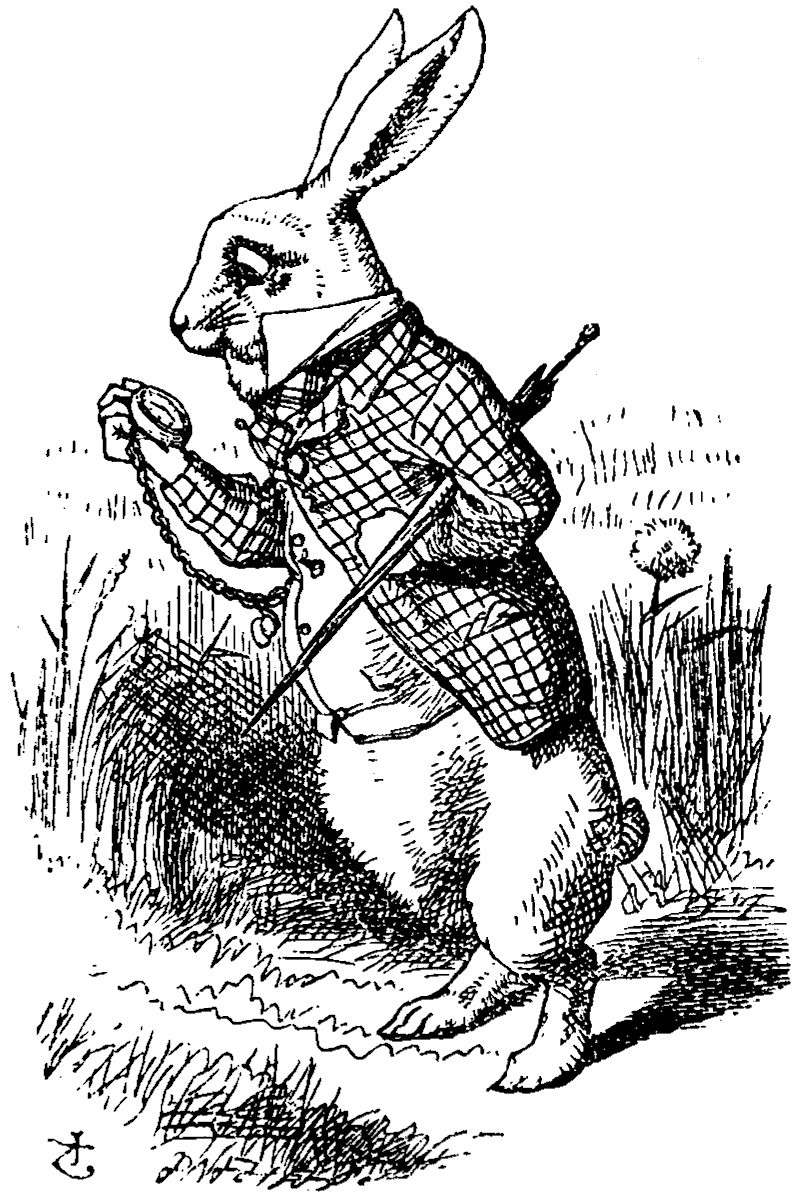
The best-known cultural origin comes from Alice's Adventures in Wonderland, by Lewis Carroll, published in 1865. Alice follows the White Rabbit, falls down the hole and enters a world where logic, language, size, identity and authority no longer work as before. The phrase became famous precisely for this reason: entering the rabbit hole means crossing a passage into a stranger reality than the one that seemed guaranteed.
The image beside this text represents Alice going down the rabbit hole. It matters because the original metaphor is not only about curiosity; it is about falling, disorientation and change of scale. Alice does not merely visit a new topic. She loses the ground of the previous reality.
On AwakenMap, the rabbit hole is the moment when research, symbol, fear and revelation mix. The person does not only learn something; they feel they have crossed a door.
In conspiracy culture, the rabbit hole is less a subject than a process. A person begins with a legitimate question: why did this happen? Who benefits? Why does the official version feel incomplete? These questions can be healthy. The problem appears when the process loses brakes: every disagreeing source becomes “programming”, every absence of proof becomes “cover-up” and every accident becomes code.
This is why the theme speaks to the matrix. The rabbit hole promises to show the backstage of reality. First, the person distrusts the news. Then they distrust media, science, history, language, medicine, institutions and their own memory. The sensation is similar to waking inside a simulation matrix: nothing is only what it seems.
A concrete modern case is the path through communities linked to QAnon. Many people entered through memes, questions, alleged clues and promises of doing their own research. The aesthetic was almost playful: follow the crumbs, decode messages, connect dates, names and symbols. But the interpretive game could become a total view of the world, where politics, media, celebrities, crimes and spirituality were reorganized by one narrative of secret war.
The connection with the Deep State and Cabal, Deep State and Illuminati appears because the rabbit hole usually needs a hidden center. The deeper someone goes, the more they tend to imagine that scattered events obey one central architecture. Real corruption, real abuse and real secrecy can exist; this does not mean every event comes from one invisible command. The difference between investigation and totalizing myth lives there.
hidden history adds another layer. Rabbit holes often offer alternative history: erased peoples, lost technologies, invisible empires, untold wars, hidden archives. Some historical revisions are necessary and true. Others become compensatory fantasy. The test is simple but demanding: which sources exist, what method was used and what would change the conclusion?
The gateway to all understanding is almost a philosophical relative of the rabbit hole. Both promise broad understanding. The difference is that a gateway can be crossed with humility, while a rabbit hole can become compulsive falling. When an interpretive key begins to explain everything, it stops being a tool and becomes a closed world. The person no longer uses the map; they live inside it.
The hyperdimensional hexagon shows how specific symbols can function as corridors. A geometric form, architectural coincidence or visual pattern can open real research into art history, astronomy or mathematics. It can also become a bottomless hole of associations. The critical question is: does the pattern survive testing, or does it only grow because we accept any connection?
The link with secret societies is inevitable. The rabbit hole almost always passes through hidden orders, rites, passwords, discreet societies and transmission of reserved knowledge. This touches an old human desire: entering the backstage. The risk is turning every reserve, symbol or initiatory tradition into proof of malicious control, without distinguishing ritual secrecy, institutional privacy, real abuse and paranoid imagination.
mainstream media appears because the descent rarely happens without an information ecosystem. Platforms, recommendations, short videos, forums, private groups and influencers create trails. Studies on online recommendations show different results depending on method and period, but the question remains serious: digital environments can intensify beliefs by repeating content increasingly aligned with fear, anger or suspicion.
Psychology research helps explain why the rabbit hole is so attractive. The APA summarizes findings indicating that conspiracy theories often respond to needs for understanding, safety and belonging. Studies on epistemic mistrust show that when authorities are seen as irredeemably corrupt, a vacuum of trust opens. The rabbit hole offers community, narrative and the feeling of being less lost.
global control is the political version of the descent. The individual starts investigating one specific topic and ends in a thesis about total control: economy, health, education, media, war, climate, technology and spirituality are parts of one machine. This view gives coherence, but it asks a high price: almost nothing can be simple, local, incompetent, contradictory or contingent anymore.
The connection with disclosure and full disclosure shows the luminous face of the metaphor. Not every descent is sickness. Sometimes deeper research reveals corruption, real archives, buried crimes or neglected science. The question is not avoiding the hole, but learning to carry a rope: method, pause, comparison of sources, conversation with people outside the bubble and the ability to say “I don't know”.
mental and spiritual states are fundamental here. The rabbit hole affects excitement, fear, isolation, sense of mission and identity. The body feels the investigation: sleep changes, attention sticks, relationships become tense, and the person feels unable to “unsee” what they saw. This does not prove the discovery is false, but it indicates that the process needs care.
A mature reading separates three planes. First, legitimate curiosity and deep investigation. Second, the psychological experience of disorientation when an old worldview breaks. Third, conspiratorial capture, when the descent becomes a closed system that feeds on any evidence against it. The rabbit hole can be passage; it can also be trap.
The rabbit hole matters because AwakenMap itself lives near this edge. The map exists to connect difficult themes, but connection is not permission to lose criteria. Awakening is not falling forever. It is learning to descend, observe, compare, return to the surface and remain human enough to change your mind.
Simple summary
Rabbit hole is the metaphor of investigative descent in which one question leads to another until perception of reality changes. Its origin comes from Alice's Adventures in Wonderland, but on AwakenMap it connects to the matrix, QAnon, Deep State, hidden history, secret societies, media, global control and disclosure. The conspiratorial part appears when every doubt, accident or disagreement becomes proof of a total hidden structure.
References and starting points
- Project Gutenberg - Alice's Adventures in Wonderland
- Wikimedia Commons - Down the Rabbit Hole
- APA - why people believe conspiracy theories
- PMC - epistemic mistrust and conspiracy theories
- arXiv - online recommendations and video-platform radicalization
- Great Awakening Map - original poster
Why it belongs on AwakenMap
It belongs because the map needs to teach people how to enter and exit its own depth. The rabbit hole is useful when it leads to more careful investigation; it becomes dangerous when it turns curiosity into descent without method, connection into paranoia and awakening into isolation.
Keep exploring
You can open another path
 Map center Great Awakening 5/5 intensity Explore →
  AI and Matrix Matrix / Everything is an Illusion 5/5 intensity Explore →
  Control systems Q / QAnon 5/5 intensity Explore →
  Control systems Cabal / Deep State / Illuminati 4/5 intensity Explore →
  Control systems Deep State 4/5 intensity Explore → Esoteric practices The Gateway to All Understanding 4/5 intensity Explore →
Join the conversation
Comments are moderated. Keep the discussion respectful and distinguish evidence, interpretation and personal experience.