Connection level
0 direct connectionsAge of the Golden Race is the idea of humanity in a higher state: simpler, more peaceful, closer to the sacred and less trapped in fear, violence and separation. Before becoming a modern language of ascension and 5D Earth, this image already appeared in ancient myths about a Golden Age.
The ancient root: Hesiod and the five ages
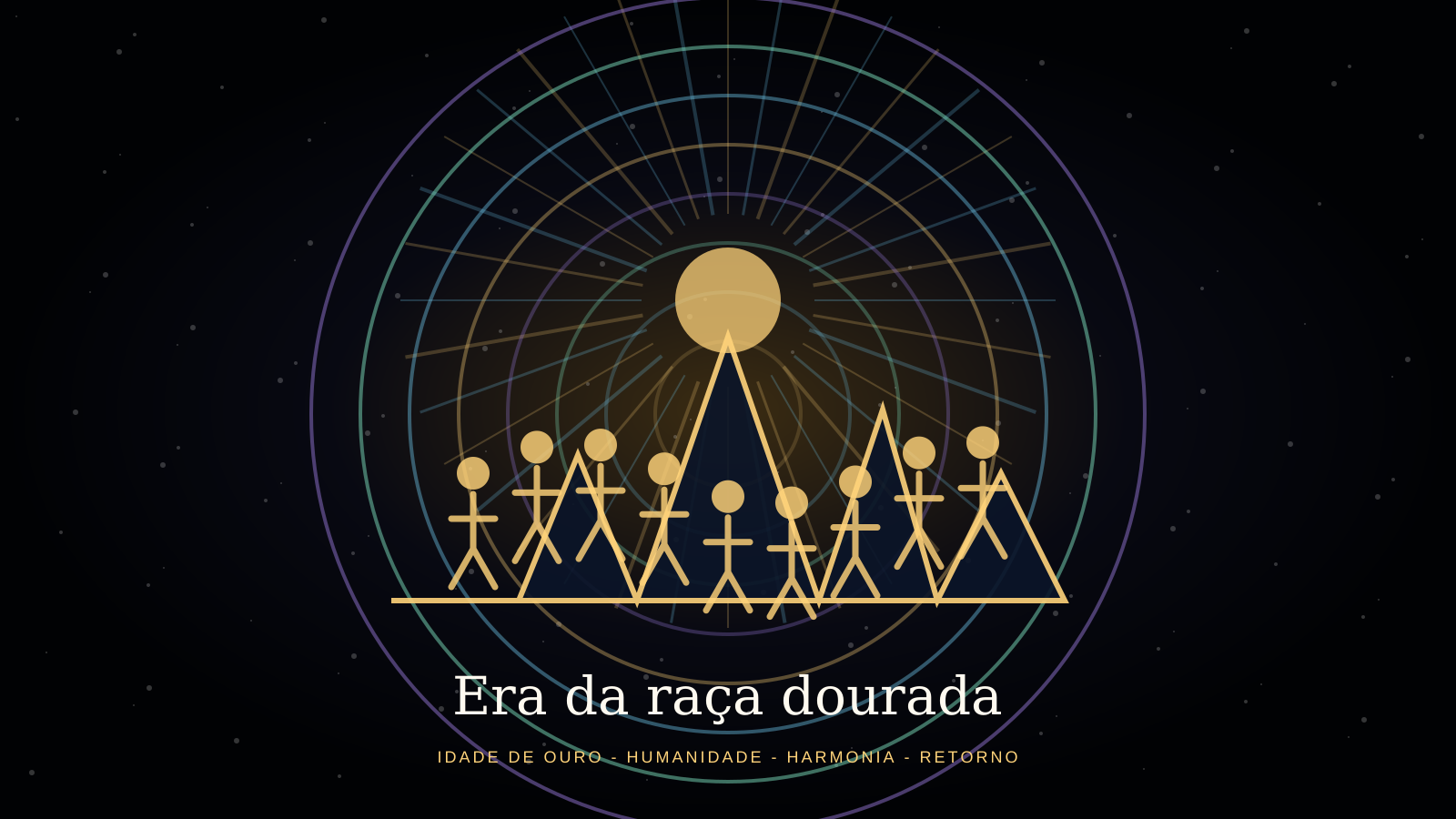
In Greek tradition, one of the key sources is Hesiod’s Works and Days. He describes human history as a sequence of ages: Gold, Silver, Bronze, Heroic and Iron. The first one, the Golden Age, would have taken place under Cronus, before the world became heavy, competitive and painful.
This golden humanity is not compelling because of advanced machines or giant empires. It grips for the opposite reason: people did not age as we do, death was like falling asleep, the earth gave food without brutal toil, and peace was the normal condition of life. The image is simple, almost pastoral — and that is why it works so well.
The missing detail
The strength of the myth is not only saying “there was a better time”. It shows how that time was imagined: without courts, without constant fear, without manufactured hunger, without war as destiny. In Ovid, the Golden Age also appears as a time before harsh laws, punishments and ambitious navigation to dominate other lands.
This layer gives the theme a body. The golden race stops being a beautiful phrase and becomes a scene: fertile land, symbolic spring, simple life, social peace and closeness to the gods.
Prometheus, Pandora and the loss of the original state
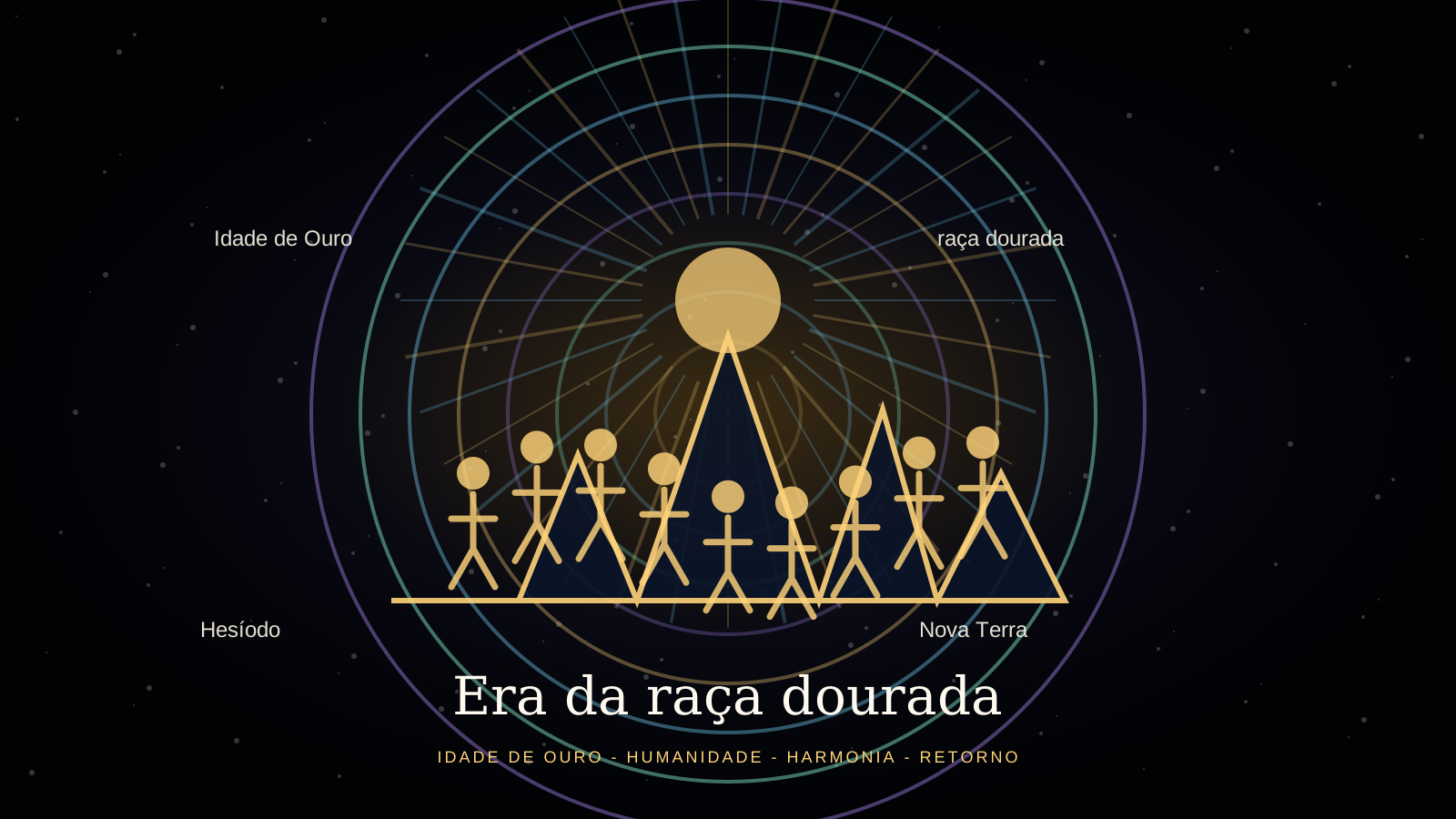
The myth also has a dramatic turn. After the Golden Age come themes such as Prometheus, fire, human arts and Pandora. The opening of Pandora’s box symbolizes the entry of evils into the world: suffering, conflict, disease, scarcity and disorder. It is the passage from protected humanity to humanity that must face weight, choice and consequence.
That is why the Age of the Golden Race connects so well with the imagination of the Great Awakening. The reader is not only asking whether a perfect past existed. The deeper question is whether something essential was lost — and whether it can be recovered in another form.
Arcadia, Eden and Yugas: the same longing in different languages
The idea did not remain limited to Greece. In European pastoral literature, Arcadia became an image of simple life, nature, shepherds, nymphs and rustic peace. In Christianity, the memory of an original state appears in Eden. In Indian traditions, the Yuga cycle begins with Satya Yuga or Krita Yuga, an age of truth and order before progressive decline toward Kali Yuga.
These traditions do not say exactly the same thing, but they share a powerful intuition: human history can be read as cycle, fall, forgetting and possible return. This is where the theme approaches 5D Earth, the Age of Aquarius, ninth density, 12-Strand DNA and the Agartha Network.
Why “golden race” appears on AwakenMap
On AwakenMap, “race” should be understood as generation, symbolic lineage or state of consciousness. The focus is not biology or human superiority. The focus is the spiritual question: what would humanity look like if it matured inwardly?
That is why the theme works as a bridge. On one side, it has a classical root: Hesiod, Cronus, Ovid, Arcadia, Eden and Yugas. On the other, it reappears in modern language: ascension, 5D Earth, subtler body, collective healing, the Law of One and return to Source.
Why this myth is so resistant
The Golden Age survives because it is not only an ancient belief. It is a permanent human question. If the present world feels tired, anxious, aggressive and disconnected, the myth offers the opposite image: humanity reconciled with itself, with nature and with the divine.
That emotional force explains why the golden race keeps returning in modern spiritual writing. It names a hope: not merely surviving collapse, but remembering a more whole way of existing.
Simple summary
Age of the Golden Race is the modern spiritual version of a very old image: the Golden Age. In Hesiod, it was the first age of humanity, ruled by Cronus and marked by peace, abundance and closeness to the gods. In current readings, it becomes a symbol of 5D Earth, ascension and the return to a more conscious humanity.
References and starting points
- Theoi - Hesiod, Works and Days
- Perseus / Scaife Viewer - Hesiod Works and Days
- Theoi - Ovid, Metamorphoses Book 1
- Britannica - Golden Age
- Wikipédia - Era dourada
- Open Maricopa - From the Matsya Purana: The Yuga Cycle
- L/L Research - The Ra Contact
FAQ
Is the Age of the Golden Race the same as the Golden Age?
On AwakenMap, it is a spiritual rereading of the Golden Age: it takes the ancient image of harmonious humanity and connects it with ascension, 5D Earth and awakening.
Who described the Golden Age?
One of the most important classical sources is Hesiod’s Works and Days. Ovid also transmitted an influential version in Metamorphoses.
What is the difference between myth and modern reading?
The ancient myth speaks of a primordial age. The modern reading uses that image as a symbol of human transformation, consciousness and possible collective renewal.
Join the conversation
Comments are moderated. Keep the discussion respectful and distinguish evidence, interpretation and personal experience.